
Shelley Kuipers
Episode
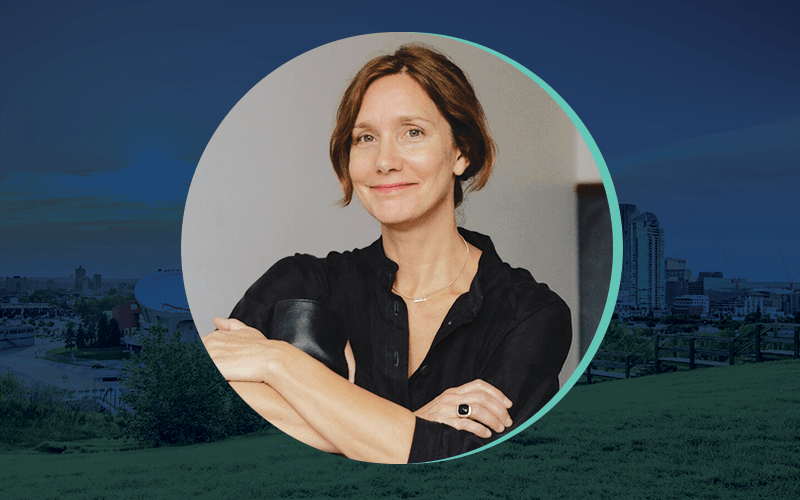
Shelley Kuipers is co-founder of The51, an investment platform for female entrepreneurs.
Key takeaways
- Women entrepreneurs receive only 3% of total venture capital funding, representing a massive untapped opportunity in the market.
- Female-led technology companies in Alberta are at 30% compared to the national average of 15%, showing strong potential for economic diversification.
- Building a community around investing where women pool capital together creates a more supportive and successful investment model.
- Trust your instincts as an entrepreneur and surround yourself with champions who believe in your vision, especially when facing skepticism.
- Women are more likely to build businesses with both commercial and social missions, making them attractive investments that align financial returns with positive impact.
Transcript
Full transcript page · Interactive episode
============================================================
TRANSCRIPTION WITH SPEAKERS
============================================================

[00:00] SPEAKER_01: It's Calgary's podcast on the Canada's podcast network.
[00:07] SPEAKER_01: Hello, this is Mario Tata-Guzi coming to you today with Calgary's podcast, a member of Canada's
[00:13] SPEAKER_01: podcast network where we talk to the entrepreneurs who are making it happen in Calgary, Alberta,
[00:19] SPEAKER_01: so you can listen, discover and engage.
[00:23] SPEAKER_01: Joining me today is our guest, Shelley Kipers, who is co-founder of the 51.
[00:29] SPEAKER_01: Thanks for joining us today, Shelley.
[00:31] SPEAKER_01: Yeah, thank you.
[00:32] SPEAKER_01: So, tell me what the 51 is and what it does.
[00:37] SPEAKER_00: Yeah, that's definitely a frequently asked question these days.
[00:44] SPEAKER_00: Well, it's kind of growing in nature, I would say.
[00:46] SPEAKER_00: So, initially, we got started with an idea that we could activate women's capital for women
[00:53] SPEAKER_00: entrepreneurs.
[00:55] SPEAKER_00: And so, when we got started last year, March of last year,
[00:58] SPEAKER_00: we did it as a bit of an experiment.
[01:01] SPEAKER_00: We didn't know if it would work.
[01:03] SPEAKER_00: And what we found was there was an enormous connection, a synergistic connection between women
[01:09] SPEAKER_00: who have money and women who need money for their business.
[01:13] SPEAKER_00: So, that's kind of how we got started.
[01:15] SPEAKER_00: It was through a single event, my house.
[01:17] SPEAKER_00: We had about 75 people at my house.
[01:20] SPEAKER_00: We had a single entrepreneur up there telling their story and we raised half a million Canadian
[01:25] SPEAKER_00: for that entrepreneur just based on that event alone.
[01:29] SPEAKER_00: So, if we kind of fast forward to 2020, the 51 today would be considered an investment platform.
[01:37] SPEAKER_00: It's where female entrepreneurs come together with female investors, accredited investors today.
[01:45] SPEAKER_00: And those accredited investors either invest directly in those entrepreneurs,
[01:49] SPEAKER_00: or we also do it through a special purpose vehicle, where all of us pool our capital together
[01:53] SPEAKER_00: and go in as a single investor into that entrepreneurial business.
[01:58] SPEAKER_00: So, we would call ourselves an investment platform.
[02:02] SPEAKER_01: Where does the name come from?
[02:04] SPEAKER_00: Great question.
[02:05] SPEAKER_00: So, women make up 51% of the population.
[02:08] SPEAKER_00: So, that's how we came up with the name.
[02:10] SPEAKER_01: Okay.
[02:11] SPEAKER_01: Is it, are you seeing that there's difficulty out there for female entrepreneurs to find the
[02:18] SPEAKER_01: capital to do what they need to do to establish a business or even throw their own businesses?
[02:25] SPEAKER_00: Yeah, absolutely.
[02:27] SPEAKER_00: A lot of people are aware of the statistics, but I'll just repeat it.
[02:31] SPEAKER_00: In 2019, the total venture capital that was allocated to women was 3% of that total.
[02:39] SPEAKER_00: And so, the 51 is looking at this problem or this challenge or this opportunity as very much
[02:45] SPEAKER_00: an opportunity.
[02:46] SPEAKER_00: So, we are saying that there is 51% of the population that's being underserved
[02:52] SPEAKER_00: from a financing perspective.
[02:54] SPEAKER_00: And so, the 51 wants to be a solution and help closing that gap.
[02:58] SPEAKER_00: If we again, couple that opportunity or that challenge with female lead capital, with
[03:04] SPEAKER_00: female lead businesses, it creates a really unique experience where we can bring women who
[03:10] SPEAKER_00: understand women built businesses. They can bring their expertise to bear.
[03:16] SPEAKER_00: And so, our capital ultimately can be smart capital.
[03:20] SPEAKER_01: How did you get involved in this and what?
[03:23] SPEAKER_00: So, there's three of us that are co-pandors.
[03:26] SPEAKER_00: Judy Fairburn, Alice Rimer and myself.
[03:29] SPEAKER_00: And it really got started from personal experience.
[03:32] SPEAKER_00: And so, we have all had experience in either raising money from the venture side or creating a fund.
[03:39] SPEAKER_00: And, you know, over the years, many, many years.
[03:42] SPEAKER_00: And there's some gray hair in our group.
[03:45] SPEAKER_00: We saw that the gap consistently existed.
[03:49] SPEAKER_00: And so, we've been talking about the idea forever.
[03:52] SPEAKER_00: We were very much inspired by a trip to Palo Alto a couple of years ago,
[03:57] SPEAKER_00: where, again, we saw this systemic kind of discrimination in women trying to raise money or
[04:03] SPEAKER_00: how they were supposed to raise money.
[04:05] SPEAKER_00: And so, we're again trying to create a new model for that.
[04:08] SPEAKER_01: Okay. What's it like doing business in Calgary these days?
[04:13] SPEAKER_00: Good question. Again, I would say, you know, while the economic climate appears to be quite challenging,
[04:22] SPEAKER_00: there are many people at work working hard to diversify the economy, especially women.
[04:28] SPEAKER_00: So, when we look at kind of the number of female led entrepreneurial businesses that are
[04:35] SPEAKER_00: technology-based or technology enabled in Alberta, we are twice the national average.
[04:41] SPEAKER_00: So, we're sitting at 30% that being women, while the national average is 15.
[04:47] SPEAKER_00: So, what we would say is there is a lot of work being done by women, both entrepreneurs and
[04:52] SPEAKER_00: those that want to invest in the entrepreneurs to really focus on diversifying the economy here in
[04:58] SPEAKER_00: Calgary. So, I think it's challenging, yes. If we stay focused on kind of the current paradigm and
[05:04] SPEAKER_00: the current business models, but there's enormous opportunity if we look to innovate and disrupt
[05:10] SPEAKER_00: what all of us can provide as solution and businesses.
[05:14] SPEAKER_01: So, what's your vision of the 51 as you move forward?
[05:20] SPEAKER_00: Yeah, I would say, you know, at a big, big vision, we wouldn't be required.
[05:26] SPEAKER_00: We wouldn't have to find solutions to help close this funding gap. So, I would say big vision
[05:32] SPEAKER_00: would be we are irrelevant. And those that are maybe minorities or, you know, women themselves
[05:40] SPEAKER_00: would have equal opportunity for financing for their business. So, that would be the big, big vision.
[05:46] SPEAKER_01: So, you know, one of the things obviously there's no shortage of either female entrepreneurs or
[05:53] SPEAKER_01: aspiring female entrepreneurs, but I'm wondering on the other side of that equation, you've got the
[05:59] SPEAKER_01: investors, tell me about that pool there and what it's like these days.
[06:05] SPEAKER_00: It's something that's really key to our model. So, there's kind of, again, I would say an
[06:12] SPEAKER_00: inherent bias that women who have money or they belong to families who have money are typically
[06:18] SPEAKER_00: in situations where they are either learned or taught or it's just expected that the women and
[06:27] SPEAKER_00: those families will give their money away. That's their role in the family. And so, what we're
[06:33] SPEAKER_00: trying to do is we're trying to break that paradigm and say, there's another model. And so, you can
[06:38] SPEAKER_00: also take that capital and you can invest it in female lead companies. And to that, what's even more
[06:44] SPEAKER_00: compelling is that many of these female lead companies, they have a social mission built into their
[06:49] SPEAKER_00: company. So, while it's a commercial venture, it also has a social mission. So, it's a combination
[06:56] SPEAKER_00: of creating a business that's commercial and social. Women are more likely to create that
[07:03] SPEAKER_00: business. And so, what we're trying to do is create a proposition that's very much attractive
[07:07] SPEAKER_00: to these female investors or potential female investors and kind of bring those two parties
[07:13] SPEAKER_00: together. So, I would say, well, the numbers aren't big at a first glance. It's exactly what the
[07:20] SPEAKER_00: 51 is trying to do. We are trying to activate these women to be investors and female lead businesses.
[07:27] SPEAKER_00: And so, right now, there's a kernel of us. There's kind of like a, you know, kind of a tribe of
[07:32] SPEAKER_00: us right now that is doing that. And what we're doing is we're reaching out to our network and we're
[07:36] SPEAKER_00: slowly activating different women to also become accredited investors. And I would say that the
[07:44] SPEAKER_00: thing that the 51 is also doing that is probably differentiated is that we're building a community
[07:49] SPEAKER_00: around that. So, for example, we've recently just invested in a company called Virtual Gurus,
[07:55] SPEAKER_00: which is led by Bobby. And you probably saw it. There was an article on the Globe and Mail this
[08:01] SPEAKER_00: morning. She just closed her fundraising round. We participated, the 51, which is great,
[08:06] SPEAKER_00: but we participated as a group. So, there was a bunch of us pooled our capital together and
[08:12] SPEAKER_00: went in as a single investor into Bobby's company called the 51. And what we're finding is that
[08:17] SPEAKER_00: women really like to do that investing together. And so, that's a big part of what we're trying to
[08:22] SPEAKER_00: do is build a community around this activity. So, the investors are the only females then?
[08:29] SPEAKER_00: No, it's a great observation and question. So, while we are targeting women, we're also targeting
[08:36] SPEAKER_00: women and their partners. And what we're also finding is that men are kind of stepping up and
[08:41] SPEAKER_00: they're going, wait, the data is now starting to prove it out that, you know, diverse companies
[08:46] SPEAKER_00: perform better. Sometimes female lead companies perform better with the capital that they have,
[08:51] SPEAKER_00: they're very capital efficient. So, it's a good investment opportunity. And so, we are getting
[08:57] SPEAKER_00: interest both from men and women to participate in investing.
[09:01] SPEAKER_01: What are the key things that an investor is looking for then in these entrepreneurs?
[09:06] SPEAKER_00: So, I would say it probably breaks down into, you know, if we looked at our audience right now,
[09:13] SPEAKER_00: there's those accredited investors that we know very well that are experienced investors.
[09:18] SPEAKER_00: And they will have a different lens that they want to apply to those businesses, but I will give
[09:23] SPEAKER_00: you an example of one. One would be women on the cap table. So, what is the percentage of the
[09:30] SPEAKER_00: company that is actually owned by women? So, for example, we could be approached to invest
[09:36] SPEAKER_00: in a company that was maybe founded by a guy where he is now brought on a COO onto his business.
[09:43] SPEAKER_00: That's a woman. I'm really like, that's great. You have a co-leadership kind of characteristic of
[09:49] SPEAKER_00: a man and a woman leading that company. But if we peel back the layers there and we see that that COO
[09:57] SPEAKER_00: that's a woman, does it really have any position on the cap table? Then it's not necessarily a fit
[10:02] SPEAKER_00: for us. It needs to be co-funded or co-led by a woman. And there needs to be a value position on
[10:08] SPEAKER_00: that cap table. So, that would be an example of what our accredited investors would look at.
[10:13] SPEAKER_00: Those that have lots of experience. And then there's those women that we're starting to activate
[10:19] SPEAKER_00: that are kind of, you know, one step away from us and now we're starting to get involved in the
[10:23] SPEAKER_00: investing. They might not be looking at that characteristic. They might be looking at, okay,
[10:29] SPEAKER_00: what type of businesses are women building and what's really inspiring to me as an investor and
[10:35] SPEAKER_00: as a woman. And I think again, if we go back to Bobby's story at virtual gurus, it really resonated
[10:41] SPEAKER_00: with our community. It was a very accessible investment opportunity. And then there's that third
[10:46] SPEAKER_00: group, you know, it's the group that aspires to become investors. What's been the biggest challenge
[10:52] SPEAKER_00: for you setting up the 51? It's been there's way too much interest in demand for us to keep up.
[11:00] SPEAKER_00: Which is a really unique experience for an entrepreneur. I think an entrepreneur many times will
[11:05] SPEAKER_00: you know, slog away with their proposition and try to get interest from the market around what
[11:10] SPEAKER_00: they're doing. We're very much feeling the opposite. We cannot keep up with the incoming interest
[11:15] SPEAKER_00: and demand around what we're doing. And the proposition, you know, is very attractive to those that
[11:21] SPEAKER_00: want to invest in the 51, including government organizations, we're talking to several banks across
[11:28] SPEAKER_00: Canada. And there's other people that actually want to, you know, kind of put money into the 51.
[11:35] SPEAKER_01: What do you think separates female and male entrepreneurs? What do you think key differences?
[11:43] SPEAKER_00: Or are there any? Yeah, I mean, I think you don't want to say generalizations, right?
[11:48] SPEAKER_00: Yeah, I will definitely stay away from that. I would say first and foremost, what's different
[11:54] SPEAKER_00: is that woman is building a business from her perspective. And we often say at the 51 that the
[12:01] SPEAKER_00: world has largely been designed by men. And we're not being critical of the solutions that have been
[12:07] SPEAKER_00: posed to date. But you know, for example, a woman might look at a specific solution or experience
[12:14] SPEAKER_00: or service or product and go, okay, well, maybe me as a working mother, I would do something different
[12:20] SPEAKER_00: or maybe me as a mom at home or maybe me as a professional. I would do something different with
[12:26] SPEAKER_00: that solution. So I think first and foremost, women are looking at these business opportunities
[12:31] SPEAKER_00: and they have a different lens to apply that could sometimes be very personal. And again, Bobby
[12:37] SPEAKER_00: from virtual gurus specifically built out of business that was initially going to service her.
[12:44] SPEAKER_01: You know, when you look back at all the people you've spoken to over the years,
[12:49] SPEAKER_01: is there any strong piece of advice that kind of resonates with you that you've heard over the years?
[12:57] SPEAKER_00: You know, I'm an entrepreneur and I'm an investor. And I would say trust your instincts.
[13:06] SPEAKER_00: You know, quite often female entrepreneurs will be told. And I was just on another college
[13:10] SPEAKER_00: just now where she was telling her story to an investor and in this case an investor,
[13:16] SPEAKER_00: potential investor is a male. And he said, you know, I just don't understand how this can be a business.
[13:23] SPEAKER_00: And I think, you know, very, you know, quite often women will hear that about their entrepreneurial
[13:28] SPEAKER_00: venture. And I would say stick to it. You know, the business better than anybody else for the
[13:33] SPEAKER_00: business opportunity because you're designing it for you. And therefore surround yourself with
[13:39] SPEAKER_00: champions that believe in you and your idea to make it a reality. So I would say trust yourself
[13:46] SPEAKER_00: and drive forward with your business idea and surround yourself with champions and mentors.
[13:54] SPEAKER_01: Okay, I'm going to switch gears a little bit here and ask you some more personal type questions.
[14:00] SPEAKER_01: I start by asking you just being an entrepreneur yourself. What is it above being an entrepreneur
[14:07] SPEAKER_00: that you like and enjoy? Yeah. I think it's, you know, about, you know, charting your own course,
[14:15] SPEAKER_00: right? Being your own boss, being fully accountable to you versus always being accountable
[14:21] SPEAKER_00: to somebody else. Not that being said, you know, as an entrepreneur, you are accountable to
[14:27] SPEAKER_00: your customers and your team and potentially your investors. But it's that freedom to really do
[14:33] SPEAKER_00: what you believe needs to happen. And so I've had many ideas over the years, not all of them have
[14:39] SPEAKER_00: been executed. But I think for me, that's probably the most compelling thing is to bring an idea and
[14:47] SPEAKER_00: a vision to life. So what drives you in this area? Disruption. It's an overuse word. So let's maybe
[14:55] SPEAKER_00: throw that one away. I would say, you know, changing the status quo. So often, you know, we are
[15:03] SPEAKER_00: provided solutions because that's the way it's always been done. I think entrepreneurs have the
[15:08] SPEAKER_00: opportunity to go, well, just because that's the way it's always been done doesn't mean that that
[15:12] SPEAKER_00: needs to be the way going forward. So I think for me, that's probably the most compelling.
[15:18] SPEAKER_01: If you had one word to describe yourself, what would it be in one?
[15:27] SPEAKER_00: I'm say a bit of a troublemaker, you know, an activist. I always say things can be done versus
[15:35] SPEAKER_00: saying they can't be done. So, you know, I would say an activist for sure.
[15:41] SPEAKER_00: What do you think that came from? You know, I think I always had problems with the authority
[15:45] SPEAKER_00: for sure. And it's that idea of like, there's some justice and activism too. So I think that's
[15:51] SPEAKER_01: that plays a big role in it too. Do you have a daily routine that you follow?
[15:59] SPEAKER_00: Sometimes. On the road a lot. But I would say, you know, there is that, you know, first thing in
[16:05] SPEAKER_00: the morning, really trying to find that quiet time in your own mind, in your body. I'm trying to
[16:11] SPEAKER_00: kind of plan out your day and figure out, you know, what do you want to achieve that day? I would say,
[16:16] SPEAKER_00: I don't like to wake up in a rush and try to scramble. I like to wake up earlier and kind of be on
[16:22] SPEAKER_00: my own and be contemplative about what I'm trying to achieve that day. So I would say, that's
[16:27] SPEAKER_01: definitely a ritual of mine. Okay, I'm going to present a scenario to you and then just in a
[16:33] SPEAKER_01: response. Oh, great. Okay, just imagine this beautiful tropical island in the middle of the ocean
[16:40] SPEAKER_01: somewhere. Okay, we're going to take you there and drop you off by yourself, drop you off at this
[16:45] SPEAKER_01: island. It has one foam booth, but nothing else. No technology. Okay. Two questions. How long do you
[16:53] SPEAKER_01: think it would take you to pick up that foam and call us and say, Hey, get me back home? And the
[16:59] SPEAKER_01: second thing is, what do you think you would do on a tropical island by yourself? I would probably,
[17:06] SPEAKER_00: what I would do is I would, I would map out and go, how many days could I do this? Then I would
[17:13] SPEAKER_00: probably pick up the phone and go, I can commit to this number of days. And then I would, I would
[17:19] SPEAKER_00: really commit to it. So it would be like a conference call with the family. You know, this is where I
[17:23] SPEAKER_00: am for so many days. And then I'll probably just get to work on something that's very personal. So
[17:29] SPEAKER_00: it could be, you know, it could be well-being, it could be yoga, it could be meditation, it could
[17:34] SPEAKER_00: be fitness. But if I had the opportunity to do that, I would definitely really try to be contemplative.
[17:41] SPEAKER_01: Okay. Super. Is there anything you'd like to add before you leave us today, Shelley?
[17:47] SPEAKER_00: I would say, you know, check out the 51. You know, our website is 51.com. We're having an event
[17:54] SPEAKER_00: coming up in Calgary here on the 19th of February. There's still tickets available. We'd love to have,
[17:59] SPEAKER_00: you know, men and women in the room. We're doing our next event is called How to How to Fundraise
[18:07] SPEAKER_00: Like a Woman. And so we will be taking the audience and the community through your process. It's,
[18:12] SPEAKER_00: you know, should be highly effective for them if they're going to grow and raise money. But I would
[18:17] SPEAKER_00: say get involved, even if you are aspiring and look for, you know, that female entrepreneur that
[18:24] SPEAKER_00: maybe needs a little bit more support and and lenter your support. Okay. Super. Thanks for joining
[18:30] SPEAKER_01: us today, Shelley on Calgary's podcast. Awesome. Thank you very much, Maria. Thanks for taking
[18:37] SPEAKER_01: the time today to listen to Calgary's podcast on Canada's podcast network. We hope you enjoyed the
[18:44] SPEAKER_01: show today. Make sure you sign up for our newsletters and write a review for us on iTunes and then
[18:51] SPEAKER_01: connect with us on Twitter, Facebook, Instagram, LinkedIn at Canada's podcast. You can also check out
[18:58] SPEAKER_01: what other entrepreneurs are doing across the country. See you next time.