
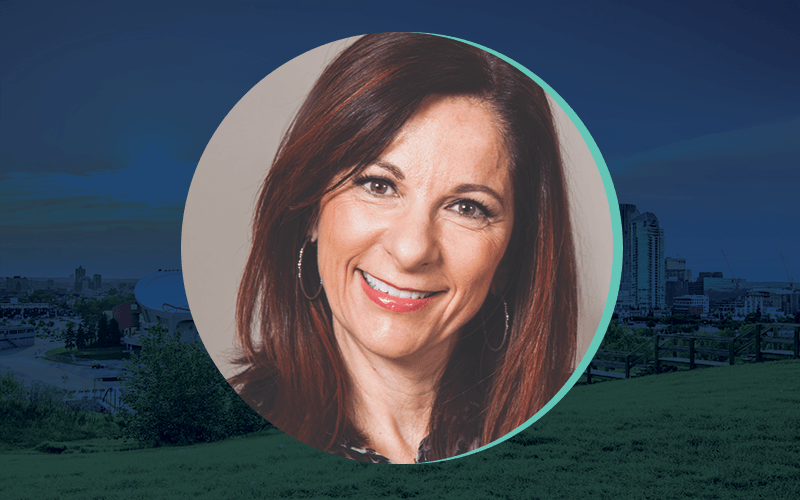
Sharon Hapton
Episode
Sharon Hapton is the founder and CEO of Soup Sisters, a charity dedicated to ‘creating a stir’ in communities across North...
Key takeaways
- Soup Sisters started in 2009 with a birthday party making 200 liters of soup for a women's shelter and has since provided over four million bowls to people in crisis across Canada.
- Partnering strategically with cooking schools, food production facilities, and logistics companies allowed the organization to scale nationally while remaining administratively lean without owning kitchens or trucks.
- When the pandemic shut down community soup-making events in March 2020, the organization pivoted to create Canada's first soup bank with commercial production and pro bono refrigerated delivery across the country.
- The power of soup as comfort food goes beyond nourishment—it represents care, connection, and the ability to change someone's day, especially for marginalized populations facing food insecurity.
- The new Hug in a Bowl social enterprise will generate profit from food service sales to support the charity, allowing the team to focus energy on their core mission rather than constant fundraising and grant writing.
Transcript
Full transcript page · Interactive episode
============================================================
TRANSCRIPTION WITH SPEAKERS
============================================================

[00:00] SPEAKER_01: Welcome to Canada's Entrepreneur, where we talk to the entrepreneurs who are making it happen
[00:05] SPEAKER_01: across Canada and deliver the news, trends, knowledge and opinions from entrepreneurs and business
[00:13] SPEAKER_02: influences across the country. Hello, I'm Mario Tonoguzi, managing editor of Canada's Entrepreneur.
[00:21] SPEAKER_02: Joining me today on Calgary's podcast is Sharon Hapton, who is founder and CEO of
[00:27] SPEAKER_02: Soup Sisters and Huggin' a Bowl Enterprises. Thanks for joining us today, Sharon.
[00:34] SPEAKER_00: Thank you, Mario. Thanks for having me. Okay, maybe explain both those entities and
[00:41] SPEAKER_00: what it is that you do. Well, I'll start with the first one and that is the Soup Sisters charity.
[00:49] SPEAKER_00: And that one I founded in 2009 with a suit making birthday party. I invited about 30 girlfriends
[00:56] SPEAKER_00: to a cooking school here in Calgary, where I'm from. And we made about 200 leaders of soup that
[01:02] SPEAKER_00: night for the Calgary Women's Emergency Shelter, now known as Fear's Not Love. But that was like
[01:09] SPEAKER_00: something that they'd never seen in terms of a gesture. We delivered a massive amount of fresh soup
[01:15] SPEAKER_00: to the shelter for women and children fleeing family violence and domestic abuse. It was all
[01:21] SPEAKER_00: about the messaging and the care and that there's complete strangers in the community here for you.
[01:28] SPEAKER_00: So that's how that part started. And then over the years, we grew that concept to 27 cities across
[01:35] SPEAKER_00: the country. Well, yeah, we were operating community soup making events in 27 cities.
[01:42] SPEAKER_00: And the soup was going to women and children and youth in crisis. And then 2020 came. And
[01:51] SPEAKER_00: as with most businesses, charities, our model adapted and changed. And we started Canada's first ever
[02:02] SPEAKER_00: soup bank. And that kind of leads to the second part of your question in terms of our hug and a
[02:08] SPEAKER_00: bowl enterprises, which is fairly new, starting now actually where we're going into food services.
[02:16] SPEAKER_00: And the social enterprise piece is that fails to support the charity.
[02:23] SPEAKER_02: So the sales are taking place where? All over the country. So we've got
[02:31] SPEAKER_00: where registered with Cisco and GFS, which are, you know, two of I think North America's largest food distribution
[02:38] SPEAKER_00: companies. And we are making the soup at a production facility in Edmonton. And that's kind of what
[02:47] SPEAKER_00: started in 2020 because, you know, I'll always remember that on March 11th, 2020, you know, the pandemic
[02:54] SPEAKER_00: was declared official. And at that point, you know, we had provided what we call a hug and a bowl
[03:02] SPEAKER_00: to over four million people across the country through the community soup making events. And then
[03:07] SPEAKER_00: they came to a halt on March 11th. I was at an event here in Calgary and thought, oh my god, you
[03:13] SPEAKER_00: know, what happens now, you know, anything that was community just got down that day. And that's
[03:22] SPEAKER_00: when I made a phone call to a food distribution commercial production facility that I knew in Edmonton.
[03:30] SPEAKER_00: And I said, can you make the soup? And they were like, we can make it because I was obsessing,
[03:35] SPEAKER_00: of course, on how to maintain the giving that we had platformed for agencies all over the country.
[03:42] SPEAKER_00: And they started making soup for us in large kettle quantities, like 2600 pounds of flavor.
[03:50] SPEAKER_00: And my next, you know, hurdle was, you know, how do I get it delivered, you know, yesterday I
[03:56] SPEAKER_00: had volunteers delivering soup. And I'd love to share this story because it's huge for me and for
[04:05] SPEAKER_00: the transition of how we managed to stay in this giving mode. I called the president of what at the
[04:15] SPEAKER_00: time was Versa Code Logistics, a refrigerated trucking facility company. And they're now lineage.
[04:22] SPEAKER_00: I called them and I said, and it was, you know, COVID for him too. It was COVID for everybody.
[04:27] SPEAKER_00: We were all in, you know, disarray. And I said, you know, I can get the soup made and, you know,
[04:32] SPEAKER_00: large quantities, but how, you know, can you help me? I need to now get it delivered. And he got
[04:39] SPEAKER_00: back to me four days later. So, in 2020, lineage has pro bono been delivering soup right across
[04:47] SPEAKER_00: the country for soup sisters to agencies everywhere. Wow. Pretty incredible.
[04:53] SPEAKER_02: What, you know, maybe backtrack for a second. Sure.
[04:57] SPEAKER_02: Gotcha. You like into this whole thing. Like, like, you know, what was there something that sparked
[05:04] SPEAKER_00: your interest in doing this with what was it? Yeah, you know, it was sort of a few things that
[05:11] SPEAKER_00: culminated at the time that it was meant to culminate. One of them is that both my kids were leaving
[05:18] SPEAKER_00: for university. And I was going through what I call, you know, my giant nurture void. Well,
[05:23] SPEAKER_00: there's nothing more nurturing than the food. So yeah, right? Yeah, universal comfort food.
[05:29] SPEAKER_00: And I think at the same time, I had also been to a fundraiser for the Calgary women's emergency
[05:35] SPEAKER_00: shelter. And really, for the first time, understood that women and children fleet their home
[05:40] SPEAKER_00: was nothing, you know, not their pet, not their lipstick. Like, literally was nothing. And
[05:46] SPEAKER_00: that had a profound impact on me. And honestly, one day I was walking my dog one day, just me
[05:54] SPEAKER_00: and the dog and thinking as I did on these walks and about, you know, what I was going to become.
[06:00] SPEAKER_00: I was approaching 50. That was the birthday where I started it. And I realized that I had been a
[06:07] SPEAKER_00: suit maker all my life for family and friends. That's what I did. I delivered them soup. Sometimes
[06:12] SPEAKER_00: I just showed up and they were like, how did you know? And I'm like, I knew here I am. And I
[06:16] SPEAKER_00: realized it had the power to change their day. So all of these songs really came to me. And then I
[06:22] SPEAKER_00: had that birthday party that, you know, provided so much soup for the emergency shelter.
[06:28] SPEAKER_00: And it ended there. It was an incredible night. But it took off like crazy.
[06:33] SPEAKER_02: What did you mean? It took off. What do you mean by the power to change their day?
[06:38] SPEAKER_00: The gesture. I really mean the gesture so that when you show up to somebody and you say, you know,
[06:45] SPEAKER_00: I see you, I care, you know, and here's a bowl of nurturing and nourishing soup.
[06:52] SPEAKER_00: I honestly understood that it did have the power to change someone's day. And since then,
[06:57] SPEAKER_00: I've seen that over and over in other populations. I'm talking about I started this with friends
[07:03] SPEAKER_00: and family that delivery. But now, you know, I, you know, those four million bowls of soup have
[07:08] SPEAKER_00: gone to marginalized populations. People, people who don't, who we don't always look at when we walk
[07:14] SPEAKER_00: past them on the street. And it's very powerful. And I have to say, I've never seen such gratitude,
[07:23] SPEAKER_00: authentic gratitude as when that exchange happens. It's pretty incredible. And necessary.
[07:31] SPEAKER_02: You know, they need the nourishment. What do you think soup is, I guess such a powerful comfort
[07:38] SPEAKER_00: for people? You know, I think it's like, I think it's been that way for for hundreds of years.
[07:46] SPEAKER_00: And I think it starts with the family. It's really interesting to me how many people I come across
[07:52] SPEAKER_00: that have a soup story. Like I honestly, you know, one of my taglines is every good soup has a
[07:58] SPEAKER_00: story. I really believe that. But how many people go back into their memory of mom or grandma?
[08:04] SPEAKER_00: And I've seen that so many times with, with kids who are, who are on the street. Like they actually
[08:10] SPEAKER_00: thank us for something that they know has taken place in their life. They, they feel the connection,
[08:17] SPEAKER_00: they feel the repeat. They've been there. And now they're in this other place. And someone's
[08:21] SPEAKER_00: actually taking the time to give them something that meant something to them. You know, yeah, it's
[08:28] SPEAKER_00: the universal comfort food. There's no doubt in my mind. Do you have a favorite?
[08:34] SPEAKER_00: You know, I do. There's a mushroom bean and barley soup that we produce. And it's actually,
[08:42] SPEAKER_00: I don't know if you know who Bonnie Stern is. She's a lovely like a entorano and she's a chef
[08:50] SPEAKER_00: and she's a cookbook author. That recipe from one of her early heart smart cookbooks is the
[08:58] SPEAKER_00: one that I made over and over and over and over and delivered to people for so many years. And that
[09:04] SPEAKER_00: was the one where I had that epiphany. Like, you know, why isn't everybody delivering soup? You know,
[09:09] SPEAKER_00: why don't we just doing this? Yeah. You know, in a really grand large scale way. So how many
[09:15] SPEAKER_00: different types of soups do you guys made? Well, for the soup making events, we've got a repertoire
[09:23] SPEAKER_00: of about 40 different soups that we make. And you know, we've got cookbooks and our cookbooks
[09:28] SPEAKER_00: have very elaborate. We're not doing that. You know, we're making really party nourishing soups
[09:34] SPEAKER_00: for social service agencies. And there's about 40 different recipes that get used that way. But
[09:40] SPEAKER_00: for our soup bank, the ones that we're producing large scale, we've got seven different varieties
[09:46] SPEAKER_00: use is what they're called. And so for agencies that we're supporting, they any given month can
[09:53] SPEAKER_00: choose from probably about four different flavors each month. Yeah. How many soups, the servings of
[10:02] SPEAKER_02: soups would you think you distribute each year? I would say probably over a hundred thousand.
[10:12] SPEAKER_00: And what I love about it is that it's so intentional. So there's nothing random about
[10:21] SPEAKER_00: receiving an all-encompassing meal that way. And I think it's really important. I think we,
[10:26] SPEAKER_00: you know, we underestimate how difficult it can be for some people just to get out of bed in the
[10:31] SPEAKER_00: morning. And to be able to offer something that is just keep and serve and ready for your family
[10:39] SPEAKER_02: right now feels really, really monumental. Yeah. Now before starting up the enterprises, the
[10:47] SPEAKER_02: Hugg and the Bowl enterprise, it's a social enterprise. Like how was the soup sisters funded? And
[10:55] SPEAKER_00: how did you guys manage or operate? Well, you know, we are incredibly small administratively
[11:03] SPEAKER_00: for the size of what we do. And that's got a lot to it. So like with any charity, we rely on donations.
[11:11] SPEAKER_00: But you know, I remember years ago when I launched soupsisters in Victoria, we had, you know,
[11:18] SPEAKER_00: cooking schools were our partner all over the country. And you know, so I remember she said,
[11:23] SPEAKER_00: and soupsisters is, you know, self-sustaining. I went, oh, yeah, that's right. We are. We're
[11:34] SPEAKER_00: simple and self-sustaining. So, and I say, as I say, like administratively, what we do is so simple
[11:43] SPEAKER_00: because we partner in all the right places to make this happen. And you know, we partner with
[11:51] SPEAKER_00: the corporate world. And you know, that makes a big difference. So for them, they get to have a
[11:59] SPEAKER_00: little piece of, you know, purpose meets profit. And it's a, it's a, it's a feel good all around
[12:07] SPEAKER_00: for everybody. So, you know, moving forward with our hug in a bowl, you know, when, when a
[12:14] SPEAKER_00: senior resident or a resident, when somebody buys our soup from the distribution, they'll know
[12:20] SPEAKER_00: that they're supporting the soup sisters agency where we're providing soup to so many people
[12:26] SPEAKER_00: who are, you know, needing that nourishment. Sorry, what year did you start all this? 2009.
[12:34] SPEAKER_02: 2000. Yeah. Okay. And, and you know, when you look back, like, like, it must be mind-boggling to
[12:42] SPEAKER_02: think back of, you know, when you first started to what you are now. It's, it is. It's mind-boggling.
[12:48] SPEAKER_00: And yet it's somehow along the way. It's like, we always knew what the next step was. There's
[12:55] SPEAKER_00: something so intuitive about building that way. And so it is mind-boggling. And it's like, I always
[13:03] SPEAKER_00: say my computer's my brain, because it's like, you know, if I need to look up something, I can find
[13:07] SPEAKER_00: it in my computer. It's not here anymore, you know? This is finite, right? Stuff falls off.
[13:13] SPEAKER_02: Yeah. Now, you said, you said the, the facilities in Edmonton?
[13:19] SPEAKER_02: Yes. Yeah. And what do you have there? Like, what's there? Like, how big is it?
[13:24] SPEAKER_00: We have, oh, you know, it's, we have a partnership there. That's what we have. So this is, this is a
[13:30] SPEAKER_00: commercial production facility that might make products, super sauces for big big chains,
[13:37] SPEAKER_00: like Tom's House of Pizza. But so what we've done is we are actually a wholesaler that doesn't mark
[13:46] SPEAKER_00: up for the social service industry. But, hug and a bull now is going to have a mark up that
[13:53] SPEAKER_00: shows us some profit that goes back to the charity. So we, so when I say that we run lean, we do. We've
[14:01] SPEAKER_00: never had our own commercial kitchen. We've always partnered. We've never had our, you know,
[14:08] SPEAKER_00: trucks to, we've partnered. We've just partnered with people in all the right places that,
[14:15] SPEAKER_00: that understood, understood the value of what we present. There's actually, in a lot of ways,
[14:21] SPEAKER_00: there's just nothing like it, you know, in terms of agencies and charities and food. I mean,
[14:28] SPEAKER_00: most stuff is very much like, you know, the basket of really great nursing things that people need,
[14:34] SPEAKER_00: but not the instant meal. And yet we have that, don't we? Like, we have, you know, we can make a
[14:39] SPEAKER_00: phone call and have it delivered. I mean, we've got that. Yeah. So how is it packaged? Oh, it's
[14:45] SPEAKER_00: packaged in 20 pound boxes, flash frozen. So it's frozen frozen solid. So when an agency receives it,
[14:53] SPEAKER_00: they thought they cut open a bag. There's five, four pound bags in every box and basically heat
[15:00] SPEAKER_00: and serve it. Mustard seed and Calgary, they serve our soup every single day for lunch. Wow.
[15:08] SPEAKER_00: Every single day. Yeah. That's a lot of people to go to. Oh, it is. And they know that they can't make
[15:13] SPEAKER_00: at the price that we can provide it for. Yeah. So, so basically, you know, as you said, you started
[15:20] SPEAKER_02: up looking at the, and women who had problems or had it. Yes. Yes. Crisis. Yes. Yes. So now it's
[15:32] SPEAKER_02: kind of vaulted to people that need food, right? Yeah. Because hunger is such an epidemic.
[15:40] SPEAKER_00: You know, there's 8.7 million Canadians facing food insecurity. You know, one in four kids,
[15:46] SPEAKER_00: one in four kids are going to school hungry. So it started off as the, you know, the big giant nurture
[15:52] SPEAKER_00: 15 years ago, but it's become so important in food insecurity.
[15:59] SPEAKER_02: Okay. And can you maybe describe this to the range of places that that receive the soup? Yeah.
[16:07] SPEAKER_00: One of the most interesting to me in terms of me just understanding what's out there and what's
[16:14] SPEAKER_00: available and not really always knowing is so many agencies and centers for drug addiction are
[16:21] SPEAKER_00: using our soup. And what's so important about that is they can't start working with people
[16:26] SPEAKER_00: until they're nourished. That's the starting point. And, and you know, that kind of rings true
[16:33] SPEAKER_00: on so many levels. You can only begin to help people when they're properly nourished.
[16:40] SPEAKER_00: So that was a really big one. Kids, you know, youth in crisis,
[16:46] SPEAKER_00: 16 to 24 typically who were, you know, going from street culture into mainstream society,
[16:52] SPEAKER_00: another really important one. It's all so important. We're still supporting all the same
[16:58] SPEAKER_00: women's shelters all across the country. You know, everybody has very limited food budgets.
[17:05] SPEAKER_00: I mean, they really do all of these agencies do. Yeah.
[17:09] SPEAKER_02: What do you think to future lives for for you folks in starting up the the enterprise
[17:16] SPEAKER_02: the social enterprise and what's that going to mean? Yeah. We're all.
[17:20] SPEAKER_00: Well, I think it's going to help us stay focused on who we are at the core. You know,
[17:27] SPEAKER_00: I think when the social enterprise and it's so new Mario, but when it reaches a point
[17:32] SPEAKER_00: that it's supporting the charity, what's so important about that is we can take our time and energy
[17:38] SPEAKER_00: and put it where we really, really want to. And that's in the people we serve as opposed to writing
[17:44] SPEAKER_00: all of these, you know, request the letters and, you know, thanking people all day long. It's
[17:51] SPEAKER_00: it's almost it's it's tough, you know, I mean, that doesn't happen in any other sector other
[17:57] SPEAKER_00: than the charitable sector where we actually get drawn away from our mandate to be thankful and to
[18:04] SPEAKER_00: be asking all the time. I'm hoping for this freedom. You know, where the same product, the same
[18:22] SPEAKER_00: food services, the very same suit that we give to people who are in who are food insecure. And
[18:31] SPEAKER_00: that's that's huge for me. It's the same suit. It's what you would put on your own table. That feels
[18:39] SPEAKER_02: incredibly important. Excellent. Well, thanks so much, Sharon, for joining us today. Thank you.
[18:45] SPEAKER_02: Thank you. Okay, that was Sharon Hapton, who is founder and CEO of Super Sisters
[18:52] SPEAKER_02: and Hug and the Bowl Enterprises. I'm Mario Toniguchi, managing editor of Canada's Entrepreneur.
[18:58] SPEAKER_02: Thanks for joining us today.