
Navigating a merger in a pandemic, & other entrepreneurial lessons with Ownr Co-Founder Shadi McIsaac
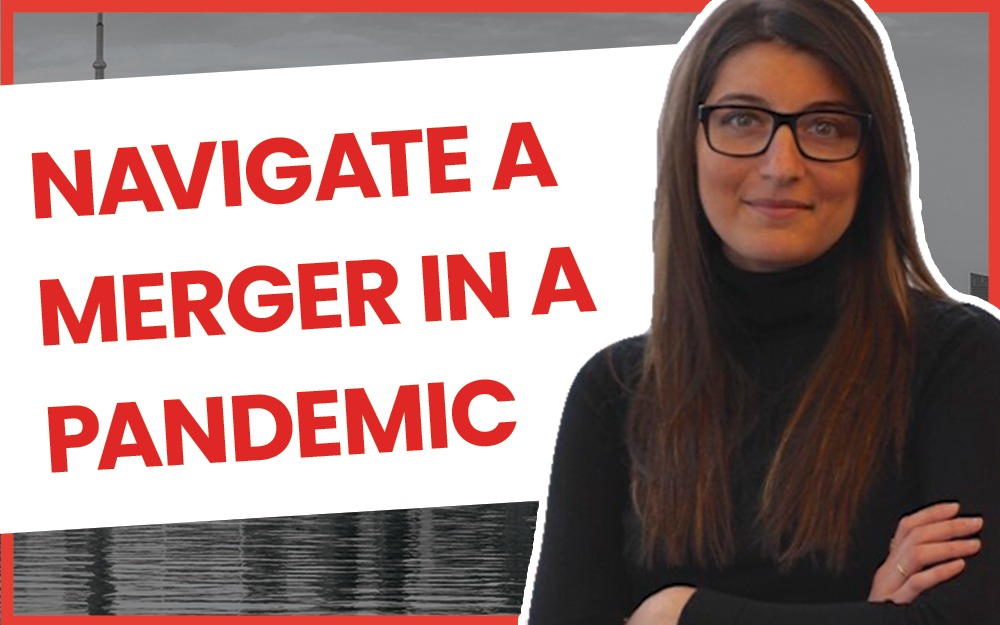
Episode
Shadi McIsaac is the CEO and Co-Founder of Ownr, an RBC Ventures company that offers a simple and convenient...
Key takeaways
- Owning the quality of outcomes rather than the outcomes themselves allows you to build trust with your team and delegate effectively without micromanaging.
- The business you start with will not be the business you end up with, so embrace evolution and change as markers of growth rather than sources of anxiety.
- Showing up humbly every day as a leader is essential, especially when you're learning on the job and operating as a generalist across different business functions.
- Always start with your customer and work backwards, using this principle as your guiding logic through all business decisions and pivots.
- In mergers and acquisitions, investing significant time in intentionally building a new combined culture is just as critical as handling the operational and technical integration.
Transcript
Full transcript page · Interactive episode
============================================================
TRANSCRIPTION WITH SPEAKERS
============================================================

[00:00] SPEAKER_00: Welcome to Canada's podcast.
[00:05] SPEAKER_00: Hi and welcome to Canada's podcast. I'm your host,
[00:08] SPEAKER_00: Celine Williams. And today I'm here with
[00:10] SPEAKER_00: Shadi Makizek, who is the CEO and co-founder of Owner,
[00:15] SPEAKER_00: an RBC Ventures company that offers a simple and convenient way to register or
[00:19] SPEAKER_00: incorporate a business online, along with the tools to help entrepreneurs manage
[00:24] SPEAKER_00: their businesses. Shadi, it's really nice to have you here.
[00:27] SPEAKER_00: Thanks for having me, Celine.
[00:28] SPEAKER_00: I'm very excited for this conversation. As I mentioned,
[00:31] SPEAKER_00: your company literally came up in conversation last week with a friend of mine.
[00:36] SPEAKER_00: So perfect timing.
[00:38] SPEAKER_00: I'm appearing that.
[00:40] SPEAKER_00: I'd love to know a little bit about you.
[00:42] SPEAKER_00: So your journey to get to where you are now, to founding owner,
[00:48] SPEAKER_00: what kind of what got you on this path to being an entrepreneur.
[00:53] SPEAKER_01: Sure. Yeah. And I think in all cases,
[00:57] SPEAKER_01: it wasn't necessarily a straightforward one. My background is actually,
[01:01] SPEAKER_01: I started my career at IBM.
[01:03] SPEAKER_01: I take a quick pause for education and then was fortunate enough to join RBC.
[01:09] SPEAKER_01: And so in 2017, I was actually just early on the ground as we were setting up RBC Ventures,
[01:14] SPEAKER_01: which is really the bank's corporate venture arm.
[01:17] SPEAKER_01: And it's really a small group of innovators from within and outside the bank
[01:22] SPEAKER_01: who were coming together to see if we could nurture and viable ideas from ideation
[01:28] SPEAKER_01: to concept to reality and ultimately scale.
[01:32] SPEAKER_01: And so I founded on over three years ago inside of that construct.
[01:37] SPEAKER_01: And at the time, we saw an opportunity to make it easier for Canadian entrepreneurs
[01:41] SPEAKER_01: to start their business predominantly by removing the friction around forming your business
[01:46] SPEAKER_01: and then kind of managing your business and your corporation really along its life cycle.
[01:51] SPEAKER_01: And in doing that, the idea was to spur more entrepreneurs to throw their hat in the ring.
[01:56] SPEAKER_01: So not only support the ones that were all in and ready to go,
[02:01] SPEAKER_01: but also inspire and enable the ones that were that are we're sort of thinking about it
[02:06] SPEAKER_01: and making it easier for them to do so.
[02:09] SPEAKER_01: And in those interim three years,
[02:11] SPEAKER_01: I've been fortunate enough to take our initial offering to market here in Ontario
[02:16] SPEAKER_01: and then build across Ontario, Alberta and BC across a series of products and services
[02:23] SPEAKER_01: with what is now an incredible 30 person team.
[02:28] SPEAKER_01: So that's been really exciting for me personally.
[02:30] SPEAKER_01: And I think through an important milestone for us as a business was last year
[02:35] SPEAKER_01: when we were in a position to bring all of our progress and our success together
[02:40] SPEAKER_01: to culminate into an acquisition of a legal tech firm at the time here in Toronto,
[02:45] SPEAKER_01: found a technology.
[02:47] SPEAKER_01: So in that time, we've joined teams and technologies and we're now sort of one big,
[02:53] SPEAKER_01: better formidable team in support of entrepreneurs and their business launches.
[03:00] SPEAKER_00: With that, so super cool story.
[03:02] SPEAKER_00: I have a thousand questions.
[03:03] SPEAKER_00: I'm going to start with the beginning part, which is it sounds like,
[03:09] SPEAKER_00: and I'm not super familiar with the RBC Ventures model.
[03:12] SPEAKER_00: So I'm going to ask you some questions about that.
[03:13] SPEAKER_00: I'm sure.
[03:14] SPEAKER_00: But it also sounds like you had the opportunity to inside of a larger organization of some sort
[03:20] SPEAKER_00: basically flex those entrepreneur muscles as what, you know, we like to call entrepreneur.
[03:26] SPEAKER_00: But you really have that opportunity to explore beyond the confines of what we often think of as a corporate world.
[03:33] SPEAKER_01: That's right.
[03:34] SPEAKER_01: Yeah.
[03:34] SPEAKER_00: So can you tell me a little bit about that?
[03:37] SPEAKER_00: And it might be part of the RBC Ventures model.
[03:39] SPEAKER_00: This is why I'm saying I don't know enough.
[03:41] SPEAKER_00: But can you tell me a little bit about what that was like?
[03:44] SPEAKER_00: Because I think we have a lot of listeners who are in a corporate space,
[03:50] SPEAKER_00: who want to start their own venture or maybe don't want to, but want to be able to be entrepreneurial inside an organization.
[03:58] SPEAKER_00: So you have a really unique experience in that way.
[04:01] SPEAKER_01: Yeah, absolutely.
[04:03] SPEAKER_01: And I have a bias for the model because I've lived it for the last four years.
[04:08] SPEAKER_01: And I think it's one that's worked and it's reflective and owner and the rest of the RBC Ventures.
[04:15] SPEAKER_01: But I think what was particularly unique in terms of the RBC Venture story is that it was.
[04:24] SPEAKER_01: It was, you know, in parallel to, but distinct from the RBC is an organization.
[04:30] SPEAKER_01: So RBC Ventures is a wholly owned subsidiary.
[04:33] SPEAKER_01: And it, in a way, it operates separate from core RBC.
[04:40] SPEAKER_01: And the reason for that is kind of to your point around, well, how do you innovate and how do you like protect your core business?
[04:50] SPEAKER_01: How do you just manage that dichotomy?
[04:52] SPEAKER_01: And I think one of the ways in which you do it is to create a little bit of space for that to happen.
[04:59] SPEAKER_01: And that is ultimately one of the ways that I think RBC Ventures has been so, so helpful.
[05:06] SPEAKER_01: So, you know, obviously we are part of the broader RBC family with the, with the purpose.
[05:13] SPEAKER_01: And I think the mission of wanting to deliver value to across, you know, all Canadians, in my case specifically, obviously to entrepreneurs.
[05:22] SPEAKER_01: But having, I think the license, the space, the championing the sponsorship, you know, there's so many components to it to be able to do that with white space with, you know, small resources with a different cadence.
[05:41] SPEAKER_01: And building a product or building a business that's separate from how we run an enterprise is really one of the key factors to success as ICN.
[05:56] SPEAKER_00: So, what, okay, so what made you decide to step into the world of owner inside of the space? Like what made you decide that owner was where you wanted to focus?
[06:06] SPEAKER_00: Was, were you particularly drawn to entrepreneurs? Did you, you know, again, not knowing fully how the RBC Ventures works?
[06:16] SPEAKER_00: Is this something that you did about, like was there a lot of research and you were like, oh, there's this specific gap.
[06:20] SPEAKER_00: Was it something that you were more drawn to? Where did this come from? Because it's, it's a really, listen, as an entrepreneur, it's a real, real problem that you're solving.
[06:30] SPEAKER_00: And I fully appreciate it. And no one's done it before you. So tell me a little bit about that process.
[06:38] SPEAKER_01: And there's probably two angles that, that best describe it. I would say on a personal level where I'm really vested and where I'm really passionate is probably just due to my background.
[06:49] SPEAKER_01: I'm an immigrant here. My parents are very much an immigrant here. And I think that I'm like, you know, not only many other Canadians, I don't think it's a particularly unique story.
[06:59] SPEAKER_01: But what I think is really powerful is the ability for entrepreneurship and business ownership to help shape the arc of your life, especially when you're new to the country.
[07:09] SPEAKER_01: It's a way to, you know, gain financial independence, have wealth creation. And I don't mean wealth creation, like you're rich, but like wealth creation in terms of, you know, putting a roof over your, your, your head and your family and so on and so forth.
[07:22] SPEAKER_01: And so from that perspective, it's like that's very much ingrained in me as a, as why entrepreneurship and business ownership is important, especially when you live in a place that supports it with, with, you know, just kind of.
[07:38] SPEAKER_01: I think that's really the geography which you're operating in. So I think on a personal level, that that's what really, really drew me to entrepreneurship.
[07:47] SPEAKER_01: I think broadly speaking and at a macro level, it's such a key part of Canada. I mean, it's a dated stat, but it's the last one that was published, you know, it's around 50% of Canada's GDP.
[07:59] SPEAKER_01: It's close to 70% of employment opportunities here in Canada. And so I think between what it meant for this great country and what it meant for my family, it really came together as a space that I'm so passionate about.
[08:16] SPEAKER_01: And, you know, if I think about who does this, like who starts a business, I think it's so wonderfully gritty and you just have to have such a different DNA to be able to do it.
[08:31] SPEAKER_01: And it's so hard.
[08:33] SPEAKER_01: Even with all the small businesses that we have in Canada, only two out of five entrepreneurs take the lead to do it. And so I wanted to make sure that we had a product out there who was helping the two out of five who were going out the gate and trying to get the other three in through the door and say, hey, listen, let's remove some of the barriers.
[08:53] SPEAKER_01: You can do this. We're with you.
[08:57] SPEAKER_00: I love that. I love that it's.
[09:00] SPEAKER_00: I love that you have such a personal connection to it on in a few different ways. And it is a great opportunity. Right. Entrepreneurship is a great opportunity. And it's not for everyone. And I always have that caveat like.
[09:12] SPEAKER_00: Your face says, but really, we tend to glorify entrepreneurship and it's not for everyone. And it shouldn't be for everyone. But for those who are interested, the fewer barriers to entry, there are the more successful entrepreneurs we're going to have.
[09:28] SPEAKER_01: That's right. That's exactly it.
[09:32] SPEAKER_00: So owners four years old, four years 2017, yeah, four years old had to do some math there. Time has lost meaning in the past year. All on it.
[09:42] SPEAKER_00: What has been your biggest challenge? I'm going to ask you two part question. What's been the biggest challenge in the last four years and what's been the biggest learning you've had?
[09:55] SPEAKER_01: Sure. Yeah. Definitely big question. I'll say if I think about challenges. I generally think about them in like two arcs of the business. The first one starting the business. So maybe the earlier years.
[10:08] SPEAKER_01: And now in the last year or two, it's been how do you grow the business? So I think some of the challenges and we kind of touched on this earlier, which is how did you get started? Why owner but like why business formation really?
[10:24] SPEAKER_01: I think I'm the kind of person where the hardest part for me will actually be getting started. And I know that's unique to everyone. But for me, it's that first step. That's the hardest one. I feel like generally speaking, I can work my way or overcome subsequent things. But if the kernels there, like, I've got it.
[10:45] SPEAKER_01: So I think in getting started, it was figuring out, okay, I know our broad based vision is to help support the launch of businesses and it's to help support entrepreneurs early days in their journey.
[10:59] SPEAKER_01: But how do you do that? What does that mean? How do you unpack that? And I think for me, in stepping through that challenge, one of the things that I had to go and do was just administratively or.
[11:12] SPEAKER_01: Tactically goes through the process of starting a business. So, you know, you and I, we could both be entrepreneurs, different types of businesses, but we will do the same basket of things.
[11:24] SPEAKER_01: And, you know, eight of them are more or less the same and two of them might be unique to the type of business that we have, but we'll go through relatively the same journey.
[11:33] SPEAKER_01: So I went through that journey and I thought, where am I getting hung up and what's hard for me and what's what's a barrier.
[11:40] SPEAKER_01: And, you know, sure enough, I really struggled with business formation and I think there's two ways to look at that.
[11:46] SPEAKER_01: You can look at that as that's the area of opportunity where you can deliver the most value or it's the area of that's right for the most innovation, depending on the lens you want to take.
[11:57] SPEAKER_01: So, that was like the first challenge for me, like, how do I get started and then just to double click into that a little bit more, it was.
[12:08] SPEAKER_01: It was figuring out, okay, well, we wanted to deliver this service, obviously, to as many Canadians as possible.
[12:15] SPEAKER_01: This isn't quite worth it that you have to small, you have to start really small, stop your way through it, can't go from zero to a hundred.
[12:23] SPEAKER_01: And it's particularly unique with business formation because it's so regional.
[12:27] SPEAKER_01: So, different provinces, you can have like a level, a federal level.
[12:33] SPEAKER_01: And so, you know, where do you start?
[12:36] SPEAKER_01: So, for me, my first challenge was just decomposing that and figuring out a path forward for myself.
[12:41] SPEAKER_01: And like I said, the way I did it is just for me putting myself in the experience in the shoes of someone who's going to do this, right?
[12:48] SPEAKER_01: They're going to need to do 10 things, not necessarily in the same order.
[12:52] SPEAKER_01: And it's like, what's the worst part? What's the stickiest part?
[12:56] SPEAKER_01: And I let that help guide me.
[12:59] SPEAKER_01: And then I think part two is like growing a business. So, fast forward a couple of years and you have, you feel like to be product market fit and you have a little bit attraction in terms of conviction that you're delivering value to your users.
[13:15] SPEAKER_01: Because always want to start with your customer and work backwards.
[13:20] SPEAKER_01: And so, the question has been, well, where do we should be focused on going deeper in the provinces that we're already operating in? Should we be expanding our reach across Canada?
[13:34] SPEAKER_01: Prior to the acquisition owner was very much like a transactional one time model.
[13:37] SPEAKER_01: So, do we just think about extending our value to the entrepreneurs that we're still supporting today?
[13:44] SPEAKER_01: And so, that was sort of the second arc of our, we're rather for me, like the challenge to solve for, I think ultimately we decided that we wanted to go deeper in terms of the value we provide you as an entrepreneur.
[13:58] SPEAKER_01: So, let's hope you get started. Let's help manage your business as it continues to grow with you.
[14:04] SPEAKER_01: That's ultimately would lead to the acquisition. I'm sorry I've talked for so long. You have to refresh my memory on the second part of the question.
[14:12] SPEAKER_00: No, you're fine. I'm actually going to change tax slightly. We'll come back to it because you mentioned the acquisition.
[14:17] SPEAKER_00: And I'd love to talk about that a little bit because I know it happened during the pandemic.
[14:24] SPEAKER_00: Which is unique in and of itself.
[14:28] SPEAKER_01: The most unique of my professional experiences.
[14:32] SPEAKER_00: Can you tell, can we talk a little bit about what that was like for you? And especially as the leader of an organization, like what?
[14:40] SPEAKER_00: How was that? How did that go?
[14:44] SPEAKER_01: It was, it was a ride and I'm thrilled that we're all and I mean the new combined team is still here to talk about it.
[14:52] SPEAKER_01: It's such an excited fashion, but yeah, like you said, it was so unique.
[14:58] SPEAKER_01: I mean, mergers and acquisitions. There is a ton of content around how well or, and while they go in the best of circumstances,
[15:09] SPEAKER_01: Larian, a pandemic and remote working and it makes for even a more interesting experience.
[15:19] SPEAKER_01: I'll say what, what helped and I actually do think this is this was a critical factor in so we saw team members helping met each other and then it's been, you know, six, seven, eight months now that we're going on.
[15:35] SPEAKER_01: But I think what helped on a few different fronts was there was there was an existing relationship with with founded technology.
[15:42] SPEAKER_01: So we had a partnership in place first. I need of founders very well personally.
[15:47] SPEAKER_01: We were very well acquainted with their technology. And I think it created a little bit of a warm environment as we went into the acquisition and then subsequently the merger.
[15:58] SPEAKER_01: So that was wonderful. And I thought, okay, this is going to set us up for success.
[16:02] SPEAKER_01: Now, you know, fast forward to day one for us as a new team. And I think there's, there's the important, but I'll say maybe time boxed component of how do you onboard the team remotely.
[16:18] SPEAKER_01: And I do think that organization later has to be a level of like operational consideration for how you do that.
[16:25] SPEAKER_01: So, you know, as basic as do your devices. Do you have like a welcome kit or are you do we have the right support to make sure you're on the right systems and things.
[16:35] SPEAKER_01: It's it's minor, but I it's still your first impression. So I actually don't want to discount it and how important that is.
[16:43] SPEAKER_01: But I would say, honestly, the meat and potatoes of it is the team you have in hand, which is why I mentioned knowing the team previous the acquisition was so, so important because effectively your leaderships need to come together and commit to not one culture for the other culture, but actually forming a new combined culture.
[17:05] SPEAKER_01: And I would say I'm like humbled by and so impressed with the amount of time collectively that we spent on and leadership team spent on defining that and investing time in that.
[17:20] SPEAKER_01: So what are our values as a new owner team combined with all of us and how do we in a sense start from like a bunch of paper, you know.
[17:32] SPEAKER_01: How did we say a little bit of a goodbye to both previous worlds and saying, okay, well, here's our aspirations for this new business.
[17:42] SPEAKER_01: And you know, we're not two small companies anymore. We're one bigger company now. And what are the beyond the values, but what's the right structure and what's the right processes to support us and our teams and our clients.
[17:58] SPEAKER_01: And that was a very iterative exercise, which means a lot of patients on zoom and other video conferencing, you know, tools to do that.
[18:08] SPEAKER_01: So I'll say no cutting corners, like you just have to put in this wet work and just get it done.
[18:17] SPEAKER_00: Listen, my personal bias because I do work in culture is around culture. I'm going to own that right up front because I love that you are so intentional about it in what you were just saying around bringing the two companies together because I think that oftentimes we overlook that piece of a merger or an acquisition and focus on all of the operational technical like the things that have to get done from operating a business perspective.
[18:43] SPEAKER_00: And we forget that we are people inside of business and the culture defines everything at like if that if we are not thinking about that none of the other stuff is going to flow out.
[18:55] SPEAKER_00: And so I love that you were so intentional about it and I appreciate you saying that because I think it's really it helps set it helps set your business up for success in a way that is really hard to define after the fact.
[19:13] SPEAKER_00: Like it makes a difference and it's hard to look back and be like, well, this is the specific piece of the culture work that made the difference, but it does.
[19:22] SPEAKER_01: Yeah, actually, as we were talking, I thought the one maybe part that I hadn't counted for, but I thought it was really interesting and hindsight was that we almost had to do it twice.
[19:35] SPEAKER_01: The first part was when we just were brought together and there's a period of time where near operating because you have to do two businesses and two teams, it's just day one.
[19:48] SPEAKER_01: And you still want to be intentional to your point around team building and culture.
[19:53] SPEAKER_01: And then there's a series of months that you do this work and then you, you know, you're working towards bringing it all together.
[20:01] SPEAKER_01: So how do you have one team with one structure, one business, one business processes.
[20:05] SPEAKER_01: And I felt like we had to almost reset again and say, okay, now we're not trying to keep two sets of lights on.
[20:14] SPEAKER_01: And let's, we all have to go through this exercise again and make sure that it makes sense for this big business.
[20:20] SPEAKER_01: So I feel like we lived in two parts and if you would ask me at the beginning, I maybe wouldn't have been able to articulate that and why it was important.
[20:31] SPEAKER_00: And I think that's a really good point. And it goes to what you were saying about it being iterative, right, which is there's not, it's not done.
[20:36] SPEAKER_00: And like it's not done. And here's a thing, right, like as new people come into the business, it's still not going to be like it's going to, it is that constant design iteration that's part and parcel of doing it really successfully.
[20:50] SPEAKER_00: So I love that you were that intentional about it all.
[20:55] SPEAKER_00: To go back to the question I asked earlier, the question I had was, what, what have been some of the biggest lessons that you've learned inside of founding this business.
[21:06] SPEAKER_00: And this running this business going through the merger, all the different things that you've done acquisition, like what, what are, and it by the way, doesn't have any of the things I mentioned obviously, but what have you done a lot in four years, it's been a really, you know, your business has changed and grown and you've started to scale and and you've hit a number of different milestones.
[21:29] SPEAKER_00: So what have some of your biggest lessons been not only by the way, not only for the business, which is totally fair, but also for you, Shady as an entrepreneur.
[21:41] SPEAKER_01: Yeah, wow, what a great question.
[21:45] SPEAKER_01: Yeah, I'll say from a, I'll start with the business one in some ways. It's the easier one.
[21:52] SPEAKER_01: Always is. It always is right. I'll see the lesson that I've had and it's anchored in something, you know, you need to the business, but I think there's there's an extra revelation here.
[22:04] SPEAKER_01: So I would say I actually did a lot of my learning on the job.
[22:09] SPEAKER_01: So, you know, creating a digital first product day one was a steep learning curve, but I think when in maybe year one gave me angst, and my learning year was to manage the angst.
[22:39] SPEAKER_01: And I swear letters up to something that makes sense, but ultimately, you know, I'll skip to the end. The thing you start with is not the thing you finish with and you just have to be really comfortable with that.
[22:51] SPEAKER_01: And wrap your wrap your mind around it. So, you know, our initial offering went to market in 11 and a half weeks.
[22:58] SPEAKER_01: And that's what needed to happen when we were getting started. Now, it turns out that, you know, you collect a lot of technical debt and we built 11 other things on top of that MVP infrastructure.
[23:11] SPEAKER_01: But the learnings for me over the years has been.
[23:14] SPEAKER_01: And you kind of embedded it in your question, but the business has to change. Like that's a marker of good things. It's like a positive thing that how you envision the day one year one year two is not what year three and four and five are going to look like.
[23:34] SPEAKER_01: And, you know, truly if we just go back to think about the acquisition, we acquired a lot of wonderful, a lot of wonderful tech, right?
[23:42] SPEAKER_01: So it's like it's part of the evolution that needs to happen and the growth that is critical to your business.
[23:51] SPEAKER_01: But I guess I wish I knew that day one and I didn't lose quite as much sleep over it as I had. And like I said, I think something like your tech stack or the you know tech that that that you accumulate or should accumulate is unique to a digital business.
[24:08] SPEAKER_01: But I hope I think the lesson still kind of extends.
[24:13] SPEAKER_01: And then kind of to your question on what's been a personal learning and I'll say it's been a personal like reinforcement like almost daily reinforcement. If that makes sense is.
[24:29] SPEAKER_01: Every day you have to show up and there's just I have found that there is just no other way for me anyway to operate this business and to work with my team.
[24:43] SPEAKER_01: I think what's helped is that like I said, a lot of my learnings actually happened on the job. So it's not that I came in with a I've done this before. I've got a good handle on it.
[24:54] SPEAKER_01: You know, there's there's a little bit of foundation there. I thought I have the experiences that I have. But a lot of it. I'm ultimately a general.
[25:07] SPEAKER_01: And a lot of different facets of the business. And so I think a personal learning or like I said, a personally week, a daily reinforcement for me is just how you show up every day for your team.
[25:21] SPEAKER_01: And, you know, obviously some days every day is not the same. And some days you're in a better headspace or rather I'm in a better headspace than others, but just must show up humble and go from there.
[25:34] SPEAKER_00: So I want to touch on two things and we'll wrap this up soon. But I think two things you said, and they're really important. And one of them is that we tend to especially we're starting a business.
[25:44] SPEAKER_00: We tend to fear the changes that we don't know are going to come right like there when the the staying up at night worried about a tech stack not realizing like actually this is it's not change.
[25:57] SPEAKER_00: It's just evolution. And it's part of every business. I don't care how my business is not super tech heavy. And it has evolved year over year over year over year. And we fear change so much because it's the unknown instead of just being able to embrace it.
[26:14] SPEAKER_00: But that it's going to happen. So let's do the best we can in this moment. And then we'll see what the next best is and then we'll see what the next best is and committing to that instead of worrying so much about one thing that it holds us back.
[26:27] SPEAKER_00: And so I think I just want to I just want to mention that I think it's it's important. And we don't talk about it a ton.
[26:35] SPEAKER_01: You know, for sure. And I think even the there's the change in between like you said, but then there's this I felt like there was like two layers of pressure. One of the other one was to define the end today.
[26:46] SPEAKER_01: Like I don't who knows I you know it's like a great best guess at what you're you know five year three year plan is.
[26:55] SPEAKER_01: And I think everyone should be thoughtful about doing that. Like I business planning very, very important.
[27:01] SPEAKER_01: You know, but how you know how fixed is it and how comfortable are you with it evolving again to your point, whether it's in the moment or year by year, but the end might just look different.
[27:14] SPEAKER_01: And I think that's okay to I think that's actually a positive you look at all the great big companies today.
[27:21] SPEAKER_01: They did not their end doesn't look like the one that they had envisioned year one.
[27:28] SPEAKER_00: I think that's a I think that's a really important point and I when I work with clients, I say that all the time one of the things is like let's stop with a five year goal.
[27:35] SPEAKER_00: Make a five year vision. This is the direction you're heading in and then it's going to change you're going to check it. It's going to change constantly.
[27:41] SPEAKER_00: You have to release the attachment to that because the rate of change is so fast now in terms of everything that it's not going to look that I don't care what it's not going to look the way you think it's going to look.
[27:51] SPEAKER_00: Let's just let's be okay.
[27:53] SPEAKER_01: So I need all the right markers, right? And it's not to say that do it and go so you need like so what are your principles for your business?
[28:00] SPEAKER_01: Why always want to start with my customers and work backwards? And if I hold that logic, then I'm okay with the evolution, whether it's in year or at the end, right?
[28:09] SPEAKER_01: Yeah. And I just I want to figure out how delivering value to my customers first and then I want to answer for how am I delivering value to the business or to the organization to the enterprise wherever whatever context it is for you.
[28:21] SPEAKER_01: So they there's a formula. It's just it's never evolving one.
[28:29] SPEAKER_00: 100%. The other thing I wanted to say, which I love was inside where you said, you know, the personal lesson has been to show up humble every single day.
[28:37] SPEAKER_00: And I think that I love that you acknowledged, called yourself a generalist because I think that we glorify specialists as though an expert and there's nothing wrong with being an expert.
[28:51] SPEAKER_00: But we glorify it and we forget that generalists are vital to business success. And whether a generalist or an expert being able to say this other person has a deeper knowledge of whatever it is than I do is really important because if you don't surround my this my two cents, if you don't surround yourself people who can do it better than you can do their thing better than you can.
[29:18] SPEAKER_00: That's a problem for the business.
[29:21] SPEAKER_01: Oh, absolutely. I'm biased to your statement because like I said, I'm a generalist, but I think what would by default, the mode you have to take is.
[29:32] SPEAKER_01: And I and I certainly a principle that really resonates with me, but to your point, you want to own the quality of the outcomes, not the outcomes themselves.
[29:42] SPEAKER_01: Yes.
[29:43] SPEAKER_01: And if you commit to the quality, that means you have a team in place that you trust you have a lot of autonomy to make the business work.
[29:51] SPEAKER_01: And then you're not personally responsible for those outcomes, because how could you be perfect or an expert in all in all the areas that you need to run a business.
[30:01] SPEAKER_01: But I think that mentality, I think, for me, especially as a generalist really resonates.
[30:05] SPEAKER_00: Yeah, no, I could I love it. I couldn't I.
[30:10] SPEAKER_00: I am so on board with that.
[30:13] SPEAKER_00: And I love that. And I love that. I think a big takeaway from what you just said is that you want to own the quality of the outcomes, not the outcomes themselves.
[30:21] SPEAKER_00: And that is so hard for people. It's so hard for people to let that go.
[30:25] SPEAKER_00: And it's why you end up with micromanaging and it's why you end up with all these things that don't actually serve the business or the customers or the outcomes.
[30:33] SPEAKER_01: There you go.
[30:36] SPEAKER_00: So we're going to wrap this up. I'm going to ask this question. Is there anything that we didn't get to or that you wanted to to mention before we wrap this up and send people to tell people where they can find you online?
[30:49] SPEAKER_00: Is there anything you want to emphasize or bring up that we didn't get to?
[30:54] SPEAKER_01: I think we covered it all. I think if you're, you know, if you're an aspiring entrepreneur, if you're early days and in your business journey, you know, look us up at owner dot CEO, but why is it think we had a wonderful conversation.
[31:06] SPEAKER_00: I like that you beat me to being able to I was going to say go check them out at owner dot CEO, but you and it's oh, oh, WNR dot CEO went away from those who are listening or watching and everything will be linked in the show notes.
[31:21] SPEAKER_00: It's such a great it's such a great business for Canadians who are thinking of starting a business or have a business but haven't gotten that step of incorporating or whatever it is.
[31:31] SPEAKER_00: Check out owner dot CEO truly it's it's they're fantastic and so shoddy thank you for chatting with me today. It's been really nice to hear a little bit more about your story.
[31:41] SPEAKER_01: Thank you for your time. Nice chatting for me.