
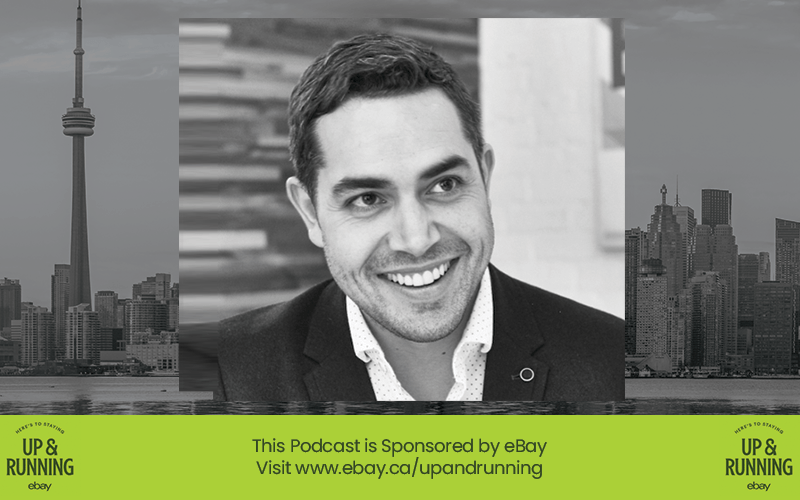
Sean Hoff Started Moniker, Which Creates Custom Corporate Retreats Across the Globe
Episode
Legend has it, Sean Hoff started out his career as a Banker but cast off to start Moniker, after being an attendee...
Key takeaways
- When facing major business disruptions, pivoting quickly to create new revenue streams can not only help you survive but also build sustainable divisions that complement your original business model.
- Trust your instincts about career satisfaction early on rather than staying too long in a job you're not passionate about, as you'll never feel completely ready to start your own venture.
- Embracing risk and exposing yourself to challenges makes you more comfortable and confident at navigating obstacles, regardless of what you face as an entrepreneur.
- Building strong company culture and employee engagement has become increasingly important, whether through in-person retreats or virtual experiences, especially as remote work continues to evolve.
- The winds of what makes companies cool and culturally relevant are always shifting, so staying adaptable and moving with industry trends is crucial for long-term success in any service business.
Transcript
Full transcript page · Interactive episode
============================================================
TRANSCRIPTION WITH SPEAKERS
============================================================

[00:00] SPEAKER_01: This podcast is sponsored by eBay Canada.
[00:03] SPEAKER_01: eBay Canada has been supporting Canadians small business retailers for 25 years.
[00:07] SPEAKER_01: With their up and running program, you can access eBay's 180-plus million buyers
[00:13] SPEAKER_01: in 190 countries around the world.
[00:16] SPEAKER_01: With up and running, there are no listing fees on up to 200 listings per month
[00:19] SPEAKER_01: and you only pay fees when you sell.
[00:22] SPEAKER_01: As part of the eBay community, you get real-time advice and inspiration
[00:26] SPEAKER_01: and access to powerful selling tools and insights.
[00:30] SPEAKER_01: Go to eBay.ca, forward slash, up and running, stay local and sell global.
[00:37] SPEAKER_00: Welcome to Canada's podcast, the number one podcast for entrepreneurs by entrepreneurs.
[00:44] SPEAKER_00: Hi, I'm Phil Wilson, Canada's podcast.
[00:47] SPEAKER_00: Today, I'm going to introduce you to Sean Huffoff, who is co-founder and managing partner
[00:52] SPEAKER_00: of Monica Cooper Retreats.
[00:55] SPEAKER_00: So Sean, welcome to Canada's podcast.
[00:58] SPEAKER_00: Let's kick off by letting everyone know who Sean Huff is.
[01:02] SPEAKER_00: Tell everyone a little bit about yourself and about your company,
[01:06] SPEAKER_00: what you're doing at the moment, kind of thing.
[01:10] SPEAKER_02: So my name is Sean Huff.
[01:12] SPEAKER_02: I am the managing partner of a company called Monica.
[01:15] SPEAKER_02: Pre-COVID, we did corporate retreats, off-sites, meetings, things like that in incentives trips.
[01:21] SPEAKER_02: And then of course, COVID drastically changed our plans towards with the restrictions on travel.
[01:28] SPEAKER_02: And so since then, in the last four or five months, we have pivoted the company into the virtual world
[01:34] SPEAKER_02: applying the same learnings that we had in designing in-person team building to the virtual space.
[01:40] SPEAKER_02: And so now our company is focused on creating online experiences aimed at remote teams
[01:45] SPEAKER_02: and helping companies basically engage with their employees online.
[01:51] SPEAKER_00: Have you been able to correct the COVID, I mean, is it a travel?
[01:57] SPEAKER_00: The COVID crunch, if you like?
[02:00] SPEAKER_02: Yeah, I mean, the first few months, it was definitely, we were still kind of gearing up
[02:05] SPEAKER_02: and getting the business up and online in the virtual side of it.
[02:09] SPEAKER_02: But over the past two months, we've reached a point where we're actually now operating
[02:15] SPEAKER_02: with the profit margin that even regardless of what you're not, we're able to...
[02:21] SPEAKER_02: it's a sustainable business model now.
[02:23] SPEAKER_02: So it'll be interesting what happens when we get back to travel as well,
[02:27] SPEAKER_02: because for us, what's interesting is that we've almost essentially created a whole new division
[02:32] SPEAKER_02: that will definitely stick around for the long term.
[02:35] SPEAKER_00: That's what people have done it right.
[02:38] SPEAKER_00: That's what I'm hearing that really, you know, they've created something that maybe COVID has some good parts
[02:44] SPEAKER_00: to it because it's forced us to think a little bit differently and run businesses in parallel, basically.
[02:52] SPEAKER_00: So it's kind of interesting.
[02:54] SPEAKER_00: How long have you been an entrepreneur?
[02:57] SPEAKER_02: Well, we started Moniker in 2013, so this will be seven years coming up on eight.
[03:03] SPEAKER_00: You know, I know you're a banker before it.
[03:05] SPEAKER_00: What made you become an entrepreneur?
[03:07] SPEAKER_00: It's a little different, especially the travel sort of side of things.
[03:13] SPEAKER_02: The reason I went into banking was originally that job promised a lot of opportunity to travel in Libra Broad.
[03:20] SPEAKER_02: And then when I was in it, I realized very quickly that the day-to-day routine and the grind of it, it didn't suit me.
[03:27] SPEAKER_02: I wasn't passionate about it.
[03:29] SPEAKER_02: And I had worked in the travel space previously, and I missed it, although I definitely had the angle that I wanted to create something of my own,
[03:39] Speaker UNKNOWN: and vision.
[03:40] SPEAKER_02: And so after a few years working at the bank, I realized, what do I have to lose?
[03:44] SPEAKER_02: It was at an age where, you know, you can take those kind of, those risks without too much of a problem if it doesn't work out.
[03:53] SPEAKER_02: And so I branched out a 28 years old and started Moniker, and it was a pursuit of a passion of travel, but at the same time it was to create something that I really believed in.
[04:05] SPEAKER_02: And so it worked out very well.
[04:06] SPEAKER_00: So you've been in Antibere long enough to be able to answer this question really well, everything.
[04:13] SPEAKER_00: You know, what's the best thing or the best things that you've found about being an Antibere versus an employee?
[04:23] SPEAKER_02: I think the number one thing is that you get to shape your own destiny in terms of what the company looks like, what the values are, what the culture is like, what type of clients you work with,
[04:34] SPEAKER_02: the employees that you hire to work with as your colleagues.
[04:38] SPEAKER_02: I think also hand in hand with it being positive and negative is that you face all of the ups and downs that go with it, the highs and the lows.
[04:46] SPEAKER_02: The winds are bigger and the losses are more personal.
[04:49] SPEAKER_02: So I do definitely enjoy kind of the challenges that come with being an entrepreneur and leading, trying to lead a company, do growth and to being sustainable business for the long run, but at the same time,
[05:00] SPEAKER_02: it obviously brings with it some serious obstacles and hiccups along the way, which only teach you lessons and make you stronger.
[05:08] SPEAKER_00: Good question for you, what do you see as a future of your industry, which is really, you know, a specialized problem?
[05:17] SPEAKER_02: Well, the reason that we got into what we do has always been about helping companies build strong cultures.
[05:22] SPEAKER_02: Regardless of whether or not it was in person or whatever, it just so happened that doing it in person was obviously easier and more effective.
[05:32] SPEAKER_02: So what I see the future of our business and in its place in the greater industry is, I think companies having gone through COVID and having had the team split up and worked from home, have probably realized and acknowledged more so than before, how important it is to keep your employees together, engaged and build that sense of camaraderie.
[05:51] SPEAKER_02: So going forward, yes, we will continue to work on helping companies and clients work and engage their employees in the real space when travel returns.
[06:04] SPEAKER_02: But at the same time, I also see this being a very important piece of our business going forward having the virtual engagement as well.
[06:13] SPEAKER_00: What's been the greatest challenge over the last six years so that you've been running the business?
[06:21] SPEAKER_02: I think the challenge in the travel industry is that the winds are always shifting companies 10 years ago, 10 years ago, Google set set a standard for how to be a cool company now to really talk the talk and walk the walk on culture.
[06:36] Speaker UNKNOWN: So I think it's a great challenge to be a cool company when they started introducing unique offices with beanbag chairs and Xboxes.
[06:43] SPEAKER_02: Seven or eight years ago, Facebook became the leader in culture and cool offices when they started introducing free day care and free lunch and breakfast.
[06:53] SPEAKER_02: And then a few years ago, companies started becoming the cool cultures when they started investing in their employees directly and doing the retreats.
[07:01] SPEAKER_02: And so we've been very fortunate in terms of timing to have coincided with that trend and that growing importance and investment placed on companies investing in their people through retreats.
[07:12] SPEAKER_02: But right now, as you can imagine, it's completely shifted the other direction and we just have to go with where the wind is blowing right now and figure out that at this moment, the emphasis is moving online.
[07:24] SPEAKER_02: And so we've had to adapt in quite a hurry.
[07:27] SPEAKER_02: And there's no telling when the real travel will return and how it will look and how it will affect our previous business when it does come back.
[07:38] SPEAKER_00: You know, if you could go back in time, what advice would you give your 20 year old self?
[07:44] SPEAKER_02: That's a great question, Philip.
[07:46] SPEAKER_02: I think the advice I would give my 20 year old self would be trust your gut and don't stay as long in a job that you weren't that crazy about to begin with.
[07:57] SPEAKER_02: I think I probably learned quite a lot in five years working in the banking industry that was very valuable and helpful and just taught me maturity to move on and move forward with building a company now.
[08:12] SPEAKER_02: But at the same time, I also feel like there was just as much passion and gusto to start it.
[08:18] SPEAKER_02: And I think I would have probably told myself, don't be afraid to pursue it, even if you don't think you're ready yet.
[08:27] SPEAKER_02: And who knows who knows where it would have been and also expect that some things are going to cut out of your control or going to come and completely blow your roof off.
[08:37] SPEAKER_02: So prepare, but you'll never be prepared.
[08:40] SPEAKER_00: You know, on the same way, it's slightly different. What's the best piece of advice that you've ever received?
[08:48] SPEAKER_02: There are two phrases or models that stand out that I think I refer to often. They're related.
[08:56] SPEAKER_02: The first one is a ship in Harbour is safe. That's not what ships are built for.
[09:02] SPEAKER_02: And the second one is calm seas don't make for a skilled sailor.
[09:08] SPEAKER_02: So I think what I pull out of those two comments is the more you put yourself out there, take on challenges and expose yourself to risk.
[09:17] SPEAKER_02: The more comfortable and confident you will be at embracing it and navigating it regardless of what you face.
[09:25] SPEAKER_02: So both of those have been very important in shaping how I approach risk.
[09:29] SPEAKER_01: This podcast is sponsored by eBay Canada.
[09:33] SPEAKER_01: eBay Canada is powering Canadian small businesses go to eBay.ca forward slash up and running.
[09:39] SPEAKER_01: Chopen your new global e-commerce business.
[09:42] SPEAKER_00: So going to move on to what item the rapid-fire questions.
[09:46] SPEAKER_00: Which is you know, wanting to answer reasonably quickly.
[09:50] SPEAKER_00: If you weren't doing what you were doing now, what you would you be working at instead?
[09:55] SPEAKER_00: I don't think it would have been a bank of this or what you said, but it may be.
[10:00] SPEAKER_02: I would either run a small hotel in Tuscany or I would have loved to be an architect and design hotels.
[10:08] SPEAKER_00: What book are you calling reading and listening to? Which have it?
[10:13] SPEAKER_02: Pat Trickland-Shionny, the ideal team player.
[10:16] SPEAKER_02: Great, great book on team and culture.
[10:20] SPEAKER_00: Any other that you would read that sort of, you know, we've all read those books that stay with us.
[10:27] SPEAKER_00: Any others apart from that?
[10:29] SPEAKER_02: Well, I mean for work we're actually I'm just reading right now 12 Angry Men.
[10:34] SPEAKER_02: Which is a play from the 50s.
[10:36] SPEAKER_02: Yeah, yeah.
[10:37] SPEAKER_02: A lot of them.
[10:37] SPEAKER_02: A lot of them.
[10:38] SPEAKER_02: Yeah, it's quite relevant and we're actually we're trying to adapt that play into our next concept for a virtual team kind of game.
[10:46] SPEAKER_00: That would be really fun.
[10:48] SPEAKER_02: But reading through the case right now of the play is extremely relevant.
[10:53] SPEAKER_00: Are you a morning or a nighttime person?
[10:56] SPEAKER_02: 100% night.
[10:58] SPEAKER_02: I go to bed.
[10:59] SPEAKER_02: I do my best work usually when most people are going to bed and in the morning I need to probably
[11:05] SPEAKER_02: go to the couch.
[11:08] SPEAKER_00: It's about 80% morning to 20% at night.
[11:11] SPEAKER_00: But the night people are like there's definitely the night people.
[11:16] SPEAKER_02: My best work is on after 9 p.m.
[11:19] SPEAKER_00: You have to pick the one word to describe yourself.
[11:22] SPEAKER_00: What would it be in the why?
[11:25] SPEAKER_02: I would go with Tenacious.
[11:27] SPEAKER_02: I think a lot of people thought I was insane to quit a job in the banking industry and start a travel company.
[11:33] SPEAKER_02: And there's been a lot of challenges thrown my direction since then.
[11:37] SPEAKER_02: Even just the way I operate at work or just with my colleagues, I think there's a tenacity of just constantly trying to
[11:44] SPEAKER_02: push and insist and persist your way through no matter what the obstacles are.
[11:48] SPEAKER_02: So I think it's paid off for me, but it also can rub some feathers around away.
[11:55] SPEAKER_00: Well, I think Tenacious is this definite entrepreneurial trait.
[12:00] SPEAKER_00: Apart from COVID and maybe Mr. Trump, what's keeping you up at night these days?
[12:08] SPEAKER_02: Another great question.
[12:10] SPEAKER_02: Apart from Trump and COVID, what does keeping me up need?
[12:13] SPEAKER_00: Maybe that's nothing else.
[12:15] SPEAKER_02: I mean, it's a very political answer, but just the general direction as you watch the news around the world,
[12:23] SPEAKER_02: the general direction that what used to be a sense of growing community around the world and global cooperation seems to be trending the opposite direction.
[12:33] SPEAKER_02: With more and more countries closing their doors and looking inwards as opposed to what they're and extended.
[12:38] SPEAKER_02: That does give me up what does 20 years look like?
[12:43] SPEAKER_00: Yeah, I get it.
[12:45] SPEAKER_00: You know, and this is a great question for you, a travel guy, because you're more qualified than most of us.
[12:52] SPEAKER_00: What's your favorite place in the world?
[12:55] SPEAKER_00: Oh, Philip, that's a hard question.
[12:57] SPEAKER_00: That's why I want to hear your answer.
[13:00] SPEAKER_02: It depends on the mood.
[13:03] SPEAKER_02: If I want to eat and see great architecture and just just revel in life, you can't beat this out the Italy.
[13:12] SPEAKER_02: If I want to if I want a party and I want to go vibrant and walk the streets, you can't be Colombia or Brazil.
[13:19] SPEAKER_02: But if you want to get outdoors and explore a bit of nature and go for a hike, there's something about Iceland, which really appeals to me.
[13:27] SPEAKER_00: I would have said the South of France in the first one, but that's just the question.
[13:30] SPEAKER_02: I prefer the Italian.
[13:35] SPEAKER_00: What do you see non-negotiables?
[13:38] SPEAKER_00: And you're let's say your evening routine, because you seem to be a nighttime guy.
[13:43] SPEAKER_02: Three non-negotiables in the evening routine.
[13:47] SPEAKER_02: Number one, always have to fit in a workout or some exercise before dinner.
[13:54] SPEAKER_02: Two good food.
[13:55] SPEAKER_02: I cook a lot and I think it's important to it's just as much my meditation or my yoga to sit and cook.
[14:02] SPEAKER_02: And then I think the third is turn off the TV.
[14:05] SPEAKER_02: I try to avoid as much as possible to watch TV or shows or anything.
[14:09] SPEAKER_02: Read or or do work or something else, but yeah.
[14:14] SPEAKER_00: I think that's happening a lot more with.
[14:16] SPEAKER_00: Because TV has been so garbage.
[14:19] SPEAKER_00: I think that there's a lot more people going back to reading.
[14:25] SPEAKER_00: I know there's a podcast and a lot more people listen to podcasts for sure.
[14:30] SPEAKER_00: And again, it's a bit of a travel one and a kind of chuckling to think what your answer's going to be.
[14:36] SPEAKER_00: I don't know whether you actually made it to the end of the other podcast, but we have our desert island thing at the end of it.
[14:44] SPEAKER_00: This basically says there's a small chocolate lounge in the middle of the ocean with only one foam booth.
[14:53] SPEAKER_00: And no one today.
[14:55] SPEAKER_00: We drop you off there, no technology.
[14:58] SPEAKER_00: At any time you can use the phone booth to make one call back to the boat where we are to pick you up.
[15:06] SPEAKER_00: How long would you last? And what would you do?
[15:10] SPEAKER_02: I think I would last a pretty decent amount of time.
[15:13] SPEAKER_02: I mean in terms of if I'm stranded on a desert island, I think I could probably figure out how to survive and make a way for myself for at least a few weeks,
[15:21] SPEAKER_02: maybe a few months, but I think after a while you just miss human contact and just being with other people.
[15:28] SPEAKER_02: So what would I do? I would use the time to see if I can make it to figure out how to live and use the time to think and meditate on a whole bunch of things that are in my life.
[15:39] SPEAKER_02: But eventually I would say probably after a month or two, I would get a bit homesick and watch returns to civilization.
[15:46] SPEAKER_00: You know what? Sure. That's half an hour already. That's amazing.
[15:51] SPEAKER_00: It's a little bit really interesting in the language of you.
[15:56] SPEAKER_00: Thank you very much for coming. Come on.
[15:58] SPEAKER_00: How can you know people listen to these things? How can people get a hold of you online?
[16:04] SPEAKER_02: Oh, they could just reach me at my email. It's Sean, SEM at monocardpartners.com, same as our website.
[16:11] SPEAKER_02: And I am happy to chat with anybody about the topic of entrepreneurship travel or just catch up about what they would do on a deserted island and how long they would last.
[16:22] SPEAKER_00: Well, once again, thanks so much for coming on the show. I really appreciate it.
[16:26] SPEAKER_02: Thank you, Philip. I appreciate that.
[16:28] SPEAKER_01: This podcast is sponsored by eBay Canada. eBay Canada is here to help. They've been supporting Canadian small business retailers for 25 years and their up and running program is getting Canadian businesses online today.
[16:42] SPEAKER_01: Visit ebay.ca forward slash up and running. Stay local and sell global with eBay.