
Ryan Gill
Episode
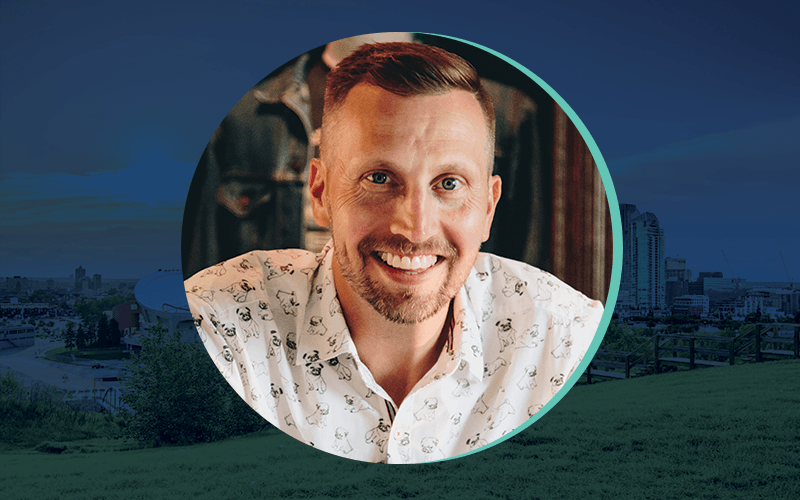
Ryan Gill is one of the city’s best-known entrepreneurs. He is CEO and Co-founder of Communo, a vetted network of marketing...
Key takeaways
- True entrepreneurs are wired differently and must be comfortable with the fact that they're the prize to be won, not the client, if they can genuinely deliver on their promises.
- The greatest work of a leader is investing in people and getting out of their way, understanding that your job is serving your team rather than checking off your own to-do list.
- Starting each day with gratitude by reaching out to people who've helped you is one of the most powerful ways to combat stress, depression, and entrepreneurial burnout.
- When you achieve your first significant financial success, share it meaningfully with the people who helped you get there—it's one of the most rewarding things you can do as an entrepreneur.
- Relentless resourcefulness is essential because 95% of the time you'll hear "no" or "it can't be done," but the world has been built by people who found a way to say yes anyway.
Transcript
Full transcript page · Interactive episode
============================================================
TRANSCRIPTION WITH SPEAKERS
============================================================

[00:00] SPEAKER_01: It's Calgary's podcast on the Canada's podcast network.
[00:18] SPEAKER_01: Hello, this is Mario Tonoguzee coming to you today with Calgary's podcast, a member of Canada's podcast network,
[00:26] SPEAKER_01: where we talk to the entrepreneurs who are making it happen here in the city of Calgary, Alberta.
[00:32] SPEAKER_01: Ryan Gill is one of the city's best known entrepreneurs. He is CEO and co-founder of Camino,
[00:38] SPEAKER_01: a vetted network of marketing professionals. He's also president and partner of Cult Collective,
[00:44] SPEAKER_01: an agency specializing in marketing and branding. Welcome to the show, Ryan, and thanks for taking
[00:49] SPEAKER_00: the time to be here for our listeners. My pleasure, you forgot one thing that people in Calgary should
[00:55] SPEAKER_00: know about us. Although I don't run it day to day, I also founded the gathering, like I need more
[01:00] SPEAKER_00: stuff to do, but the gathering is a global summit of the world's bravest friends in the world,
[01:05] SPEAKER_00: and they're leaders that come and talk every year. Okay. It bench rings in February, so your
[01:10] SPEAKER_01: listeners are there, you're invited. All right, super. Thanks, Ryan. Tell us a little bit about yourself,
[01:16] SPEAKER_01: where you're from, and what you're up to these days and all your ventures.
[01:22] SPEAKER_00: Too many. Well, first of all, I'm way back. I'll make a long story short. I'm from Brock,
[01:27] SPEAKER_00: Phil, Ontario. I'm an import from out east. I moved here. I guess it was 1998, 1999. So what
[01:34] SPEAKER_00: is that? 20 plus years ago. And Cult Collective is definitely my home now. I'm a father, two little
[01:41] SPEAKER_00: girls, Scarlet and Halley. Shout out to them. And an amazing wife, Amy. Yeah. So I run three
[01:48] SPEAKER_00: companies and a bit of a media company as well. I put a personal content every day under the
[01:54] SPEAKER_00: platform of Ryan Gilleshairs. It's basically my stories of started up life and running businesses.
[02:00] SPEAKER_00: Mostly I talk about the failures, not the successes, because there's more than my share of failures
[02:06] SPEAKER_00: that have happened. And I think that's the real life that people want to experience, especially
[02:11] SPEAKER_00: in the world of social media where it's very plastic and fake. I try to make this content real.
[02:16] SPEAKER_00: So that's what I do on a day to day basis. But right now, my full time you nail it, start my full
[02:21] SPEAKER_00: effort right now is on communal with building a global company. Well, let's talk a little bit about
[02:26] SPEAKER_01: communal, first of all. What is it and how has it grown since you started it? Yeah, no industry is
[02:33] SPEAKER_00: changing more than the advertising marketing, digital services industry. A lot of people will
[02:38] SPEAKER_00: have really put lipstick on a pig. I'll say it that way. That really, you know, the mediums
[02:45] SPEAKER_00: changed and they thought they're changing marketing, but marketing really hasn't changed much for
[02:49] SPEAKER_00: 50, 60 years. It's a really change in industry. It needs to change at the operational level. It's not
[02:55] SPEAKER_00: sexy. It's really the foundational stuff changing. We say it's not sexy until it is. But communal is
[03:02] SPEAKER_00: basically a marketplace for sole openers and freelancers around the world and ad agencies,
[03:08] SPEAKER_00: marketing firms, PR firms to give and get work and do it fast and with trust.
[03:15] SPEAKER_00: And so we started really, we closed our angel round of funding about 12 months ago.
[03:21] SPEAKER_00: And we had about 100 users at that time. In a short, 11, 12 months, we've gone to 38,
[03:27] SPEAKER_00: almost 40,000 users on the platform globally. So it's been a, it's the first business that I've
[03:33] SPEAKER_00: built. That's a truly a global business. And it's changing people's lives. And it's been,
[03:39] SPEAKER_00: it's been fun to give back to the industry that gave so much to me. What's your plans for the
[03:43] SPEAKER_00: company for the future? Yeah, we're growing over the next five years trying to grow it to about
[03:48] SPEAKER_00: a 300, 350 million dollar business. It'll employ about five to 600 people here in Calgary. Hopefully
[03:56] SPEAKER_00: we'll keep everyone here for Ken. And most importantly, we'll be growing it to about probably two
[04:02] SPEAKER_00: million users and about 200,000 members. There's the different stream members and users to get more
[04:06] SPEAKER_00: access as members than they do to be a typical user. But it's really to make the community,
[04:12] SPEAKER_00: the global creative community closer and help the small guy and the big guy be able to scale up
[04:18] SPEAKER_00: and down quickly. The biggest costs for marketing professionals is people and space and real estate.
[04:25] SPEAKER_00: And so I've tried to make both of those agile and contingent. And so that's what we're doing with
[04:32] SPEAKER_00: with Camino. It's really contingent workforce solution. And then we've layered on
[04:36] SPEAKER_00: co-working spaces. So we have about 20,000 square feet here in Calgary. It's completely full already.
[04:42] SPEAKER_00: We're looking at more space now. We have a space in Vancouver. We just opened up. That's filling
[04:48] SPEAKER_00: up. And then we're opening in Toronto and New York in the next few months for your listeners.
[04:54] SPEAKER_00: A bit of an exclusive. I can't tell you who yet. We potentially have a deal on the table in the
[04:58] SPEAKER_00: next couple of weeks. I'll be able to announce where we could open up in 130 cities globally.
[05:04] SPEAKER_00: So it's to be truthful, Mario. It's growing so fast. I'm just holding on for the ride.
[05:10] SPEAKER_01: Okay. Let's talk about being an entrepreneur, Ryan. What are the biggest benefits of being
[05:16] SPEAKER_01: an entrepreneur here in Calgary and also maybe what some of the biggest challenges?
[05:21] SPEAKER_00: Depending on the day you catch me or any entrepreneur, there's either benefits or downsides.
[05:26] SPEAKER_00: And let's talk about the positives. First, of course, it gives you autonomy. You have control
[05:30] SPEAKER_00: of your future. You have the ability to do what you want to do. At the same time,
[05:37] SPEAKER_00: everything's your fault. And it should be. If you're a good entrepreneur and you're a response
[05:42] SPEAKER_00: to entrepreneur. And so I'm not one to delegate blamed other people. So when shit hits the fan,
[05:50] SPEAKER_00: I don't know if you swear on this podcast, the crap hits the fan. It always falls on me. So that's
[05:56] SPEAKER_00: the downside. But I like that responsibility. And so being an entrepreneur is it's invoked right now.
[06:02] SPEAKER_00: I've been an entrepreneur for almost 20 years. It's crazy to even say that two decades.
[06:07] SPEAKER_00: It's been a learning experience the whole way. I'm still humbling now to have a bunch of
[06:14] SPEAKER_00: businesses that are running on their own without my input. I'm truly a founder. I'm a founder entrepreneur.
[06:19] SPEAKER_00: I'm not an operating entrepreneur. So I'm really good for the first three to five years.
[06:24] SPEAKER_00: Took me a long time, Mario, become okay with that. I thought, you know, like, hey, like I'm a flake.
[06:30] SPEAKER_00: You know, like I can only hold on for two to three years or five years and took a coach of mine
[06:36] SPEAKER_00: and say, no, you're not at all. You're you're the one that is in the trenches for the hard part.
[06:41] SPEAKER_00: You're just not good at operating. And I'm so happy that I figured that out for myself because,
[06:46] SPEAKER_00: yeah, I'm really I'm really solid and I'm in the pocket in the first three, five years. And
[06:52] SPEAKER_00: you're not a flake if it's two, you know, two, three, four, five years. And so it took me a little
[06:57] SPEAKER_00: while and some soul searching to become okay with that. Different entrepreneurs are good at different
[07:02] SPEAKER_01: things. And I'm definitely a founder startup guy. Now we do some of our best work outside the office
[07:09] SPEAKER_01: is there a place in Calgary that whether it's close to where you live or where you work that you
[07:15] SPEAKER_01: like to go to recharge, get inspired, think about your business. I'm very lucky to live on one of
[07:21] SPEAKER_00: the lakes here in Calgary. So I live on Lake Bonna Venture. So I love in the summer to sit on my
[07:26] SPEAKER_00: dock afterward and think this is going to sound super strange. But for those entrepreneurs that
[07:31] SPEAKER_00: they're listening, I think they'll relate with this. My best place to get work done and the thing
[07:36] SPEAKER_00: is on the plane because I want to play in a lot. And so I try to get C1A put my headphones on and
[07:45] SPEAKER_00: grind work out for three, four, five hours. However long the plane ride isn't sometimes I'll get
[07:50] SPEAKER_00: done a trip and I'll be like, I wish you're on the plane for everyone else is begging to get off. I
[07:54] SPEAKER_00: wish we could stay for another hour or two. So that's what comes to mind. I like the dock and the
[07:59] SPEAKER_01: plane. Okay. Hypothetical hypothetical question for you. You know imagine if you were to start all over
[08:06] SPEAKER_01: again and you just moved to Calgary. But this time you don't know anyone knowing what you know now,
[08:13] SPEAKER_01: what would you do and how would you do it to start all over again as an entrepreneur?
[08:18] SPEAKER_00: I would start all over again by doing what I'm doing now, which is investing in people and leaders.
[08:24] SPEAKER_00: Understanding that to build a company, a great company that could scale. It doesn't rely on you,
[08:30] SPEAKER_00: it relies on how good you are getting good people around you. It's so cliche to say, but to inspire
[08:35] SPEAKER_00: those people and to get out of their way. Steve Jobs says a famous quote, don't hire smart people
[08:40] SPEAKER_00: and tell them what to do. I urge smart people and they should tell you what to do. It's easy to say,
[08:46] SPEAKER_00: it's hard to do because they got to trust you. People that work for you to disagree. They got to
[08:52] SPEAKER_00: trust you and feel comfortable to step out on their own. That's my job to make sure that they feel
[08:58] SPEAKER_00: trusted and that I'm vulnerable enough with them. Let them know that especially when I talked about
[09:03] SPEAKER_00: earlier in the podcast was I'm a starter. I'm not an operator. So all my good ideas are usually
[09:10] SPEAKER_00: gone in the first one or two years. And so it really is on them to take the company forward.
[09:15] SPEAKER_00: I've been living that out and the stress levels go way down when you really say, hey,
[09:22] SPEAKER_00: I got a team run this and they got to run it because I'm not the one that's going to be running
[09:24] SPEAKER_01: this long term. What's the first hour of your day look like when you get up in the morning?
[09:30] SPEAKER_00: Do you have a specific ritual routine? Yeah, I really try to start with gratitude for sure. I have
[09:35] SPEAKER_00: a little bit of a maybe cheesy, but I have a gratitude journal. I try to get two or three things.
[09:40] SPEAKER_00: Think about people in my path that have helped me and either I send them a text, a great way to get
[09:45] SPEAKER_00: over depression or get over stress, get over feeling sorry for yourself or how much you have to
[09:51] SPEAKER_00: do is to send someone a text call someone and tell them how thankful you are for them.
[09:57] SPEAKER_00: So I try to do that almost every day. And when you're doing it every day, you start to,
[10:01] SPEAKER_00: you're thinking around out of people, but you don't. And when you start to have this
[10:05] SPEAKER_00: attitude of gratitude, it's amazing how it lifts your spirits as well as someone else's. So
[10:11] SPEAKER_00: I try to start with generosity and being thankful for other people and being thankful for what I
[10:16] SPEAKER_00: have. And then truthfully, my day, I'm usually running behind. After that, I get right into it.
[10:25] SPEAKER_00: And then it's six or seven a night. And I'm like, what just happened today? And usually it's in
[10:29] SPEAKER_00: the service of other people. And that's my job as a leader for those people out there listening.
[10:35] SPEAKER_00: I might feel depressed at the end of the day. You didn't get your work done. I'm using air quotes.
[10:39] SPEAKER_00: I know you're listening to using air quotes. You didn't get your job done. I would ask you to
[10:44] SPEAKER_00: reframe that because if you're feeling like you just help people all day, that's probably your
[10:49] SPEAKER_00: work. It's not, you know, the other stuff is unimportant. What's the, when you look at sort of
[10:56] SPEAKER_01: entrepreneurs, do you think that they have to be a little different, maybe strange or weird,
[11:03] SPEAKER_00: to be an entrepreneur? Yeah, to be a high performing entrepreneur, a one percenter.
[11:09] SPEAKER_00: The ones that have this tremendous success, I think they are definitely wired different.
[11:15] SPEAKER_00: Another thing I've learned through the years is I can't expect people to be like me.
[11:19] SPEAKER_00: They're never going to be like me. And that doesn't mean they're worse or better.
[11:24] SPEAKER_00: Sometimes I think they're better. But the way true entrepreneurs died in the wool, entrepreneurs
[11:30] SPEAKER_00: are wired. It's something to behold because I know a lot of them. And I look up and respect them.
[11:37] SPEAKER_00: And I think I'm wired that way too, that I'm just like, for instance, Mary, like I've made my money,
[11:43] SPEAKER_00: I've made my wealth. If you, you know, I've sold some companies, I've had some successes.
[11:48] SPEAKER_00: Why would I start a brand new company? But with global aspirations, it's going to take, you know,
[11:54] SPEAKER_00: it's a 40-hour work week won't do. It's going to take 60, 80-hour work weeks. I've been doing that
[11:58] SPEAKER_00: for 20 years. Why would I start all over again? You've got to be a bit weird upstairs.
[12:03] SPEAKER_01: Here I go.
[12:04] SPEAKER_00: So I am. But as much as we are, I love it. And it's my purpose. And so I told my wife, this will be my
[12:12] SPEAKER_00: last one. This will be the big one. And she just looks at me and laughs. And so yeah, right. I'm
[12:17] SPEAKER_00: 42. I probably got four or five left. But my long, I think the greatest entrepreneurs in the world
[12:25] SPEAKER_00: start with a mission in mind that's most people laugh at. And their dream is so big that it's
[12:31] SPEAKER_00: literally, even I'm sure they, I certainly doubt myself sometimes. Or Elon Musk wants to take
[12:37] SPEAKER_00: rockets to Mars, list of things. And he sends it with such conviction. I, since I was 11 years old,
[12:43] SPEAKER_00: have wanted to know an ancient hockey team, specifically the St. Louis Blues. And I've been moving
[12:50] SPEAKER_00: towards that on a daily basis since, you know, I was young. And so, the own hockey team, you need to have
[12:56] SPEAKER_00: liquid cash and a lot of it. And it's not even about the money from me. It's about, can I,
[13:02] SPEAKER_00: can I complete my mission that I started 31 years ago? So in order to achieve great things,
[13:09] SPEAKER_00: you have to have stamina and consistency. And I've been trying to live that out. So back to question,
[13:15] SPEAKER_00: definitely entrepreneurs are weird. But I think they have a lot of them have a lot of higher
[13:19] SPEAKER_00: calling of doing something great that not the average person doesn't want to do, nor do they need
[13:25] SPEAKER_00: to do, but that we're, we're, we're a strange breed. Are there any books you're reading right now
[13:31] SPEAKER_00: that, and why? I read lots of books. This is my favorite one right now and holding it up to the
[13:36] SPEAKER_00: thing is the 10X Mind Expander by Dan Sullivan. It's a small book. Dan Sullivan's a business coach
[13:44] SPEAKER_00: out of Chicago. I think he has a place in Toronto, but he runs a company called Strategic Coach.
[13:49] SPEAKER_00: Anyone out there listening? Check out Strategic Coach. All the stuff that Dan Sullivan writes is
[13:55] SPEAKER_00: amazing. My favorite book ever is a book called Wind Without Pitching by Blair Ends. It's a specific
[14:01] SPEAKER_00: to the creative advertising world, but it applies across the spectrum. Really the essence of the book
[14:07] SPEAKER_00: is just understanding that if you do what you say you do and you know you can execute and deliver,
[14:13] SPEAKER_00: you need to operate under the assumption and it might seem egotistical, but it's not that you're
[14:18] SPEAKER_00: the prize to be won, not the client. They're lucky to get to work with you. And not in an arrogant
[14:24] SPEAKER_00: way, just what it means is if they hire you for whatever you do, you know you're going to deliver
[14:30] SPEAKER_00: on what you say and it's going to increase the value of their company. Yeah, they're definitely
[14:34] SPEAKER_00: lucky to work with you because there's so much shit out there that isn't true, that isn't,
[14:40] SPEAKER_00: that people don't execute. So when you know you can execute having that swagger of, I'm going to do
[14:45] SPEAKER_00: not just what I said, but more. Blair Ends, right, this right, this book called Wind Without Pitching.
[14:50] SPEAKER_00: If you're so good, you don't need to pitch anymore. So you do, obviously you mentioned before
[14:55] SPEAKER_01: it had a long hours, a long days, et cetera. How do you find that the balance in your life
[15:02] SPEAKER_00: separate work into your personal life? Yeah, I don't believe in balance. Whatever I'm doing,
[15:09] SPEAKER_00: that the moment I'm 100%, that's my balance. So it's actually in balance. Again, atso I thrive,
[15:16] SPEAKER_00: people may not like it. It works for me and my family and we have a wonderful happy life. I have
[15:22] SPEAKER_00: great friends. I've great social circles. I feel very blessed. Knock on wood continues that way.
[15:27] SPEAKER_01: So what do you do when you're not working? What are your favorite things to do? I'm always working
[15:32] SPEAKER_00: by love golf. I love poker. I spend times with my kids. I'm coaching my daughter in soccer, so I
[15:38] SPEAKER_00: have that tonight. As I don't you're nervous, it's true. Like you really do something great. You're
[15:43] SPEAKER_00: always working like you're responsible for people's lives and their livelihoods. So I can't really
[15:49] SPEAKER_00: take a day off. Like if I have guys like, dabs and video events right now, they need me. I got to be
[15:55] SPEAKER_00: there. And when you do that for them, they'll be there for you. You know, and so I don't care about
[16:00] SPEAKER_00: the clients. The sounds really weird. I don't care what the clients and the money are. That kind of
[16:03] SPEAKER_00: stuff. I just care about the people that work for me and work with me. And when you get that right,
[16:10] SPEAKER_00: honestly, the rest takes care of itself. So in the light of that, yeah, I turn to work off
[16:15] SPEAKER_00: sometimes. But if you're a true leader that's managing people, people's lives are 24, 7 and plus
[16:22] SPEAKER_00: I have employees in different cities and stuff like that. So different time zones. So yeah,
[16:27] SPEAKER_00: it's very draining at times. I would be I would be fake to say it's not tiring and I get burnt out
[16:33] SPEAKER_00: sometimes I do, but I take six, seven weeks off all the days where I try to completely unplug
[16:40] SPEAKER_00: more than most people take off that are actually employees. So it's interesting, but I don't
[16:44] SPEAKER_00: believe in balance. I believe whatever you're doing need to do it full tilt. If you weren't doing what
[16:50] SPEAKER_01: you're doing now, obviously you're passionate about this. But if you weren't doing this, what would
[16:56] SPEAKER_01: you think you'd be? What kind of a profession would you be in? I think I've told you this before
[17:02] SPEAKER_00: Mario, like I started my whole career in life as a journalist, a sports journalist. So I would
[17:07] SPEAKER_00: actually go be a journalist and the the profession of a journalist has changed so much. And I think
[17:14] SPEAKER_00: it's exciting. I know it's scary and things are in disarray right now, but I would love to be a
[17:19] SPEAKER_00: journalist or content creator, which I'm kind of doing, telling stories and entertaining people
[17:25] SPEAKER_00: that way. And if I that didn't work out, I would be a professional poker player.
[17:29] SPEAKER_01: Okay. Hey, here's a question for you. Like when you're talking and being a journalist, sports
[17:34] SPEAKER_01: journalist, if you had one dream assignment to cover something, what would it be? It would be to
[17:42] SPEAKER_00: cover the story of Brett Hall. Why? Because he think he was a very spoken, confident guy that was
[17:49] SPEAKER_00: misunderstood. And one of the best most underrated hockey players of all time, even though he's
[17:55] SPEAKER_00: considered probably one of the top 20, I think he's probably top five. So I would love to cover that
[18:01] SPEAKER_00: story. And he had lots of different twists and turns and people didn't like him. People still don't
[18:07] SPEAKER_00: like him. I like telling those people's stories to get the other side of it. The other story I'd
[18:12] SPEAKER_00: love to cover. I'm I want to Tesla and I love the Tesla story. I own shares and Tesla. I would
[18:18] SPEAKER_01: love to interview Elon Musk. When you're looking at business, are there any favorite words or
[18:25] SPEAKER_00: quotes that you like to use? Generosity is a word I like to use. By the first dream, be the person
[18:32] SPEAKER_00: that people look at. When you're dead, that was there for other people to help them. And I
[18:40] SPEAKER_00: believe if you do that, you'll never be lacking in relationships, which is by the way, if you're
[18:45] SPEAKER_00: listening, money doesn't make you happy. Your health doesn't, I know a lot of people are healthy
[18:50] SPEAKER_00: that aren't happy. It's your social connectedness and your relationships that make you happy. So
[18:55] SPEAKER_00: taking care of people, for instance, Mary, I've known you for 20 years almost. You cover, you did
[19:00] SPEAKER_00: the first story on suitcase back in the early 2000s. And we've stayed in touch. I don't care if you
[19:05] SPEAKER_00: read another story about me or if you cover me, I really like you. And you know that to be true.
[19:11] SPEAKER_00: And you're not you're one of the many people in my life that if you called me, I would be
[19:16] SPEAKER_00: there for you and try to help if I could. So I've lived my life that way and you can attest to that.
[19:21] SPEAKER_01: Super. So generosity. Generosity. What about down the flip side of things? So there's something
[19:27] SPEAKER_01: that a word or sentence you don't like to hear? That's a good one. What do I don't like to hear?
[19:35] SPEAKER_00: It's funny. I don't like no. When people say no to me, it's a chip on my shoulder.
[19:40] SPEAKER_00: Say for investors, some investors that said no to me in the early days and ended up
[19:45] SPEAKER_00: that people that did invest made millions. I like sending them a magazine cover with me on it.
[19:52] SPEAKER_00: But I sold my company to say, missed out. I like to care. I think most entrepreneurs carry a chip
[19:57] SPEAKER_00: on the shoulder. So I don't know. I think, yeah, I can't but no in the other sense of it can't be done.
[20:04] SPEAKER_00: I just think anything can be done. You can figure it out. I try to teach my teams that
[20:10] SPEAKER_00: relentless resourcefulness. You have to have it because literally most of the
[20:15] SPEAKER_00: 95% of the time it's no. Oh, I can't do it this way. I can't get that shot. I can't program things.
[20:21] SPEAKER_00: Like no, the world has been built on. People have said, yes, you can do it. And so I despise the word
[20:27] SPEAKER_01: no in many ways. If you had a couple of words, speaking words, if you had a couple of words or one
[20:33] SPEAKER_01: or two words to describe yourself, what would they be and why? Yeah, relentless. I'm a team player.
[20:43] SPEAKER_00: I like to be actually, even though I'm the CEO of different companies, I actually loved I would
[20:48] SPEAKER_00: rather be number two or number three or number four. And even at cult that firm I ran for a while.
[20:54] SPEAKER_00: I still own it, but you know, I'm down the ladder. I love that. So I like being a team player.
[20:59] SPEAKER_00: Another word, intense. I think people will say that I wish I was more chill, but it's just not me.
[21:08] SPEAKER_01: But I think intense with lighthearted. What's when you look at your life right now,
[21:16] SPEAKER_01: is there anything that you have on the top of your bucket list, let's say? Yeah, only an
[21:22] SPEAKER_00: angel team. So that's the number one thing that I think about all the time. And I'm just also,
[21:28] SPEAKER_00: and I can't say too much about it, but this isn't something I just talk about. Like I'm in conversations
[21:34] SPEAKER_00: with teams and people right now. Like you can't just have a big dream like only the hockey team or
[21:40] SPEAKER_00: in Elon's case, putting rockets on Mars and space travel and not move towards it. That's just
[21:46] SPEAKER_00: talk. It's just bullshit. It's annoying. And so I take my own medicine. So I've been trying
[21:55] SPEAKER_00: no to team for years. And so I've been I'm in talks right now. And it's exciting. Look forward to that.
[22:03] SPEAKER_01: And let's talk about, you know, obviously over the years, you've probably had a lot of advice
[22:08] SPEAKER_01: from different people, mentors, colleagues, associates, friends, family, whatever. What's the best
[22:15] SPEAKER_01: piece of advice you've ever received over the years for being an entrepreneur and that you'd like
[22:19] SPEAKER_00: to pass on to people? Yeah, there's lots. So I don't know if the best, but one that stuck out when
[22:25] SPEAKER_00: you asked the question, when I made my first big chunk of money, I took a big portion of that and
[22:32] SPEAKER_00: got it in cash. And I broke it up into big chunks. I won't say how much, but it was a lot of money.
[22:39] SPEAKER_00: And I gave it to people that had helped me along the way. And the type of money I gave them and
[22:46] SPEAKER_00: just got to pat myself on the back. But it was a great advice from one of my mentors. They said,
[22:50] SPEAKER_00: when you make your first bit of money, go give some back to those people that helped you get there.
[22:55] SPEAKER_00: So my executive assistant and some early hires I had, it was the best thing I ever did in my life was
[23:00] SPEAKER_00: when I made that first big chunk of money, I set them in my office. I said, thank you. I said to
[23:05] SPEAKER_00: thank you, the word thank you, you know, always seems so empty. But it's nice when it's with
[23:12] SPEAKER_00: an envelope of cash. Exactly. And again, it doesn't matter with the money, it was just the
[23:22] SPEAKER_00: physical thank you was something that's meaningful. And that was the best piece of the
[23:28] SPEAKER_00: guys I got from a guy named David Rechard. It used to be the president. It was the global CEO for
[23:34] SPEAKER_00: IHS. And then he was the CEO of Olympic size American. It's been a board member of mine and
[23:40] SPEAKER_00: they invited for years. And he said, when you make your first big money, share it around. And I did it.
[23:45] SPEAKER_00: It was still the one of the best moments in my career. I'm going to give you a question from left
[23:51] SPEAKER_01: field here. So imagine a tropical island just off of Fiji. And there's only a foam booth there.
[23:58] SPEAKER_01: And you have no internet. So we're going to drop you off there. But you obviously have no access
[24:05] SPEAKER_01: to a computer, no smartphone, no tablet, etc. Now you can use a foam booth at any time to call
[24:13] SPEAKER_01: us and we'll come with a boat and pick you up. I'm just curious, how long do you think you would
[24:18] SPEAKER_01: last there before you made that phone call? And what would you do while you were there?
[24:23] SPEAKER_00: Oh, so I would probably build a a museum park that would be the most well-known
[24:29] SPEAKER_00: at Music Park in the world somehow. And the first phone call, once I got it built somehow,
[24:36] SPEAKER_00: I'd probably sail around, figure out about sail around, find people to work on the music park.
[24:41] SPEAKER_00: And after 10 years maybe I haven't ready. My first phone call would be to the New York Times to say,
[24:46] SPEAKER_01: we're open for business. Okay, Ryan, how I'm like, I appreciate the taken of time to do this today.
[24:54] SPEAKER_01: Like, how can our listeners get ahold of you if there's anything they would like to be in touch about?
[25:00] SPEAKER_00: So I'm very active on social media. Ryan Giel shares at our YAN GILL S H A R E S.
[25:08] SPEAKER_00: That's a long handle, but Ryan Giel shares on Instagram, Facebook, Twitter, and then just
[25:15] SPEAKER_00: Ryan Giel on LinkedIn. I'm very active on LinkedIn as well for those professionals out there.
[25:21] SPEAKER_00: I put out content every day except Saturday. And so you can engage with me. I'm the one that
[25:26] SPEAKER_00: responds. So it's not a team unless someone holidays they respond, but you can reach out to me anytime.
[25:33] SPEAKER_01: Okay, thanks a lot, Ryan, for being our guest on Calgary's podcast. I've learned a lot
[25:37] SPEAKER_01: about you, your business, and I'm sure our listeners have as well. Thanks, Ryan. My pleasure.
[25:44] SPEAKER_01: Hey there, thanks for taking the time today to listen to Calgary's podcast on Canada's podcast
[25:51] SPEAKER_01: network. We hope you enjoyed the show today. Make sure you sign up for our newsletters and
[25:57] SPEAKER_01: write a review for us on iTunes and then connect with us on Twitter, Facebook, Instagram,
[26:03] SPEAKER_01: LinkedIn at Canada's podcast. You can also check out what other entrepreneurs are doing across the
[26:11] SPEAKER_01: country. See you next time.