
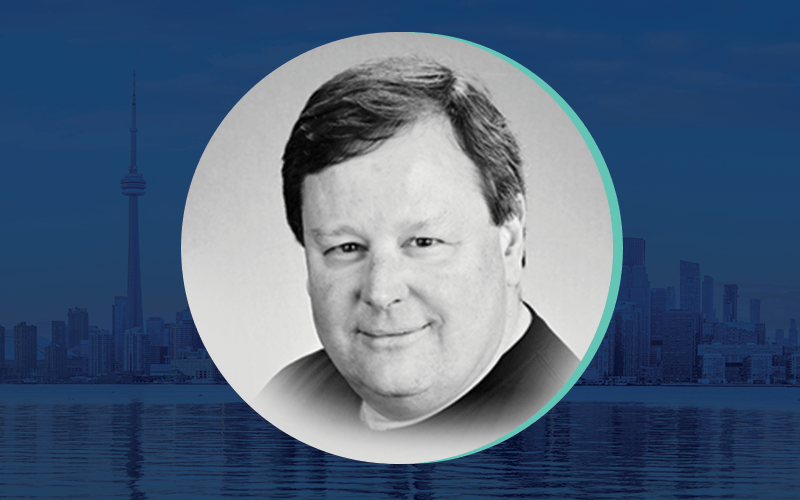
Robin H. Smith
Episode
Robin Smith Co-Owner and Co-Founder of VL OMNI – which he has built over the past twenty-five years. He is also founder...
Key takeaways
- Maintain strict financial discipline from day one with good accounting practices, timely invoicing, and the willingness to walk away from difficult clients who don't align with your business values.
- Avoid micromanaging your employees and instead empower them with trust and latitude to do their jobs, as this approach retains the best talent and allows you to focus on higher-level priorities.
- Stay surgically focused on what you can realistically accomplish rather than chasing every opportunity, as time is your most limited resource and perfectionism must be balanced with practical execution.
- Build international relationships and look beyond your local market, as cooperation and lucrative partnerships are often more readily available outside Canada despite the domestic talent pool.
- Remain perpetually curious and seek out experts with different perspectives, avoiding silo vision and recognizing that you will never know everything in business.
Transcript
Full transcript page · Interactive episode
============================================================
TRANSCRIPTION WITH SPEAKERS
============================================================

[00:00] SPEAKER_01: It's Toronto's podcast on the Canada's podcast network.
[00:16] SPEAKER_01: Hi everyone and thanks for listening.
[00:19] SPEAKER_01: I'm Philip Bliss, a business visionary and co-host of Toronto's podcasts.
[00:24] SPEAKER_01: It's part of the Canada's podcast network.
[00:27] SPEAKER_01: Your source of great insights from entrepreneurs across Canada.
[00:32] SPEAKER_01: Robinsmith is co-owner and co-founder of VL Omni,
[00:36] SPEAKER_01: which is built over the past 25 years.
[00:39] SPEAKER_01: It's also founder of genealogyman.com.
[00:42] SPEAKER_01: VL Omni provides a platform for agile and scalable,
[00:46] SPEAKER_01: I-PASS e-commerce integration.
[00:48] SPEAKER_01: It is used by a global multi-channel to move data seamlessly
[00:51] SPEAKER_01: through their infrastructure as they grow, expand,
[00:55] SPEAKER_01: and accelerate their business.
[00:57] SPEAKER_01: VL Omni is headquartered in Oval and this offices in the UK as well.
[01:02] SPEAKER_01: So Robin, welcome to Canada's podcast.
[01:05] SPEAKER_01: Tell us a little bit more about yourself, where you're from,
[01:08] SPEAKER_01: give us the details on your current business.
[01:10] SPEAKER_01: Let everyone know who you are.
[01:12] SPEAKER_00: Great, well thanks very much for having me, Phil.
[01:14] SPEAKER_00: It's a pleasure to be here.
[01:17] SPEAKER_00: A little bit about my background.
[01:18] SPEAKER_00: I have an undergraduate degree from the University of Toronto
[01:22] SPEAKER_00: in prehistoric archaeology.
[01:24] SPEAKER_00: And I have a master's degree in international relations
[01:27] SPEAKER_00: and transnational corporations from Webster University
[01:31] SPEAKER_00: and Vienna, Austria.
[01:32] SPEAKER_00: So you probably wonder about that kind of a combination.
[01:36] SPEAKER_00: It's sort of a very eclectic mixture.
[01:42] SPEAKER_00: He speaks to my background.
[01:43] SPEAKER_00: I left Canada when I was three years old.
[01:45] SPEAKER_00: We lived in East Africa, came back to Canada, lived in Ottawa for a few years
[01:51] SPEAKER_00: and then moved to Greece.
[01:54] SPEAKER_00: And I spend most of my former years living in Greece and have lived in South America
[02:00] SPEAKER_00: in Europe, went to school in Switzerland, and have worked in various places
[02:06] SPEAKER_00: in the Middle East and Saudi Arabia, Kuwait, Somalia.
[02:11] SPEAKER_00: So I've got this very eclectic background,
[02:13] SPEAKER_00: which led me to, after I finished my master's degree,
[02:18] SPEAKER_00: I worked in the UN Office in Vienna for a year
[02:20] SPEAKER_00: on the computerization of the world, crime, data statistics.
[02:25] SPEAKER_00: And from there, I ended up coming back to Canada
[02:30] SPEAKER_00: and working in international business development.
[02:33] SPEAKER_00: I had attempted and failed to get into the foreign service
[02:36] SPEAKER_00: and was told that I had too much international experience.
[02:43] SPEAKER_01: And I got nuts, isn't it?
[02:45] SPEAKER_01: You know, which at the time was the thing.
[02:48] SPEAKER_00: I speak three languages and have traveled extensively.
[02:54] SPEAKER_00: Clearly, I was probably unable to be formed in the foreign service way.
[03:02] SPEAKER_00: Okay.
[03:04] SPEAKER_00: So that was my background.
[03:05] SPEAKER_00: And then when we started the company, I was working for a division of CN,
[03:09] SPEAKER_00: called Canak Telecom.
[03:11] SPEAKER_00: Andak Telecom was the holding company that CN,
[03:15] SPEAKER_00: as a crime corporation had,
[03:19] SPEAKER_00: that was the place where all non-rail activity within CN happened.
[03:27] SPEAKER_00: And I joined Canak from an organization in Montreal called TEMC,
[03:31] SPEAKER_00: which was the Telecommunications Executive Management Institute of Canada.
[03:36] SPEAKER_00: And it was a joint venture between the private sector
[03:38] SPEAKER_00: and the federal government at the time to promote Canada's Telecom industry overseas.
[03:44] SPEAKER_00: And it was a phenomenal success.
[03:46] SPEAKER_00: It actually still exists.
[03:48] SPEAKER_00: But that's how I ended up at Canak.
[03:49] SPEAKER_00: And I was working in the Middle East, Iran, Saudi Arabia, Kuwait,
[03:56] SPEAKER_00: and East Africa.
[03:59] SPEAKER_00: And CN was mandated to downsize.
[04:02] SPEAKER_00: So they sold off Air Canada,
[04:05] SPEAKER_00: because that's where the Canak name came from.
[04:06] SPEAKER_00: It was Canadian National Air Canada.
[04:09] SPEAKER_00: They privatized Air Canada.
[04:10] SPEAKER_00: They privatized the phone companies,
[04:12] SPEAKER_00: Ternovatelle, North Westell, Telassat, was privatized.
[04:16] SPEAKER_00: And then what ultimately became Rogers,
[04:19] SPEAKER_00: CN's 50% of CNCP.
[04:22] SPEAKER_00: And within this group, I was working in the BISDEV for their telephone billing software division.
[04:29] SPEAKER_00: And because it was a perfect piece of software that fit into small to medium-sized telephone companies.
[04:35] SPEAKER_00: So there was a huge market internationally.
[04:38] SPEAKER_00: They had installed it in Burkina Faso and the Ivory Coast.
[04:43] SPEAKER_00: So my job at the Canak was to go into these new markets,
[04:47] SPEAKER_00: build the relationships, and so on and so forth.
[04:50] SPEAKER_00: Within that software group, there was a group that did EDI,
[04:53] SPEAKER_00: Electronic Data Interchange, and it was too small for CN to sell off.
[04:58] SPEAKER_00: It was insignificant financially to them.
[05:01] SPEAKER_00: And my business partner and I, who I'm still currently working with,
[05:07] SPEAKER_00: we took it over and that was 25 years ago.
[05:10] SPEAKER_01: Why'd you come in on to the printer or why take the risk?
[05:13] SPEAKER_01: What made you do that?
[05:15] SPEAKER_00: Well, I was always, you know, given my background traveling and so on and so forth.
[05:21] SPEAKER_00: I mean, I was always a very twitchy employee.
[05:24] SPEAKER_00: I was impatient.
[05:25] SPEAKER_00: I was impatient with mediocrity.
[05:27] SPEAKER_00: I was impatient with big corporate structures.
[05:31] SPEAKER_00: And you know, hindsight, CN was probably not the best place for me to end up.
[05:36] SPEAKER_00: My wife says it's ADHD, but I don't know where it is or not.
[05:41] SPEAKER_00: Well, your wife's probably not so far.
[05:44] SPEAKER_00: There's a big component there.
[05:46] SPEAKER_01: We both grew up in blue chips and went off kind of things.
[05:50] SPEAKER_00: Yeah, exactly.
[05:51] SPEAKER_00: When my wife says to me, she said,
[05:54] SPEAKER_00: you're not the type to work in the corporate world.
[05:57] SPEAKER_00: You know, she said you would to tell somebody to go to hell.
[06:01] SPEAKER_00: So fast.
[06:03] SPEAKER_00: But anyway, so, yeah, to why the entrepreneurialism, I mean,
[06:08] SPEAKER_00: there is no real entrepreneur nature in my direct family,
[06:13] SPEAKER_00: both my father and my mother were not entrepreneurs,
[06:16] SPEAKER_00: but my mother's father was an entrepreneur.
[06:19] SPEAKER_00: And my father always says that he was probably the one that influenced me the most.
[06:24] SPEAKER_00: I've got our high risk tolerance.
[06:26] SPEAKER_00: So I think that's probably from my background as well.
[06:29] SPEAKER_00: And I think you need a certain risk tolerance to become a...
[06:32] SPEAKER_01: How did you, you know, I mean, this is sort of learning how people did it.
[06:36] SPEAKER_01: So you obviously were in that, the right place at the right time,
[06:40] SPEAKER_01: that's part of entrepreneurship as well.
[06:43] SPEAKER_01: How did you get a rolling?
[06:44] SPEAKER_01: I mean, taking it, funding it, you know, making a living overnight,
[06:49] SPEAKER_01: from not making a living, how did you do that?
[06:52] SPEAKER_01: What can we learn from that?
[06:54] SPEAKER_00: You know, that's interesting.
[06:56] SPEAKER_00: So when my partner and I decided to start the company,
[07:00] SPEAKER_00: we were both at CN.
[07:03] SPEAKER_00: He was actually packaged out.
[07:05] SPEAKER_00: And I wasn't. I was kept on.
[07:07] SPEAKER_00: So I actually had to quit.
[07:09] SPEAKER_00: And I had a fair amount of money saved up.
[07:12] SPEAKER_00: I was single. I had a fair amount of money saved up from all of the travel that I was doing.
[07:17] SPEAKER_00: The last year I was at Kenak, I was on the road for 32 weeks.
[07:21] SPEAKER_00: So it was a lot of travel.
[07:24] SPEAKER_00: So I, at the time, I was interviewing for a job in the UK with a telecom company.
[07:31] SPEAKER_00: And I didn't like the attitude.
[07:33] SPEAKER_00: And I said to him, I said, you know what?
[07:35] SPEAKER_00: I'll put some money into it and I'll give it a year.
[07:37] SPEAKER_00: After a year, we're not successful.
[07:39] SPEAKER_00: We're not profitable.
[07:40] SPEAKER_00: We can go our own ways.
[07:43] SPEAKER_00: And he went off on his honeymoon and he came back and I had already sold four sites.
[07:48] SPEAKER_00: And then we had to figure out how to, how to put this stuff in.
[07:51] SPEAKER_00: And we were profitable after the first year.
[07:56] SPEAKER_00: And I've been profitable ever, ever since.
[07:58] SPEAKER_00: And I think part of it is being part of that profitability has come from the fact that we've been extremely disciplined about what we do.
[08:06] SPEAKER_01: Focus is that focuses everything.
[08:09] SPEAKER_00: We've been disciplined about our record keeping.
[08:12] SPEAKER_00: So from right from the get go, we had good accounting.
[08:15] SPEAKER_00: We were very disciplined in getting invoices.
[08:18] SPEAKER_00: We were very disciplined with not being bossed around by the customer.
[08:23] SPEAKER_00: Not running after anything that moved.
[08:26] SPEAKER_00: And that would be one word of advice I would give to anybody is that you've got to be, as you say, focused, but very disciplined about your focus.
[08:34] SPEAKER_00: You won't let so you can fire the client.
[08:37] SPEAKER_00: Exactly.
[08:37] SPEAKER_00: Exactly.
[08:38] SPEAKER_00: We had customers in the first years that I walked away from that I said, I can't do business with you.
[08:44] SPEAKER_00: And I had one guy one time phone me up and he was screaming at me asking me why I couldn't do business.
[08:49] SPEAKER_00: And I just said, well, here's why.
[08:52] SPEAKER_00: You're screaming at me.
[08:53] SPEAKER_01: So what does what does a typical day look like for Robert?
[08:57] SPEAKER_01: You know, how do you maintain the kind of focus it needs to keep on succeeding and having fun.
[09:02] SPEAKER_01: You've been doing this for 25 years now.
[09:04] SPEAKER_01: How do you keep that focus going?
[09:06] SPEAKER_00: Well, I think it involves as the business involves.
[09:09] SPEAKER_00: We've got 20 employees today.
[09:12] SPEAKER_00: So I manage the sales and marketing and the administration.
[09:17] SPEAKER_00: So I've got a director of marketing who I oversee.
[09:21] SPEAKER_00: She's got people below her.
[09:23] SPEAKER_00: So I meet with her probably three times a week just to just to chart priorities.
[09:31] SPEAKER_00: I think it's really important that the people you have below you, that you empower them to do the right things.
[09:39] SPEAKER_00: That you give them the latitude to do that.
[09:41] SPEAKER_00: I think one of the things that happens in a lot of entrepreneurial situations is that the owner.
[09:46] SPEAKER_00: The owner has this fear of letting go so they micromanage.
[09:50] SPEAKER_00: And when you micromanage, I don't think you keep the best employees.
[09:54] SPEAKER_00: There has to be that level of trust.
[09:56] SPEAKER_00: And that I think has been the fun the biggest fundamental change.
[09:59] SPEAKER_00: So when I manage my sales guys, I give them the latitude.
[10:03] SPEAKER_00: I mean, if there's something that they are not 100% sure on the doors open, they can come and talk.
[10:10] SPEAKER_00: You know, I don't get into the minutia as much as I used to, which is a good thing.
[10:15] SPEAKER_00: But I think that, you know, at a certain point, you need to start to let go and you need to trust people.
[10:21] SPEAKER_01: What are the biggest benefits for you being an entrepreneur in the GTA?
[10:25] SPEAKER_01: I mean, why here? You're well traveled. You speak three languages.
[10:30] SPEAKER_01: Why do you stay here in Oakville in particular?
[10:35] SPEAKER_01: Why stay here? You could be, you know, let's talk and say, you're okay because of Brexit.
[10:41] SPEAKER_01: I mean, you could do business elsewhere as well.
[10:44] SPEAKER_00: There's no question. I mean, I think you have to make the move internationally when the time is right for the business.
[10:51] SPEAKER_00: And it took us, it took us, it took us a fundamental shift in our business to move from selling on premise solutions to moving to the cloud that allowed us to now start to look outside of Canada.
[11:04] SPEAKER_00: We had always done business in the US.
[11:07] SPEAKER_00: Our customer base traditionally had always been Canada, US split.
[11:13] SPEAKER_00: But the cloud, moving to the cloud, moving our solutions to the cloud and offering cloud services has allowed us now to go global.
[11:20] SPEAKER_00: I think the reason for Oakville was really family.
[11:24] SPEAKER_00: My wife worked for one of the big banks in a very senior position.
[11:30] SPEAKER_00: She head office was Toronto. It was too lucrative to move away from.
[11:35] SPEAKER_00: My capacity to earn income was far less than hers.
[11:40] SPEAKER_00: So that became the imperative.
[11:44] SPEAKER_00: Have I been twitchy? Absolutely. I am much happier sitting on an airplane going someplace.
[11:55] SPEAKER_01: What about your entrepreneurial community in Oakville in this area?
[12:02] SPEAKER_01: Is it helped you? Is there been any kind of benefits you've had from that?
[12:09] SPEAKER_00: You know, it's a very interesting question.
[12:12] SPEAKER_00: In high tech, one of the things that has sounded me going to San Francisco for the first time was the amount of cooperation there was between competitors.
[12:24] SPEAKER_00: And it's something that doesn't exist in Canada for some reason. And I'm not sure why.
[12:28] SPEAKER_00: I think that what Rima and Chris Herbert did with Silicon Hall was an attempt to try and bring Canadian high tech entrepreneurs together.
[12:39] SPEAKER_00: But I find that in Canada, our inferiority complex comes out and we tend to be very, very guarded about cooperation.
[12:48] SPEAKER_00: We have amazing relationships with customers with partners in the Middle East and in the UK.
[12:56] SPEAKER_00: We have not been able to establish in Canada and even in our own backyard.
[13:02] SPEAKER_00: And that I think is one of the principal reasons why we've spent the energy going outside of Canada because A, the market is there.
[13:12] SPEAKER_00: But I find that the relationships that we build are a lot more lucrative than the ones that we build in our own backyard.
[13:21] SPEAKER_01: So moving on from the business side, you know, we do somewhere best work outside of the office.
[13:27] SPEAKER_01: Is there a place, you know, in this general area where you like to go to reach odds to get inspired to think?
[13:35] SPEAKER_01: Quite a lot of people have a get out of here place, you know, hopefully isn't the pub.
[13:41] SPEAKER_00: You see what I was saying, you know, yeah, no, no, I don't really, no, I don't really need to do that.
[13:46] SPEAKER_00: I don't really have the place I go to.
[13:50] SPEAKER_00: I mean, I think I do that when I travel.
[13:53] SPEAKER_00: I mean, for me, Vienna is a go to place.
[13:56] SPEAKER_00: I live there for many years. I went to university there. I work there.
[14:01] SPEAKER_00: I find just traveling and interacting with other people is where I get a lot of inspiration from.
[14:07] SPEAKER_00: I love exchanging with people. I love learning about other places and other people.
[14:11] SPEAKER_00: So I think I get ideas and inspiration that way.
[14:14] SPEAKER_00: You know, solitude, yeah, some people need to go away and eat done plug.
[14:18] SPEAKER_00: For me, it's going home after work and unplugging from the office and not doing any work.
[14:23] SPEAKER_00: I mean, I usually after I get home and we have dinner, I don't do any work at all.
[14:28] SPEAKER_00: I mean, I made that a conscious effort.
[14:30] SPEAKER_00: So and I think you need to find your own way of unplugging and not be constantly driven.
[14:35] SPEAKER_01: So what does the first day, the first hour of your day look like?
[14:38] SPEAKER_01: Do you have a specific routine that gets you kind of ready for the day?
[14:43] SPEAKER_00: I look at my calendar before I leave home to go to the office just to see what I've got call wise.
[14:48] SPEAKER_00: I usually have at the end of the previous day, I'll update my to-do list of things that I need to do.
[14:55] SPEAKER_00: But it's really just a matter of plowing through all the stuff that needs to get done.
[15:01] SPEAKER_00: I'm a multitasker, so it's incremental advancement of all sorts of things all at the same time.
[15:07] SPEAKER_01: What books are you reading or even audio books that you're reading now or have read in the last two or three years?
[15:14] SPEAKER_01: That you think listeners should get a hold of because it inspired you kind of thing.
[15:20] SPEAKER_00: Wow, that's a tough one because I'm a voracious reader.
[15:24] SPEAKER_00: I've got piles of books around.
[15:27] SPEAKER_01: How many people I interview that are voracious readers?
[15:31] SPEAKER_01: Oh, I can't.
[15:32] SPEAKER_01: That's an unreal thing. It's kind of interesting.
[15:34] SPEAKER_00: Yeah, no, I read all sorts of stuff.
[15:37] SPEAKER_00: I'm reading John Likare's latest novel right now.
[15:40] SPEAKER_00: I've carried it to the Middle East.
[15:42] SPEAKER_00: I carried it to Europe.
[15:44] SPEAKER_00: I carried it to LA and never started it on airplanes.
[15:47] SPEAKER_00: It went around in my backpack and I finally I was down in Vegas.
[15:52] SPEAKER_00: I can't stand Vegas last week for shop talk and I said,
[15:56] SPEAKER_00: okay, I got to read this book.
[15:58] SPEAKER_00: So I'm going through John Likare's stuff.
[16:01] SPEAKER_00: I love his spine novels.
[16:04] SPEAKER_00: Having grown up in Europe in the 70s, they're very interesting.
[16:09] SPEAKER_00: I also read a lot of very eclectic stuff.
[16:12] SPEAKER_00: I just started reading the Black tutors.
[16:16] SPEAKER_00: It's about Black people in Tudor, England.
[16:21] SPEAKER_00: I've got Stephen Hawking's latest book that I picked up in London in October
[16:27] SPEAKER_00: that is sitting on my pile.
[16:29] SPEAKER_01: That's good.
[16:31] SPEAKER_01: If you weren't doing what you do now, what would you like to do for a profession?
[16:36] SPEAKER_01: So, less about running another business?
[16:40] SPEAKER_00: You know, it's an interesting question.
[16:42] SPEAKER_00: I've always been told I would have made a great war correspondent.
[16:46] SPEAKER_00: Interesting work, yeah.
[16:47] SPEAKER_00: Yeah, which is a very interesting profession.
[16:49] SPEAKER_00: Journalism, I was never exposed to journalism as a kid.
[16:53] SPEAKER_00: My father's a geochemist.
[16:55] SPEAKER_00: So, I mean, I was always exposed to science and my mother was a social antipologist.
[17:01] SPEAKER_00: So, I was always exposed to that kind of stuff.
[17:04] SPEAKER_00: Journalism was never something on my radar.
[17:06] SPEAKER_00: But I think in hindsight, I probably would have done something like that.
[17:10] SPEAKER_00: I mean, the diplomatic service for me interacting with other people,
[17:13] SPEAKER_00: other cultures, very interesting.
[17:15] SPEAKER_00: I had somebody tell me at one point that I would have made a good spy.
[17:19] SPEAKER_00: I'm not so sure of that.
[17:22] SPEAKER_01: What kind of job wouldn't you not like to do?
[17:25] SPEAKER_00: Oh, God.
[17:26] SPEAKER_00: Working a warehouse, construction.
[17:29] SPEAKER_00: I'm not good at any of those things.
[17:31] SPEAKER_01: So, in business, what is your favorite word or quote phrase, whatever that you like to use?
[17:39] SPEAKER_01: Oh, I hate mediocrity.
[17:41] SPEAKER_01: That's okay.
[17:43] SPEAKER_01: What's your least favorite word phrase that you like to use?
[17:47] SPEAKER_00: Or my least favorite phrase, I don't like to use it at all, but my bad.
[17:51] SPEAKER_00: I cannot stand my bad.
[17:56] SPEAKER_00: When people use that, I just cringe.
[17:58] SPEAKER_00: To me, it's like it's so uncultured and just so, I don't know.
[18:03] SPEAKER_00: It just grates me the wrong way.
[18:06] SPEAKER_01: So, if you had to pick two words to describe only two words to describe yourself.
[18:11] SPEAKER_01: I know it's not going to be my bad.
[18:14] SPEAKER_01: What would it be and why?
[18:16] SPEAKER_01: What would they be?
[18:17] SPEAKER_00: Curious, for sure.
[18:20] SPEAKER_00: And restless.
[18:22] SPEAKER_00: Well, keep you up at night.
[18:24] SPEAKER_00: Maybe nothing, I don't know.
[18:26] SPEAKER_00: What keeps me up at night, having to deal with stupidity.
[18:32] SPEAKER_00: That's the biggest thing.
[18:33] SPEAKER_00: And I think that's where a lot of my entrepreneurial sort of bent comes from.
[18:39] SPEAKER_00: Not having enough time to do all the things that I want to do.
[18:42] SPEAKER_00: Which, which when I was younger, that wasn't an issue.
[18:45] SPEAKER_01: You know, you've got some good years logged as an entrepreneur.
[18:49] SPEAKER_01: And part of this, you know, for listeners is coming on to these podcasts and listening to entrepreneurs
[18:54] SPEAKER_01: and getting some sense.
[18:57] SPEAKER_01: What kind of advice that you may receive, can you pass on to others, especially in the Toronto area
[19:03] SPEAKER_01: or in the Ontario, in terms of doing business, building a business here?
[19:09] SPEAKER_00: You know, I've always said to people who ask me, what are the, what are the,
[19:12] SPEAKER_00: the sort of the gems that you've learned over the years?
[19:15] SPEAKER_00: One is that you never have enough time to do the things that you want to do.
[19:19] SPEAKER_00: If you're a perfectionist, you're going to have to dab back your perfectionism
[19:22] SPEAKER_00: because you just don't have the time.
[19:24] SPEAKER_00: So you've got to be really, really surgical about what you want to do
[19:28] SPEAKER_00: and what you realistically can do.
[19:30] SPEAKER_00: I have no issues with people who want to dream huge and are driven.
[19:37] SPEAKER_00: The flip side of that is make sure you look after yourself.
[19:40] SPEAKER_00: When you travel, and this is my rule and I travel on the business, I always take time for myself.
[19:46] SPEAKER_00: I always carve out some time to go and do a touristy thing.
[19:50] SPEAKER_00: I think that's really important.
[19:51] SPEAKER_00: And I think people today need to think outside their boxes.
[19:54] SPEAKER_00: They need to look, the world is a huge and a very small place.
[19:58] SPEAKER_00: It's easy to get around and there's a lot of opportunities in areas that people don't even think there's opportunity.
[20:04] SPEAKER_01: That's a very nice lead into this one we ask everybody.
[20:08] SPEAKER_01: There's a small tropical island just off Fiji.
[20:11] SPEAKER_01: There's one phone booth, no internet.
[20:15] SPEAKER_01: You drop you off there.
[20:16] SPEAKER_01: You don't have a computer or a smartphone or a tablet or anything like that.
[20:20] SPEAKER_01: You can use the phone booths located there anytime to call the boat back and we'll come and pick you up.
[20:26] SPEAKER_01: How long would you last before you made the call and what would you do there?
[20:31] SPEAKER_00: It depends where I was coming from.
[20:34] SPEAKER_00: On how long I needed to decompress.
[20:37] SPEAKER_00: I think that's really the way I would look at it.
[20:40] SPEAKER_00: I'm not one to be isolated.
[20:43] SPEAKER_00: I'm a news junkie.
[20:45] SPEAKER_00: So I like to know, I mean, I read, I listen to the BBC on my car coming in.
[20:50] SPEAKER_00: I read the Guardian on my iPad in the morning.
[20:54] SPEAKER_00: I get the globe and mail in New York times.
[20:56] SPEAKER_00: I don't think I could be isolated for very long.
[20:59] SPEAKER_00: Probably a couple of weeks at the most.
[21:01] SPEAKER_00: Yeah, good.
[21:03] SPEAKER_01: Robert, you know, lots of people listen to this.
[21:05] SPEAKER_01: How can our listeners get a hold of you?
[21:07] SPEAKER_01: And there's anything you'd like to add before we kind of conclude today?
[21:12] SPEAKER_00: What I say to any young entrepreneur or anybody who's younger than me is be curious.
[21:18] SPEAKER_00: Keep an open mind.
[21:20] SPEAKER_00: You don't know everything.
[21:22] SPEAKER_00: You will never know everything.
[21:24] SPEAKER_00: And seek out those people who are experts.
[21:26] SPEAKER_00: I find in there way too many entrepreneurs and people in business who have silo vision.
[21:31] SPEAKER_00: And they they're not willing to listen to people who maybe have a different perspective and have different experiences.
[21:38] SPEAKER_00: So that that would be the advice I would pass on.
[21:41] SPEAKER_00: How can they get in touch with me on our website?
[21:44] SPEAKER_00: VLomney.com.
[21:46] SPEAKER_00: I'm on LinkedIn.
[21:47] SPEAKER_00: They can send me an email.
[21:49] SPEAKER_00: I usually don't connect with on LinkedIn with people that I've never met or I don't know.
[21:54] SPEAKER_00: But just message saying that they heard the podcast.
[21:58] SPEAKER_01: That's great.
[21:59] SPEAKER_01: Interesting.
[22:00] SPEAKER_01: Really, really, really great meeting you and listening to some of those stories and experiences.
[22:07] SPEAKER_01: Thanks very much for coming on Canada's podcast.
[22:10] SPEAKER_00: Thank you very much for having me Phil.
[22:13] SPEAKER_00: It was my pleasure.
[22:15] SPEAKER_01: Thanks everyone for taking the time today to listen to Drondas podcast on the Canada's podcast network.
[22:21] SPEAKER_01: We hope you enjoyed the podcast today.
[22:24] SPEAKER_01: Make sure you sign up for our newsletters or write a review for us on iTunes.
[22:28] SPEAKER_01: You can connect with us on Twitter, Facebook, Instagram, LinkedIn or at Canada'spodcast.com.
[22:34] SPEAKER_01: You can also check out what other entrepreneurs are doing across the country.
[22:39] SPEAKER_01: I'm Phil Bliss.
[22:40] SPEAKER_01: See you next time.