
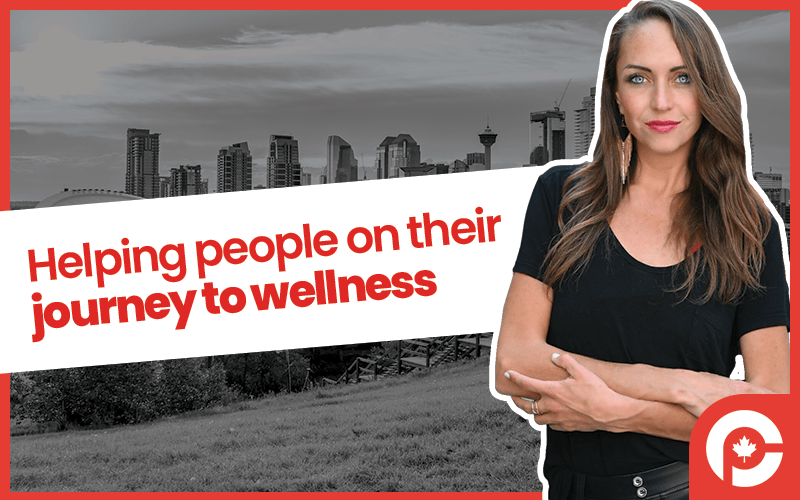
Helping people on their journey to wellness
Episode
Magdalena Czyz is a certified health coach and public speaker. She specializes in effortless weight loss, overcoming burnout, and...
Key takeaways
- Mental health issues have risen significantly post-pandemic due to loss of control, technology addiction, economic pressures, and constant information overload affecting our primitive brains.
- Approximately 75% of physical health conditions can be traced back to stress, with unprocessed emotions like grief and anger manifesting as lung issues, hormonal imbalances, and other serious health problems.
- Simple stress management techniques include grounding by walking barefoot on earth, working out, screaming in private spaces, listening to appropriate music frequencies, and practicing breathwork to release emotions productively.
- Corporate wellness programs directly impact productivity, performance quality, absenteeism rates, and workplace safety, making employee mental and physical health crucial for business operations.
- Movement and dance serve as powerful forms of stress relief and self-expression that can instantly shift your mental state and help release tension from the body.
Transcript
Full transcript page · Interactive episode
============================================================
TRANSCRIPTION WITH SPEAKERS
============================================================

[00:00] SPEAKER_03: Welcome to Canada's podcast.
[00:07] SPEAKER_03: Hello, I'm Mario Tonigusi, managing editor of Canada's podcast.
[00:11] SPEAKER_03: Today on Calgary's podcast, joining me is Magdalena Chish,
[00:16] SPEAKER_03: who is a certified help coach and a public speaker.
[00:19] SPEAKER_03: Thanks, Magdalena, for joining us today.
[00:22] SPEAKER_01: Thanks for pronouncing my name and last name perfectly.
[00:25] SPEAKER_01: Please.
[00:26] SPEAKER_03: I'll get it by the end of the podcast.
[00:28] SPEAKER_03: I'll forget it.
[00:30] SPEAKER_01: That's okay. You nailed it once.
[00:33] SPEAKER_03: So tell me a little bit about yourself, Magdalena, what you do?
[00:38] SPEAKER_01: Sure. I do a lot of different things.
[00:42] SPEAKER_01: So I actually used to work with immigrants for 14 years as a settlement counselor.
[00:47] SPEAKER_01: I'll be in it French, Spanish, Polish, and English speaking immigrant subtle into the city.
[00:53] SPEAKER_01: I really enjoy helping people.
[00:57] SPEAKER_01: And now I transitioned into health coaching.
[00:59] SPEAKER_01: So as a health coach, I help people in different settings, one-on-one, and group,
[01:05] SPEAKER_01: and in the corporate world.
[01:08] SPEAKER_01: So my areas of expertise are helping people with mental health,
[01:12] SPEAKER_01: so dealing with anxiety, depression, learning how to better manage stress,
[01:17] SPEAKER_01: learning how to even see stress from a different perspective.
[01:21] SPEAKER_01: So a lot of it is kind of, I guess it would be kind of like mindset shift,
[01:26] SPEAKER_01: but just showing people a different way of looking at things.
[01:29] SPEAKER_01: I also have an online weight loss program.
[01:32] SPEAKER_01: It's called wellness and weight loss, because the focus really is wellness.
[01:37] SPEAKER_01: Yeah.
[01:37] SPEAKER_01: And weight loss is just a side effect.
[01:39] SPEAKER_01: I don't, I barely talk about weight in the program.
[01:41] SPEAKER_01: I just teach people how to take better care of their bodies,
[01:45] SPEAKER_01: and teach them hacks on how to improve capitalism,
[01:48] SPEAKER_01: boost energy levels easily.
[01:52] SPEAKER_01: And then I also run corporate wellness workshops for companies,
[01:56] SPEAKER_01: all types of companies, engineering firms, startups, tech companies,
[02:02] SPEAKER_01: medical offices, and I, the workshops are in stress management,
[02:07] SPEAKER_01: leadership skills, and wellness.
[02:11] SPEAKER_01: So things like nutrition, physical fitness,
[02:14] SPEAKER_01: and you think that I'm starting now is I want to start coaching small groups
[02:20] SPEAKER_01: of upper management staff, so executives on an ongoing basis,
[02:24] SPEAKER_01: and then start incorporating, incorporating the workshops as just a part of the coaching.
[02:29] SPEAKER_01: And the workshops I give to all employees,
[02:32] SPEAKER_01: like whatever staff wants to attend.
[02:35] SPEAKER_03: Yeah.
[02:36] SPEAKER_03: So when you're looking at this whole mental health picture, Vangdalena,
[02:42] SPEAKER_03: you know, are you seeing greater levels of distress out there with people,
[02:50] SPEAKER_03: especially having gone through the, you know,
[02:52] SPEAKER_03: a few years of the pandemic, and now obviously the economic challenges out there.
[03:00] SPEAKER_03: There's a more people with mental health issues.
[03:03] SPEAKER_01: Yes.
[03:04] SPEAKER_01: Which is why the short one is yes,
[03:07] SPEAKER_01: which is why I actually created a brand new workshop called Mental Health and Suicide Prevention,
[03:14] SPEAKER_01: because what I think I noticed among people that I know is a rise in suicide levels,
[03:20] SPEAKER_01: I think because of the level of stress that people are experiencing.
[03:23] SPEAKER_01: Yeah.
[03:24] SPEAKER_03: What do you think this is happening?
[03:30] SPEAKER_03: Like, you know, obviously this has been the mental health issues have been there for forever, right?
[03:36] SPEAKER_03: And we've always, you know, we've always had these issues out there in, you know,
[03:43] SPEAKER_03: challenges in the world, but it just seems to be heightened now. Why?
[03:48] SPEAKER_01: Yeah.
[03:49] SPEAKER_01: Okay. Well, one thing talking about the pandemic,
[03:51] SPEAKER_01: I think it showed people that they have less security and control over their lives than they think.
[03:56] SPEAKER_02: Yeah.
[03:58] SPEAKER_01: Which interestingly enough, control over your life is an illusion anyway,
[04:02] SPEAKER_01: and that's what I teach people.
[04:05] SPEAKER_01: But that perceived level of control suddenly disappeared and that can cause stress to the mind,
[04:11] SPEAKER_01: the mind that doesn't understand how it works.
[04:15] SPEAKER_01: So I help people to understand how their mind works, to help dissipate stress.
[04:19] SPEAKER_01: But anyway, so that's one thing.
[04:21] SPEAKER_01: And then I honestly, I think technology,
[04:24] SPEAKER_01: first of all, the actual physical radiation that comes from technology,
[04:28] SPEAKER_01: like the different wavelengths that they call EMFs,
[04:31] SPEAKER_01: that comes from everything, like, I mean, microwaves, TVs, laptops, modems,
[04:38] SPEAKER_01: our cell phones, we're literally bombarded with this,
[04:40] SPEAKER_01: and a lot of people are sensitive to that, and they don't notice.
[04:44] SPEAKER_01: I find also, maybe since the pandemic too, people feel like they really got a hustle to make ends meet.
[04:53] SPEAKER_01: And then of course, with inflation, everything's more expensive.
[04:56] SPEAKER_01: We've got to work harder to make kind of the same amount of money,
[05:01] SPEAKER_01: but everything's now expensive, and so that need to have to work a lot is another thing.
[05:07] SPEAKER_01: And then again, this addiction to technology, like social media,
[05:12] SPEAKER_01: cell phones, we're constantly, our brains are not meant to go so fast,
[05:17] SPEAKER_01: and with this information overload, which is great.
[05:21] SPEAKER_01: It's very convenient and helpful, but at the same time,
[05:24] SPEAKER_01: it's just taxing on our primitive brains that are not adapting as quickly as technology is evolving.
[05:31] SPEAKER_01: So that's why I see this happening.
[05:33] SPEAKER_03: I think I saw something the other day where your people are, you know, especially younger people,
[05:38] SPEAKER_03: spending like seven hours a day on TikTok, like the Holy Smoke.
[05:44] SPEAKER_03: It's amazing.
[05:46] SPEAKER_03: What are the consequences of mental health issues, like on physical health?
[05:52] SPEAKER_01: Oh, there's so many.
[05:56] SPEAKER_01: I mean, honestly, any health, not any, but I'd say 75% according to studies of stress,
[06:03] SPEAKER_01: physical conditions can be traced back to stress.
[06:07] SPEAKER_01: And different emotions can impact different parts of the body,
[06:11] SPEAKER_01: so if you're constantly dealing with feelings of grief,
[06:15] SPEAKER_01: and to me, any emotion that's uncomfortable is a type of stress.
[06:20] SPEAKER_01: Yeah.
[06:21] SPEAKER_01: So feelings of grief, for example, that are not processed,
[06:24] SPEAKER_01: end up resulting in lung issues.
[06:27] SPEAKER_01: Feelings of anger and resentment can result in cancer for some people.
[06:33] SPEAKER_01: I'm not saying that it always causes that.
[06:34] SPEAKER_01: The other causes sometimes it's hard to know what it is, but there's definitely a direct relation.
[06:41] SPEAKER_01: Court is all levels go up, so your hormones start to become imbalanced.
[06:45] SPEAKER_01: Your sleep cycle is off when your court is all as up due to stress.
[06:49] SPEAKER_01: Yeah.
[06:49] SPEAKER_01: So, yeah, it's a very direct relation actually between stress and wellness.
[06:55] SPEAKER_00: Yeah.
[06:55] SPEAKER_00: Canada's podcast is your gateway to success in the world of entrepreneurship.
[07:00] SPEAKER_00: Start listening today.
[07:02] SPEAKER_00: Canada's podcast.com subscribe now.
[07:05] SPEAKER_03: And what are you finding in terms of the demographics?
[07:10] SPEAKER_03: Is this the mental health issues hitting people who are younger,
[07:15] SPEAKER_03: more than the sitting that people that are older or are just the same across the board?
[07:21] SPEAKER_01: Yeah, I haven't really done research, and I tend to work with adults between 30 and 60 years of age.
[07:28] SPEAKER_01: But what I noticed when it comes to suicide, I have, again, this is anecdotal.
[07:33] SPEAKER_01: I haven't done the research, but I've noticed among people that I've known,
[07:38] SPEAKER_01: suicide rates tend to be higher among males, again, between 30 and 50 years old.
[07:45] SPEAKER_01: That's what I've noticed.
[07:47] SPEAKER_01: So, I don't know if men tend to experience stress more strongly, maybe because they don't have the support,
[07:55] SPEAKER_01: they haven't been taught to be more open, women tend to be more inclined to share their feelings,
[08:01] SPEAKER_01: to find support, and men feel like they have to do everything on their own,
[08:05] SPEAKER_01: and the burden is on their shoulders alone.
[08:07] Speaker UNKNOWN:
[08:08] SPEAKER_03: Thinking now that you guys, you know, I've had that happen, you know,
[08:11] SPEAKER_03: on a personal level knowing people that have committed suicide,
[08:15] SPEAKER_03: and then just recently one of the golfers on the PGA tour,
[08:22] SPEAKER_03: who was quite young, the same thing.
[08:24] SPEAKER_03: And I guess when you're talking about being open, like for men,
[08:31] SPEAKER_03: actually for anybody, I guess, internalizing everything is not good, right?
[08:37] SPEAKER_03: Then keeping everything inside, like what's the key to start to, I guess, overcome some of this stuff?
[08:46] SPEAKER_01: For sure. So there are many things you can do.
[08:52] SPEAKER_01: One thing is just to release your emotion, whatever that may look like.
[08:56] SPEAKER_01: And I don't mean that if you're angry, go yell at somebody.
[08:59] SPEAKER_01: I mean, release it in a non-hurtful, productive way.
[09:04] SPEAKER_01: So it could be go to the gym, like working out as an amazing way to maintain mental health,
[09:10] SPEAKER_01: like punching bags.
[09:12] SPEAKER_01: Or yeah, it could be screaming, like not at somebody though,
[09:16] SPEAKER_01: screaming into a pillow or screaming in your car or going outside with
[09:20] SPEAKER_01: there's nobody and just screaming in there.
[09:22] SPEAKER_01: So having a release is very helpful.
[09:27] SPEAKER_01: Another way to release emotion, honestly, I find going into nature,
[09:31] SPEAKER_01: is very helpful and grounding.
[09:34] SPEAKER_01: So have you heard of grounding in the sense of putting your feet directly on the earth?
[09:40] SPEAKER_01: What literally physically happens on an electrical magnetic level is that
[09:44] SPEAKER_01: when you're standing on the earth barefoot, especially if the ground is wet,
[09:49] SPEAKER_01: so it could be sand on by the ocean, that's a little bit moist,
[09:53] SPEAKER_01: or the morning dew, or just after it rains, the grass.
[09:58] SPEAKER_01: It increases the electrical current.
[10:00] SPEAKER_01: And what happens is that the positive ions, which are stress creating and disease creating ions,
[10:06] SPEAKER_01: get absorbed out of your body into the earth,
[10:09] SPEAKER_01: so get released into the earth, the earth absorbs it,
[10:13] SPEAKER_01: and then the earth releases negative ions into your body,
[10:16] SPEAKER_01: which are the calming ions, the ones that produce wellness and feeling grounded and calm.
[10:23] SPEAKER_01: That literally physically happens in your body.
[10:25] SPEAKER_01: So that's one way, again, if you're processing emotions,
[10:28] SPEAKER_01: just getting yourself grounded, listening to certain types of music is helpful too.
[10:34] SPEAKER_01: Like if you're feeling very low, I would suggest more upbeat music,
[10:39] SPEAKER_01: the frequency of the music affects your brain and your body, actually the cells in your body.
[10:44] SPEAKER_01: And if you're feeling very anxious, and I wouldn't suggest putting on heavy metal or EDM,
[10:49] SPEAKER_01: I would suggest classical music or meditative music or just something joyful and calm.
[10:58] SPEAKER_01: Yeah, so those are some ways to start to process emotions.
[11:01] SPEAKER_01: And once you start doing that, you can become more open to also sharing.
[11:06] SPEAKER_01: And I mean, I see some men's groups starting up more and more.
[11:11] SPEAKER_01: So for men who are looking for support, just do some research on men's group.
[11:17] SPEAKER_01: And they're very, I've attended some because sometimes they have things open for women to attend to.
[11:21] SPEAKER_01: They're very inviting. They're very conscious and evolved and helpful.
[11:28] SPEAKER_01: Yeah.
[11:29] SPEAKER_03: Okay. Now, you know who depack troopers?
[11:34] SPEAKER_03: Yes.
[11:34] SPEAKER_03: Okay. So years ago, when I was a...
[11:37] SPEAKER_01: I want to know who doesn't know who that is.
[11:40] SPEAKER_03: Years ago, when I was a reporter at the Calgary Herald,
[11:43] SPEAKER_03: I remember him coming to Calgary to do one of his big conferences and workshops.
[11:50] SPEAKER_03: And it was at the convention center.
[11:53] SPEAKER_03: And the first thing he was told people was to sit, you know, close your eyes and sit quietly.
[12:01] SPEAKER_03: And it was the toughest thing for people to do, right?
[12:05] SPEAKER_03: And that was the point he was making is that...
[12:07] SPEAKER_03: And I'm wondering if we've lost because of the busyness and the technology out there.
[12:15] SPEAKER_03: Have we lost the ability to be still and to be silent?
[12:19] SPEAKER_03: And what are the consequences of that?
[12:22] SPEAKER_01: Yes. Yes, we have.
[12:26] SPEAKER_01: So stillness.
[12:28] SPEAKER_01: And then I forgot to breath work is an amazing way to get grounded and release emotions.
[12:33] SPEAKER_01: Incredible.
[12:34] SPEAKER_01: Way to do that.
[12:36] SPEAKER_01: But yes, we definitely have.
[12:39] SPEAKER_01: And the thing is,
[12:41] SPEAKER_01: with like I mentioned before, technology, you know, when your notifications are going off all the time,
[12:46] SPEAKER_01: when you're receiving emails, texts, just like all this information overload,
[12:51] SPEAKER_01: we also get a dopamine hit from all of that.
[12:54] SPEAKER_01: And we get used to it.
[12:55] SPEAKER_01: It becomes an addiction.
[12:56] SPEAKER_01: Kind of like you start smoking and then you need it more cigarettes more often.
[13:00] SPEAKER_01: Because you get that instant gratification feeling.
[13:05] SPEAKER_01: And the same thing happens with technology.
[13:07] SPEAKER_01: And so our brains...
[13:09] SPEAKER_01: It's like we're overproducing dopamine.
[13:12] SPEAKER_01: And when you overproduce something, then after time, you're not producing enough of it.
[13:15] SPEAKER_01: So now you're needing that hit from technology.
[13:18] SPEAKER_01: And it's really hard for us to stay still because we get bored.
[13:22] SPEAKER_01: And we have this feeling that we need something from the outside to give us like that hit.
[13:27] SPEAKER_02: Yeah.
[13:28] SPEAKER_01: Good kind of hit.
[13:31] SPEAKER_01: Yeah.
[13:31] SPEAKER_01: So I think that's what's happening.
[13:33] SPEAKER_01: It's just it's we get bored so easily because we're used to being bombarded.
[13:38] SPEAKER_03: Yeah.
[13:39] SPEAKER_01: Stop.
[13:40] SPEAKER_01: Yeah.
[13:41] SPEAKER_03: I wanted to ask you a little bit about your corporate wellness work.
[13:46] SPEAKER_03: You know,
[13:48] SPEAKER_03: I've you seen more of a willingness by companies to do stuff like this for employees.
[13:56] SPEAKER_03: And they're recognizing the problems and issues out there.
[14:01] SPEAKER_01: For sure.
[14:02] SPEAKER_01: And I do think the pandemic was a big wake up call of just how important mental and physical health is for people and to foster that within companies.
[14:13] SPEAKER_03: Yeah.
[14:14] SPEAKER_03: What are they, you know, what are they looking at when they're when they're looking at this,
[14:21] SPEAKER_03: you know, in terms of how it impacts their their operations like when when people are sick, you know,
[14:30] SPEAKER_03: and mentally ill, how does that impact a company's, you know, how it rates and what it does.
[14:40] SPEAKER_01: So many ways I mean it impacts productivity levels at work.
[14:44] SPEAKER_01: It impacts performance, the quality of the performance.
[14:48] SPEAKER_01: As you said yourself absenteeism.
[14:50] SPEAKER_01: So when people are taking less stress, leave less sick days because they're supporting their mental and physical health.
[14:57] SPEAKER_01: Of course, that's helpful.
[14:59] SPEAKER_01: Safety in the workplace as well when people are more present and they're not in pain and they're not distracted by something going on in their body.
[15:06] SPEAKER_01: There's more safety, especially like in the oil fields, right?
[15:09] SPEAKER_01: Whether when they're operating machinery and yeah, and when people are sleeping better, they have more alertness.
[15:16] SPEAKER_01: So they can catch mistakes easier.
[15:19] SPEAKER_01: It's a huge impact.
[15:21] SPEAKER_01: Honestly, and I always say like if you don't have your health, you have nothing in a way.
[15:25] SPEAKER_01: Like I understand you can have a greater connection to something outside of you, even if you're unwell,
[15:31] SPEAKER_01: but it's just hard to live in the world and be productive when you don't have your health.
[15:36] Speaker UNKNOWN:
[15:37] SPEAKER_00: Stay ahead of the game with our expert tips and strategies that will help your business thrive in a digital era.
[15:44] SPEAKER_00: Canada's podcast.com subscribe now.
[15:47] SPEAKER_03: I wanted to ask you one other thing and of what you do and dancing.
[15:54] SPEAKER_03: Tell me your eyes lit up when I said that.
[15:59] SPEAKER_03: Tell me about dancing and what part then roll that plays in your life.
[16:05] SPEAKER_01: Yeah, so I started off with actually swing dancing when I was 17 years old was my very first class that I took.
[16:13] SPEAKER_01: And after that, I finally invited me to a salsa class, one lesson.
[16:17] SPEAKER_01: And ever since I kept dancing, Latin dancing.
[16:22] SPEAKER_01: And there was a period of time where I went out to practice salsa dancing for nights a week for an entire year.
[16:28] SPEAKER_01: I did some breaks, but yeah, I've been dancing salsa since I was 18 years old.
[16:34] SPEAKER_01: But and I love it.
[16:36] SPEAKER_01: It's just such a form of stress relief and self expression and being creative.
[16:41] SPEAKER_01: But what I started doing in the last five years more recently is something called free flow dance.
[16:47] SPEAKER_01: And again, that's even more tapping into my own creativity and self expression.
[16:52] SPEAKER_01: And that's the use of props like these LED wings that laid up.
[16:56] SPEAKER_01: So like Angelic wings and silk fans like these long fans that I play around with.
[17:03] SPEAKER_01: And then I dress up and I put jewels on my face.
[17:06] SPEAKER_01: And it's a whole like costume that I put on it.
[17:11] SPEAKER_01: And basically, yeah, so I started doing this at church as a form of prayer and meditation.
[17:16] SPEAKER_01: And then I decided I like dancing to all types of music.
[17:19] SPEAKER_01: So I started dancing in my living room like this one right here.
[17:22] SPEAKER_01: And then now I dance for all types of events.
[17:26] SPEAKER_01: So it could be corporate parties.
[17:28] SPEAKER_01: It could be Christmas parties, birthday parties, sometimes at the nightclub.
[17:32] SPEAKER_01: I'll dance this Friday, actually, if you'd like to join.
[17:36] SPEAKER_01: There's a photo exhibit a black and white photo exhibit that this photographer is putting on.
[17:41] SPEAKER_01: I'll be dancing at that event as well.
[17:44] SPEAKER_01: So yeah, and I just love bringing my wings and costumes and dance to all types of music.
[17:48] SPEAKER_01: And people love it.
[17:49] SPEAKER_01: It's just very inspiring.
[17:51] SPEAKER_01: And I feel like it shows them that they can tap into their own creativity and their own self expression.
[17:58] SPEAKER_01: And that's what I love about doing it is to help people feel that with themselves too.
[18:03] SPEAKER_03: So do you find that the dancing and, you know, obviously with music.
[18:09] SPEAKER_03: Kind of takes you away from the reality is what is there that may be bothering you or whatever, right?
[18:19] SPEAKER_01: 100%.
[18:20] SPEAKER_01: Yes, such a form of stress relief.
[18:23] SPEAKER_01: And sometimes when I'm too tense and stressed, even I'll go to the gym with my flags.
[18:29] SPEAKER_01: And then I just, it's so flowy and like free flowing that my body just starts to relax.
[18:36] SPEAKER_01: And all the tension just goes away.
[18:40] SPEAKER_03: I'm laughing because I could confession time, right?
[18:44] SPEAKER_03: So yesterday I was in that mood of listening to music, right?
[18:50] SPEAKER_03: And so I had the music blurring away as I was working.
[18:54] SPEAKER_03: And then every once in a while a certain song would catch my attention.
[18:58] SPEAKER_03: And I would be up in my living room just dancing away.
[19:02] SPEAKER_01: And you know me props, right?
[19:04] SPEAKER_01: You can just dance.
[19:05] SPEAKER_03: And then I thought that you know what mentally and my frame of mind for the rest of that day was one of the best days I've had in, you know, in a few days.
[19:17] SPEAKER_01: That's awesome.
[19:18] SPEAKER_01: I love that.
[19:19] SPEAKER_01: Yes, dancing is for everyone and it can look however you want it.
[19:23] SPEAKER_01: It just means moving your body.
[19:25] SPEAKER_03: Yeah.
[19:26] SPEAKER_01: Awesome.
[19:27] SPEAKER_03: Exactly.
[19:28] SPEAKER_03: All right.
[19:29] SPEAKER_03: Just a little background on you, Magdalena, where are you from?
[19:33] SPEAKER_03: I was born in Poland.
[19:34] SPEAKER_03: Okay.
[19:35] SPEAKER_03: And how long you've been in Calgary?
[19:37] SPEAKER_01: So I came to Saskatoon when I was six and a half.
[19:40] SPEAKER_01: Oh wow.
[19:41] SPEAKER_01: And seven and a half we moved to Calgary with my family.
[19:44] SPEAKER_01: So I've been, I'm 42 now.
[19:45] SPEAKER_01: So however long that is ago.
[19:47] SPEAKER_03: And what do you, as a, you know, as an entrepreneur and then you're, you know, and what you do, how do you find living and working in Calgary?
[19:56] SPEAKER_03: And running a business?
[19:59] SPEAKER_01: Yeah.
[20:01] SPEAKER_01: I mean, I haven't really ran business outside of Calgary, so I don't know much different.
[20:06] SPEAKER_01: But I feel like there's a lot of growth happening.
[20:09] SPEAKER_01: Like you mentioned a lot of a lot more companies open to what I'm doing right now.
[20:15] SPEAKER_01: More, there's a lot of people coming into the city.
[20:18] SPEAKER_01: So that did.
[20:19] SPEAKER_01: I can have a lot of different entrepreneurs.
[20:22] SPEAKER_01: There's tons of networking events I find it.
[20:24] SPEAKER_01: Yeah, it's getting better for sure for entrepreneurs.
[20:27] SPEAKER_03: All right.
[20:29] SPEAKER_03: Wonderful.
[20:30] SPEAKER_03: Well, thanks very much, Magdalena for joining us today.
[20:33] SPEAKER_01: Thank you.
[20:34] SPEAKER_01: I really appreciate the opportunity.
[20:36] SPEAKER_03: All right.
[20:37] SPEAKER_03: Super.
[20:37] SPEAKER_03: That was Magdalena Chish, who is a certified health coach and public speaker in Calgary.
[20:43] SPEAKER_03: I'm Mario Tonoguzzi, managing editor of Canada's podcast today on Calgary's podcast.
[20:49] SPEAKER_03: Thanks for joining us.