
The Importance of Defining Success with Krista Halliday
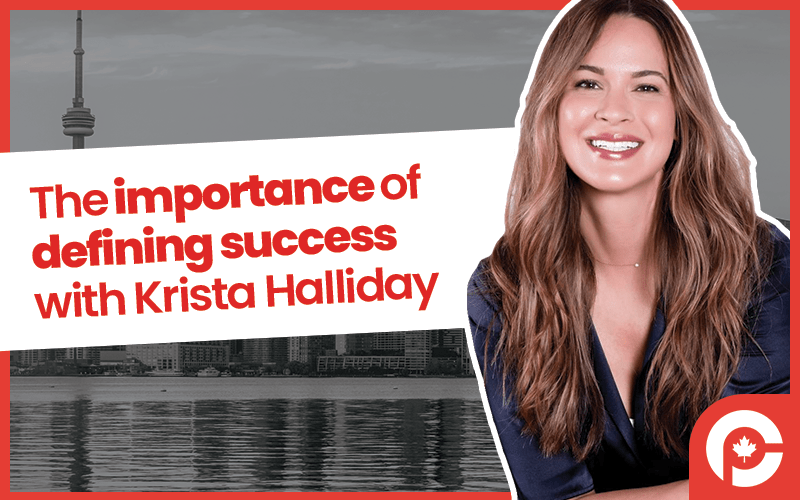
Episode
Krista Halliday is a serial entrepreneur on a mission to disrupt the brand ecosystem as we know it. Leading...
Key takeaways
- Understanding your target market deeply is critical for success, as assuming one market operates like another can lead to costly failures even for established brands.
- Define what success looks like for you early on beyond just revenue and employee counts, as financial goals alone rarely lead to fulfillment or happiness.
- Be selective about who you work with and ensure alignment in values, as the people around you have a significant impact on your daily well-being and business satisfaction.
- Just because you're good at something doesn't mean you need to build a business around it, since running a business often means you spend less time doing what you actually enjoy.
- Develop deep self-awareness to recognize when things are negatively impacting your life, as small changes in health, relationships, and personal well-being are important signals that something needs to shift.
Transcript
Full transcript page · Interactive episode
============================================================
TRANSCRIPTION WITH SPEAKERS
============================================================

[00:00] SPEAKER_00: Welcome to Canada's podcast.
[00:05] SPEAKER_00: Hi, this is Celine Williams hosting for Montereo for Canada's podcast.
[00:09] SPEAKER_00: My guest today is Christa Halliday, who is a serial entrepreneur and founder of Ray Management Group.
[00:16] SPEAKER_00: And she is on a mission to disrupt the brand and retail ecosystem as we know it. Welcome, Christa.
[00:23] SPEAKER_01: Thank you. Thanks, Celine. Thanks for having me. Super excited to be here.
[00:27] SPEAKER_00: Absolutely. It's a pleasure. I have many questions.
[00:31] SPEAKER_00: But the first question I'm going to ask is, can you tell us a little bit?
[00:36] SPEAKER_00: So as your bio says, your serial entrepreneur, so can you tell us a little bit about your journey
[00:42] SPEAKER_00: to getting to where you are today and to doing what you're doing today?
[00:46] SPEAKER_01: Yeah, I mean, it's a wild journey and kind of all over the place.
[00:52] SPEAKER_01: So there's no real linear path, but absolutely. So my journey as an entrepreneur started
[01:02] SPEAKER_01: around 26, 27 years old. I was working and I'm really fortunate to have worked for some amazing
[01:09] SPEAKER_01: corporate powerhouse brands. Revlon, whole Renfrew, Rexall, really amazing people and companies.
[01:20] SPEAKER_01: But something was always in me actually probably since a little girl of, I want to do more and I
[01:28] SPEAKER_01: want to do everything and I want to learn everything. I'm somebody who asks why a lot and
[01:37] SPEAKER_01: throughout my career, I noticed that there were a lot of big opportunities that people weren't
[01:44] SPEAKER_01: really tapping into. And so my background was in retail, branding, buying, marketing,
[01:51] SPEAKER_01: cosmetics, that whole world. And I noticed a really big opportunity for US or international brands
[01:59] SPEAKER_01: to come into the Canadian marketplace and launch at Canadian retailers. And oftentimes, you know,
[02:06] SPEAKER_01: US or any brands outside of the Canadian landscape don't really understand the differences.
[02:15] SPEAKER_01: And there's a lot of them in the Canadian market. And there's companies that do this, but not
[02:23] SPEAKER_01: to the same extent or same degree. So I really noticed this opportunity and I went to my boss at the
[02:28] SPEAKER_01: time who was US based and I said, listen, here's what I want to do. This is my vision. I'm going to do
[02:35] SPEAKER_01: it, but I'm your only Canadian employee. Why don't I come off payroll and you pay me as a consultant.
[02:42] SPEAKER_01: And that way there's no gap in the organization. I continue to do my job. Hopefully you think I'm
[02:48] SPEAKER_01: doing it well and you can pay me less. And after a few conversations, thankfully they got on board
[02:56] SPEAKER_01: and they said, okay, let's do this. And that really started my journey as an entrepreneur. And,
[03:02] SPEAKER_01: you know, it's taken many twists and turns along the way and many different companies along the way.
[03:07] SPEAKER_01: But that's really, you know, the foundation of it. So I love that you saw an opportunity
[03:16] SPEAKER_00: and a gap that you wanted to fill. And I'm curious. This is going to get very specific for a second.
[03:21] SPEAKER_00: But when you're talking about like US brands, for example, that want to come into Canada and don't
[03:28] SPEAKER_00: understand the market differences, which are real. The thing that immediately comes to mind is
[03:33] SPEAKER_00: target and target coming into Canada. And it felt like they just assumed it's exactly like the US.
[03:40] SPEAKER_00: And we're just going to do the same thing. And I'm cute. And I'm not saying that is right or wrong.
[03:45] SPEAKER_00: I'm just saying that's what it felt like as a consumer. And I'm curious as someone who
[03:50] SPEAKER_00: understands branding and retail space in the way that you do, is that an example of someone who
[03:57] SPEAKER_00: missed the mark in that way or have I completely come up with an example that is for other reasons,
[04:04] SPEAKER_01: not great. No, so you've nailed it on the head. I mean, that is the textbook example
[04:14] SPEAKER_01: of not understanding a market and a consumer base. And, you know, I came in on the tail end of that
[04:22] SPEAKER_01: target launch to try and help with it. But, you know, that's exactly what happened. It was just
[04:29] SPEAKER_01: not understanding the market and the nuances in the market and thinking, hey, we have this big
[04:35] SPEAKER_01: powerhouse brand in the US. It's Uber successful. Canada's just north of us. There's no reason
[04:43] SPEAKER_01: that we can't make this a huge success overnight. And we all know that didn't work out really well.
[04:50] SPEAKER_00: Well, and it's, I didn't know that you were involved in targets. So,
[04:56] SPEAKER_00: unintentionally, but it's interesting because I also think that in a case like that,
[05:04] SPEAKER_00: and this may not always be the case, there was, I think also Canadians were so excited about it
[05:12] SPEAKER_00: because they knew what target was in the US. I don't think that is always the case. And I'm
[05:20] SPEAKER_00: curious when you're doing the work that you're doing outside of coming at the tail end of target,
[05:26] SPEAKER_00: how often are you, is there an element of education for the market itself in Canada?
[05:35] SPEAKER_01: There's a huge element of education. And in fact, what we do is interesting because we take on the
[05:43] SPEAKER_01: brands as if we are the brand owners. And usually, nine times out of 10, when a brand owner in the US
[05:52] SPEAKER_01: realizes or we're able to show them and provide them that education on how the market is different,
[05:58] SPEAKER_01: they get it and they say, okay, you know what, like we're not going to try and accomplish
[06:06] SPEAKER_01: what needs to happen for success in the market. We're going to hand it over to you. And you guys do
[06:12] SPEAKER_01: all the selling logistics, all of the marketing operations because we are not market experts.
[06:21] SPEAKER_01: Now, like target, it's happened before where we have brands who say, no, we're doing a great job
[06:26] SPEAKER_01: and we're going to do all of that. And I can tell you they end up in the same place as target quite often.
[06:36] SPEAKER_00: It's so it's it almost feels like no offense to target or anyone else when I say this,
[06:42] SPEAKER_00: but it almost feels like the arrogance that we figured out in one place. We're just fine to fit.
[06:46] SPEAKER_00: It's going to be the exact same. The state is huge. Obviously, we can if we figured out here,
[06:50] SPEAKER_01: we can figure it out anywhere. Yeah, absolutely. And I mean, there is, I think when you're
[06:56] SPEAKER_01: talking to any, you know, successful brand, you know, target is a great example. We keep using it
[07:01] SPEAKER_01: as an example. And I think it's a fantastic one because they've been in business for so long.
[07:06] SPEAKER_01: They get it. They're a well-oiled machine. They've mastered their market and their retail landscape.
[07:12] SPEAKER_01: And it makes sense, right? You know, just in theory, why would Canada be any different?
[07:19] SPEAKER_01: But it is drastically different. The consumers are very different. The retail landscape is
[07:25] SPEAKER_01: different and it presents a ton of challenges. You know, even the simple like exchange rate,
[07:32] SPEAKER_01: you know, logistics, operations, all of the things behind the brand, really, you know,
[07:41] SPEAKER_01: can lend it this hand to a fast fail in the market. And there's a huge investment required to get
[07:46] SPEAKER_01: into the Canadian market when you when you start thinking of, you know, bilingual packaging and
[07:51] SPEAKER_01: a different formulation in health and beauty. You know, Canada has different regulations when it comes
[07:57] SPEAKER_01: to cosmetics and body care and hair care. And if you don't understand all of the details around
[08:03] SPEAKER_01: that, you can be in and out of here pretty quickly. And that's a huge loss. Yeah. And you really
[08:09] SPEAKER_01: have one chance at succeeding. You know, a customer, customers are savvy. It's not like, you know,
[08:17] SPEAKER_01: even 15, even 10 years ago, they understand what's happening behind the brand. Social media has
[08:24] SPEAKER_01: opened up this whole world of education to people when it comes to brands and education. And so
[08:30] SPEAKER_01: if they see you on shelf and you're not doing the right things, they're not going to pick up your
[08:34] SPEAKER_01: product. And if you're not talking to the right consumers that you're going after or treating
[08:40] SPEAKER_01: them in a way that they understand the brand, they're just not going to purchase. Yeah.
[08:48] SPEAKER_00: I think that that, you know, it's really interesting. I think what you're saying about how
[08:53] SPEAKER_00: social media has changed the landscape. It's not the only thing, but I think it has absolutely had
[08:58] SPEAKER_00: more of an impact than a lot of, I would say especially the larger, more established brands,
[09:04] SPEAKER_00: sometimes are even want to be aware of. I think if you're new and like all those brands that
[09:10] SPEAKER_00: have exploded on TikTok in the last year or two, for example, I think they're hyper aware,
[09:15] SPEAKER_00: hyper aware of the importance of social media and the impact it can have good and bad. And I
[09:20] SPEAKER_00: think a lot of the bigger brands are like, it's not a thing I have to worry about. Yeah. Absolutely.
[09:27] SPEAKER_01: And I would disagree 100%. It's absolutely something you have to worry about because Ghana
[09:33] SPEAKER_01: of the days where you're looking to your mom for a recommendation on a product or your aunt,
[09:38] SPEAKER_01: even a friend, like a friend may mention a brand and you're going to go look it up, you're going
[09:44] SPEAKER_01: to research it, you're going to understand what they're all about. You're going to know who the
[09:49] SPEAKER_01: CEO is and what the products made of before you decide to leverage your purchasing power. And
[09:57] SPEAKER_01: you know, for me as a consumer, my mom is like, dub soap, my favorite soap, right? I've been using it
[10:06] SPEAKER_01: for years. I don't need anything else. And I'm like, okay, I get it. But you know, what does dub do?
[10:12] SPEAKER_01: What are they doing behind the brand? What are their advertising campaigns? What are their goals?
[10:19] SPEAKER_01: And she's like, I don't know. I have no idea. I just know it's a great product and I've been using
[10:22] SPEAKER_01: it for 40 years. So I'm not going to change my product that does not exist anymore. There is no
[10:27] SPEAKER_00: brand loyalty. Yeah. I love it. You said that because I have probably been saying that too long
[10:37] SPEAKER_00: where I will often say like, I'm not a brand loyal person. I will like something until I find
[10:43] SPEAKER_00: something that I like more. Just really speaking. And we're waiting for something more, right? It's
[10:52] SPEAKER_01: a product you might be happy with it. But you could be in the poll foods or shoppers drug
[10:58] SPEAKER_01: mart and you see something else that's shiny and new and you're immediately gravitated towards
[11:03] SPEAKER_01: it. And it doesn't matter how long or how much you love that product. So I'm going to take a step
[11:08] SPEAKER_00: back for a second. Yeah. Into your journey as a serial entrepreneur, where you saw an opportunity
[11:17] SPEAKER_00: in the role that you had to become a consultant, change your role step externally, which sounds
[11:23] SPEAKER_00: like whether or not the start of Ray management group was the start of being an entrepreneur and
[11:29] SPEAKER_00: running your own businesses along the way to get to Ray management group, whether that was the
[11:36] SPEAKER_00: first or not. What were some of the challenges that you faced or lessons that you learned?
[11:47] SPEAKER_00: I ask this also specifically because I think the fact that you were dealing with US brands and
[11:56] SPEAKER_00: American companies and in this kind of feat in both worlds lends itself to some pretty unique
[12:04] SPEAKER_00: challenges and lessons and opportunities. And I think that's really interesting for people to hear
[12:10] SPEAKER_01: about. Yeah, definitely. So learnings right off the bat would be know who you're working with.
[12:25] SPEAKER_01: Make sure that you are aligned as people as human beings have a similar value system.
[12:35] SPEAKER_01: You know, regardless of the product, the people that you're working with have such
[12:40] SPEAKER_01: influence on your everyday and your environment that I would say I'm much
[12:47] SPEAKER_01: pickier today than I was 15 years ago on who I work with and what brands I work on.
[12:56] SPEAKER_01: I'm always reminded of that and have to go back to okay, what are my values? What are our
[13:01] SPEAKER_01: company values? What are we working towards? We're actually working on creating a vetting system
[13:07] SPEAKER_01: for that very reason because people on your everyday have such a huge impact on your well-being
[13:14] SPEAKER_01: that I think that is so key. Partnerships, I used to have partners in my business. I no longer do.
[13:24] SPEAKER_01: We definitely have external partnerships and company incentives in terms of partnerships.
[13:33] SPEAKER_01: But when it comes to ownership partnerships, I think that those are really key. Again, it's like a
[13:39] SPEAKER_01: marriage without ever being in love. So that's very difficult and lessons learned there.
[13:48] SPEAKER_01: And then to answer your point around working with US brands or just people from other
[13:54] SPEAKER_01: countries, something that I learned very quickly and early on in my career is that I need to keep
[13:59] SPEAKER_01: learning and I need to keep up to date with everything that's going on in my business and in the
[14:06] SPEAKER_01: country that I work and I operate in because you are expected to understand it to the fullest or at
[14:14] SPEAKER_00: people on your team who do understand it. Yeah. I love that you started with the people around
[14:24] SPEAKER_00: you matter because I think that is so important. But also the easiest thing to overlook when you're
[14:35] SPEAKER_00: just especially starting out, and this is not a criticism when you're starting out, you need to
[14:40] SPEAKER_00: take clients on, I get it. But it is the easiest thing to overlook and I don't know anyone who has
[14:49] SPEAKER_00: not learned that at a certain point, some types of people become draining and they're not
[14:54] SPEAKER_00: ideal clients. And that is not to keep making that choice when you don't have to.
[15:00] SPEAKER_00: When you, I mean, I think that that is a really important point to emphasize.
[15:07] SPEAKER_01: And I think it comes and I've learned this as obviously throughout my career and as just as a person,
[15:15] SPEAKER_01: defining what success looks like for you and really identifying that early on can really help
[15:23] SPEAKER_01: navigate because yes, clients pay the bills and that matters and that's important. But if you're
[15:29] SPEAKER_01: not in touch with what does success look like? Why did I start out doing this in the first place?
[15:36] SPEAKER_01: You know, what are my short-term and long-term goals? Then you're going to just keep chasing
[15:41] SPEAKER_01: clients to make money and money doesn't always equal success. And so, you know, that's another
[15:49] SPEAKER_00: tough lesson I've learned along the way. Yeah. And I think having goals that include,
[15:58] SPEAKER_00: I think a lot of business owners when they start and we have a lot, you know, the audience that
[16:03] SPEAKER_00: listens to KAN's podcast, there are a lot of entrepreneurs or people that want to be entrepreneurs.
[16:08] SPEAKER_00: It's not, you know, they may not have started a business yet, but they're looking at starting one.
[16:13] SPEAKER_00: I think we're often, we get focused on, let me say that a financial goal, goal, let me set a profit
[16:18] SPEAKER_00: goal, let me set a, you know, money as success. And we kind of stop there, right? Like,
[16:27] SPEAKER_00: if I get this amount of funding, if I have this number of people working for me, if I make this
[16:32] SPEAKER_00: amount of money, those become the goals. And that is often not the definition of success that
[16:41] SPEAKER_01: actually makes a difference for us. Yeah, 100%. And, you know, rape management has evolved over time.
[16:51] SPEAKER_01: It started off as another company called GlowBledge Brands, was structured very different, very
[16:57] SPEAKER_01: detailed views and highly successful company, but, you know, the where the business was going,
[17:07] SPEAKER_01: and the type of work we're doing. And the clients that we took on just did not sit well with me.
[17:15] SPEAKER_01: And over time, over a long period of time, it slowly ate away why was, and the whole reason I started.
[17:23] SPEAKER_01: So I needed to take 10 steps back, reset, and restart.
[17:30] SPEAKER_01: And that's a really hard thing to do when you have a successful company to say,
[17:37] SPEAKER_01: this isn't for me, I need to really look at my life who I am and where I'm going and start over.
[17:45] SPEAKER_01: And so I did that about 10 years into that company.
[17:48] SPEAKER_01: And that was a really hard thing to do.
[17:51] SPEAKER_01: And it took me, you know, 18 months before I got the courage to make that move and make that change.
[17:59] SPEAKER_00: Thank you for sharing that.
[18:01] SPEAKER_00: I think that I'm going to ask, I want to ask a question about that, the taking a step back and resetting and restarting,
[18:09] SPEAKER_00: whether or not you are an entrepreneur and you're doing that in a business that you're already running
[18:14] SPEAKER_00: or you're in a corporate role and you've been there for years but you know you need a change.
[18:20] SPEAKER_00: I think that is a really specific challenge.
[18:23] SPEAKER_00: And I think it's a really common challenge.
[18:24] SPEAKER_00: And I'm curious for you how you went through that process.
[18:29] SPEAKER_00: And if there's anything that you would tell someone who's listening that worked really well for you or didn't work for you,
[18:36] SPEAKER_00: or you know that is a takeaway from your experience inside of that to help them because I think it is extraordinarily common.
[18:45] SPEAKER_00: And yet we don't talk about it that much.
[18:48] SPEAKER_01: Yeah. I think it's really important to have deep self awareness.
[19:00] SPEAKER_01: Understand when things are changing around you for the negative side of things.
[19:08] SPEAKER_01: You know little things would start to be different.
[19:10] SPEAKER_01: I noticed I'm generally like a pretty patient person. I would become on edge.
[19:16] SPEAKER_01: Constantly go go go go go.
[19:19] SPEAKER_01: You know fitness and nutrition were important to me.
[19:22] SPEAKER_01: They took a wayside.
[19:25] SPEAKER_01: And I was in my family.
[19:28] SPEAKER_01: I wasn't seeing my kids as much as I wanted to.
[19:32] SPEAKER_01: You know spending time in nature.
[19:35] SPEAKER_01: All of these little things aren't little right there.
[19:39] SPEAKER_01: They're really important in your every day.
[19:42] SPEAKER_01: And over time when all of these things start to diminish, it takes a toll on who you are.
[19:49] SPEAKER_01: And I was not liking myself.
[19:51] SPEAKER_01: I wasn't liking who I was becoming.
[19:54] SPEAKER_01: I wasn't enjoying my day to day.
[19:57] SPEAKER_01: And was I making a lot of money?
[20:00] SPEAKER_01: Absolutely.
[20:01] SPEAKER_01: Way more than I'm making today.
[20:03] SPEAKER_01: But if somebody asked me, you know, would you go back?
[20:08] SPEAKER_01: Absolutely not.
[20:09] SPEAKER_01: Absolutely not because success today looks very different to me.
[20:14] SPEAKER_01: And I didn't define success back then.
[20:17] SPEAKER_01: So it was really attached to revenue goals.
[20:20] SPEAKER_01: And like you said, employee counts.
[20:22] SPEAKER_01: And we had satellite offices here and there.
[20:24] SPEAKER_01: And I was doing all of this lavish travel and staying in these great hotels and hanging out with these awesome, you know, who I thought were awesome people.
[20:32] SPEAKER_01: And you know, we deal with celebrities.
[20:34] SPEAKER_01: So from the outside, it looked like the picture perfect career.
[20:39] SPEAKER_01: But I was unhappy.
[20:42] SPEAKER_01: And I needed that change.
[20:43] SPEAKER_01: So today business is very different.
[20:46] SPEAKER_01: Revenue is very different.
[20:47] SPEAKER_01: But I have an amazing team.
[20:49] SPEAKER_01: I am motivated to come to work every day.
[20:52] SPEAKER_01: I love what I do.
[20:54] SPEAKER_01: And it's I'm a different person.
[20:57] SPEAKER_00: There's a lot to be said for that intrinsic motivation because you enjoy what you do versus.
[21:04] SPEAKER_00: It looks successful from the outside or it looks a specific way.
[21:08] SPEAKER_00: Being the dry or that unintentional rather being the driver of.
[21:15] SPEAKER_00: What makes us happy because those things are rarely the things that make us happy, right?
[21:20] SPEAKER_00: We all we often go when I when I whatever it is when I lose 10 pounds, I'm going to find the person I meant to be with.
[21:28] SPEAKER_00: When I make a million dollars, I am going to be all of my problems are solved.
[21:32] SPEAKER_00: And I'm going to be happy whatever that external I'm, you know, whatever it is.
[21:36] SPEAKER_00: And that is rarely true.
[21:40] SPEAKER_01: Yeah, I mean, I can tell you that I hit every one of my call it lavish goals.
[21:49] SPEAKER_01: And I was I was probably the most unhappy I had ever been in my life.
[21:57] SPEAKER_01: And today those goals are very different.
[22:01] SPEAKER_00: And you're the happiest.
[22:03] SPEAKER_00: And that is a wonderful thing.
[22:05] SPEAKER_01: Yeah, yeah, I wouldn't change a thing.
[22:08] SPEAKER_00: Well, that is a beautiful place to wrap it up with not with not wanting to change a thing.
[22:12] SPEAKER_00: Is there anything that you would like to add before we wrap it up because I think that, you know, you not wanting to change a thing is beautiful.
[22:21] SPEAKER_01: Oh, thank you.
[22:23] SPEAKER_01: The only I mean, you mentioned that a lot of people who are entrepreneurs or want to be entrepreneurs, you know,
[22:29] SPEAKER_01: what I say a lot of time to people, we have this side of the business called fish food where we take on, you know, community based business and help them grow.
[22:40] SPEAKER_01: And I asked people like, one, what does success look like for you? I think that's really important. You need to define that early on.
[22:47] SPEAKER_01: But also just because you're good at something doesn't mean you, you know how or need to know how to run an entire business around it.
[22:57] SPEAKER_01: You can be really great at something.
[23:00] SPEAKER_01: And there are other ways around it because sometimes when you start a business because you just really enjoy something, you actually don't get to do what you really enjoy.
[23:10] SPEAKER_01: You're too caught up and you have to be as a business owner in all of the day to day management that has nothing to do with what you really enjoy.
[23:19] SPEAKER_01: So oftentimes, you know, I would suggest seeking out what are other ways to do what I really like to do, continue to put my efforts and energy into that and maybe make it more profitable.
[23:33] SPEAKER_00: Yeah, I love that. Thank you for, thank you for sharing that.
[23:38] SPEAKER_00: To all of our listeners, you can find links to excuse me, Chris's company and to find Chris in the show notes.
[23:47] SPEAKER_00: And thank you for being my guest today, Chris, I really appreciate you sharing your perspective and your experience.
[23:53] SPEAKER_00: I think it's extremely powerful and the whole concept of defining success is going to be a huge takeaway for everyone who is listening.
[24:01] SPEAKER_00: I think it's incredibly important. So thank you for sharing your experience with that. I appreciate it.
[24:05] SPEAKER_01: Thanks for having me.
[24:07] SPEAKER_00: Absolutely. And for those who are listening, thanks for listening to Kans podcast, like comment and subscribe to all channels to get the latest podcasts from entrepreneurs across Canada.