
Kirsta Franke
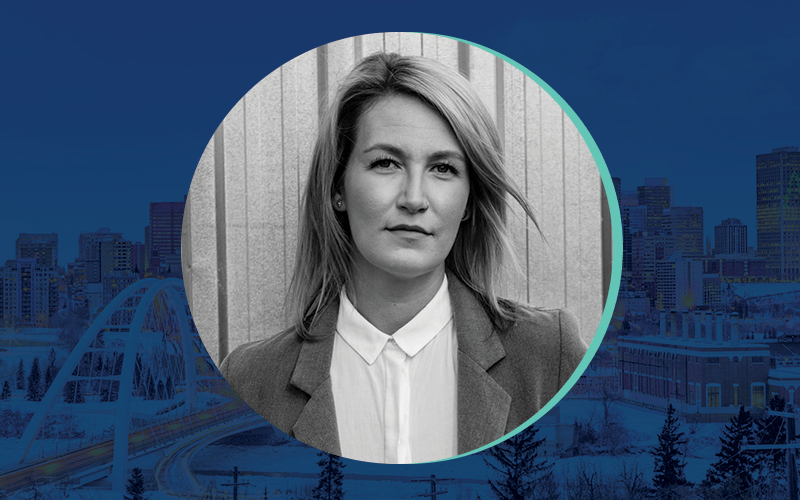
Episode
Kirsta Franke is founder and owner of Wild Heart Collective which has succeeded in Edmonton by creating from the heart. Offering mindfully...
Key takeaways
- Starting a business doesn't require an MBA or formal business education—passion for improving your community and willingness to learn through self-discovery can be enough to succeed.
- As an entrepreneur, you will be your own worst boss and the work will be harder than working for someone else, so be prepared for that reality before starting.
- Building a well-rounded team with diverse skills is essential when scaling from a solo operation because you cannot be everything for your business.
- Maintaining work-life balance as an entrepreneur requires prioritizing basics like eating well, sleeping seven hours a night, and exercising regularly while knowing when to step back and take a breath.
- Drawing inspiration from travel, exploring different markets and cultures, and taking annual inspiration journeys can fuel creativity and bring fresh ideas back to your business.
Transcript
Full transcript page · Interactive episode
============================================================
TRANSCRIPTION WITH SPEAKERS
============================================================

[00:00] SPEAKER_00: It's Edmonton's podcast on the Canada's podcast network.
[00:05] SPEAKER_01: Hello, this is Mario Tonigüzi coming to you today with Edmonton's podcast, a member
[00:11] SPEAKER_01: of Canada's podcast network.
[00:13] SPEAKER_01: Where are we taught to the entrepreneurs who are making it happen in Edmonton, Alberta?
[00:18] SPEAKER_01: So you can listen, discover, and engage.
[00:21] SPEAKER_01: Today's guest is Kiersta Frankie, who is well known in Edmonton with several businesses
[00:28] SPEAKER_01: which we'll get into in a few minutes.
[00:30] SPEAKER_01: Welcome to the show Kiersta and thanks for taking the time to be here for our listeners.
[00:34] SPEAKER_00: Thanks so much, Mario.
[00:36] SPEAKER_01: So when you sent me your bio, you had a bunch of business initiatives there that you're
[00:42] SPEAKER_01: involved in.
[00:43] SPEAKER_01: Let's just start by telling me a little bit about that.
[00:47] SPEAKER_00: Yeah, well dive right in.
[00:49] SPEAKER_00: So I founded a company called Wildheart Collective in 2012.
[00:53] SPEAKER_00: It was meant to be a bit of my own sole proprietorship where I was a contractor in acting
[01:01] SPEAKER_00: people's really creative ideas and really putting some bones and production behind that.
[01:06] SPEAKER_00: So basically a project manager for a number of different things.
[01:09] SPEAKER_00: However, at the time I started the company, I was working for a local business on 124
[01:14] SPEAKER_00: streets, a popular thoroughfare in Edmonton here.
[01:17] SPEAKER_00: And I realized there was no local grocery in the neighborhood.
[01:21] SPEAKER_00: So I quickly started my own initiative to start a weekly evening time farmers markets.
[01:28] SPEAKER_00: I work in the hospitality industry and I'm not always able to make it on a Saturday morning
[01:33] SPEAKER_00: to pick up my fresh produce or locally made products.
[01:36] SPEAKER_00: So we wanted to gear something towards kind of my demographic that happened from 4 p.m.
[01:41] SPEAKER_00: to 8 p.m. and was more of a weekly street festival slash farmers market where people could
[01:47] SPEAKER_00: come to.
[01:47] SPEAKER_00: So from May 2012, we've grown that market now going into our ninth season here in the city.
[01:55] SPEAKER_00: And it's really taken on a life of its own.
[01:59] SPEAKER_00: And then since then under the Wildheart Collective on Brella, we have grown our team to six
[02:05] SPEAKER_00: individuals.
[02:05] SPEAKER_00: So we're still a small company, but we create from the heart and do a lot of different
[02:09] SPEAKER_00: interesting activities in the city from whether it's producing a 55,000 person festival to
[02:14] SPEAKER_00: doing small business consulting and marketing communication strategy for small businesses
[02:19] SPEAKER_00: here in the city.
[02:20] SPEAKER_01: Okay.
[02:21] SPEAKER_01: And you mentioned to me, prior to we getting online here, you have something else called
[02:27] SPEAKER_01: the public.
[02:27] SPEAKER_01: Tell me what that's about.
[02:29] SPEAKER_00: Yeah.
[02:29] SPEAKER_00: So the public is kind of this beautiful evolution of everything that we've worked on in the
[02:33] SPEAKER_00: city.
[02:34] SPEAKER_00: We really love to make gap assessments.
[02:37] SPEAKER_00: And what we saw is there is an incredible amount of small to medium sized food companies
[02:42] SPEAKER_00: that exist across Ebonton and Calgary between the two regions.
[02:46] SPEAKER_00: But there's no actual physical infrastructure to support those companies and scale up of
[02:51] SPEAKER_00: their operation.
[02:52] SPEAKER_00: There's very limited resources when it comes to that.
[02:55] SPEAKER_00: So what we also wanted to look at was where do they also need to be assisted at in the
[02:59] SPEAKER_00: development of their company that's not physical infrastructure.
[03:03] SPEAKER_00: That's not just kitchen equipment or communal access to all of this equipment that we'll
[03:09] SPEAKER_00: have within our facility.
[03:10] SPEAKER_00: So really brokering relationships from every line of the food chain, whether it is sourcing
[03:15] SPEAKER_00: ingredients to distribution, to working to connect them to the proper banks or investors
[03:21] SPEAKER_00: that want to help them with that scale of approach.
[03:23] SPEAKER_00: So the public is a modern business incubator for hundreds of businesses across the province
[03:31] SPEAKER_00: once we fully go to launch.
[03:33] SPEAKER_01: Oh, excellent.
[03:34] SPEAKER_01: Go back in time for me and let me tell me a little bit about the history of how you started
[03:39] SPEAKER_01: and why you started wild hard collective.
[03:43] SPEAKER_00: That's a great question.
[03:45] SPEAKER_00: Actually, my experience in my education is in journalism and professional communications,
[03:50] SPEAKER_00: which is weird.
[03:51] SPEAKER_00: I never went to school about trying to, I never went to school for my MBA.
[03:57] SPEAKER_00: I didn't go to school on how to start a business.
[04:00] SPEAKER_00: Somehow eight years later, fund myself running two different companies.
[04:04] SPEAKER_00: But yeah, so my path was kind of along the lines of I want to make Ebonton a better
[04:09] SPEAKER_00: place.
[04:09] SPEAKER_00: That was where I started with that.
[04:11] SPEAKER_00: It wasn't at the core value of what career do I want.
[04:14] SPEAKER_00: I just wanted to make the place that I decided to live in a better place all around.
[04:19] SPEAKER_00: So with that wild heart was created.
[04:22] SPEAKER_00: And it was kind of a mishmash of a bunch of different consulting activities at that point.
[04:27] SPEAKER_00: And it's really grown to the effect that we have a few dozen different clients that we
[04:33] SPEAKER_00: work with in the city.
[04:34] SPEAKER_00: And I would say 80% of the clients that we work with are food-based businesses or food-based
[04:38] SPEAKER_00: companies or small to medium-sized companies here in the city.
[04:42] SPEAKER_01: So where's the genesis of that name and the reason for the name?
[04:47] SPEAKER_00: If I'm honest with you, I was a child born in the 80s from a mother that really loved
[04:51] SPEAKER_00: Fleetwood Mac and Stevie Nicks.
[04:53] SPEAKER_00: And I never really thought that wild heart would grow to what it is today to have the breadth
[05:00] SPEAKER_00: of what it is today.
[05:01] SPEAKER_00: So it was kind of my own personal touch on this company that I didn't know how far it
[05:06] SPEAKER_00: was going to go.
[05:07] SPEAKER_00: So I decided to keep the name and keep the umbrella under that.
[05:10] SPEAKER_00: And it's actually really reflective of the work that we do and the community and team that
[05:15] SPEAKER_00: we attract to the work that we do.
[05:17] SPEAKER_00: We all do create from the heart.
[05:19] SPEAKER_00: And we're a really amazing collective group of individuals with lots of different skills.
[05:25] SPEAKER_01: What are the benefits of having a business and operating a business in Edmundton these
[05:30] SPEAKER_01: days?
[05:31] SPEAKER_00: You know, I think it's a well-connected network of small to medium-sized companies in the
[05:37] SPEAKER_00: realm that we work in specifically.
[05:39] SPEAKER_00: And with that breeds entrepreneurs who are all working collectively and they're really
[05:45] SPEAKER_00: thriving in a supportive environment that really breeds new ideas.
[05:49] SPEAKER_00: So for me, Edmundton has been a place where we're able to be creative in our approaches.
[05:55] SPEAKER_00: It's not just a straight line from point A to B on how to produce an event in full or
[06:01] SPEAKER_00: how to enact a strategy.
[06:03] SPEAKER_00: And there's a lot of people who think outside of the box as well when you're looking at
[06:07] SPEAKER_00: not just providing something that's cookie cutter.
[06:11] SPEAKER_00: So that's some of the benefits I would say.
[06:13] SPEAKER_01: So when it comes to creativity, where do you find it?
[06:17] SPEAKER_01: Where do you get it, say, outside of an office environment?
[06:22] SPEAKER_00: Yeah.
[06:22] SPEAKER_00: I'm a very community-driven person.
[06:26] SPEAKER_00: I like to be involved in my community.
[06:27] SPEAKER_00: I'm on a lot of volunteer community leagues.
[06:31] SPEAKER_00: I like to know all the neighbors on my street, but really where the inspiration comes from
[06:35] SPEAKER_00: is traveling, bringing back little pieces of things that are really magical and inspire
[06:40] SPEAKER_00: me about other places.
[06:42] SPEAKER_00: So we do inspiration journeys on an animal basis.
[06:45] SPEAKER_00: Basically, go at that comfort zone, whether it's to New York or to Europe and explore
[06:51] SPEAKER_00: markets and events and initiatives that are happening there and bring a little piece
[06:55] SPEAKER_00: of that back.
[06:55] SPEAKER_00: But I'm also a pretty big gardener and outdoors person too.
[06:59] SPEAKER_01: You know, they say being in nature really is a spot for people, right, for their mental
[07:05] SPEAKER_01: health and other things, physical health too, right?
[07:08] SPEAKER_00: Absolutely.
[07:09] SPEAKER_00: And, you know, just even cycling, I have the opportunity our office is centrally located
[07:13] SPEAKER_00: and so is my neighborhood.
[07:15] SPEAKER_00: So I can bike to work when it's not minus 47 degrees outside of this today.
[07:20] SPEAKER_00: And I'm lucky enough to be able to, I've raised garden beds at my home and then my parents
[07:26] SPEAKER_00: have property an hour outside the city.
[07:28] SPEAKER_00: So I do quite a bit of gardening where I can.
[07:31] SPEAKER_01: Excellent.
[07:32] SPEAKER_01: What's the toughest challenge you've faced and had to face in being an entrepreneur?
[07:38] SPEAKER_00: You know, I started my company when I was quite young.
[07:41] SPEAKER_00: I was 23.
[07:43] SPEAKER_00: Didn't know a lot about some of the industries that I was entering into.
[07:46] SPEAKER_00: So a lot of it was self discovery.
[07:49] SPEAKER_00: But also I think that being a woman was difficult, especially being a young woman and being taken
[07:55] SPEAKER_00: seriously at that level of my career.
[07:57] SPEAKER_00: That's been quite difficult and something that I continue to face.
[08:03] SPEAKER_00: Even now as my company is evolved and my position within the city is evolved.
[08:07] SPEAKER_00: But it's definitely gotten better.
[08:10] SPEAKER_00: And then I would say scale is another piece.
[08:13] SPEAKER_00: You know, whether you're going from just a one woman show to, you know, half a dozen
[08:17] SPEAKER_00: person team, really realizing that you can't be everything for yourself and putting together
[08:23] SPEAKER_00: a really great team that has a well rounded group of skills to do that.
[08:26] SPEAKER_00: So that was the thing.
[08:28] SPEAKER_00: That was a big one for me.
[08:29] SPEAKER_01: Now, imagine you've talked to a lot of people over the years about being an entrepreneur.
[08:34] SPEAKER_01: Is anything stick in your mind as the best piece of advice you've received?
[08:40] SPEAKER_00: I think people have this assumption that as an entrepreneur, it is an easier lifestyle
[08:47] SPEAKER_00: that you get to do what you want for yourself and no one tells you what to do.
[08:51] SPEAKER_00: But I am my own worst boss.
[08:53] SPEAKER_00: I will fully go to admit that.
[08:55] SPEAKER_00: I can be harder on myself than any boss has ever been in any job that I've ever worked.
[09:00] SPEAKER_00: So knowing that it's going to be harder to work for yourself than someone else, I think
[09:07] SPEAKER_00: it's a great piece of advice and that really drives me and motivates me, but it was a difficult
[09:11] SPEAKER_00: realization doing this full time for myself.
[09:15] SPEAKER_01: So if you weren't doing what you're doing now, what do you think you'd be doing?
[09:19] SPEAKER_01: Maybe a journalist working for the Edmonton Journal?
[09:22] SPEAKER_00: No, I would not.
[09:24] Speaker UNKNOWN: I would not.
[09:25] Speaker UNKNOWN: I would not.
[09:25] SPEAKER_00: I would not.
[09:26] SPEAKER_01: Not a good industry to be in these days.
[09:28] SPEAKER_00: You know, yeah, it was, when I graduated, it was ailing and the reality is that it doesn't
[09:36] SPEAKER_00: really exist to the, this vision that I had for it before.
[09:41] SPEAKER_00: It's changed quite a bit.
[09:42] SPEAKER_00: So I think if I were, I would want to, you know, work hard, but still do things that are
[09:48] SPEAKER_00: part of my life.
[09:49] SPEAKER_00: So something like owning a flower shop.
[09:51] SPEAKER_00: So still being an entrepreneur, but owning a flower shop or a small scale farm, an urban
[09:58] SPEAKER_00: farm, something like that would be a lot of fun because I love working with my hands
[10:01] SPEAKER_00: and being outside.
[10:02] SPEAKER_00: So that's what I'd probably do if I wasn't doing what I do now.
[10:05] SPEAKER_01: Did you go up in the firm?
[10:07] SPEAKER_00: I didn't, but my family's history is deeply rooted in farming communities and Saskatchewan
[10:12] SPEAKER_00: and Manitoba.
[10:13] SPEAKER_00: So I've been able to take a deep dive into my past on what that is, but we do work with
[10:18] SPEAKER_00: a lot of farmers and small-scale growers here in the city too, being that we have the
[10:22] SPEAKER_00: farmers market, but also these, it's a next generation of farmers that are my age that
[10:27] SPEAKER_00: are just first generation farmers really trying to start something different.
[10:31] SPEAKER_00: So they're attracted to the work that we do.
[10:33] SPEAKER_01: Okay.
[10:35] SPEAKER_01: I'm going to ask you a few kind of personal questions.
[10:39] SPEAKER_01: Everybody's got a bucket list these days.
[10:41] SPEAKER_01: I'm just wondering, not related to business, but more on your personal life.
[10:46] SPEAKER_01: What do you see as being sort of near the top or at the top of your bucket list right
[10:52] SPEAKER_01: now?
[10:53] SPEAKER_00: Well, I'm motivated in travel by the different cuisines in different cultures.
[11:00] SPEAKER_00: Well, firstly, actually, I want to go on a honeymoon because my husband and I got married
[11:04] SPEAKER_00: last summer and it's been so busy that we haven't got to go on our honeymoon.
[11:07] SPEAKER_00: So we're going to Spain and Portugal this summer, which I'm quite excited for.
[11:11] SPEAKER_00: So that's a bucket list item.
[11:13] SPEAKER_00: But Japan and Vietnam are two really huge food cultures that I've wanted to explore that
[11:20] SPEAKER_00: are at the very, very top of that bucket list, I would say.
[11:22] SPEAKER_00: So mostly bucket list items are eating lots of fun, different staff in different countries.
[11:27] SPEAKER_01: Is there, you know, when you talked earlier about traveling around a different places,
[11:31] SPEAKER_01: is there any particular place you fondly remember for its cuisine?
[11:37] SPEAKER_00: One of the most surprising, I would say, would be Budapest.
[11:41] SPEAKER_00: It's a really interesting melting pot of lots of different culture, but still deeply
[11:46] SPEAKER_00: rooted in like traditional German or European food, so like heavy goulaches, paprikas,
[11:53] SPEAKER_00: big spices.
[11:54] SPEAKER_00: So all the Google-Aish houses there were just like super surprising for me and I really
[11:59] SPEAKER_00: enjoyed anything I ate there.
[12:01] SPEAKER_00: And they had a lot of really incredible markets that you could just kind of turn the corner
[12:05] SPEAKER_00: and stumble upon as well as their well-famous for their grand Budapest market.
[12:11] SPEAKER_00: So it was really cool to explore a place like that, yeah.
[12:14] SPEAKER_01: Excellent.
[12:16] SPEAKER_01: Now, obviously, being an entrepreneur takes up a lot of your time.
[12:21] SPEAKER_01: I know it well.
[12:23] Speaker UNKNOWN: Yeah.
[12:24] SPEAKER_01: What would you say are some of the keys to creating a series of work-life balance?
[12:33] SPEAKER_01: Find it, you have it or?
[12:35] SPEAKER_00: I don't find I have it just yet.
[12:38] SPEAKER_00: But as I'm getting older and thinking about some of the personal goals I have for myself,
[12:43] SPEAKER_00: whether it is, you know, something like starting a family, those are things that you definitely
[12:47] SPEAKER_00: have to think about.
[12:48] SPEAKER_00: So really what I'm focusing on right now is providing a really good level of strategy and
[12:54] SPEAKER_00: a really good platform for the team that I've built.
[12:56] SPEAKER_00: And I'm going to continue to grow so that I can have a little more of that.
[12:59] SPEAKER_00: But I think it's a good recipe of eating really well, sleeping at least seven hours a night
[13:06] SPEAKER_00: if you can get it and exercising when you can at least a few times a week.
[13:11] SPEAKER_00: But not pushing yourself to the point where you're killing yourself, trying to work and
[13:14] SPEAKER_00: also have that life balance, too.
[13:16] SPEAKER_00: So sometimes if you just have to go home at the end of a long day and take a breath,
[13:22] SPEAKER_00: I've been better at telling myself on that needs to happen.
[13:25] SPEAKER_01: Do you have a routine that you follow each day or is it just kind of whatever happens?
[13:30] SPEAKER_00: Yeah, you know, day by day I could start my day at 7 a.m. some days, like be at the office by 7.
[13:37] SPEAKER_00: And some days I'm lucky enough to be able to work from home and be in the office by 10 a.m.
[13:42] SPEAKER_00: And some days I have a 16 hour long day and some days it's a regular eight hour work day.
[13:48] SPEAKER_00: So it really ebbs and flows based on the time of year for us.
[13:53] SPEAKER_00: Once we hit March, we're working with over a dozen to two dozen clients to help produce outdoor
[13:59] SPEAKER_00: or summer spring oriented events.
[14:01] SPEAKER_00: And then that season alongside market season goes all the way to October.
[14:06] SPEAKER_00: And then really October, once that's finished, usually November or end of October is when we take some of our
[14:11] SPEAKER_00: inspiration journeys and we do a bit of traveling and recharge and then come back to the Christmas season,
[14:16] SPEAKER_00: which is Christmas markets, Christmas events, you know, people wanting rebrands, those sorts of fun things that we come back to.
[14:23] SPEAKER_00: So it really doesn't, yeah, it doesn't provide well for a routine.
[14:28] SPEAKER_01: Okay.
[14:29] SPEAKER_01: I'm going to ask you a little bit of a different question.
[14:33] SPEAKER_01: So just imagine a beautiful tropical island in the middle of the ocean somewhere.
[14:38] SPEAKER_01: We're going to drop you off on that island.
[14:42] SPEAKER_01: It has one phone booth, but nothing else in terms of technology and your left home, your own devices.
[14:50] SPEAKER_01: I have a couple of questions.
[14:53] SPEAKER_01: How long do you think you would last before making a phone call and asking us, hey, get me back home.
[14:59] SPEAKER_01: And secondly, what do you think you would do while you were there?
[15:03] SPEAKER_00: My first question would be how many phone calls do I get?
[15:07] SPEAKER_01: One phone call.
[15:08] SPEAKER_00: One vocal.
[15:10] SPEAKER_00: So if it's one phone call, I would probably make it within the first three hours just so I could make sure that I know someone's coming to get me,
[15:18] SPEAKER_00: even though there's luxuries that are provided by being on an isolated island by yourself and the sun.
[15:23] SPEAKER_00: I'd want to make sure that someone knows where I am because I'm practical that way.
[15:27] SPEAKER_00: But I would probably spend the time exploring the island.
[15:33] SPEAKER_00: Minimal outskirts of the island not going too deep in the forest for sort of a lost situation.
[15:39] SPEAKER_00: And yeah, just kind of explore what's around me really.
[15:42] SPEAKER_00: If I knew someone was coming to get me, then the fear of being deserted on this island wouldn't really be there.
[15:47] SPEAKER_01: And you could probably figure out some cuisine and now they're.
[15:51] SPEAKER_00: You bet.
[15:51] SPEAKER_00: I would start a fire actually.
[15:53] SPEAKER_00: That would be another thing I would do just just in case.
[15:57] SPEAKER_01: Is there anything you'd like to add before you leave us today, Kiersta?
[16:02] SPEAKER_00: Yeah.
[16:03] SPEAKER_00: Well, the public is going to be launching this year.
[16:06] SPEAKER_00: We've been working tirelessly over two years to get this thing going.
[16:11] SPEAKER_00: So it's been a long haul and we just recently started construction last week.
[16:15] SPEAKER_00: So we are very excited to showcase this product to the Alberta food scene.
[16:21] SPEAKER_00: It's going to be a really great space for people can create, but also learn.
[16:25] SPEAKER_00: And fail it succeed together in a community of individuals that really understand that.
[16:30] SPEAKER_00: So I would tell people to check out our website, which is join the public com to find out more information about it.
[16:37] SPEAKER_00: And just kind of what we're hoping to launch here this spring.
[16:40] SPEAKER_01: Great. Thanks for joining us today.
[16:42] SPEAKER_00: Thank you so much for having me on the show.
[16:46] SPEAKER_01: Thanks for taking the time today to listen to Edmonton's podcast on Canada's podcast network.
[16:52] SPEAKER_01: We hope you enjoyed the show today.
[16:55] SPEAKER_01: Make sure you sign up for our newsletters and write a review for us on iTunes.
[17:01] SPEAKER_01: And then connect with us on Twitter, Facebook, Instagram, LinkedIn at Canada's podcast.
[17:07] SPEAKER_01: You can also check out what other entrepreneurs are doing across the country.
[17:12] SPEAKER_01: See you next time.