
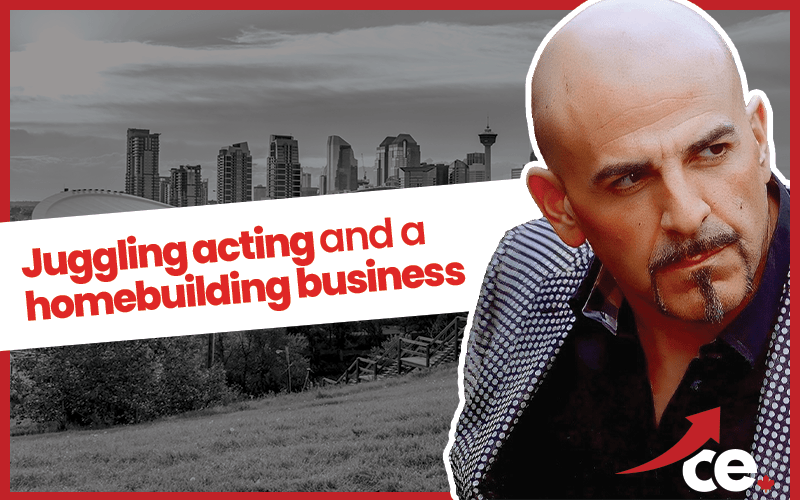
Juggling acting and a homebuilding business
Episode
Robert Daprocida is a Canadian and international actor, singer and pianist, and is a first-generation born Canadian to Italian...
Key takeaways
- Self-motivation is essential for entrepreneurs as there's no one to push you, and you must maintain discipline even when doing unpaid but necessary work like planning and estimating.
- Entrepreneurship requires treating your business like another child, being on call constantly and often sacrificing personal time because the business is what takes care of you and your family.
- Be prepared for extended periods where you work without immediate compensation, as employees, suppliers and other obligations must be paid first before you see any profit.
- Building a strong support system and maintaining cultural connections provides crucial grounding, especially when you're managing the demands and isolation that can come with running your own business.
- Success in entrepreneurship comes down to personality and hunger—you need unlimited drive and willingness to do whatever it takes, accepting less security than traditional employment in exchange for unlimited potential.
Transcript
Full transcript page · Interactive episode
============================================================
TRANSCRIPTION WITH SPEAKERS
============================================================

[00:00] SPEAKER_00: Welcome to Canada's Entrepreneur. Where we talk to the entrepreneurs who are making it happen
[00:05] SPEAKER_00: across Canada and deliver the news, trends, knowledge and opinions from entrepreneurs and business
[00:13] SPEAKER_00: influences across the country. Hello, I'm Mario Tonigusi, managing editor of Canada's Entrepreneur.
[00:21] SPEAKER_03: Joining me today is Robert De Procheda, in Calgary, who is an owner of Encore of Homes of
[00:29] SPEAKER_03: Home Building Company and also an actor, singer, pianist and we'll get into all that and
[00:36] SPEAKER_03: just prefacing this. I was at Morning Mass for Ash Wednesday. That's why you see
[00:42] SPEAKER_03: the the ashes on my forehead and I know that this episode won't be running until a little while,
[00:51] SPEAKER_03: but today is Ash Wednesday while we're doing the taping. Thanks for joining us today, Robert.
[00:55] SPEAKER_03: Absolutely, Mario. How are you? Oh, I'm good. I'm good. So tell me just first of all,
[01:00] SPEAKER_03: let's talk about there's too many aspects of you here, right? So many careers.
[01:07] SPEAKER_03: Let's talk about Encore of Homes. Tell me what you guys do there.
[01:12] SPEAKER_01: Encore of Homes is one of my building companies. I actually have two,
[01:16] SPEAKER_01: had one in Fort McMurray, up north called Birchwood Homes. We started back in 2000 and we built
[01:22] SPEAKER_01: many, many homes out there, probably close to 400. We did just regular home building out there.
[01:28] SPEAKER_01: We were also involved in the fire rebuilds and after when the floods happened, so did a lot of work
[01:35] SPEAKER_01: up there for quite a while. Encore of Homes, I started back in 2015. That was so I could start
[01:43] SPEAKER_01: building here locally because we actually moved from Formic Murray back down to Calgary in 2011
[01:49] SPEAKER_01: and I did a few years back and forth and wanted to kind of start up down here.
[01:54] SPEAKER_01: And shortly after starting here, the fires happened, so I did a lot of back and forth running
[01:59] SPEAKER_01: my company here, running the one up there. And now I pretty much wind down in Formic
[02:04] SPEAKER_01: Marine and concentrating more here. Okay, interesting. Interesting. What's really interesting
[02:09] SPEAKER_03: is the other side, you know, the left side and the right side of the brains of people talk about.
[02:15] SPEAKER_03: So, one side and I don't know what side that is, that's the business side, right?
[02:19] SPEAKER_03: Yeah. The other side is the creative side. So, you know, I'm looking at your bio and you are
[02:27] SPEAKER_03: training or training in classical piano at the age of four? That's right. That's actually
[02:34] SPEAKER_01: started piano just before I started school. So I've been was in piano for like I said, right from
[02:41] SPEAKER_01: four years old, I completed my Royal Conservatory at a very young age at 13 and then there in that time,
[02:48] SPEAKER_01: I also started doing singing as well. And after 13, I started teaching for quite a while. So that
[02:53] SPEAKER_01: was my part time job while I was at school. So let's talk about the piano stuff. First of all,
[02:58] SPEAKER_03: how did you get into piano? Was there family members that played the piano? Well, my dad's side is
[03:05] SPEAKER_01: kind of musical, but none of them really spoke music or took music lessons. Like he has brothers
[03:10] SPEAKER_01: and stuff that just picked up instruments and just learned them and they're just quite naturally
[03:14] SPEAKER_01: musical. But with me, it was my mom just kind of discovered me playing on a little toy piano
[03:20] SPEAKER_01: pairs that I had and do recognize that I was actually playing some tunes. I was playing some
[03:26] SPEAKER_01: songs just learning them by ear on the piano and I guess right away ding ding ding. She said, okay,
[03:31] SPEAKER_01: let's go to piano lessons. So that's September. She sent me off the piano and that was it.
[03:36] SPEAKER_01: And wow. And do you still play? Oh, yeah. I still play all the time plays thing.
[03:44] SPEAKER_01: Now I have my daughters is singing and so sometimes we'll do a little thing here together,
[03:50] SPEAKER_01: we'll sing in a wedding or funeral or something like that. My wife sings as well. She's a fantastic
[03:55] SPEAKER_03: singer. And so we're always doing something. Okay, now tell me about the singing part. What kind of
[04:01] SPEAKER_03: things were you involved in with singing over the years? Well, singing is what kind of brought me
[04:09] SPEAKER_01: into like I did in the music and then you know, I was still singing and then I started doing a little
[04:14] SPEAKER_01: bit of theater at school. So I kind of led into some musical theater and I once I kind of started
[04:19] SPEAKER_01: doing that. I really like loved that. The acting part of it as well. So that kind of led from musical
[04:25] SPEAKER_01: theater into theater and then by time I graduated high school, I made a decision I wanted to get into
[04:30] SPEAKER_01: the film. So when it happened, he is like graduated, because I grew up in a small town called
[04:35] SPEAKER_01: Cramberk for Columbia. Yeah. So after graduation, I headed down to the coast of Vancouver and the next
[04:44] SPEAKER_01: probably seven, eight years, just acting full time out there. And I was doing film stuff out there
[04:48] SPEAKER_01: and building my career. And we had a big strike in 1998. Similar to what SEGA had a few years back,
[04:57] SPEAKER_01: we had a big actress strike out there. So kind of productions kind of stopped in 1998. So there
[05:02] SPEAKER_01: wasn't much going on. So I kind of came to Calgary to visit some family, hang out, started doing a show
[05:08] SPEAKER_01: while I was here and that's where I met my wife and I never left. Oh, interesting. So tell us a
[05:14] SPEAKER_03: little bit about your acting career, some of the shows or films that you've been involved in and
[05:22] SPEAKER_01: that some people would recognize. So back in the 90s, I was in Vancouver and I was in the show
[05:30] SPEAKER_01: such as the X-Files, the Outer Limits, the sort of poltergeist. There did a few films out there,
[05:38] SPEAKER_01: one with Big Teen Nelson, Giancarlo Esposito was in that film. I did want to throw a blow,
[05:46] SPEAKER_01: one with the Arab McCormick, Sean Young. So it did quite a bit of film and film and TV out there.
[05:52] SPEAKER_01: And then when I came here after what happened with the acting stuff, once I moved to Calgary,
[05:58] SPEAKER_01: there wasn't really a film industry here, not enough to make a living out of and made the decision
[06:03] SPEAKER_01: I was going to be with my wife getting married. So I actually kind of put everything on hold. They
[06:08] SPEAKER_01: said, okay, well, I'm going to change gears here and that's what kind of led into, I went to
[06:13] SPEAKER_01: SAIT first. I got a computer diploma and computer technology. So I did that first computer programming
[06:21] SPEAKER_01: and that kind of landed me a job up north of the Cormick Murray, literally right after we got married.
[06:27] SPEAKER_01: So I went up there for a while and brought my wife up of course and did that for about a year
[06:33] SPEAKER_01: and a half working at ThinkRude and then I just had an opportunity to do the building company there.
[06:37] SPEAKER_01: So I decided, hey, office work really wasn't for me. So I kind of got out of that and started
[06:44] SPEAKER_01: the building company with my dad and we did that for quite a few years and acting just went
[06:50] SPEAKER_01: completely on hold. And then once we came back here after 2011, it was probably but the
[06:56] SPEAKER_01: made 2010s, I kind of thought, okay, well, what am I doing a few things, right? So I kind of
[07:03] SPEAKER_01: rekindled with my agent. I was here and I did a couple little things in the mid 2010s, but then
[07:10] SPEAKER_01: the fire happened before make Murray. So I started going back up there and so I put it on hold again.
[07:16] SPEAKER_01: And so I did four or five years past and I think it was about 2022, 2021-22. I kind of,
[07:25] SPEAKER_01: I was pretty much done up there. I was here. COVID was just kind of finished happening.
[07:31] SPEAKER_01: The whole industry kind of had a shift to change, which was kind of basically everything was online now.
[07:38] SPEAKER_01: I wish everything. So I was kind of like, well, that done me thinking because it's like, well,
[07:42] SPEAKER_01: this opens up a whole bunch of opportunity now, which wasn't there prior, right? So
[07:49] SPEAKER_01: started looking back into things again and rekindled my agents again and I'm going to give
[07:56] SPEAKER_01: you see how this works out and it actually worked out for me pretty great because now I can access
[08:02] SPEAKER_01: all these markets, which I couldn't access before. So I started working on that.
[08:08] SPEAKER_01: Little by little, Rekindle Mage in here, Rekindle Mage in some of the coast.
[08:13] SPEAKER_01: And the other big, big goal for mine was to be able to work in the US.
[08:18] SPEAKER_01: Now I didn't have a visa, I'm not a US citizen, so it was a challenge. I started that challenge
[08:22] SPEAKER_01: two years ago. Oh, cool. Working everything, kind of figuring out what I needed, trying to get the
[08:28] SPEAKER_01: right experience, the right backing, the right support letters, and finally, this past June, I was
[08:34] SPEAKER_01: able to finally acquire a visa for. Oh, excellent. Yeah, that was a big step.
[08:40] SPEAKER_03: So in terms of acting, are you in any particular type of character that you tend to be
[08:51] SPEAKER_01: brought into films for? Yeah, you get called in lots for the authority, kind of guys,
[08:57] SPEAKER_01: either the bad guys or like, you know, the, the, you know, the intense business owner, a lot of
[09:03] SPEAKER_01: power, kind of characters, right? Usually what I do mostly, right? I did do a role where I was a little
[09:09] SPEAKER_01: more of a happy dad, um, I'm Toronto, but the most of them are tend to be that heavy authority kind of
[09:17] SPEAKER_03: guy. Yeah. You kind of look like you, you, you, you, you, you, you could play a role in it in a godfather
[09:26] SPEAKER_01: movie, right? Yeah, yeah, I've done a few of those. Yeah, I did my boss for sure. I did a biker,
[09:33] SPEAKER_01: down doing a film this past summer, I played a biker, you know, you know, always a nice guy.
[09:41] SPEAKER_03: And so I'm curious, how do you manage, uh, yeah, to run a business still and, and, and do the
[09:48] SPEAKER_01: acting? How do you juggle that? Just kind of fit everything in. I don't know. It's kind of, I'm not
[09:55] SPEAKER_01: wondering, think about how I'm going to do it. I just kind of have all these things to do. So just
[10:00] SPEAKER_01: get to him and do it, right? Uh, when it comes to the home building, I mean, for me, most of the stuff,
[10:06] SPEAKER_01: because I also do all my own CAD drawings and stuff. So, well, when I'm building a home, like, I know
[10:11] SPEAKER_01: every inch of that house from top to bottom, because I designed the whole thing, right? So,
[10:16] SPEAKER_01: so most of the stuff, like, I'm, I still go on site whenever I'm here, month side, like,
[10:21] SPEAKER_01: pretty much all the time to the construction. And if I ever am away out of town or something like that,
[10:26] SPEAKER_01: I know them well, right? So, like, pretty much somebody explaining me what they're looking at,
[10:32] SPEAKER_01: and I know what they're talking about, work through our solutions and our issues, and get things done.
[10:37] SPEAKER_01: Don't far have been able to make it work. I did the same when we were doing the
[10:41] SPEAKER_01: Formic Murray Fire, as I was going out there a week, coming home a week, and then I was still,
[10:45] SPEAKER_01: you know, I still managed my site. Yeah, it's mostly just about having a good
[10:51] SPEAKER_01: grasp of what you're doing. So, when your people are there working, they have, you know,
[10:57] SPEAKER_01: their communication of what's going on, and these don't have issues. Yeah. Now, and curious,
[11:03] SPEAKER_03: you know, with your creative background, especially in the acting part of it,
[11:10] SPEAKER_03: has that helped you in any way, like, for being a business band?
[11:15] SPEAKER_01: Oh, yeah. Like, I mean, one, it definitely taught me how to be like a self-motivated person.
[11:24] SPEAKER_01: First of all, so like, I've just been doing this kind of stuff my entire life where you have to kind
[11:30] SPEAKER_01: of pain yourself to get out and get things done, because there's all that stuff you do that doesn't
[11:35] SPEAKER_01: make you money, but it's still a requirement to do it, right? It's like, you know, you've got to
[11:39] SPEAKER_01: spend the time with your planning, spend the time doing your estimate, spend the time
[11:44] SPEAKER_01: doing all that. So that requires quite a bit of motivation to want to do that, right?
[11:48] SPEAKER_01: And because I do a good portion of it myself, like, I don't hire people for all that kind of stuff,
[11:54] SPEAKER_01: I do all that. It's just, you know, there's nobody there to kick you out of bed, so you just
[11:58] SPEAKER_01: got to get up and do your thing, right? Every single day. And I'm kind of just always kind of
[12:05] SPEAKER_01: been that way. I always think of my long-term goal, and then it's like, okay, so I want to be
[12:09] SPEAKER_01: there. So I got, you know, all these steps to get to you from here to there. And I start,
[12:14] SPEAKER_01: you know, just road mapping and one thing at a time, a little bit here, a little bit there, and,
[12:19] SPEAKER_01: you know, eventually get to where you're trying to get.
[12:22] SPEAKER_03: And in the acting side of things, there's something that you want to do that you haven't done.
[12:28] SPEAKER_01: I'd like to start getting into some producing. I'd like to start maybe bringing some more projects
[12:34] SPEAKER_01: here to Alberta, because we're still in the scheme of it. Like, we don't, it's improving all the time,
[12:41] SPEAKER_01: but we don't do a lot of stuff here and the stuff that's usually done here, a lot of it's brought in
[12:47] SPEAKER_01: from other places, so they kind of come in to do the thing, and, right?
[12:51] Speaker UNKNOWN:
[12:51] SPEAKER_01: So I'd really like to, at some point, and I'm starting to look a little bit at that. I, you know,
[12:56] SPEAKER_01: I've made some great connections with writers, directors, and that kind of stuff.
[13:00] SPEAKER_01: Just a matter of finding the right project here. And of course, you need, you know,
[13:04] SPEAKER_01: funding and investing for that kind of thing. Yeah.
[13:07] Speaker UNKNOWN:
[13:07] SPEAKER_01: Get involved in it. I'd like to start doing some more projects here. Start getting
[13:12] SPEAKER_01: Calgary building up and making its kind of, you know, it's a place in the world of film, right?
[13:18] SPEAKER_01: Yeah.
[13:18] SPEAKER_01: Because Vancouver and, you know, on Toronto, they're quite established now. Like, when I first moved out
[13:23] SPEAKER_01: to Vancouver, it was still a younger industry, right? A little further than the head than we are now,
[13:29] SPEAKER_01: but it was at that time, it was still fairly young, and it was kind of going through the same thing,
[13:33] SPEAKER_01: where, you know, all the other towners were coming in, but then it started to establish itself,
[13:37] SPEAKER_01: and it put out some great, great productions and that kind of thing. So Toronto and Vancouver now are
[13:43] SPEAKER_01: are well recognized in the film industry in general. Yeah. But I think to see the same kind of
[13:49] SPEAKER_01: happening, Calgary, lots of talented people, and crews, you know, good tax incentives here for that kind
[13:55] SPEAKER_03: of thing. So it's great. But the film industry here in Calgary is much bigger than it used to be,
[14:03] SPEAKER_01: right? Oh, yes, it is growing. Every year it grows a little bit more, which is nice to be
[14:08] SPEAKER_01: and stuff. It's just, you know, I just think we have a lot more to offer, and we could take on a
[14:13] SPEAKER_01: whole lot more and just really, really grow that. Yeah. Okay, then. Tell me just a little bit about
[14:22] SPEAKER_03: your Italian background. Where points are you from? All from Calabria. My mom was born in a little town
[14:31] SPEAKER_01: called Palizzi in Reggio Calabria, and my dad's town was kind of a stone through a way,
[14:37] SPEAKER_01: right? Just post-bicolpietra Granada. Okay. The little mountain town, Granada, really.
[14:43] SPEAKER_03: Hey, what do you think you learned growing up from your parents that stick with you today?
[14:50] SPEAKER_01: Well, definitely the work ethic you learn, right? I think most Italian kids do go through that,
[14:56] SPEAKER_01: right? We had lots of stores growing up. Yeah, things are supposed to get done, and learn how to
[15:02] SPEAKER_01: be very self-sufficient too. Like, my case, he just kind of, I don't know, I feel like just
[15:09] SPEAKER_01: known from like my other friends, you kind of grow up a little quicker, right? And, you know,
[15:14] SPEAKER_01: you don't have the expectations, maybe the kids have now. You know, our parents were just,
[15:21] SPEAKER_01: it wasn't even a thought, right? Like, when you were young, I wanted something. It's like 12
[15:25] SPEAKER_01: years old, I wouldn't have got my first job. I was making money when I was younger just through
[15:30] SPEAKER_01: like, you know, festivals playing piano and stuff. So I always had a little bit of savings and
[15:34] SPEAKER_01: stuff that I could go, if I want something, I could go get it, right? But then you know, 12 years old,
[15:39] SPEAKER_01: I was like, well, I think I want to, you know, we'll get a job. So I never thought at that age,
[15:43] SPEAKER_01: you know, you think at 12 years old, you need to go ask your parents, I just went and found a job,
[15:47] SPEAKER_01: didn't even ask. You're like, okay, I want to get stuff, I'm going to go get a job. And so you
[15:53] SPEAKER_01: just start doing stuff, right? And my parents, you know, we grew up in a smaller town. Lots of
[15:58] SPEAKER_01: the times are still, and everybody knew each other, literally right next to my uncle, and it was just
[16:05] SPEAKER_01: kind of, got up every day, you went outside, you left, you know, as long as you made a home by
[16:10] SPEAKER_01: dinner, nobody worried about you came home for supper and that was it. But we are, you know,
[16:14] SPEAKER_01: pretty traditional involved in the Italian center that was in Cranburg and either community and
[16:20] SPEAKER_01: grew up the old way, right? So everybody else making sausage, making wine, doing our stuff all the
[16:26] SPEAKER_03: times. Right? So yeah. Yeah, exactly. When you look at your, the whole growing up as an Italian,
[16:36] SPEAKER_03: you know, what was your favorite thing about growing up as an Italian?
[16:43] SPEAKER_01: Ah, I just, just like the aura of everybody, I don't know, just the wind, wait, when Italians get
[16:50] SPEAKER_01: together, there's just, there's so much about just the people, just, it's, it's almost a difficult
[16:57] SPEAKER_01: thing to put into words unless you experience it, and I mean, you, you obviously experienced it,
[17:02] SPEAKER_01: sure other big families experienced it as well, but it's just just such a part of life, and when
[17:08] SPEAKER_01: I moved like away Vancouver, like I had moved there by myself, I didn't know a soul out there,
[17:15] SPEAKER_01: you know, you start to meet people for a while, but you do, you notice that boy gone, right? It's like,
[17:20] SPEAKER_01: you know, I don't have somewhere to go, the weekends, we're not together with aunts and uncles,
[17:25] SPEAKER_01: cousins, you know, that kind of stuff. So it's, it really becomes more apparent when you kind of leave
[17:32] SPEAKER_01: it. So I know a lot of people like friends of mine, aiming cousins, they've never really left,
[17:38] SPEAKER_01: you know, the nest date really, right? They were still there, we're living the same cities
[17:42] SPEAKER_01: or parents and that kind of stuff. So they didn't experience what it's like not having. So sometimes
[17:47] SPEAKER_01: maybe it gets taken for granted. Yeah, but when you move away, you feel it. So when I
[17:55] SPEAKER_01: came back here, I went and met my wife, my wife's also a tying color bracelet like me. I'm a
[18:00] SPEAKER_01: dad side, both sides, it was just, you know, it's just then the mesh was just there, right? So we're very
[18:07] SPEAKER_01: involved, like we have our kids involved in, you know, the tying culture center here in Calgary,
[18:13] SPEAKER_01: our girls dance with the dancers, my wife's president of the dancers, we, we're down there all the
[18:18] SPEAKER_01: time for the different events and we're very involved. Yeah, exactly. Yeah. Now, as an entrepreneur,
[18:26] SPEAKER_03: Robert, if a young person came to you, or your children came to you and said, Dad, you know,
[18:34] SPEAKER_03: want to be an entrepreneur, what would you tell them? What advice would you give them?
[18:40] SPEAKER_01: Well, when it comes to entrepreneurship, it really boils down to your personality,
[18:46] SPEAKER_01: because it's not everybody can get out there and deal with the days and days out because it is,
[18:54] SPEAKER_01: it's, it's basically on call all the time. Yeah. When it comes to your business, your business,
[19:01] SPEAKER_01: like another child of yours, you have to be on it all the time. It has to be almost number one. So
[19:06] SPEAKER_01: a lot of times you have to sacrifice many things in your life just to make for the well-being of
[19:12] SPEAKER_01: the business. And, you know, and it's not because work is everything. It's because the business
[19:16] SPEAKER_01: is what's taking care of you. Bam, right? So you can't let that just, ah, just go out,
[19:22] SPEAKER_01: let us say and let us like tomorrow, right? You know, because it does, it catches up. You have to be
[19:28] SPEAKER_01: a real hungry kind of person. You have to really be willing to say, I'm going to just, you know,
[19:35] SPEAKER_01: give it my all and you've got to be willing to do whatever because there is a lot of those days where,
[19:41] SPEAKER_01: you know, you're out and you could work for two, three weeks straight and not make a dime.
[19:45] SPEAKER_01: Because, you know, you're out, you still have to make your payments to your people, you have to pay
[19:50] SPEAKER_01: them, you have to pay your suppliers, pay your employees, who everybody kind of gets paid first
[19:55] SPEAKER_01: and you're hoping there's something there at the end for you. So you have to be prepared for that
[20:00] SPEAKER_01: kind of life, right? And then there's no, you know, if you want benefits and stuff while you have to
[20:05] SPEAKER_01: go and pay an arm to the leg for them or you just don't get them. It's so, you don't have all the
[20:10] SPEAKER_01: comforts and security working for somebody else, but you do have unlimited potential and limit
[20:15] SPEAKER_01: potential than what you're feeling. But yeah, exactly. Perfect. All right. Well, thanks so much,
[20:23] SPEAKER_03: Robert, for joining us today. Yeah, thanks, Mario. All right. That was wonderful. That was Robert
[20:29] SPEAKER_03: DeProtje, who is owner of Ankara Homes in Calgary, a zolcemonacter. And I'm Mario Tonigusi
[20:36] SPEAKER_03: managing editor of Canada's entrepreneur. Thanks for joining us today.