
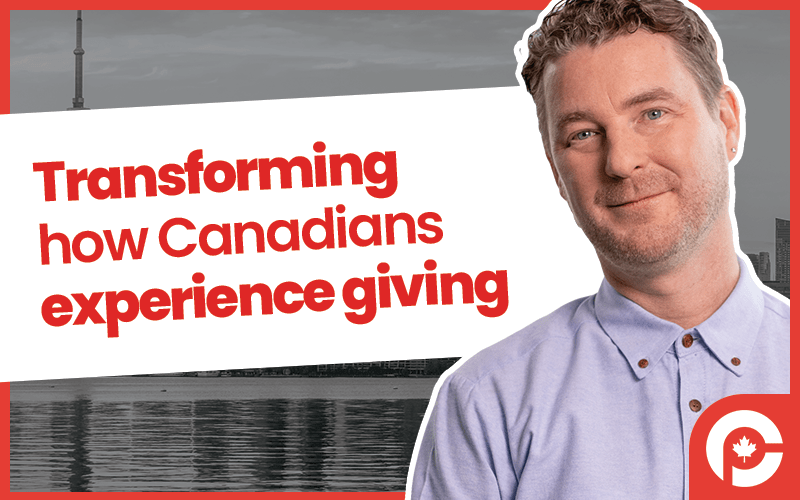
Transforming how Canadians experience giving
Episode
John Bromley is the Founder and CEO of Charitable Impact. After a decade of working in corporate finance and...
Key takeaways
- Charity literacy is critically low in Canada, and entrepreneurs who have deep subject matter expertise often fail to recognize how little their target audience actually knows about their field.
- When creating a market for a new product or service, spending time and resources on education and onboarding is essential from the start, not something to add later after achieving scale.
- Learn to love mistakes and take full responsibility for them as an entrepreneur, even when you're not directly associated with the problem, because this mindset accelerates growth and learning.
- True entrepreneurship is about serving your audience first, and while growth is important, scaling too quickly before you can deliver quality service will undermine your mission and long-term success.
- Everyone has something to give toward creating change—whether time, talent, or money—and incorporating giving into your lifestyle benefits both the causes you support and your own sense of purpose.
Transcript
Full transcript page · Interactive episode
============================================================
TRANSCRIPTION WITH SPEAKERS
============================================================

[00:00] SPEAKER_00: Welcome to Canada's podcast.
[00:05] SPEAKER_00: Hi, this is Celine Williams, hosting for Monterey for Canada's podcast.
[00:09] SPEAKER_00: My guest today is John Bromley, who's the founder and CEO of Charitable Impact.
[00:15] SPEAKER_00: After a decade of working in corporate finance and charity law,
[00:18] SPEAKER_00: John founded Charitable Impact to transform how Canadians experience giving.
[00:23] SPEAKER_00: Welcome, John.
[00:25] SPEAKER_02: Hi, thanks for having me.
[00:27] SPEAKER_00: Absolutely, it's a pleasure.
[00:29] SPEAKER_00: I'd love for you to tell me a little bit about how you got to where you are now.
[00:39] SPEAKER_00: Corporate finance seems like an interesting journey to charity law, let alone into starting your own business.
[00:47] SPEAKER_01: Yeah, well, I usually tell the story by starting the beginning when I was raised in a family that valued Charitable Giving.
[00:54] SPEAKER_01: It was something that my parents talked about that they caused me and my sisters to experience.
[01:01] SPEAKER_01: They also modeled it for us.
[01:03] SPEAKER_01: It's just something they did, that's all.
[01:06] SPEAKER_01: And as I grew up, I was a normal kid.
[01:11] SPEAKER_01: When I went to university, some reason I went into commerce and I sort of fell in love with macro level finance.
[01:19] SPEAKER_01: I wasn't particularly good by the way, getting the answer right.
[01:23] SPEAKER_01: My math skills are just good as they should be.
[01:26] SPEAKER_01: But I started to understand that was a bit of a systems thinker and I really loved the economy and finance through that lens.
[01:33] SPEAKER_01: So I went in and worked in corporate finance, capital markets, type of thing.
[01:39] SPEAKER_01: And gained a lot of financial influence.
[01:42] SPEAKER_01: I loved learning about that part of the world.
[01:45] SPEAKER_01: It wasn't a great culture fit, though, for that work it turned out after five or six years, which was important for me to recognize.
[01:50] SPEAKER_01: I'm actually really grateful that I was able to see that and had the courage looking back on it that had the courage to leave.
[01:58] SPEAKER_01: That's when I started kind of interfacing with my dad.
[02:02] SPEAKER_01: So same guy who raised me, you know, with my mom in this family that valued Charitable Giving.
[02:07] SPEAKER_01: But like, he happens to be the pioneer of charity law.
[02:11] SPEAKER_01: So like my background in charity laws is, first of all, I'm not a lawyer, but was like working with him and advising exclusively in that space focused on two major areas.
[02:21] SPEAKER_01: If you're a person, what I refer to as a charity entrepreneur and you want to understand what structures help you to architect your, now you architect the corporate structures behind carrying out your vision.
[02:32] SPEAKER_01: I've got a ton of experience in that our business did that.
[02:35] SPEAKER_01: The other thing we did was we worked with donors to help them structure their giving, you know, how to give what to give when to give how much to give, you know, more about the strategic side of that, not so much the fundraising.
[02:46] SPEAKER_01: Hey, you should send it to this charity versus that charity.
[02:49] SPEAKER_01: We're not very involved in that type of work.
[02:51] SPEAKER_01: So through that experience, I learned a ton about Charitable Giving, a topic that there isn't really much many places to go to learn about.
[03:01] SPEAKER_01: By the way, it's one of the biggest problems in the sector for what it's worth.
[03:06] SPEAKER_01: And through those experiences, I recognized how there is effectively nowhere to go to get objective experience to giving advice as a person, as a Canadian who wants to create change in the world.
[03:17] SPEAKER_01: And through that realization combined with my general subject matter expertise that was continuing to grow at the time still grows today.
[03:29] SPEAKER_01: You know, I said, look, let's start Charitable Impact.
[03:32] SPEAKER_01: And Charitable Impact is effectively, it's kind of like a charity bank.
[03:36] SPEAKER_01: We service and we're designed to help donors regardless of how much money they have to give away.
[03:41] SPEAKER_01: And regardless for what causes or charities they want to give to, right?
[03:44] SPEAKER_01: So we work for you, the donor, we help you understand and get your stuff done.
[03:49] SPEAKER_01: But we're not going to tell you, you know, where to give the money.
[03:56] SPEAKER_01: You know, we don't tell you what to do.
[04:01] SPEAKER_01: So the charity bank helps you understand what you can do and how to do it effectively.
[04:04] SPEAKER_01: But we won't tell you what charity team to.
[04:08] SPEAKER_00: So tell me a little bit more about that.
[04:11] SPEAKER_00: And I'll give you the context for why Mass is question.
[04:14] SPEAKER_00: I think of people who, you know, one of the things that I'm sure you're familiar, I guarantee you're familiar with is people saying, well, I don't, you know, I don't know what you're doing.
[04:23] SPEAKER_00: I don't know how pick insert charity name is spending the money.
[04:27] SPEAKER_00: I don't know that it's not going to these salaries that we've heard, you know, that have been in the media where someone has 14 houses and is driving eight for our ease at once or whatever the case may be as opposed to the money going to the chair.
[04:42] SPEAKER_00: I mean, that's an exaggeration.
[04:43] SPEAKER_00: But we know, you know what I'm talking about.
[04:46] SPEAKER_00: I think there's often a lot of confusion and uncertainty around things like that.
[04:53] SPEAKER_00: And it sounds like that's some of what you're talking about that charitable impact provides information, but tell me more about like what it helps with or how it helps for those of us who are like.
[05:04] SPEAKER_00: Well, I mean, I think this sounds like a good charity, but I don't really know how they're spending my money.
[05:11] SPEAKER_01: Well, so what you're talking about there, I think it's two things.
[05:15] SPEAKER_01: One is like it's this recognition that there's not a ton of charity literacy, right?
[05:18] SPEAKER_01: And so then when we read a story about maybe the CEO of some charity that does drive 14 charities and doesn't do that because they invest in the Bitcoin because you don't always know how people made their money to be frank.
[05:30] Speaker UNKNOWN:
[05:31] SPEAKER_01: You know, he may, he or she just maybe an incredible investor.
[05:36] SPEAKER_01: But so sometimes about charity literacy, right?
[05:39] SPEAKER_01: And in which case, charitable impact would be there to help you to help support you as you explore understanding things better.
[05:46] SPEAKER_01: Like so if you said to me, is it a problem that you know fraudulent activity inside charities?
[05:51] SPEAKER_01: Is that generally a problem in the Canadian charity sector? I tell you no.
[05:55] SPEAKER_01: If you said well, is this fraud ever happened? I'd say yes.
[05:58] SPEAKER_01: Right. But it's not something a huge thing to be worried about in my experience.
[06:02] SPEAKER_01: But the other thing you're kind of talking about there is like what level of confidence do we have as donors?
[06:10] SPEAKER_01: And like, you know, if you're really confident in the kitchen, you can like really pull stuff together and make a wonderful meal out of very little.
[06:17] SPEAKER_01: If you're confident in the sport, you can do all these things and it attracts you to do it more and you engage, you bring your friends and you can have a lot of fun doing it.
[06:24] SPEAKER_01: So donor confidence is relatively low, I would say in Canada. And I think it's largely low because of literacy about knowing how the charity system works and you know, be able to identify good charities.
[06:39] SPEAKER_01: And in this context, charitable impact are our businesses there to help you as a donor walk through and understand those things.
[06:49] SPEAKER_01: Generosity is something that's very pervasive in a lot of cultures, including Canada.
[06:56] SPEAKER_01: There's a lot of generosity, but people don't know how to channel their generosity towards creating the change they want to see in the world.
[07:02] SPEAKER_01: And that's really what we're here to support them to do.
[07:07] SPEAKER_00: So how do you do that? What does, like, what are the, what kind of support does charitable impact provide? What does that look like?
[07:18] SPEAKER_01: So we get, yeah, great, great question. So we give you sort of a tool answer and then there's a services support, you know, human health answer. Let me just take you briefly through both.
[07:29] SPEAKER_01: So when you sign up for, when you sign up for, you know, at charitable impact and you can do it online, we're a web based business.
[07:35] SPEAKER_01: It takes 30 seconds to create an account. What you're creating is, is what I would say is like a bank account just for charitable giving.
[07:44] SPEAKER_01: Charity nerds would recognize it as what's called a donor advised fund. So you're creating this, this giving fund for yourself.
[07:49] SPEAKER_01: You can then put money into it, use a credit card, use publicly trade securities, use crypto currency. You can donate into it with whatever you want.
[07:58] SPEAKER_01: We help you get that done, but if the credit card's done automatically online, for example, and then the money goes into your account, your issue to tax receipt automatically.
[08:07] SPEAKER_01: And then that money sits there until you're ready to send it away to a charity of your choice. And every single registered charity in the country exists in the charitable impact platform.
[08:19] SPEAKER_01: Right. So, so what we do there is we provide a tool that's like a bank account tool to donors and it's helpful to them to them.
[08:27] SPEAKER_01: Because first of all, being able to separate your donation from the decisions you make about how to spend that money over time is a very, very fundamentally important thing in my view for to be sort of more strategic over time to gain confidence about your giving, right.
[08:44] SPEAKER_01: I know I want to give a thousand bucks this year, but I don't know what charities to give to yet. So, put it in your charitable impact account. You've got your a thousand bucks, you got your tax receipt.
[08:52] SPEAKER_01: And now, you know, go about doing your research, talk to your friends, whatever get confident about the charities that you might choose and then send them the money, right.
[09:01] SPEAKER_01: Do so anonymously if you want, you know, and so we give all the tools to the donor to help them manage and carry out their giving, whether they know exactly what they're doing, what charities to give to or whether they're not yet sure.
[09:12] SPEAKER_01: Right. And then the service layer on top of that is like, hey, like give us a call and we can walk you through what you're trying to achieve. I mean, maybe you're someone that knows you want to support a cause like health specifically, ALS kind of Luke Eric's disease, for example, but you don't know what, you know, charities to go after and we might help you think through how to approach that problem.
[09:34] SPEAKER_01: We might have some connections to introduce you to and things like that. Let me just give you a quick analogy. It's not perfect. But a lot of people know that they want to invest money for retirement and things like that. So they know they want to save and make investments, but they don't know what stocks to buy.
[09:51] SPEAKER_01: So you go and you find a financial advisor, you go and you find an investment manager, right. These are these are normal things to do. Well, where's the charity version of that? Right. We're providing that type of service.
[10:02] SPEAKER_01: It's a donor centered objective service that's really about helping the person we're talking to or the corporation we're talking to achieve their own charitable goals.
[10:14] SPEAKER_00: It's not it. And it sounds like you work with charities and organizations in some way as well in helping them achieve or have I just taken something too far based on what you said, because when you said achieve their goals, it sounds like you work with them as well. Is that there an element of that?
[10:34] SPEAKER_01: Well, if you said, are you charity is triple pack charity focused or donor focused? The answer would be very clearly donor focused. Right. So charities don't come to us and they say, hey, we've got a fundraising campaign and we're trying to raise $5 million from people in Toronto and we go, oh, here's what you should do. Right.
[10:50] SPEAKER_01: But if a donor came to us and said, hey, I want to give $5 million away. How can I structure that? What should I do? We would work with the donor more than the charity. Now, you know, we've done over a billion dollars through charitable impact. We've got tens of thousands of Canadians who use the platform, you know, accounts is big of tens of millions of dollars in one account. And yet, you know, both of my kids who are 10 and 11 years old, you know, have impact accounts in my wife and I give them a charitable allowance every month. Right. So we have lots of small,
[11:20] SPEAKER_01: all accounts, lots of donors, some donors give more money away, some donors give less of money away. We're really focused on helping those people, but all those people, the only way that money can ever leave the system is for it to go out to a registered charity. Right.
[11:35] SPEAKER_01: But I believe we end up talking with and dialoguing with and having some strategic conversations with charities, but the purpose of our platform isn't to help charities raise money, is to help people give money.
[11:48] SPEAKER_00: Got it. So that makes sense. So it's very focused on the. So I'm actually going to ask this question rather than make the assumption.
[12:02] SPEAKER_00: It sounds like there's a there is that lack of I think you called a charitable literacy, but I would say, you know, education in general around charity.
[12:13] SPEAKER_00: And I think that it sounds like the way that you were raised, that was very much part and parcel of your childhood and what matter to your parents. I think there's a lot of people who just they don't have that and they don't know what they don't even know what they don't know.
[12:26] SPEAKER_00: Right. There's that like, I don't even know a question to ask because I just don't know what I don't know. So do is any piece of this educational outside of like a service specifically, it's that me saying, I want to give money to ALS.
[12:42] SPEAKER_00: But if I'm like, I don't even know where to start.
[12:48] SPEAKER_01: Yeah. So that's a thanks for asking that question and not making the assumption because it's you've actually nailed something really important and as an entrepreneur, I would say, the biggest challenge we face and charitable impact is related to what I'm calling charity literacy.
[13:05] SPEAKER_01: Right. In other words, the problem isn't, oh, Canadians aren't generous. Canadians don't want to do gifts of their time or their talent or their money to help create the type of change they want to see in the world.
[13:16] SPEAKER_01: Like, that's not the problem. The problem is knowing how to go about doing that. Right. Like so, for example, like, what's a charity to people even know? I mean, I know professionals in the sector that barely even know the answer that question. Right. So charity literacy is is a function of financial literacy.
[13:32] SPEAKER_01: And I don't know what your position on how how how how progressed you think Canadians are on financial literacy. But if you think it's at all problematic, charity literacy is like way worse. Right. So so so a huge part of what we what we spend our time and money on is actually related to education.
[13:55] SPEAKER_01: And we think it's and it's and it's and it's very missional. Right. This is what's cool because the the mission is to increase access to and participation and giving. Right. And and in order to increase access access, you know, we created this donor advised fund that applies to everyone and it's free to use. So it's like, you know, you don't have an excuse that you don't have a great tool anymore. Right. Because it's it's right there and it's free.
[14:18] SPEAKER_01: But then it creates participation. It's really a function of education. Right. And how to bridge that gap between this human truth of generosity towards the action of actually starting to carry it out by, for example, I don't know, just going, well, can I afford 50 bucks a month to give away the answers. Yes. You know, open up an impact account with charitable impact, put 50 bucks in automated donation from your credit card into your account and then spend.
[14:48] SPEAKER_01: Now it's automatically happening, right. Every month is going in, you're getting your taxi and then spend then all your time just think about, gee, like what what what matters to me? Is it climate change? You know, is it is it health? Is it relieving poverty? Right. Is it helping kids get into sport?
[15:05] SPEAKER_01: I don't know, whatever you're into, right. So the education part of our our our our experience as a company in my experience as an entrepreneur is is is huge and arguably not arguably definitively, I was too slow in figuring that out.
[15:23] SPEAKER_01: So one of the weaknesses of of having such sort of depth and subject matter expertise is it takes a little longer to figure out that people in your words don't know what they don't know.
[15:33] SPEAKER_01: And once I was able to figure that out, you know, it made the educational focus at triple impact as an organization, a very central focus.
[15:44] SPEAKER_00: So I want to I want to explore that a little bit because I
[15:51] SPEAKER_00: I imagine that when you have the kind of context and education that you have to be aware of some of these things, you step into it very differently than someone who is like, I just don't know what I don't know.
[16:05] SPEAKER_00: So what were some of the lessons that you learned in growing because I mean, congratulations on the size of charitable impact and, you know, the number of people that are involved in the amount of money that's that's I mean, it's huge.
[16:19] SPEAKER_00: A billion dollars is huge. So congratulations on that. And I imagine like all businesses.
[16:26] SPEAKER_00: Not all of it was straightforward and easy and there were things that you had to learn along the way or assumptions that you were making or, you know, lessons, you had to take a step back and then move forward.
[16:36] SPEAKER_00: So what were some of those things for you that someone else who is looking at starting any kind of business, but especially if it's maybe something that they're super familiar with that they can learn from.
[16:50] SPEAKER_01: Well, you know, we're more of a market creating kind of business, you know, as opposed to going into an existing market than just like, because and the reason I say that's because like if I meet somebody who knows what a donor advice fund is that it's like meeting a unicorn, right?
[17:04] SPEAKER_01: It's like, really, are you lying to me right now? You know, and then I can ask a couple questions to test, right? But effectively, like, churnions, letters, he's so low. So, so like one of the big lessons, which we should explore here.
[17:17] SPEAKER_01: But that I've already put out there was like in the context of market creation, just, you know, you think about all the stuff you're told to think about from, you know, business blogs and textbooks and things, right? You know, who's your target audience?
[17:31] SPEAKER_01: But sometimes you forget to think about what your target audience might know, right? So like we could tell you who our target audience is and we can, you know, I could draw general rough, rough strategic plan on how to identify people who are, you know, going to be more.
[17:47] SPEAKER_01: You know, likely to be charitable, right? But you don't, but then you kind of go, oh, well, what might they know about charity today? And, and so, you know, that was an area of failure for charitable impact. And actually, despite all the success that we've had, you know, the majority of that success has come from serving people who are already very charitable engaged.
[18:15] SPEAKER_01: And no enough and can recognize that like, when they're giving to five or six different charities and committing a certain budget, having this like dedicated service and this account just to manage all their charitable giving is super useful. So then they then they use it, right?
[18:32] SPEAKER_01: And then, and then when they figure out we actually know what we're talking about and we're kind of quote sophisticated, right? Oh, we like I can give private company shares into my impact account. Oh, I can work my investment advisor at, you know, name the wealth management firm to have them manage the funds in my account before I send them out to to the charities of my choice. So I want to do that over several years. And the answer to that is yes, then the numbers can grow, right? Because now people are giving a hundred bucks might give, you know, a hundred thousand or a million.
[19:01] SPEAKER_01: You know, biggest donations we've dealt with are in the tens of millions of dollars, a single donation. And yet, you know, you can also go into the credit card and donate five bucks into your account.
[19:12] SPEAKER_01: So, so, so like really sort of having true empathy for where your target audiences are in their journey of what you're quote selling in our case, charity bank experience, a charity bank account kind of concept is something that if I could go back in time.
[19:30] SPEAKER_01: I would focus way more on that and I would spend a lot more time and money on the, for example, in our case, the onboarding and nurturing experience that you that you go through when you sign up, right? And so here we are 10 years later, a billion dollars, you know, billion two, three in, right? And it's like, oh, let's go and start building that now. Right? So it's never too late. You always got to fix your problems. But man, I wish I had had a lot more empathy for the true state of charity.
[20:00] SPEAKER_01: And so, it's not a big deal to be a literacy at the time when I started.
[20:04] SPEAKER_00: But I appreciate that. And it's this is also one of those things where you didn't know what you didn't know. Right? That's the, there you go of the lesson and being able to to change it now and to, to make a different, have a different impact going forward.
[20:23] SPEAKER_01: And I, yeah, yeah, 100% you're totally right. I didn't know what I didn't know you're bang on.
[20:30] SPEAKER_00: I think it's, I appreciate you acknowledging it because I think a lot of times people hesitate to acknowledge the things that they didn't know. And I often say that we're successful despite ourselves.
[20:41] SPEAKER_00: We can end up just successful in some ways despite all of the things that we don't know. And then you're like, oh, okay, but if I want to go to the next level, if I want this to grow to the next size of charitable impact, I probably have to fill in some of those blanks of what I don't know now.
[20:57] SPEAKER_01: Yeah, well, and that's maybe where the blessing of my, errant, you know, entrepreneurial ways are can be blessings, right? Because like, you know,
[21:07] SPEAKER_01: it can, it can, it can, it is a relatively small, well, very big country, but you know, it's only 35 million of us or whatever, right? Relatively small economy. Just by way of example, in the charity economy, Canada is about 18 billion dollars a year given away annually by Canadians.
[21:23] SPEAKER_01: Okay, that number of fluctuates between 15 and 20 depending on how you measure it, but okay, guess how big that number is in the United States?
[21:30] SPEAKER_01: It's like 500 billion annually, right? It's not that they're nicer people more generous. There's some cultural differences. There's some, you know, socioeconomic space, stuff. There's some political differences, but ultimately it's just, it's just a ton more people down there, right?
[21:45] SPEAKER_01: So, though, you know, in this, in this where I'm going is in the in in the context of sort of a 20 billion dollar annually, charitable impact having got to a billion dollars is actually quite an accomplishment.
[21:57] SPEAKER_01: That's the accomplishment is with Canadians who actually participated and gave us the chance to serve them as donors for what it's worth.
[22:04] SPEAKER_01: But, you know, if we had done such a critical, critically awesome job at educating early on and we the risk would have been growing actually too quickly and and then not actually being able to provide that level of service that we wanted to to the to the relatively large numbers of people still who are using us.
[22:22] SPEAKER_01: And so the blessing sometimes like especially in this world where where everything's always about growth, right? And talk cam and like, you know, all these fancy business terms is that, you know, sometimes you can forget and I think entrepreneurs forget too much in the last couple years have been examples of this that like you're really there to serve as an entrepreneur, right?
[22:43] SPEAKER_01: And if you make money at a service, fantastic, that's a wonderful thing, but you really are there to serve your audience and and you have to also appreciate how much more hard it is to serve, you know, hordes and scales of people.
[22:58] SPEAKER_01: And so, you know, if you're a professional, then it is to serve a relatively small thing. So the blessing of my, Aaron, you know, entrepreneurial sort of, you know, my mistakes is that they actually let us read and mature, you know, over the years to get us to the point today where we're now we're totally talking about scale all the time at charitable impact inside our shop.
[23:19] SPEAKER_01: But, you know, we're as, you know, and we can deliver on it, whereas, you know, I don't know, five years ago, eight years ago, it was more of a pipe dream.
[23:31] SPEAKER_00: Right.
[23:34] SPEAKER_00: I mean, the joy being an accidental entrepreneur in some ways, right, is that there are some real upsides and the fact that you are able to talk about scale and these things kind of happen doesn't Aaron entrepreneur, I believe is what you said, it's pretty, it's pretty incredible.
[23:52] SPEAKER_00: And it's, you know, you've designed something that is entirely about service and generosity and in an entirely new market that to your point, how many people know what a donor impact, I didn't even get the name right.
[24:14] SPEAKER_01: Don't advise.
[24:16] SPEAKER_00: There we are, like, I am getting the name.
[24:19] SPEAKER_01: Yeah, yeah, exactly, exactly.
[24:22] SPEAKER_01: You know, you said something also interesting there just because you, you talked to a lot of entrepreneurs, right?
[24:26] SPEAKER_01: So, people who are interested in it, or maybe are listening.
[24:29] SPEAKER_01: So, I'm an, I'm an Aaron entrepreneur in that, like I make mistakes and like the faster you can learn to love mistakes, the better.
[24:38] SPEAKER_01: You know, the advice is just learn to love mistakes and then and criticism and and and and take responsibility for it, right, even if you're not directly associated to it, it doesn't matter just take responsibility.
[24:52] SPEAKER_01: But I'm also an accidental entrepreneur and you use that term too. I'm accidental in that, like, I didn't like grow up wanting to be an entrepreneur.
[25:02] SPEAKER_01: I didn't, I didn't, I didn't, you know, I, it wasn't my life's plan to become a quote entrepreneur.
[25:09] SPEAKER_01: I accidentally slid my, you know, got there because I was going, here I am, this like subject matter expert on, on charitable giving, I can give you advice in my sleep on this kind of stuff.
[25:22] SPEAKER_01: Like I've batted a lot of things, right, but I'm really good at that.
[25:25] SPEAKER_00: Oh, so like all of us human and bad at more that you're going at that big.
[25:29] SPEAKER_01: Dude, if we talking about all things I've batted, we would be talking all day long.
[25:34] SPEAKER_01: So, I'm super bad at lots of things, right?
[25:36] Speaker UNKNOWN:
[25:37] SPEAKER_01: You know, like I could have a better, a better golf swing, you know what I'm saying?
[25:40] SPEAKER_01: But like, you know, I could make more shots from the free throw line.
[25:43] SPEAKER_01: But in the charitable, you know, consulting space, I'm like really, really confident and I make mistakes too, but I'm really, really comfortable and confident.
[25:50] SPEAKER_01: And the accidental part of the entrepreneurial journey was just recognizing that like there's really nowhere to go to get objective giving advice.
[25:58] SPEAKER_01: Either as a charity entrepreneur, someone who wants has a mission to save the whales or whatever you want to save.
[26:02] SPEAKER_01: And even as a donor, there's nowhere to go.
[26:04] SPEAKER_01: Generally speaking, I mean, I'm not totally unique, right?
[26:07] SPEAKER_01: But like, but and so like the accidental part of the business was kind of going, geez, like what do we create a big lineup to our consulting agency?
[26:17] SPEAKER_01: Like forget that.
[26:18] SPEAKER_01: Let's like, let's get more people being charitable and so that's where the accident came from was kind of going, oh, oh yeah, my subject matter expertise is actually useful to scale a solution because I already know what the answer is.
[26:32] SPEAKER_01: It's a donor advice fund that's built on web technology that comes with sophisticated objective advice.
[26:38] SPEAKER_01: And then it's like, oh crap, here we are doing it.
[26:40] SPEAKER_00: Yeah.
[26:42] SPEAKER_00: And I think that there's a lot of because of the expertise that you have, I think your story is common in this way because of the expertise that you had now yours was maybe more unique than the average person's expertise in some ways, right around this background in finance and then working in charity law, but not as a lawyer.
[27:03] SPEAKER_00: But so like a very it's it's a bit it's unique, but I do think the commonality is like a lot of people who have it some area of expertise.
[27:13] SPEAKER_00: You see a gap and even if your goal from being a child has not been I want to be an entrepreneur in these ways and I want to run a business and I want to you see a gap and you see a problem and you're like, well, I guess I'm the one is going to have to figure out solving it since no one else is looking at the problem.
[27:30] SPEAKER_00: And a lot of entrepreneurs are accidental entrepreneurs for that reason and I think that part of your story is is far more common than a lot of us want to admit.
[27:41] SPEAKER_02: It's very well said.
[27:46] SPEAKER_01: I knew the solution to a widely held common problem and I just couldn't not do it right.
[27:56] SPEAKER_01: That's the accidental story of being an entrepreneur.
[28:02] SPEAKER_01: Lucky for me, by the way, that there's not a lot of charity experts out there right because it's like it's like, well, why am I even saying this?
[28:09] SPEAKER_01: Okay, but like I tell you story when I lived in Montreal because I went to McGill and I started playing Ultimate Frisbee at and so I'm 45 now.
[28:18] SPEAKER_01: So that in the late 90s, early 2000s, I was living in Montreal and I was playing a lot of Ultimate Frisbee.
[28:24] SPEAKER_01: And I joke now about like, because I played at this high level, I played at one of the top team in Montreal.
[28:30] SPEAKER_01: They're called Mifisto.
[28:32] SPEAKER_01: And I joke now about how I was able to make that team because no one really played Ultimate Frisbee.
[28:37] SPEAKER_01: If I had to compete today against all the real athletes who are out there playing Ultimate Frisbee, I'd be going, I don't think I would have made the team.
[28:42] SPEAKER_01: I mean, I hope that by the way becomes true in the charitable giving space.
[28:46] SPEAKER_01: I hope that charitable impact and others, you know, like us are sort of pioneering this space to attract more intelligent, dedicated, missionally driven minds, hearts and minds, and wallets, hearts, minds and wallets to the sector.
[29:02] SPEAKER_01: And for them to figure out, first of all, like, it's not just like being charitable is the right thing to do.
[29:08] SPEAKER_01: Like, I have an agree with that, but that's not like what that's not all that interesting.
[29:12] SPEAKER_01: What's interesting is like, being sure it's kind of cool and it's fun.
[29:15] SPEAKER_01: Right? You just can't really recognize it because you're not even recognizing that like the time you're spending dedicated, you know, coaching your son's soccer team or something like that is actually given.
[29:25] SPEAKER_01: Right? And you learn and you're something in it for you, notwithstanding the fact that there's something in it for them.
[29:30] SPEAKER_01: And as people start to, and then in the business community, like, gee, by like reducing the amount of harm we're making, we can actually, you know, give back in this outsized way or buy purposefully, you know, creating a culture that, you know, includes something like an employee giving program in it.
[29:46] SPEAKER_01: So that when people come, you know, they have benefits that include the charitable side of lived experience of life, then that will get integrated more and then more bright minds, more, you know, glowing hearts,
[29:58] SPEAKER_01: more big wallets coming into the sector and a guy like me will become a dinosaur and and I'll, and hopefully I'll pat myself on the back for that.
[30:10] SPEAKER_00: Well, John, in the most respectful way, I hope that you become a dinosaur and you get to pat yourself on a back and all of these things come true.
[30:20] SPEAKER_01: I hope my kids one day listened to this very podcast so that they could say dad, you're already a dinosaur.
[30:26] SPEAKER_00: Perfect, you can just take that clip.
[30:29] SPEAKER_01: But thank you. I hope to become a dinosaur too sooner rather than later, right? Like, you know, and that's the other thing that I think entrepreneurs need to remember is like it's not just building a business and trying to make a go at making some money.
[30:44] SPEAKER_01: It's it's it's it's it's actually like creating pathways to and with the future, right? And and you can't always know where those pathways are they're going to lead and you have to accept that it's not for you to create every pathway.
[31:02] SPEAKER_00: Yeah, I mean, if if any of us could predict the future and know what those pathways were, we would all be doing something very different than what we're doing today and we'd be billionaires all of us because wouldn't that be a lovely skill to have.
[31:16] SPEAKER_01: Oh, I would have bought Bitcoin in 2008 and sold it in 2019.
[31:20] SPEAKER_00: They, exactly.
[31:23] SPEAKER_00: Before we wrap up, John, is there anything that we didn't get to that you want to talk about or that you wanted to emphasize inside of the conversation we did have?
[31:33] SPEAKER_01: Well, I mean, if if I can like put my sort of sales hat on, but the serious, you know, the mission driven one, I would just say like everyone listening to this podcast, like you all have something that you want to create change for.
[31:48] SPEAKER_01: Please just stop for a minute and think about what that might be, right? This is this this cause level and and you you all of you have have something to give towards creating change for this cause that you can't.
[32:01] SPEAKER_01: It gets illegal compared toShawn and I want people who have the super private ones who have a terrible ride, rather it's your time whether it's your talents things, you're good at or the money that you have.
[32:06] SPEAKER_01: And the last thing I want people to test, that I believe, is that when you actually give,
[32:15] SPEAKER_01: you get something in return.
[32:17] SPEAKER_01: So giving is about other people, but we also have to start recognizing what it does for
[32:21] SPEAKER_01: us.
[32:22] SPEAKER_01: How it lets us carry out a life mission to help three-legged dogs or whatever you're into,
[32:28] SPEAKER_01: like whatever cause you're into.
[32:31] SPEAKER_01: And so please just think about that and try to incorporate into your life.
[32:35] SPEAKER_01: Our goal at ChirblomPak is to make giving a lifestyle.
[32:38] SPEAKER_01: It actually is a lifestyle for people.
[32:40] SPEAKER_01: They just don't necessarily recognize it.
[32:43] SPEAKER_01: And if that sort of message resonates with you, we'd love if you checked us out at chirblomPak.com
[32:49] SPEAKER_01: and reach out, talk to us or just signed up and started using our account.
[32:54] SPEAKER_01: If you love it, please keep using it.
[32:55] SPEAKER_01: If you don't, let us know why and we'll do our best to fix it.
[32:59] SPEAKER_00: Amazing.
[33:00] SPEAKER_00: Thank you, John.
[33:01] SPEAKER_00: There will be links to ChirblomPak in the show notes and you can follow them at We Are
[33:06] SPEAKER_00: Charitable on All Socials.
[33:08] SPEAKER_00: I appreciate you taking the time to chat with me today.
[33:12] SPEAKER_01: I really enjoyed that.
[33:13] SPEAKER_01: Thank you for having me on your show.
[33:15] SPEAKER_00: Absolutely.
[33:16] SPEAKER_00: And to everyone who is listening, thank you for listening to Canada's podcast.
[33:20] SPEAKER_00: Like, comment and subscribe to all our channels to get the latest podcasts from entrepreneurs
[33:25] SPEAKER_00: across Canada.