
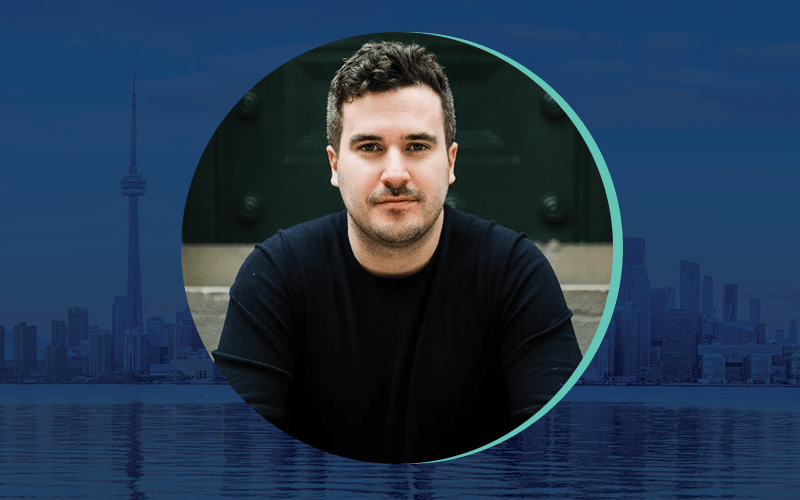
Jeffrey Doucet is Helping COVID-19’s New Job Seekers to Find New Opportunities Without Any Fees
Episode
Jeffrey Doucet is CEO of Thrive Career Wellness Platform, a software company that helps job seekers manage their job...
Key takeaways
- Focus on the feedback that truly matters by prioritizing input from customers over all other stakeholders, as their needs should drive your business decisions.
- Call your customers directly and ask them what they need and what they're willing to pay for before building new products or features.
- During a crisis, leaders must embody the values they preach because employees look to their leaders for direction and guidance during difficult times.
- The COVID-19 pandemic will accelerate digital transformation trends that were already underway, compressing a decade of change into just a few years across multiple industries.
- Building strong relationships with customers and maintaining transparent communication is more valuable than overcomplicating business models or pricing strategies.
Transcript
Full transcript page · Interactive episode
============================================================
TRANSCRIPTION WITH SPEAKERS
============================================================

[00:00] SPEAKER_01: It's Toronto's podcast on the Canada's podcast network.
[00:07] SPEAKER_00: Hi everyone, I'm Phil Bliss, a business visionary and welcome to Toronto's podcast.
[00:12] SPEAKER_00: Part of the Canada's podcast network, your source of the great insights from entrepreneurs
[00:17] SPEAKER_00: across Canada.
[00:19] SPEAKER_00: Today, we're with Jeffrey Desai, CEO of CareerJSN.
[00:24] SPEAKER_00: The software community that helps job seekers manage their job search.
[00:28] SPEAKER_00: Jeffrey, welcome to Canada's podcast.
[00:31] SPEAKER_00: And as I was just saying to you beforehand, we're going to cover your story, but we're
[00:36] SPEAKER_00: going to go in and out of useful tips during this crisis.
[00:42] SPEAKER_00: You might be able to throw into it.
[00:47] SPEAKER_00: And I think I just read about the fact that you're opening up your career wellness platform
[00:52] SPEAKER_00: for people that have lost their jobs due to COVID-19.
[00:55] SPEAKER_00: So when do we kick off?
[00:56] SPEAKER_00: That seems pretty useful.
[00:58] SPEAKER_00: So when do we kick off?
[01:00] SPEAKER_00: Like telling us a bit about that.
[01:02] SPEAKER_01: Sure.
[01:03] SPEAKER_01: Well, thanks for having me.
[01:04] SPEAKER_01: I'm really excited to be here.
[01:05] SPEAKER_01: You know, as you mentioned, I'm the CEO of Thrive Career Wellness Platform.
[01:09] SPEAKER_01: And so our business model is we offer our services to large corporations, who whenever
[01:15] SPEAKER_01: they are either redeploying employees or laying off employees, they will give them
[01:20] SPEAKER_01: access to our career wellness platform, which will help them transition and find their
[01:24] SPEAKER_01: next job opportunity.
[01:25] SPEAKER_01: And that includes everything from software to building a resume to accessing career coaches,
[01:31] SPEAKER_01: accessing upskilling or rescilling platforms, and software to track and manage your job
[01:36] SPEAKER_01: search, a real full suite of tools.
[01:38] SPEAKER_01: And we've been doing this for quite a while.
[01:40] SPEAKER_01: And what we realized was that once this crisis hit, particularly the first wave of this
[01:46] SPEAKER_01: crisis, a lot of the individuals who have been impacted by COVID are not going to get
[01:51] SPEAKER_01: any sort of career transition services.
[01:53] SPEAKER_01: And their employers are not in a position to offer any career transition services, especially
[02:00] SPEAKER_01: industries like small businesses, restaurant, hospitality, tourism.
[02:05] SPEAKER_01: A lot of these companies saw their revenues dropped by 80%.
[02:09] SPEAKER_01: And either to 100%.
[02:11] SPEAKER_01: And it's awful.
[02:13] SPEAKER_01: And so we understood really quickly that these individuals would never, would not get
[02:18] SPEAKER_01: access to our services.
[02:19] SPEAKER_01: And we saw that shocking news that everyone saw that half a million million Canadians
[02:22] SPEAKER_01: applying from employment insurance.
[02:24] SPEAKER_01: So at that point, we decided to do what we could to support those individuals.
[02:29] SPEAKER_01: So we worked really quickly to make our software available for free to a lot of those individuals.
[02:35] SPEAKER_01: And so we launched about a week and a half ago, two weeks ago, that individuals who were
[02:40] SPEAKER_01: impacted by COVID could access our website, thrivemicrored.com.
[02:44] SPEAKER_01: And they'll see a prompt to request access to our software.
[02:47] SPEAKER_01: And it's really simple.
[02:49] SPEAKER_01: They can request access.
[02:50] SPEAKER_01: And they will be then invited to our platform and get access to a wide array of our software
[02:54] SPEAKER_01: tools to help them find an extra opportunity.
[02:58] SPEAKER_00: Daniel, that's terrific.
[03:00] SPEAKER_00: Okay.
[03:00] SPEAKER_00: Well, that's a great start in terms of coming in now.
[03:03] SPEAKER_00: But you let's sort of go back to the theme.
[03:06] SPEAKER_00: And it's your story that we really wanted to hear about Jeffrey.
[03:11] SPEAKER_00: You know, I know you went to Mac.
[03:13] SPEAKER_00: I mean, you know, you know exactly where I am.
[03:19] SPEAKER_00: But you know, tell us a bit more about yourself.
[03:22] SPEAKER_00: Why do you become an entrepreneur?
[03:25] SPEAKER_00: Yeah, it's a good question.
[03:26] SPEAKER_01: It's not had not anticipated doing this.
[03:29] SPEAKER_01: And so I went to my class university, I graduated 2013.
[03:33] SPEAKER_01: And I was really involved in student politics during my undergrad.
[03:38] SPEAKER_01: I actually met my business partner, who's our chief technology officer, Tristan.
[03:42] SPEAKER_01: Probably in the second year of university because he worked at the printed design studio and worked on a number of projects together.
[03:50] SPEAKER_01: And after I graduated, I was elected as the vice president of finance of the student to you and amic master and the master student to you.
[03:57] SPEAKER_01: And during that year, I spent a lot of time arguing with the career department that they were not doing enough with the money that our students that students gave them for career services.
[04:07] SPEAKER_01: And I felt that the software that students got access to whenever they were in university to help them find their next job was antiquated, outdated and not quite frankly very helpful.
[04:18] SPEAKER_01: And so Tristan and I talked a lot about this problem.
[04:22] SPEAKER_01: I ridden my LSATs and planned to go to law school.
[04:26] SPEAKER_01: And he had started to start up that ended up getting acquired and we decided to be it began to work together on solving this problem.
[04:33] SPEAKER_01: So we started building software to help job seekers manage their job search and started selling its university and colleges and start out and the rest is history.
[04:43] SPEAKER_01: It's evolved a lot, but that's why we got started really just wanting to help people find their next job.
[04:49] SPEAKER_00: Coming back to the crisis we're in, I don't think we understand what damage is due to the economy yet.
[04:56] SPEAKER_00: I think we might next month and the month after.
[04:59] SPEAKER_00: Is there still the lining that you see coming out of this?
[05:04] SPEAKER_01: Oh, that's a really good question.
[05:07] SPEAKER_01: And I think it's hard to think about it still the lining sometime right now because things are so bad.
[05:16] SPEAKER_01: But I think that you know just like on a personal level you start to realize like how much you enjoy working with some of your colleagues and I am with with some of your friends and take start to take like almost some of these small experiences that we have in our day to day life that weren't seem like a big deal.
[05:32] SPEAKER_01: You know, you're no longer taking them for granted.
[05:35] SPEAKER_01: And I think that really easily like on a personal level that's been something that I'm taking for I'm taking a I'm realizing.
[05:43] SPEAKER_01: More like on a corporate level, I think that there are and in a business perspective.
[05:50] SPEAKER_01: I think a lot of companies are starting to adopt will start to adopt some more flexible and transparent like work styles for their employees whether that's by implementing more software so that individuals can work easily from home or be more flexible about what it needs to be a worker from your employee.
[06:07] SPEAKER_01: Do you need you need to be in the office nine to five.
[06:10] SPEAKER_01: I think that you'll start to see some of those positive outcomes, but we'll see how long it takes for things to return to normalcy.
[06:19] SPEAKER_00: Are you taking any advantage of the government subsidies that they're announcing if you've been able to access any of them as yet.
[06:27] SPEAKER_01: So there's there's actually been a lack of clarity around what companies are eligible or not eligible for and I know that especially in the startup ecosystem.
[06:35] SPEAKER_01: It's been very challenging to understand that so like at this point we have we have not been taking advantage of any of those subsidies and there's they might not apply to a company like ours.
[06:46] SPEAKER_01: So we're you know proceeding as business has is and we'll wait for a bit more clarity around what those subsidies mean.
[06:54] SPEAKER_01: But right now no, we haven't been taking advantage of any of those.
[06:58] SPEAKER_00: Is this the greatest challenge you face in the business because you've been even doing this for a while now.
[07:05] SPEAKER_00: Is there any other challenges that you've learned from you could pass on.
[07:11] SPEAKER_01: Yeah, so I would say this is definitely the greatest challenge.
[07:14] SPEAKER_01: I think one thing that's different about this challenge from a business perspective than any other challenge that I face to date is.
[07:22] SPEAKER_01: Challenges are just unique to your business and sometimes be very challenging, but they're easy to focus on and what I'm personally finding right now is like I'm worried about my business.
[07:32] SPEAKER_01: I'm worried about the health of my business. I'm worried about a lot of my friends businesses that I'm also worried about like the health of my my parents.
[07:39] SPEAKER_01: My mom works in frontline healthcare at a hospital in Mississauga like I'm concerned about that.
[07:46] SPEAKER_01: I'm concerned about the health of a lot of my colleagues.
[07:50] SPEAKER_01: And so you know I wasn't an entrepreneur in the 2008 recession.
[07:55] SPEAKER_01: I was actually still in high school, but I think that in that case you were still only worried about your business.
[08:02] SPEAKER_01: There was not all these other social implications, which I made it like like a lot harder.
[08:08] SPEAKER_01: And I think that's the real problem right now or not the real problem that really amplifies all of this is that it's not just a business problem.
[08:19] SPEAKER_01: It's like a social health problem and there's all these other issues and I'll relate that to something else that I was I'm concerned about in the sense that whenever somebody loses their job and when there's a recession.
[08:33] SPEAKER_01: There's like a lot of very challenging issues that that they face and we know that during a recession, you know,
[08:39] SPEAKER_01: rates of addiction go up that rates of domestic violence go up like all these negative things happen due to job loss.
[08:47] SPEAKER_01: Well, I was walking by a social services and employment center in Toronto the other week and like they're not open.
[08:53] SPEAKER_01: They're not open because they're not able to see patients or see people face to face because of social distancing.
[08:59] SPEAKER_01: And so I think that those things are very concerning because the second phase of how we returns a normalcy when if social isolation is still in effect, it's going to make that return challenging.
[09:15] SPEAKER_01: And those are things we're constantly thinking about and trying to think about how it can solve or solve some of those problems, but it's yeah, it's challenging.
[09:22] SPEAKER_00: It's challenging. You know, over the long the whole will will COVID-19 mean that you have changed your business model? You think? I mean, maybe it's too early to say I don't know.
[09:34] SPEAKER_01: I think that it's created us to evolve our business model a little bit. We've talked in the past, so we're primarily a B2B business.
[09:43] SPEAKER_01: So we only sell our services to enterprise through a traditional B2B business to business sales cycle.
[09:51] SPEAKER_01: We have always thought about becoming okay, do we want to be more consumer facing?
[09:57] SPEAKER_01: Should we make our product more consumer facing? And those are things that you know, did a bandwidth, due to focus, due to resources we haven't pursued up until now, just because of the business growing and things of that nature.
[10:10] SPEAKER_01: Obviously, given this crisis, and our team is really motivated to try to do something, you know, it's enabled us to start looking at, okay, do we want to invest in more consumer products?
[10:21] SPEAKER_01: Or do we want to look at distributing our product directly to consumers? And so that's that's still taking place for still in the early days of testing it.
[10:30] SPEAKER_01: We're getting really positive feedback from users. So I would say so much is that we're looking to change our business, but it might cause a natural evolution.
[10:37] SPEAKER_00: I'm going to go back to my other series, let's just move away from some of the situation stuff.
[10:45] SPEAKER_00: If you could go back in time, what advice would you give your 20 year old self as you kind of were at university and peddling around there, politicizing around there maybe.
[10:59] SPEAKER_01: You know, I think that the biggest advice, you know, I give myself, and this is something that I still struggled to adhere to today.
[11:10] SPEAKER_01: And something that you know, constantly focusing on is being able to focus on the right feedback and focusing on the feedback that's most relevant to what you're trying to do at this time.
[11:22] SPEAKER_01: And so what I mean by this is you launch a business, you're an entrepreneur with one friend, you're with one business partner and you launched that business.
[11:30] SPEAKER_01: Now all of a sudden, you're getting feedback from everybody on what you should be doing, how you should be doing that.
[11:37] SPEAKER_01: And I think that the easy thing to do a lot of the time is to take all that feedback in, treat all that feedback at the same level of importance.
[11:46] SPEAKER_01: And you can become almost overwhelmed with outside noise as to how you're running your business.
[11:52] SPEAKER_01: What I think matured on and what I've learned more when you're, you know, evolving as an entrepreneur or as an individual or as a professional or even as a student politician is honing in on the feedback that, you know, really matters.
[12:06] SPEAKER_01: And the feedback that is the most valid and relevant to what you're focusing on at that time. So, for example, right now, like the feedback that a customer gives me is more important than the feedback that one of my investor gives me.
[12:21] SPEAKER_01: And even if that investor sits on my board of directors and has invested a substantial amount revenue or into our business, not a revenue of capital.
[12:30] SPEAKER_01: I'm going to put the vice president of HR to major Canadian corporation way above them in terms of what feedback I'm focusing on and they get that and they understand that when you articulate that clearly.
[12:45] SPEAKER_01: And so, you know, I even a student politician on a 20, I probably got too upset about what someone was saying on a Facebook thread about a decision you're making about a campus bar.
[12:55] SPEAKER_01: And those are certain things that I think I think I've got better at, but that's the biggest feedback is like understanding what feedback you should be testing for and leaning in on that because you can get, becomes scrambled eggs and listening to all these different things.
[13:10] SPEAKER_00: It's interesting. I'm just looking at some of my questions, which were kind of location based, but I think the last three or four weeks make me realize that location based is less and less of a factor or it's still there, but it's so much less of a factor for many businesses than it has been.
[13:31] SPEAKER_00: I think I think that's something going forward, but on the advice side of it and I asked this to everyone because I really like the answers.
[13:40] SPEAKER_00: What's the best piece of advice you've ever received?
[13:45] SPEAKER_01: That's a good one and honestly it's very simple advice call your customers and ask them what they need.
[13:50] SPEAKER_01: It's a certain amount of use that iconic Canadian entrepreneur is one of the investors in our companies and he always goes off about how a lot of people over complicate business.
[14:02] SPEAKER_01: They over complicate pricing models, they over complicate everything.
[14:06] SPEAKER_01: Have you built a trusting relationship with your customer and you get them on the phone, you ask them what they want and you ask them what they're willing to pay for it.
[14:12] SPEAKER_01: If they say they're going to pay for it, then you build it.
[14:15] SPEAKER_01: That is I think very simple, but a lot harder than it sounds like advice to execute on as an entrepreneur.
[14:24] SPEAKER_01: It's very easy to dream up new product ideas on your own.
[14:28] SPEAKER_01: It's very easy to come up with complicated pricing models on your own.
[14:32] SPEAKER_01: It's very hard to have just a transparent conversation with your customer and just ask them what they need.
[14:40] SPEAKER_01: We're an extremely customer-centric company. It's driven by that sort of advice and it's quite simple, but it's the most easy advice to follow if you actually believe in it and you take that as far as you can.
[14:55] SPEAKER_00: Let's go about what I tell rapid-fire questions that are really focused on you and your responses.
[15:02] SPEAKER_00: If you weren't doing what you do for work now, what would you be doing instead?
[15:08] SPEAKER_01: I think that I would be working in public policy and politics in some capacity.
[15:15] SPEAKER_01: I've always been interested in solving large problems on a large scale and that's the way to do it.
[15:21] SPEAKER_00: What book are you currently reading, listening to?
[15:24] SPEAKER_00: I think we're all reading more because we're here. We're not going out when we can't talk with our customers.
[15:34] SPEAKER_01: I'm just looking at it and this is the book that I read it probably a month or two ago, but it's the one that's resonated with me a lot recently.
[15:45] SPEAKER_01: That's the one I'm going to flag.
[15:47] SPEAKER_01: What you do is who you are by Ben Horowitz, who is a venture capitalist and it's a fantastic read.
[15:54] SPEAKER_01: I really suggest anyone any business leader read it.
[15:57] SPEAKER_01: It's something that I particularly refer to a lot right now in this crisis.
[16:03] SPEAKER_01: I think a lot of individuals and at your company are looking to their leaders to lead them to this crisis and taking direction from them.
[16:11] SPEAKER_01: That book is all about you need to be what you preach and that's how you lead.
[16:16] SPEAKER_01: I'm not sure have you heard of the book?
[16:18] SPEAKER_00: Yes, I have actually. I'm going to read it.
[16:22] SPEAKER_00: You should.
[16:23] SPEAKER_00: Okay, well, this is a good one because this also says when we're all socially isolated, I think you learn this a lot better.
[16:31] SPEAKER_00: Are you a morning or a night person?
[16:34] SPEAKER_01: I'm a morning person and I think that that's the one thing that become became easy to forget whenever we're figuring your condo all the time.
[16:44] SPEAKER_01: I'm a get up workout in the morning, get outside in the morning, type person.
[16:49] SPEAKER_01: And so 100% of morning person off the opposite of my business partner.
[16:55] SPEAKER_01: So, but that's what we're not all the same.
[16:59] SPEAKER_00: So if you had to pick one word to describe yourself, what would it be and why?
[17:05] SPEAKER_01: I would say probably combination two words, but like aggressively pragmatic.
[17:09] SPEAKER_01: I think that try to be like as aggressive as possible and do as much as you can with like realistic goals and outcomes.
[17:19] SPEAKER_00: Apart from COVID-19, is anything else keeping you up at night?
[17:24] SPEAKER_01: Yeah, like well, a lot of things like, you know, this is like, like I said, it's a very interesting time.
[17:32] SPEAKER_01: And I think that, you know, everything that's related to why I'm waking up at night is probably related to COVID-19.
[17:40] SPEAKER_01: But I think that, you know, it's the intersection that this virus has caused in all different facets of our life.
[17:47] SPEAKER_01: And that's, you know, everything from a house disrupted our daily work patterns, to our health.
[17:52] SPEAKER_01: And I think that, you know, there's the optimistic group that believes that this is going to link return really quickly or to normalcy.
[18:01] SPEAKER_01: And once the restrictions are lifted, I tend to be in another group.
[18:05] SPEAKER_01: I think that this is going to have like a longer tail return to normal.
[18:10] SPEAKER_01: And I think that we're going to see a lot of implications on that long tail return.
[18:15] SPEAKER_01: And we haven't quite, you know, sorted that out entirely as well as the geopolitical implications.
[18:21] SPEAKER_00: Yeah, I think I'm not so sure where we end up geopolitically, but I think I've been reading a fair amount about it.
[18:28] SPEAKER_00: I think we're going to see an acceleration in trends.
[18:32] SPEAKER_00: I mean, you know, remote work, remote workforces were growing fairly dramatically anyway.
[18:39] SPEAKER_00: But now it's, you know, it's a question of they will dominate the local workforces will become very different.
[18:48] SPEAKER_00: So certain work, worker trends will just stay here.
[18:54] SPEAKER_00: I don't know what happens to sort of hospitality and things like that.
[18:59] SPEAKER_00: Everybody don't know.
[19:01] SPEAKER_01: Yeah, it'll be interesting.
[19:02] SPEAKER_01: Like, I think that there's a couple different groups of people though.
[19:07] SPEAKER_01: And it's interesting is like at our company, like probably the first week, a lot of people were like,
[19:12] SPEAKER_01: oh, working remote, this isn't too bad.
[19:14] SPEAKER_01: We're liking it. Everything of that nature.
[19:16] SPEAKER_01: But we for everyone's like, this is we want to be back in the office.
[19:21] SPEAKER_00: We have to lay anyone off or are you lucky?
[19:27] SPEAKER_00: We're lucky we have.
[19:28] SPEAKER_01: Yeah, we're in a fortunate position where we have not had too lay anyone off.
[19:32] SPEAKER_00: Well, that's two good news stories, at least that's fine.
[19:37] SPEAKER_00: And I'm going to ask the silly question at the end because I think we need some lightness about it all.
[19:43] SPEAKER_00: Yeah, yeah, sure, which is, you know, there's a small tropical island in the middle of the ocean with only one for both and no internet.
[19:51] SPEAKER_00: We drop you off there with no technology.
[19:54] SPEAKER_00: And yeah, there's no COVID-19, but you can't you can't use that as an excuse.
[20:00] SPEAKER_00: Okay, at any time you can use the phone booth on the island to call a boat, come pick you up.
[20:06] SPEAKER_00: How long would you last normally before making the phone call?
[20:11] SPEAKER_00: And what would you do until then?
[20:14] SPEAKER_01: Well, is there any reason why I'm not allowed like, is there any incentives to stay there?
[20:19] SPEAKER_00: That's your goal.
[20:23] SPEAKER_01: I'm not leaving you.
[20:24] SPEAKER_00: Yeah, yeah.
[20:26] SPEAKER_01: See, this is a thing.
[20:28] SPEAKER_01: I don't think I'd last very long.
[20:30] SPEAKER_01: And that's like, I mean, but this is the joke.
[20:35] SPEAKER_01: Like if there was an incentive to live.
[20:37] SPEAKER_00: There's a fishing rod to be in this beautiful beach.
[20:40] SPEAKER_01: Yeah, maybe I maybe I had last three or four days.
[20:44] SPEAKER_01: And relax for three or four days and say, okay, I'm out of here.
[20:48] SPEAKER_01: Got other things to do.
[20:49] SPEAKER_01: If there was an incentive to stay there, like I'm very incentive based person.
[20:54] SPEAKER_01: I probably would stay for a long time if I had to.
[20:59] SPEAKER_01: But if there's no incentive, I probably I relax for a little bit to get some sunshine and then be out of there.
[21:06] SPEAKER_00: Okay, just just one sort of parting shot.
[21:09] SPEAKER_00: I mean, in terms of, you know, the future.
[21:12] SPEAKER_00: I mean, you've given us some insights.
[21:14] SPEAKER_00: Any big thoughts about where we go from here?
[21:19] SPEAKER_01: Yeah, so so I do.
[21:21] SPEAKER_01: And I think that the reality is, is that prior to COVID, a lot of these sectors that have been hit really hard by COVID,
[21:30] SPEAKER_01: we're already starting transformations to change their sectors in the foreseeable future with technology.
[21:37] SPEAKER_01: And so what I mean by this is that, you know, prior to COVID,
[21:41] SPEAKER_01: banks were talking about, they're no longer being tellers retail companies.
[21:46] SPEAKER_01: And we're talking about how there won't be a physical store anymore.
[21:50] SPEAKER_01: And they were starting to look at how do they prep their workforce, retrain the workforce and start to move a lot of those more services digital.
[21:59] SPEAKER_01: I, and they're expecting that to happen over the next decade.
[22:02] SPEAKER_01: I think that that is going to be dramatically accelerated over over the next four or five years.
[22:07] SPEAKER_01: And that, you know, certain sectors of the economy, like aren't coming back.
[22:13] SPEAKER_01: And that certain processes are going to change and they're not coming back.
[22:17] SPEAKER_01: And those can be processes like in specific industries that we just discussed.
[22:23] SPEAKER_01: But can also be processes related to any other company.
[22:26] SPEAKER_01: So I'll give you another example.
[22:28] SPEAKER_01: What do you think has been one of the most stressful things about being an entrepreneur right now in, in COVID?
[22:35] SPEAKER_01: You can probably not going to guess it.
[22:37] SPEAKER_00: No, no, I don't know.
[22:38] SPEAKER_01: Getting getting paid on time.
[22:41] SPEAKER_00: And this is all I mean, from my perspective, yeah, my receivables for directions are 90 days off, you know, I mean, everybody.
[22:50] SPEAKER_01: No one is no one shockingly enough.
[22:53] SPEAKER_01: Most major corporations were not digital in their entire payment process, meaning that they still printed checks.
[22:59] SPEAKER_01: They still had to have approvals in place.
[23:03] SPEAKER_01: And now they're scrambling to change those.
[23:05] SPEAKER_01: And once they change them, like that's not coming back.
[23:08] SPEAKER_01: And that is the sort of things that I think we'll see this really quick acceleration.
[23:14] SPEAKER_01: Famous government government is putting in new processes in different areas that previously it would take like three years to get approvals to do so.
[23:21] SPEAKER_01: And now they're having to do them.
[23:23] SPEAKER_01: And those those won't come back.
[23:25] SPEAKER_01: And so those are some of the positive thing that I think will come out of this is that positive business outcomes will change for the nature for the better.
[23:37] SPEAKER_01: And those won't come back.
[23:40] SPEAKER_01: And that's just a prediction that I have.
[23:44] SPEAKER_00: So, you know, this always first questions and people want to get old to be Jeffrey.
[23:50] SPEAKER_00: How can people get old to be online?
[23:52] SPEAKER_00: That's it. I have some question.
[23:55] SPEAKER_01: So a couple of easy ways.
[23:56] SPEAKER_01: You know, if you're a Twitter person, you can follow me on.
[23:59] SPEAKER_01: Find me on Twitter, Jeffrey underscore, do set on Twitter.
[24:02] SPEAKER_01: You can find me on LinkedIn, just typing in Jeffrey, do set.
[24:06] SPEAKER_01: Or you can email me directly at Jeffrey at drivemycareer.com.
[24:11] SPEAKER_00: Thanks Jeffrey. That was really great.
[24:13] SPEAKER_00: Some good insights. Hope we were helped.
[24:15] SPEAKER_00: Help the few people with with the thoughts.
[24:18] SPEAKER_00: And thanks very much for being on Canada's podcast.
[24:21] SPEAKER_01: No problem. It's great to have you. Thank you.
[24:23] SPEAKER_00: Thanks everyone for taking the time today to listen to Toronto's podcast on the Canada's podcast network.
[24:29] SPEAKER_00: I hope you enjoyed the podcast today.
[24:32] SPEAKER_00: Make sure you sign up for a newsletters or write a review for us on iTunes.
[24:37] SPEAKER_00: You can connect with us on Twitter, Facebook, Instagram, LinkedIn or at CanadaSpodcast.com
[24:43] SPEAKER_00: where you can listen, discover and engage.
[24:46] SPEAKER_00: You can also check out what other entrepreneurs are doing across the country.
[24:50] SPEAKER_00: We'll see you next time.