
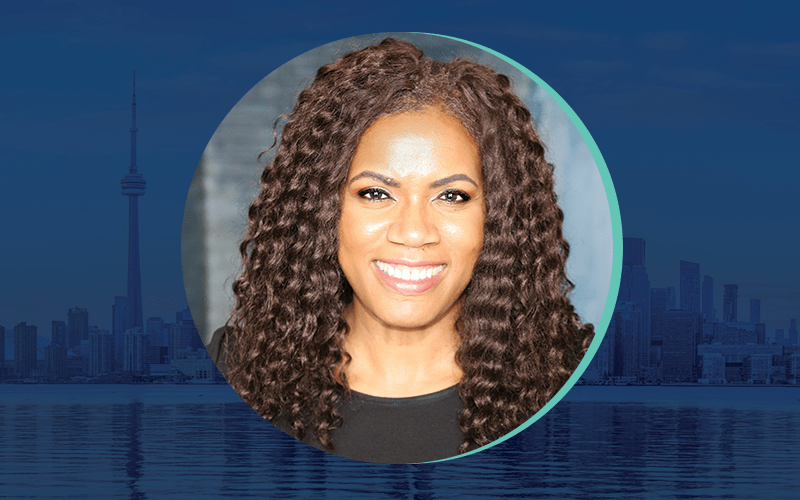
Jackie Porter, Award Winning Financial Planner Discusses The Importance of Business Finances During the COVID-19 Pandemic
Episode
Jackie Porter is an award-winning financial planner who has been in the financial industry for the past 22 years serving...
Key takeaways
- Understanding your business numbers intimately is essential for entrepreneurial success, and you should have regular strategic conversations with your accountant beyond just tax filing.
- Talking openly about money with your partner is one of the most important things you can do for a healthy relationship and is often more effective than therapy.
- Before making major financial decisions as an entrepreneur, gather information from multiple sources, scrutinize it carefully, and consult with professionals rather than acting on impulse.
- Having money conversations at your kitchen table with your children helps break the cycle of shame around finances and teaches them healthy financial habits.
- Working with independent financial advisors who can be vulnerable confidants, rather than just salespeople for specific institutions, allows for more honest and effective financial planning.
Transcript
Full transcript page · Interactive episode
============================================================
TRANSCRIPTION WITH SPEAKERS
============================================================

[00:00] SPEAKER_01: It's Toronto's podcast on the Canada's podcast network.
[00:06] SPEAKER_00: Hi everyone, I'm Sleen Williams, an international speaker and business strategist and I'd like
[00:11] SPEAKER_00: to welcome you to Toronto's podcast.
[00:14] SPEAKER_00: We are part of the Canada's podcast network, your source for great insights for entrepreneurs
[00:18] SPEAKER_00: from across Canada.
[00:20] SPEAKER_00: I'm here today with Jackie Porter who is a financial planner and financial confidant.
[00:25] SPEAKER_00: Thanks for joining me today.
[00:26] SPEAKER_00: Such a pleasure.
[00:28] SPEAKER_00: I'm really excited to talk to you not only because I want to know so much more about
[00:32] SPEAKER_00: what being a financial confidant looks like, but also because I know just how brilliant
[00:37] SPEAKER_00: your brain is and how fascinating you are.
[00:39] SPEAKER_00: So I'm really excited about this.
[00:41] SPEAKER_00: Well, thank you.
[00:42] SPEAKER_00: I want to start with, to tell our listeners a little bit about what it is that you do,
[00:47] SPEAKER_00: especially as a financial confidant.
[00:50] SPEAKER_01: So you know what, being a financial confidant, what I've come to learn, like I have a background
[00:56] SPEAKER_01: in therapy actually and I actually thought I was going to be a therapist.
[01:01] SPEAKER_01: I have a background in psychology and communications and you know, went to get further training
[01:06] SPEAKER_01: in therapy and you know, what I came to realize when I was doing my practicum in therapy
[01:13] SPEAKER_01: was I was struggling, not offering advice to the people who came week after week, who
[01:22] SPEAKER_01: told me what their issues were and you know, and I just felt like I wasn't really helping
[01:30] SPEAKER_01: them and you know, I had been trained in the area of Gestalt therapy where you do a lot
[01:36] SPEAKER_01: of active listening and positive regard, things have changed thankfully in therapy, but
[01:41] SPEAKER_01: you're listening and you're not guiding as much as you're listening and getting people
[01:47] SPEAKER_01: to come to their own conclusions.
[01:49] SPEAKER_01: And I just found that not very effective and the advice person in me just kept screaming
[01:54] SPEAKER_01: in my head and I kept wanting to tell the people I was seeing like, give your head a shake.
[02:01] SPEAKER_01: Like, didn't we just talk about this last week?
[02:03] SPEAKER_01: We're having the same conversation again this week.
[02:06] SPEAKER_01: And so I just felt like I wasn't going to be an effective therapist because I really enjoy
[02:12] SPEAKER_01: coaching and I enjoy giving people feedback and having, looking at how ways, tentable ways
[02:19] SPEAKER_01: I can help them.
[02:20] SPEAKER_01: So I just felt like I wouldn't be effective as a therapist and not please understand that
[02:25] SPEAKER_01: on my hats go out to, my hat goes off to therapists out there, I just didn't think that would
[02:30] SPEAKER_01: be my best value, my highest value.
[02:33] SPEAKER_01: So anyway, that led me to funny enough, continue to pursue a career in journalism.
[02:41] SPEAKER_01: And so I got my journalism degree and then communications degree and then I thought,
[02:47] SPEAKER_01: I would do that, I worked for the phone company for a number of years and that led me to for
[02:53] SPEAKER_01: the first time in my life, sleep, save money.
[02:57] SPEAKER_01: Like, I've been on my own and I don't even know with all of our personal conversations
[03:01] SPEAKER_01: that we've had because shout out to Celine, she's a fantastic girl out there, she's a groovy lady
[03:07] SPEAKER_01: and we've had lots of great conversations.
[03:09] SPEAKER_01: But I have actually been on my own since I was 16, I was raised by a single mom who I became
[03:15] SPEAKER_01: suddenly single at the age of 16 and I was on my own, you know, figuring out how to pay
[03:20] SPEAKER_01: for school, high school, university, I like literally had mostly through school, three
[03:27] SPEAKER_01: or four jobs while going to school.
[03:29] SPEAKER_01: And I just became really good at putting money away and saving because I had no choice.
[03:36] SPEAKER_01: And, you know, so the first time in my life that I had a full time job, just one job was what I worked
[03:42] SPEAKER_01: at Bell and so I was able to save quite a bit and now during that time period, I only worked
[03:47] SPEAKER_01: there five years, I got promoted and the next thing I know, I, the department that I was in,
[03:53] SPEAKER_01: Bell was going through transition, they were going through competition and because of that,
[03:58] SPEAKER_01: my job was up again.
[04:00] SPEAKER_01: So all of a sudden I'm going through transition at Bell and really at that point in time, I could
[04:08] SPEAKER_01: have stayed at Bell, but I was so demoralized by that whole transition process, I don't know if you've
[04:13] SPEAKER_01: ever worked in a big company going through transition, it could be pretty demoralizing what I knew, even though
[04:19] SPEAKER_01: I knew management loved me and they wanted me to stay, what I knew is I didn't want to work for a big company
[04:23] SPEAKER_01: anymore and I thought I was going to get a, you know, associate degree, a higher degree, maybe my
[04:30] SPEAKER_01: master's in journalism and I thought I would do that. And anyway, that was a first, it was that
[04:35] SPEAKER_01: time period when I left, it was in the process of leaving Bell, that somebody, a girlfriend of mine,
[04:39] SPEAKER_01: were having my very first money conversation and I said, you know, I have some stock options and never knew
[04:44] SPEAKER_01: what that was before with Bell and she said, and I have some RSPs and she said, you should talk to a
[04:53] SPEAKER_01: first time, I even heard of a financial planner and so she referred me to a financial planner who
[04:58] SPEAKER_01: get this was a woman of color, a woman of color. That was like a pretty much a unicorn back in the 90s,
[05:07] SPEAKER_00: in the 30s. It's still rare now in that field, but definitely I can see in the 90s, it's like one.
[05:15] SPEAKER_01: Exactly, exactly. So she was talking to me, I'm having like now my first really bonafide money conversation
[05:22] SPEAKER_01: right and she said something to me that like sounded revolutionary at the time. Remember, this is a girl who worked
[05:28] SPEAKER_01: three jobs since I was 16. She's like, you know, I can show you how you can make money.
[05:36] SPEAKER_01: I said to her at the end of our conversation, first of all, how do I do this? And then second of all, how do I become an
[05:41] SPEAKER_01: advisor myself? Because what I realized from that conversation is I needed to learn everything I could about money for
[05:46] SPEAKER_01: me because I desperately wanted to retire sooner than later, having worked since I was 16.
[05:54] SPEAKER_01: We reached part time jobs and maybe it wasn't therapy that I'm supposed to do. Maybe this is what I'm supposed to do.
[06:00] SPEAKER_01: As I've been doing this for as long as I have, that was like 22 years ago. So I learned everything I could about money.
[06:06] SPEAKER_01: I got my certifications, like if my CFP, all the investment licenses and I figured out how to do this.
[06:13] SPEAKER_01: And I'm so grateful for that woman. It led me to develop my own practice, allowed me to create my own seven figured out worth.
[06:20] SPEAKER_01: It was one of the most important decisions I've ever made in my life.
[06:23] SPEAKER_01: So that's the first thing. But then the part of it that attracted me why I liked financial planning I came to realize is because I found that talking about money was cheaper than going to therapy.
[06:36] SPEAKER_01: Because even with even in a relationship, right, talking about money with with couples and families, I can actually give people strategies.
[06:45] SPEAKER_01: I could show them stand tangible ways they could pay off their mortgage sooner or pay off their debt or save her retirement. I could give them so much more security.
[06:54] SPEAKER_01: And that's what appealed to me about the field. So one of the reasons I call myself a confidant is because there's still so much, there's still so much vulnerability around talking about money.
[07:04] SPEAKER_01: It's kind of like talking about sex and all the other things. And it requires a certain level of trust with the person.
[07:12] SPEAKER_01: Because if I'm going to be vulnerable with you, I need to trust you. And that's kind of like what a confidant's all about. It's kind of like what I didn't therapy.
[07:21] SPEAKER_01: You need to people need to feel trust you're going to tell you their dark secrets and money is one of them.
[07:25] SPEAKER_01: But they also, why I call myself a confidant as well is, you know, I was really big just right from the beginning, getting all of my licenses, making sure that I could be someone that someone could feel confident working with like I wanted to get my CFP wanted to get all those credentials because a I knew I was going to write a lot about money talk about money.
[07:44] SPEAKER_01: I knew I wanted to be like Oprah and I don't say that lightly in the financial world. I knew that. And so I wanted to make sure I was in a position that I could speak confidently about it.
[07:56] SPEAKER_01: So when people speak to me, they can feel confident that I can help them, but they also can have that sense that they can also be vulnerable with me because I think that's still really important and not be judgmental.
[08:07] SPEAKER_01: And those are all the things that I take from therapy.
[08:10] SPEAKER_00: Well, and I love that it's that balance of having those credentials, having that the training, it does position you as an expert.
[08:20] SPEAKER_00: And doing the work that you're doing means that you're in the field continuing to grow on it. So one of the challenges that happens with, I think sometimes a larger organizations.
[08:29] SPEAKER_00: So the joy of being an entrepreneur is you get the education and then you are stuck doing the same thing over and over and over again.
[08:36] SPEAKER_00: And you just get stuck in this little bubble. And you have this lovely balance of you have the education, the knowledge, but you're constantly building on it and putting into practice and learning.
[08:44] SPEAKER_00: So you're it's not that there's a word that I'm looking for it, but it's not it's not that stuck in just the educational model or the structure of this is the way it has to be.
[08:53] SPEAKER_02: Right. Like in the school almost like theory.
[08:56] SPEAKER_02: There's theory and practice.
[08:58] SPEAKER_00: Yes. And I think what's really cool about what you're talking about and what you do is that it is that mallets of theory and practice and it's not overly structured as one or the other.
[09:11] SPEAKER_00: It is that you're able to have people's best interest and still they can have all this trust in you because you are.
[09:17] SPEAKER_00: You have all these certifications and I think that's really cool.
[09:20] SPEAKER_01: Yeah, yeah, and I think a part of it like the whole the therapist in me you need to be approachable like if people come to you and you seem like that really stuffy ban per type, you know, maybe they'll talk to you about their investments, but they're not going to really tell you what's going on in their life.
[09:35] SPEAKER_01: The things that really matter.
[09:37] SPEAKER_01: And what I find as I work with clients, especially over a few meetings is what they present isn't always how things appear.
[09:45] SPEAKER_01: And the only way you can actually get to the heart of what's going on with them financially is they have to trust you.
[09:50] SPEAKER_01: So they'll give you some numbers in the beginning and they'll tell you one story.
[09:54] SPEAKER_01: But what I love about my job is the PR the PI piece like I'm I'm an investigative journalist at heart, right.
[10:01] SPEAKER_01: Which means I want to understand the story that people tell me.
[10:05] SPEAKER_01: But the numbers will tell me another story and it's helping them align those two stories together.
[10:11] SPEAKER_01: Like you told me one thing, but the numbers tell me this what's really going on.
[10:16] SPEAKER_00: Right.
[10:19] SPEAKER_00: So I'm going to assume and correct me if I'm wrong that you do have a lot of clients and people that you work with that are entrepreneurs.
[10:26] SPEAKER_00: That's right.
[10:27] SPEAKER_00: What do you find are the things that either the stories that entrepreneur and I'm talking about because our audience is mostly entrepreneurs.
[10:34] SPEAKER_00: So it's not but like are there specific stories or things that entrepreneurs aren't looking at or telling themselves that aren't the reality that you see kind of as a trend quite often in the people that you're dealing with.
[10:45] SPEAKER_01: Well, I have this phenomenon that I call the the broke million air syndrome.
[10:51] SPEAKER_01: And the broke million air syndrome is there seems to be a lot of money in the bank and you know they may not even have had a really good conversation with their accountant about the financial state of things.
[11:04] SPEAKER_01: So I tend to want them to become very intimate with their numbers sooner than later in the process.
[11:12] SPEAKER_01: So I'm like, have you ever had a conversation with your accountant about your financial health because maybe just because you're drawing a certain amount of money from your corporation that doesn't mean you should or it doesn't mean you shouldn't but it doesn't mean you should.
[11:27] SPEAKER_01: And what are your long term plans and I just I find that people tend to get like they're busy and also to they sometimes feel dumb when it comes to dealing with their accountant.
[11:40] SPEAKER_01: So they they don't necessarily know what they should be asking.
[11:44] SPEAKER_01: And so they often will just go to their account to file their taxes and they're not really utilizing an account.
[11:52] SPEAKER_01: And as far as I feel they should be and as as entrepreneurs you really have to especially this time of the year because we're getting to the the tax filing deadline for entrepreneurs and for corporations.
[12:04] SPEAKER_01: But you really have to watch out for dealing with someone who's an accountant that's a a filer of your taxes versus a tax advisor.
[12:13] SPEAKER_01: There's a huge difference.
[12:16] SPEAKER_01: If you're dealing with a filer chances are you're not having ongoing conversations about your financial health.
[12:23] SPEAKER_01: They're not helping you to make tactical decisions about what you should be taking out of the company that you have what you should be taking as a salary and as a dividend.
[12:31] SPEAKER_01: And you know what maybe what how things should change the following year based on some of your plans and ultimately you know entrepreneurs need competent people they're really busy like I find I'm I'm also because I push these conversations.
[12:45] SPEAKER_01: I feel like I go to accounting meetings with clients and I'm the the translator of the accountant.
[12:51] SPEAKER_01: Because they don't understand what they're saying and sometimes they just give up they're not happy but they just give up and they don't really take an active role in understanding their company's expenses.
[13:02] SPEAKER_01: And at the end of the day I mean depending on how how how cash rich and how wealthy your corporation is you can get away with that but not forever and certainly not in moments like these right.
[13:13] SPEAKER_01: It would be nice to know where you actually stand financially you know what your balance chief actually says what your you know your profit and loss statement actually means and and not just get lulled into you know it's okay.
[13:28] SPEAKER_01: I'll just keep going I can keep myself busy with other there's lots of other things but but truthfully you know to have a successful business you need to understand your numbers.
[13:38] SPEAKER_00: I agree 100% and I'm always astonished by you and I were talking about this a little bit before by how many people just entrepreneurs or not they don't even want to look at their numbers it is like if I don't look at them at all it's just going to it'll be fine because it has to be fine if I ignore them and it's and I get it a little bit more sort of as a general public thing because we don't talk about money it's there's it's scary it's but when you're not looking at it it's not like I'm not looking at it.
[14:08] SPEAKER_00: When you're an entrepreneur it doesn't make any sense to me.
[14:11] SPEAKER_01: Yeah and you have to have that conversation and I'll give you an example like I have this one client who's a lawyer and I love her but lawyers are notorious for living very high up the hog so talk about your your typical broke millionaire right so she makes a couple of million a year but she has also very high overhead like we're talking about $50,000 a month for you know so it helps to have some cash in the bank times like this right.
[14:36] SPEAKER_01: So you know and she was thinking she wanted to buy a cottage she had all these spending plans that we needed to kind of reign in because one of the things she said to me during the course of us you know putting her spending plan together and I prefer spending plan to budget because I find psychologically it does things to people it's like let's plan out your expenses.
[14:56] SPEAKER_01: Anyway all of this to say she came to me of course as we were finalizing her spending plan she's like Jackie I just wanted to know I'm thinking of buying and not an ashtamart and some other car like that right.
[15:09] SPEAKER_01: Yeah you know I'm thinking I should have a company pay for it like she thought that just because the company was paying for it that's still that made it a better idea and I'm like you know what's going to be some deductions but the end of the day you're still spending not money on this it wasn't an ashtamart and but it was.
[15:25] SPEAKER_01: It was at least a hundred thousand dollar car and I just can't think of what it was now but I'm like here's a thing you said to me you wanted to buy a cottage that was going to cost you like seven 800 thousand this year you're going to do all these other spending is this the year to buy that blah blah blah yeah.
[15:44] SPEAKER_01: Like let's walk let me try to talk you off the ledge here yeah it might make sense from a tax perspective but what are some other things you could do that would allow you to achieve your goal that's not going to be.
[15:55] SPEAKER_01: So I'm not going to put you in a situation where you have that many more expenses a month when you tell me it sometimes makes you lose sleep to have this 50 thousand a month of expenses because of your you know personal injury business that's so high so many expenses are so high that you have to worry about do you want another expense you know along those lines right so we have these kinds of conversations for the next five six years and at the end of it you're going to have a depreciating asset.
[16:22] SPEAKER_01: So you just put all of that money in that vehicle so you know I'm not I'm one of those people they know we're going to have these kinds of conversations and I'm not trying to tell you this is what you should do you shouldn't do I'm just like here's the implications of that one financial decision is that the decision you want to make it's your money I just want you to understand it.
[16:40] SPEAKER_00: I love this because I think it's really important for entrepreneurs especially to have someone that they can have these type of conversations with about money right like I think that I mean I think everyone should have a Jackie partner truth be told.
[16:54] SPEAKER_00: Because that's really important but even if it's just being transparent and opening up to find out what your friends are doing or what's in your family.
[17:02] SPEAKER_00: Starting point have a starting point for this as an entrepreneur yeah other day off to other entrepreneurs right get some information like let's stop not talking about money.
[17:14] SPEAKER_01: Yes let's have as many money conversations as possible gather data scrutinize and then make decisions so don't go on that's a hot stock tip maybe somebody's giving you some information just scrutinize that information maybe talk to a few people get it talk to a professional.
[17:31] SPEAKER_01: And then make a decision but don't be don't be paralyzed by not making any decisions about your your money or looking at your money because you're afraid to talk about it.
[17:42] SPEAKER_00: You know one of the things that comes to mind is that you know I know there are people who are affiliated with certain portfolios or banks or whatever the case may be who are always going to get who give advice from that perspective only.
[17:54] SPEAKER_00: It's not necessarily about the best interest of the person with the money it's about the best of the institution they're representing.
[18:01] SPEAKER_01: Right and you can ask them are they independent who do they represent I'm happy to pass on questions to ask your financial advisor before you start working with them.
[18:11] SPEAKER_01: I'm happy to provide your audience with how do you know if you're working with a tax accountant who's a filer versus an advisor how to interview accountants because people usually have no idea.
[18:22] SPEAKER_01: How to interview to find a good accountant so I'm happy to pass that information on to your community.
[18:28] SPEAKER_00: I think we would probably love that and I mean look at the end of this Jackie's website is ask Jackie dot C.A.
[18:37] SPEAKER_00: So you can always find Jackie online as well and ask her but definitely we'd love sharing resources and I know that this is some of the challenges that people have is they don't even know where to start.
[18:47] SPEAKER_00: Right so they don't know where to start when it comes to talking to money they don't know where to start how do I know if it's a tax filer like just this conversation to hear that there is a difference is going to for some people be like oh I hadn't I didn't know that.
[19:03] SPEAKER_01: Now it's it's really important and you know like you know challenge yourself to first starting having a money conversation with yourself and looking at your numbers and then you know get your partner involved.
[19:16] SPEAKER_01: You know many marriages like I said talking about money with a couple is cheaper than going to therapy you know I always find like men here honey we need to go to therapy they know someone's going to be blamed probably them right.
[19:31] SPEAKER_01: So talking about money with your partner is one of the key things you can do to keep a happy marriage and so you know talking about money finding the time to look at your money issues not shaming or blaming don't do it when you're angry forgot things.
[19:46] SPEAKER_01: When you're ready pissed off about something your partner did but having that conversation and then and then really trying to create a different legacy so having money conversations at your kitchen table.
[19:58] SPEAKER_01: At the dinner table with your kids so that they can see you know what's happening with your money because you know these days kids are being raised in an environment where nobody talks about money and money is a black box which is why they're likely to think that you can give them either your bank card or your credit card and it's an endless pit.
[20:15] SPEAKER_01: And it isn't right so you know my mother had no problems telling me that she didn't have the money when she didn't have and I was okay with it I didn't die.
[20:25] SPEAKER_00: Yeah I could not agree with you more I know you have another call coming up and I want to be respectful of your time and I want to thank you because this has been super helpful and I'd love to have you back for another conversation.
[20:38] SPEAKER_02: Absolutely you know what I like I said Jimmy girl I love chatting with you.
[20:41] SPEAKER_00: Thank you for coming on our listeners are going to get so much out of this you can find Jackie online that ask Jackie dot C.A.
[20:48] SPEAKER_00: The links will be in the show notes here. Thank you Jackie I appreciate you very much.
[20:53] SPEAKER_01: It's such a pleasure catching up with you again.
[20:56] SPEAKER_00: Thanks everyone for taking the time today to listen to Toronto's podcast on the Canada Podcast Network.
[21:01] SPEAKER_00: If you enjoyed the podcast today please make sure to write us a review on iTunes and share this episode with a friend.
[21:07] SPEAKER_00: You can also check us out online at Canada's podcast dot com where you can listen, discover and engage and learn more about what other off-punners are doing across the country.
[21:17] SPEAKER_00: See you next time.