
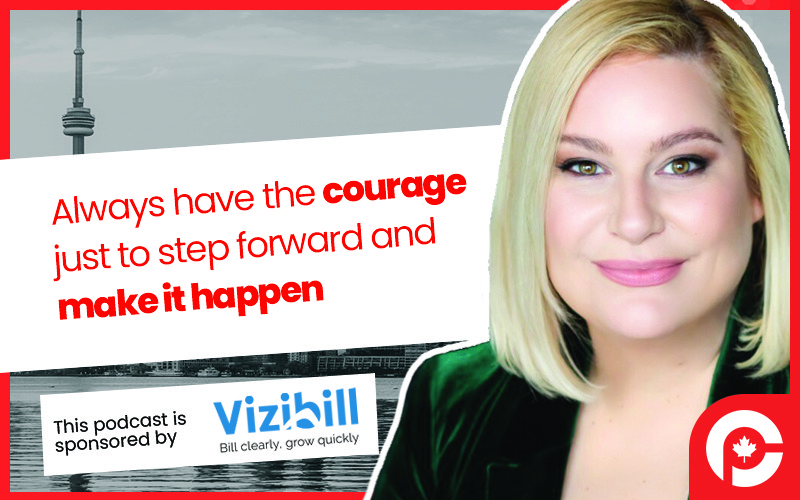
Always have the courage just to step forward and make it happen – Ontario, Canada’s Podcast
Episode
Driving thought leadership in digital transformation, Helen Kontozopoulos is the Co-Founder and Chief Tech Evangelist of ODAIA Intelligence, an...
Key takeaways
- Talk to your users directly and continuously—you cannot delegate customer research to others if you want to truly understand their journeys and problems.
- Being coachable is essential for success, which means being willing to listen to feedback, accept advice, and do the work required to implement what you learn.
- Prepare yourself as much as possible for every situation, but also be ready to adapt when things don't go according to plan.
- Don't be afraid of embarrassment or failure—have the courage to step forward, speak up, and take opportunities even when you're not perfect.
- Surround yourself with talented people who are good at what they do, because you cannot do everything yourself and their preparedness helps you be prepared too.
Transcript
Full transcript page · Interactive episode
============================================================
TRANSCRIPTION WITH SPEAKERS
============================================================

[00:00] SPEAKER_01: Welcome to Canada's Podcast.
[00:05] SPEAKER_00: Business leaders, ready to cut costs and boost growth with a recurring billing solution that's built for you?
[00:11] SPEAKER_00: Our platform won't just save you money, it'll help you grow so that you make more money.
[00:15] SPEAKER_00: Build clearly, grow quickly with Visibility.
[00:17] SPEAKER_00: To calculate your savings, head to visibill.com today.
[00:21] SPEAKER_01: So Helen, welcome to Canada's Podcast.
[00:25] SPEAKER_01: Great to have you on and I think everyone's going to find an interesting session.
[00:31] SPEAKER_01: You know, what you're involved in now is very interesting and although, you know, we don't sort of promote.
[00:40] SPEAKER_01: But, you know, before we got too deep into conversation about your journey, tell us a little bit about who you are, what you're doing.
[00:50] SPEAKER_01: Now, how you got there, you know, three or three or four minutes of that kind of stuff.
[00:57] SPEAKER_01: I think it lets everybody into the conversation.
[01:01] SPEAKER_02: Well, thank you Phil for inviting me to the podcast.
[01:06] SPEAKER_02: It's really great to talk about my journey and especially in a Canadian context.
[01:11] SPEAKER_02: Yeah, so I'm Helen Connozzopolis and the co-founder of ODAAM.
[01:16] SPEAKER_02: We are five year old startup out of the University of Toronto.
[01:24] SPEAKER_02: And in 2018, we were transferring, I'd be transferring technology out of the university and patents that were around customer journeys and process mining.
[01:39] SPEAKER_02: So understanding underlying journeys of, in this case, it was patience, it was citizens, it was customers.
[01:46] SPEAKER_02: But understanding true journeys that someone is saying, he, what I mean by true is the reality of a journey and the process is in the underlying realities that someone takes through platforms or services.
[02:03] SPEAKER_02: And I love this. This is, this was, you know, at the time I was an adjunct professor and I was also running an incubator out of the University of Toronto at the Department of Computer Science.
[02:16] SPEAKER_02: And being an anthropology major in the past, understanding journeys and understanding why people do the things they do was, was amazing.
[02:25] SPEAKER_02: And to be able to use machine learning to deal with all the data and to understand a journey, especially a patient journey, I found it fascinating.
[02:34] SPEAKER_02: So we incorporated the company in March 2018 and we were able within that year to get a pilot with a pharmaceutical company.
[02:43] SPEAKER_02: And it was there to understand a doctor journey, to understand a patient journey and that interaction they're going to have with, with the sales rep.
[02:55] SPEAKER_02: And a sales rep and a doctor journey is under, is getting and transferring knowledge transfer of a therapy to a doctor.
[03:04] SPEAKER_02: And that's what we do now. So, Dea has created a SaaS platform where sales rep can understand past and future prescriptions within a, like a geographical trends.
[03:16] SPEAKER_02: And they're able to go and talk to a doctor and be more, who are, who is more receptive to their call and visit and likely to prescribe a given treatment.
[03:30] SPEAKER_02: For us, wise as important is eventually these treatments need to get to patients. So the more the doctor knows the more they can make a decision to give that therapy to a patient.
[03:43] SPEAKER_02: So, yeah, that's what we do.
[03:46] SPEAKER_01: That's cool.
[03:47] SPEAKER_01: You know, it's interesting. I know this one of the many, you know, you sort of started up an incubator and, and, and, and, and, so I, I thought this, I mean, this question I've asked before, but I think your insights into it, especially in terms of, you know, coming from university, commercializing that kind of trip.
[04:11] SPEAKER_01: But, you know, do you find that those people that are taking the route to commercialization have to be have sort of some kind of entrepreneurial persona that you don't see in others.
[04:30] SPEAKER_02: That's a good question. It's a good, it's a good, it is a very good question.
[04:36] SPEAKER_02: And, I always wonder if I've always been entrepreneurial, even as a kid. So, you know, my mom worked in a factory and, and my dad worked as a waiter and had a little take out place down at Dundas and Jarvis, Toronto.
[05:00] SPEAKER_02: And he goes, if you can sell more pickles or pickled eggs, you can get money out of it. And as a kid, I was like, okay, how am I going to sell this, you know, and mom was always like, you know, if you make more, if you beat for me, you can, you could, I'll give you, give you some more money. So, I was a kid who had money on, because I was always trying to figure out ways of making more, and I was always trying to,
[05:25] SPEAKER_02: like as a teenager, trying to make raper pants. And so it kept on, it was always trying to create my own business in my own way.
[05:36] SPEAKER_02: And coming out of a university, like I didn't come, you know, my whole background is no one academia, it's being a maker, it's being a freelancer, it's a tinker, it's, who's not coming from that usual background, right.
[05:49] SPEAKER_02: And I always wonder when I would meet people in the university, there were just some students and some researchers that there was that tinkle in their eye, you know, that moment when they're like, they get really excited about the opportunity.
[06:03] SPEAKER_02: But it's beyond getting excited about the opportunity in a research mode, it's getting that tinkle in the like that twinkle to say, wow, we can create a business out of it, and I'm ready to do it.
[06:15] SPEAKER_02: So there's this kind of different. Yeah, yeah, it's a very different.
[06:21] SPEAKER_02: It's excited about the research, but then you got to get excited about the.
[06:25] SPEAKER_01: They're running a retail outlet for a pickled axe kind of thing.
[06:28] Speaker UNKNOWN:
[06:32] SPEAKER_01: What do you, what do you think, you know, you are an entrepreneur, what's what's what do you like best about being an entrepreneur and you, you said you didn't sort of grow up in academia and just curious in terms of that that that side of you.
[06:57] SPEAKER_02: It's a love hate relationship, I think with academia.
[07:02] SPEAKER_02: You know, I was always kept after school for being a bad kid.
[07:07] SPEAKER_02: Always like, Mr. Fiss, and I still, I still think I have that.
[07:13] SPEAKER_02: But I love books and I love reading and I love learning and I love.
[07:20] SPEAKER_02: I would sneak onto campus at U of T when I was a kid, just to listen to the lectures.
[07:25] SPEAKER_02: So I would skip normal school to go onto campus just to watch an archeology lecture.
[07:32] SPEAKER_02: And that was more fascinating. I mean, of course, I didn't have to do the work for that lecture after I didn't have to.
[07:38] Speaker UNKNOWN: I was a good person.
[07:39] SPEAKER_02: But I think it's.
[07:43] SPEAKER_02: For me, school was something that was exciting and amazing and interesting.
[07:51] SPEAKER_02: But it also was very boring.
[07:53] SPEAKER_02: And so my boredom had to be kind of balanced with other stuff I was doing. So always work.
[07:59] SPEAKER_02: Or creating something else and creating something. So I always had to balance that kind of academia love and hate.
[08:06] SPEAKER_02: Because I'm very hard like it's hard for me to deal with structure.
[08:10] SPEAKER_02: And I, I don't know if I'm answering it correctly. See, as always, I go off on a, on a bit of a tangent of trying to figure out balancing.
[08:22] SPEAKER_02: Because I love school.
[08:25] SPEAKER_02: But I also don't like the structure of it. So I don't know if Philip that answered your, you know.
[08:32] SPEAKER_01: Well, you know.
[08:36] SPEAKER_01: And in the sort of the innovation side, commercialization side.
[08:41] SPEAKER_01: What do you think the biggest challenge that those sort of academic entrepreneurs have to overcome to get to get commercial success?
[09:02] SPEAKER_02: I think it's letting go of what they think entrepreneurship is and what it is to build a business.
[09:14] SPEAKER_02: And then be open to listen to advisors and other founders and investors.
[09:24] SPEAKER_02: And be open to hear about their stories. I think when you, and you've been a coach, you know, you've been an advisor, you've been through the process where there's that point, there's that point or a question where it says, are they coachable?
[09:39] SPEAKER_02: You know, you know, you always ask, right? You know, and I bet you've been asked, you know, do you think this team is coachable?
[09:47] SPEAKER_02: And that is the part where are they?
[09:51] SPEAKER_02: So the ones I feel who have been coachable and what we mean by coachable is, are they willing to hear about feedback? Are they willing to take advice and roll with it? Are they able to understand the negatives and the positives?
[10:06] SPEAKER_02: And are they able to take it in and say, you know what? I think, I think you might be right.
[10:12] SPEAKER_02: You know, and I think the coachability part, I think is really really important. The teams and the academics who were successful.
[10:20] SPEAKER_02: Or the ones who could be coached and who are willing to do the work, right? So it not only the getting coached, but it's also willing to hear, yes, I agree.
[10:30] SPEAKER_02: The next step is the willing to do the work. And I think that's, that's, I think, one of the second parts to it.
[10:39] SPEAKER_02: And the third is, I would say, the riskiness, because there are many years, you're not going to get awarded forever, like rewarded for, you're not going to get an award or like, you're not going to get rewarded for something for a very long time.
[10:58] SPEAKER_02: And you don't know if you're going to ever, if you're going to meet that point, you know, so I think it's the risk. So I think coachability, ability to do things, take the, and then take the risk.
[11:11] SPEAKER_01: Oh, moving that to you, what do you see as your biggest challenge in your future as an entrepreneur?
[11:22] SPEAKER_02: Am I seeing and, um, am I giving myself enough vision of where we could go with a vision of transforming the patient journey and transforming that doctor patient relationship?
[11:45] SPEAKER_02: I always wonder how big we can go and not staying small. I think that's where I think I'm, you know, because you're, you're in the day, day and day work, you kind of get overwhelmed, you know, you're dealing with HR or dealing with, um, you know, a client or you're, you're dealing with marketing and you're dealing with the everyday items.
[12:08] SPEAKER_02: I think it's being able to step back at this moment and being able to see a bigger strategic landscape and see a bigger vision. So I think at this moment, I think it's opening up my mind more to the possibilities.
[12:27] SPEAKER_02: I think that's kind of where I'm at right now.
[12:31] SPEAKER_00: Business leaders. Ready to cut costs and boost growth with a recurring billing solution that's built for you? Our platform won't just save you money, it'll help you grow so that you make more money.
[12:41] SPEAKER_00: Build clearly, grow quickly with visibility to calculate your savings head to visibill.com today.
[12:47] SPEAKER_01: What advice, again, you've seen this and would you give someone on entrepreneur looking to start the business commercialize, you know, research.
[13:04] SPEAKER_01: What is what advice, what's the best kind of advice you could give that person?
[13:13] SPEAKER_02: It's, I gave it last night, I still teach, I still teach, um, a product development course in an entrepreneur course. It's at the University of Toronto, the Department of, Department of Computer and Mathematical Sciences and just what I say to my students now.
[13:25] SPEAKER_02: You've got to talk to users, you've got to talk to people and especially that I work with computer scientists, engineers, data scientists, people who are very.
[13:38] SPEAKER_02: On the, like the quantitative side of the work, the qualitative part gathering stories and understanding user journeys and understanding why your user is doing something and going a bit deeper.
[13:58] SPEAKER_02: I think it's really hard for them. And I think that's kind of the, the part that I think that is the most interesting. That's what fuels people, it fuels the stories of a user having a problem or finding an opportunity or.
[14:14] SPEAKER_02: Um, I think what I always tell academics, you've got to talk to users, you cannot leave it up to your PhD students or students to do the research, you need to do the research, you need to be in front of your customers, you have to be one of your users and you got to be talking to them all the time.
[14:35] SPEAKER_01: Coming back to you again, if you could go back in time, say 10, 15 years.
[14:41] SPEAKER_01: What advice would you give yourself?
[14:45] SPEAKER_02: That's a hard one, Philip. I've been asked it, I think in the past two, but um.
[14:57] SPEAKER_02: I think my advice I think is the same. I don't think I would change because you can't, you know, it's, it's, it's a slippery slope of going back.
[15:07] SPEAKER_02: Um, I always gave myself. I was going on a highway. I was in Spain.
[15:13] SPEAKER_02: And instead of starting a business, I had raised money to start a business, to open up a studio, yoga studio.
[15:19] SPEAKER_02: I know it's interesting. Another story that I feel.
[15:22] SPEAKER_02: Um, and I remember I go, no, I'm going to take the money and just go and backpack through Europe. I mean, it's cliché, but it was amazing.
[15:31] SPEAKER_02: And I was going by a highway and it, I don't know what advertising was, but it said, take courage.
[15:38] SPEAKER_02: And I just remember thinking, yes, like whatever negatives were happening or positives, it was just always having the courage just to step forward and.
[15:52] SPEAKER_02: Go up to that person and talk, go up to that opportunity and just make it happen.
[15:58] SPEAKER_02: And I've never been afraid of being embarrassed. And I, I think that's the advice I have is, you know, it's.
[16:06] SPEAKER_02: It happens, man. I'm so not perfect. And I don't say perfect things, but I have the courage to say them at least.
[16:14] SPEAKER_01: Well, that's good. You know, I mean, what, what.
[16:16] SPEAKER_01: So what's the best piece of advice you've been given that you kind of.
[16:22] SPEAKER_01: That sounds like one you have found, but what's the best piece of advice that you've been given that you kind of it's always there.
[16:32] SPEAKER_02: It was my geography teacher. I hated when he said it, but it's.
[16:39] SPEAKER_02: And I keep on like reversing it. Was it failing to prepare is preparing to fail?
[16:48] SPEAKER_01: Mm hmm.
[16:52] SPEAKER_02: And at that point, I remember, you know, you're a young kid and you're like, okay, I get it, you know, that prepared like that preparedness is not only getting ready for a pitch or getting ready for what you're, you know, for your.
[17:09] SPEAKER_02: A board meeting, it's also getting ready for anything that comes your way, you know, anything that might happen is kind of preparing yourself.
[17:18] SPEAKER_02: So I always think about how do I center myself and say, I'm good right now, where I'm at. I've tried my best. I'm always learning. I'm always trying my best to prepare myself.
[17:33] SPEAKER_02: Of course, there are times when there's that other one, the other saying where I think I always use it with my students is, you know, you have a great plan until you get punched in the face.
[17:45] SPEAKER_02: Who is that again? I might Tyson.
[17:48] SPEAKER_02: And I feel like that's me more maybe not punched, but there's a little bit of a, like a little bit of a tweak, a little bit of like there's a fall usually a tripping.
[17:58] SPEAKER_02: But I try to prepare myself as much as I can, but I let myself like just have fun with it. And I think having people around me who are just amazing and talented and prepared and what they're really good at helps you be prepared to.
[18:17] SPEAKER_02: So it's you can't do everything. You cannot do everything.
[18:24] SPEAKER_01: So I noticed I mean you're an evangelist here. I jump professor here.
[18:36] SPEAKER_01: So maybe this is a silly question. If you weren't doing what you know what you're doing now, what would you doing instead? You seem to have moved into having two or three channels of
[18:51] SPEAKER_01: focus channels anyway.
[18:57] SPEAKER_02: Always give someone busy more work, Philip. I was not saying.
[19:03] SPEAKER_02: I would say right now I'm an LP in in three funds that just started about two years ago.
[19:11] SPEAKER_01: Okay.
[19:12] SPEAKER_02: And you know one is like Archangel of Firehood, Genesis Ventures in Europe and Northside.
[19:21] SPEAKER_02: And I think the I don't think I could not continue working with startups. I think I would I love innovation. I love businesses.
[19:32] SPEAKER_02: I love when I see sales happen. When I hear someone talk about they've just made a sale or they're increasing. I just I feel like I'm not kid again in my dad's door. Right. I just get so excited.
[19:47] SPEAKER_02: And I think I'm just going to continue doing that. I think I'm just going to continue helping people create and trying to build an ecosystem continuously like we're supporting it. We have an awesome ecosystem.
[19:56] SPEAKER_02: You know, it's just trying to grow it continuously.
[20:00] SPEAKER_01: What book are you currently reading? And I kind of expand that to podcast or you're listening to books you're listening to whatever because you know not everyone gets a chance to read it. Read these days.
[20:16] SPEAKER_02: So it's almost Halloween.
[20:18] SPEAKER_02: So I don't want to put the date on anything, but it's almost the season where I usually
[20:27] SPEAKER_02: read Frankenstein or Dracula. But this year I think it's Frankenstein is the perfect book. I've read it many times.
[20:39] SPEAKER_02: And I think it's perfect at this time with generative AI. So I'm really I've been listening to a lot of podcasts and a lot of I think specific. Just ones that are talking about generative AI and just more on the intersection of
[20:54] SPEAKER_02: human collaboration.
[20:56] SPEAKER_02: Because that's all I think about these days is how to make things more accessible because that's my life changed because I had access access.
[21:03] SPEAKER_02: I had access to technology to do things and to create a career and and to create and tinker and do stuff.
[21:11] SPEAKER_02: So right now it's a Frankenstein with it's kind of keeping my humanity's arts thinking.
[21:20] SPEAKER_02: It's my ethics book, I think, at the moment. And then just listening to a lot of listening to conversations, I have past conferences I haven't gone to yet or like I haven't been able to attend because always working.
[21:35] SPEAKER_02: So I'm listening to a lot of more of the interesting aspects of where we can take machine learning and like how big we can create a crazy general AI.
[21:48] SPEAKER_01: You know, you're a morning or a night person.
[21:55] SPEAKER_02: Night, but sad because I've had to turn into a morning person and that person inside is crying every time I have to get up early in the morning.
[22:08] SPEAKER_02: They're like, no, my time read that book, you know, you want to.
[22:16] SPEAKER_01: If you had to pick one word to describe Helen, what would it be and why would you choose that word?
[22:24] SPEAKER_02: And you've got good questions.
[22:38] SPEAKER_02: My two Greek to say bothos like it's a it's a it's a mixture of passion and kind of.
[22:48] SPEAKER_02: So I get the right word should.
[22:54] SPEAKER_02: It's the passion.
[23:03] SPEAKER_02: There's other. Okay, so I have a question for you because it's a mean going around.
[23:08] SPEAKER_02: How many times do you think about the Roman Empire?
[23:16] SPEAKER_01: Not a lot, but you know, we seem to be.
[23:23] SPEAKER_01: Something of a decline in full culture and extremism and.
[23:30] SPEAKER_01: And Rome, but that was Rome culture.
[23:33] SPEAKER_01: So yes, I think about it as one of the cultures that were kind of going backwards as I do think at the moment, I think culturally politically, economically, etc.
[23:48] SPEAKER_01: That we're moving backwards, not forwards.
[23:52] SPEAKER_01: Maybe a machine learning can actually help on that.
[23:58] SPEAKER_02: It's a good answer because I'm always, you know, it's a meme going on around right now.
[24:04] SPEAKER_02: And I naturally think about the Roman Empire as a classics major too.
[24:08] SPEAKER_02: So I think about it often. I think daily really.
[24:12] SPEAKER_02: You know, but yeah, that was a.
[24:17] SPEAKER_01: I always wonder if people see that, you know, what's keeping you up at night, apart from the wrong empire.
[24:25] SPEAKER_02: Aside from the Roman Empire, yeah.
[24:30] SPEAKER_02: Am I good? Am I doing a good job?
[24:34] SPEAKER_02: That's what I think about, you know, I think about it.
[24:37] SPEAKER_02: My, my employees, okay. Is my co founder of okay is.
[24:43] SPEAKER_02: Right, our customers, okay, like are we doing the best we could.
[24:49] SPEAKER_02: Is my family okay, of course, you know what I mean?
[24:51] SPEAKER_02: Like it's just a worry thing, right? Because I take care of my elderly mom.
[24:55] SPEAKER_02: And.
[24:55] SPEAKER_02: And, you know, my husband, okay. Yeah, I guess.
[25:04] SPEAKER_02: He's awesome. But the.
[25:07] SPEAKER_02: I worry, I'm thinking, am I doing the best I can.
[25:10] SPEAKER_02: And I got to be careful about that. I think for anyone.
[25:13] SPEAKER_02: You got to be careful when you.
[25:17] SPEAKER_02: You got to kind of settle down because you're not going to sleep.
[25:20] SPEAKER_02: You got to kind of settle and say, okay, you know what?
[25:24] SPEAKER_02: You're, you're, you're on the path you need to be on.
[25:27] SPEAKER_02: You know, and if you weren't worrying, if you were not worrying, if you're not nervous before an interview, if you're not nervous before.
[25:37] SPEAKER_02: It was one of my archaeology professor said his dad told him, if you're not nervous.
[25:44] SPEAKER_02: Before a lecture before you talk to your students.
[25:48] SPEAKER_02: Then maybe you should be retired.
[25:51] SPEAKER_02: Like if you're not excited or or nervous about going talk to them.
[25:56] SPEAKER_02: Then you should just, you should send that.
[25:59] SPEAKER_02: And I think I'm nervous every time I speak to my students, my employees, my customers.
[26:04] SPEAKER_02: Because I want to make sure I'm doing a good job, right?
[26:06] SPEAKER_02: Like I want to make sure I'm getting through.
[26:08] SPEAKER_02: Okay.
[26:08] SPEAKER_02: But I'm also very.
[26:11] SPEAKER_02: The double side of everything is I have in my life is I'm really good at just forgiving myself and saying, you know what?
[26:17] SPEAKER_02: Should happens, man, just let it go.
[26:20] SPEAKER_02: You know, people.
[26:22] SPEAKER_02: We'll see you and they like you.
[26:25] SPEAKER_02: They like you.
[26:25] SPEAKER_02: If they don't, it's all good.
[26:26] SPEAKER_02: There's other people that can like.
[26:28] SPEAKER_01: Good.
[26:30] SPEAKER_01: Real fun.
[26:31] SPEAKER_01: Fun session.
[26:32] SPEAKER_01: That's.
[26:33] SPEAKER_01: That's some good stuff in there.
[26:35] SPEAKER_01: How can people get hold of you if they, if they want to help?
[26:39] SPEAKER_02: So, um, LinkedIn.
[26:43] SPEAKER_02: Just look at Helen and social for LinkedIn.
[26:45] SPEAKER_02: And I think my Instagram is if you want more fun, weird random stuff that I post, um, that's Helen and social as well for Instagram.
[26:52] SPEAKER_02: I love those.
[26:53] SPEAKER_02: I just love Instagram.
[26:54] SPEAKER_02: I just love posting pictures.
[26:56] SPEAKER_02: You know,
[26:57] SPEAKER_01: Thanks for coming on the canvas podcast.
[26:59] SPEAKER_00: Thank you so much for inviting me.
[27:01] SPEAKER_00: This was fun.
[27:03] SPEAKER_00: Business leaders.
[27:04] SPEAKER_00: Ready to cut costs and boost growth with a recurring billing solution that's built for you?
[27:08] SPEAKER_00: Our platform won't just save you money.
[27:10] SPEAKER_00: It'll help you grow so that you make more money.
[27:12] SPEAKER_00: Build clearly, grow quickly with visibility.
[27:15] SPEAKER_00: To calculate your savings, head to visibill.com today.