
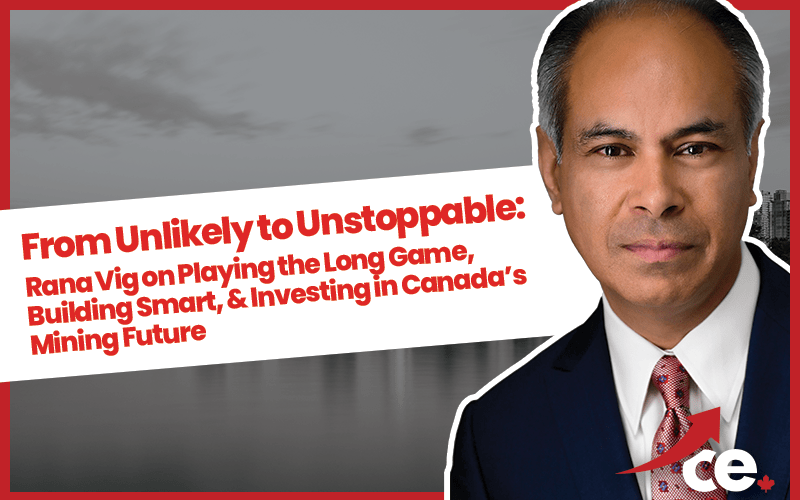
From Unlikely to Unstoppable: Rana Vig on Playing the Long Game, Building Smart, & Investing in Canada’s Mining Future
Episode
What does it take to build a company that beats the odds — and wins the permit that only...
Key takeaways
- Patience and resilience are essential in entrepreneurship—nothing ever goes as planned, and success requires the ability to get up and keep pushing forward despite setbacks.
- Transparency and genuine care for indigenous communities and environmental stewardship create long-term value for shareholders, not just short-term profits.
- Building trust with local communities requires going beyond compliance by investing in education, training programs, and partnerships that create lasting economic opportunities.
- Effective leadership means surrounding yourself with technical experts, listening to their perspectives, and making informed decisions rather than assuming you have all the answers.
- Creating a fulfilling work environment for employees requires understanding individual motivations beyond salary, including leadership training, extended benefits, and opportunities for personal growth.
Transcript
Full transcript page · Interactive episode
============================================================
TRANSCRIPTION WITH SPEAKERS
============================================================

[00:00] SPEAKER_00: Welcome to Canada's Entrepreneur. Where we talk to the entrepreneurs who are making it happen
[00:05] SPEAKER_00: across Canada and deliver the news, trends, knowledge and opinions from entrepreneurs and business
[00:13] SPEAKER_01: influences across the country. Welcome to Canada's Entrepreneur. This is Angela Fei, the podcast for
[00:21] SPEAKER_01: bold builders and moonshot thinkers. Today's guest is Rana Vig, president and CEO of Blue Lagoon
[00:28] SPEAKER_01: Resources and a standout example of Canadian entrepreneurship at a critical inflection point.
[00:34] SPEAKER_01: Right now, Rana is Blue Lagoon's leading Blue Lagoon through a rare and powerful transition
[00:40] SPEAKER_01: from Explorer to Gold producer. With production at the Done Mountain Gold project targeted for
[00:48] SPEAKER_01: summer 2025, this is no small feat in an industry where most never-might could pass the exploration
[00:55] SPEAKER_01: phase. Today we'll uncover the mindset, strategy and leadership behind Rana's 30-plus-year
[01:01] SPEAKER_01: career spanning tech, mining and global business, and why this moment matters for the Canada's future
[01:09] SPEAKER_01: economies. Stick around for the second half of our interview exclusively for members and we're
[01:15] SPEAKER_01: going to go deeper dive into business opportunities, investor insights and how you can get involved
[01:20] SPEAKER_01: in shaping the next chapter of Canadian entrepreneurship. Let's get started. Hello, Rana.
[01:25] SPEAKER_01: Welcome. Thanks for having me. Awesome. Let's just kick it off right away. Let's set the stakes.
[01:32] SPEAKER_01: You have led tech and mining to the world's most two of the industries that are
[01:37] SPEAKER_01: wildly different. So what's the real thread that's guided your approach to building businesses?
[01:44] SPEAKER_02: Well, what's the real thread? A lot of patience, I think, is really the common denominator.
[01:51] SPEAKER_02: Business is not easy, but it doesn't matter what business you're in. It takes a tremendous
[01:56] SPEAKER_02: amount of effort. Nothing ever goes as planned. Everything is always more challenging. It looks
[02:03] SPEAKER_02: all great on paper. I've ever seen a bad performance. Have you? It all looks fantastic on paper
[02:10] SPEAKER_02: and on spreadsheet. But as you get into it, there's always a tremendous amount of challenges.
[02:15] SPEAKER_02: And you just have to have this mindset that I don't know if it can be taught. Maybe it's just
[02:21] SPEAKER_02: something that you're born with. And I knew very early on I wasn't born to be a nine-to-fiver.
[02:29] SPEAKER_02: So I think it just takes a lot of patience and you have to be driven and you have to
[02:35] SPEAKER_02: get a thick skin. You can't get discouraged. You get discouraged, but you got to be able to
[02:41] SPEAKER_02: get up and walk the walk again and just keep pressing forward.
[02:46] SPEAKER_01: I'm hearing an awful lot of resilience, long-game thinking, adaptability, and of course,
[02:51] SPEAKER_01: purpose-driven leadership. They're very, yeah. The gold project we're working on right now,
[02:57] SPEAKER_01: I'm pretty excited about this. Don't mountain. You've reached a point only eight other projects in
[03:02] SPEAKER_01: BC have in the last decade. What did it take to get that permit? And how do you approach environmental
[03:10] SPEAKER_01: responsibility in a space that is often criticized for its impact? Yeah, look, again, you know,
[03:17] SPEAKER_02: tremendous amount of patience because it is very difficult to get a permit, a full mining permit
[03:23] SPEAKER_02: to be able to actually extract material out of the ground. It's very, very difficult. And then,
[03:28] SPEAKER_02: you know, and for rightly so, in that, the government wants to protect the environment, but
[03:35] SPEAKER_02: unfortunately, you know, I think that from a permitting and time standpoint, it's a little bit
[03:42] SPEAKER_02: impractical because they, the way it's structured right now, for example, in mining, there used to be
[03:50] SPEAKER_02: a couple of different offices, something for smaller operations and something for larger operations.
[03:55] SPEAKER_02: Three years ago, they eliminated that. So now there's just one office that handles everything. So
[03:59] SPEAKER_02: whether it's us a little startup or it's, you know, barrack, a giant, they treat you the same.
[04:05] SPEAKER_02: And that becomes a problem because the, you know, it's not practical, right? Also, just staffing,
[04:11] SPEAKER_02: you know, there's just a, young people don't seem to want to stick to a job anymore. So, you know,
[04:15] SPEAKER_02: there's so much turnover all the time. So that's a real challenge for industry as well as,
[04:22] SPEAKER_02: you know, a government. And then you touched on environmental. That's, there's a lot of
[04:27] SPEAKER_02: hoops that you've got to go through to make sure that you're in compliance. But even then,
[04:34] SPEAKER_02: then you have the indigenous rights that you have to deal with. Now, we were able to navigate all
[04:40] SPEAKER_02: of that, obviously, very successfully. And the way we did that is really to be transparent.
[04:45] SPEAKER_02: I think one of the challenges that a lot of leadership has, unfortunately, a lot of companies,
[04:50] SPEAKER_02: they're always, there's too much focus on the bottom line. Look, as a business, we've got to make
[04:55] SPEAKER_02: a profit. There's no doubt about that, right? We are, my responsibilities to shareholders. And you've
[05:00] SPEAKER_02: got to, you know, increase the value. And one of the ways you do that is by having a more efficient
[05:04] SPEAKER_02: operation. But also, I would argue, if you don't have good stewardship principles, and if you
[05:13] SPEAKER_02: don't have good relationships with the people that you're working with, for example, in this case,
[05:17] SPEAKER_02: the indigenous groups, then you're also doing a disservice to your shareholders because the long
[05:22] SPEAKER_02: term, then longevity of the project isn't going to be there, right? There's going to be all sorts
[05:27] SPEAKER_02: challenges that go along with it. So our approach has been very, very transparent working with the
[05:32] SPEAKER_02: indigenous people and making sure that we care. I'll give you one simple example. You know, one of
[05:38] SPEAKER_02: the things is water, very, very in the mining industry, very important, obviously, you know,
[05:44] SPEAKER_02: to us all, including indigenous, so in our case, it's the Lake Badmien Nation. You know,
[05:49] SPEAKER_02: fish isn't just a food for them, it's the way of life. So one of the things that we did, for
[05:53] SPEAKER_02: example, in one stream, we were mandated to do five different tests. But when we sat down with
[05:58] SPEAKER_02: our team, we felt we should do more because we looked at it from our perspective. So guess what,
[06:02] SPEAKER_02: we ended up doing nine test sites on that. Sure, it cost us a couple thousand dollars and more,
[06:07] SPEAKER_02: but so what? Long term that is being of dividends, A, it developed a further trust with the
[06:14] SPEAKER_02: Lake Badmien Nation because they looked at us and said, oh, wow, you guys did this on your own,
[06:18] SPEAKER_02: you must care. So you know, that's just one simple example of how I think that you have to approach
[06:23] SPEAKER_01: from a leadership standpoint. Well, in the nation that you're talking about and the actual
[06:30] SPEAKER_01: project is about 50 minutes from Smithers BC, a place where, you know, economic opportunity and
[06:37] SPEAKER_01: quality of life are deeply intertwined there. It's a little remote, but what do you see as the
[06:43] SPEAKER_01: role of mining or any resource-based business and actually strengthening Smithers itself or
[06:49] SPEAKER_02: any community that's wanting to build resilience? Well, look, contribute back to the community that
[06:56] SPEAKER_02: you are working in. I mean, that's been a longstanding principle of mine and any business that I've
[07:00] SPEAKER_02: involved with. Make sure you give back to where you are working, whether it's the town or the
[07:04] SPEAKER_02: or the Lake Badmien Nation offer opportunities. I think that's just the right thing to do. So we try
[07:10] SPEAKER_02: to do that in every way possible. Our job is one of my jobs I believe is to create those opportunities
[07:17] SPEAKER_02: for those people that live in that town. So we've done a number of things. One is that we make sure
[07:23] SPEAKER_02: everything we any dollar that we spend, we try to make sure that we spend it within that region
[07:28] SPEAKER_02: to so that they can benefit from it, but also for to create longer term opportunities like for the
[07:34] SPEAKER_02: Lake Badmien Nation, we're setting up five scholarships so that the young people have an opportunity.
[07:39] SPEAKER_02: We're also, you know, there's a tremendous opportunity here. I've spoken to my team saying,
[07:44] SPEAKER_02: look how many minds are there. I mean, there's not that many. So why don't we give an opportunity
[07:50] SPEAKER_02: to the people who would like to be in the mining industry to get some training, right? This is,
[07:55] SPEAKER_02: so this is not something that's sponsored by the government. This is our own initiative.
[07:59] SPEAKER_02: And my team is very excited about that saying we're happy to bring on people who are interested
[08:03] SPEAKER_02: in learning about mining and taking them whether it's going underground or being or in the geological
[08:09] SPEAKER_02: side or it's in the biological side, you know, testing water, what have you. So there's many
[08:16] SPEAKER_02: different ways that we can contribute other than just making a small donation to a, you know,
[08:21] SPEAKER_01: basketball team or something. When it sounds to me like you're actually in the in the
[08:26] SPEAKER_01: throws of building a local economy around the future of mining, not just what's happening today,
[08:33] SPEAKER_01: right? With training and opportunities, that's amazing. Absolutely. Look, I think it's very
[08:37] SPEAKER_02: important at any any industry, but particularly in our industry because there are many people who
[08:41] SPEAKER_02: don't understand mining. Everybody, you know, many people think that well, we shouldn't be mining.
[08:46] SPEAKER_02: Well, why? Right? So if you create the education, if you explain, you know, what you're doing and you
[08:54] SPEAKER_02: show that everything is being done responsibly and we're working hand in hand in partnership,
[09:00] SPEAKER_01: then everybody's benefiting. Well, then we talked a little bit about if it's not grown its mind
[09:06] SPEAKER_01: and if you have a laptop or you have a smartphone, you're carrying gold and silver in your pocket.
[09:13] SPEAKER_01: So just be aware that, you know, we all benefit from from mining operations. One thing that
[09:20] SPEAKER_01: could you talk a little bit about the status of Canada on the global stage in regards to responsible
[09:29] SPEAKER_02: mining? Well, I think we're one of the leaders. Absolutely. We're one of the leaders. We have a
[09:34] SPEAKER_02: beautiful country. You know, we have, I think we're one of our largest water sources in the world.
[09:41] SPEAKER_02: You know, that's one of the reasons why I think it is so strict here is we want to maintain that.
[09:49] SPEAKER_02: I would question the level of strictness. I think I think that sometimes a government goes
[09:56] SPEAKER_02: overboard, right? It's two extremes. And I think that there's a level of practicality. I think
[10:02] SPEAKER_02: that has to be injected in there. Look at what's happening. The discussions are on pipelines.
[10:07] SPEAKER_02: Suddenly, because Trump is, you know, making all these threats and he wants to make us the 51st
[10:12] SPEAKER_02: state and we're doing all this now, you know, pipelines that were out of favor a while ago with
[10:16] SPEAKER_02: government, suddenly are becoming in favor. So, you know, we shouldn't have to be forced to think
[10:22] SPEAKER_02: on those things. These should be discussions ongoing. Leading countries, you know, thought leaders,
[10:30] SPEAKER_02: that's what responsible, you know, growth, I think, is, right? Is that we should be having those
[10:35] SPEAKER_02: discussions to say, look, how do we impact each other? How do we, how do these things impact each
[10:41] SPEAKER_02: of everyone else? And how do we make sure that we do these things responsibly so that we can grow,
[10:46] SPEAKER_02: because the bottom line is it's a necessity, right? We have to do some of these things. So, I think
[10:52] SPEAKER_02: Canada is leading the way. I just think we can do more. Well, we talked a little bit about
[10:58] SPEAKER_01: inefficiency. So, I want to ask one quick question. We're propagating a concept called future zones,
[11:02] SPEAKER_01: where there's less red tape, there's some experimentation, there's innovation allowed to be
[11:08] SPEAKER_01: happen. What kind of future zone could you imagine that would work for mining and help eliminate some
[11:15] SPEAKER_02: of that red tape or inefficiencies? I think more consultation with the industry and maybe
[11:24] SPEAKER_02: dedicating departments or departments specifically to that, because one of the things that I've
[11:29] SPEAKER_02: been very frustrated about with the mining ministry and some of the people that I've worked with,
[11:34] SPEAKER_02: and this is not in any way to, you know, despise them, not speaking down to them. I'm just saying
[11:39] SPEAKER_02: that my observation is that majority of them don't come from industry. So, they don't, in fact,
[11:45] SPEAKER_02: there was one person actually that I met on the electrical side that he came from industry,
[11:50] SPEAKER_02: and it was interesting the discussion with this individual and the discussion with all the other
[11:55] SPEAKER_02: people who basically were academics, you know, who kind of came straight from school and had
[12:00] SPEAKER_02: our pretty much lifers in government. The discussions was very different because this person
[12:05] SPEAKER_02: understood my pain points because he came from industry. So, he worked with us to get to the common
[12:12] SPEAKER_02: ground, to get to where they were comfortable, what they needed to do, to make sure that we were
[12:16] SPEAKER_02: in compliance and give us, allow us, you know, the ability to get to that point with some ease.
[12:24] SPEAKER_02: So, I think that if government truly wants to make some changes, I think they've got to bring
[12:31] SPEAKER_02: in industry partners and they've got to listen, look, I'm an entrepreneur. This is a simple example
[12:36] SPEAKER_02: that I can give, right? I'm an entrepreneur. I've been in many different industries. What do I know
[12:41] SPEAKER_02: about anything really? What do I know about mining? I'm not a miner, I'm not a geologist, I'm not
[12:45] SPEAKER_02: engineer, but you know what I do? I make sure I'm the dumbest guy in the room in this industry.
[12:51] SPEAKER_02: I make sure that I surround all the top technical people right around me and I listen to what they
[12:57] SPEAKER_02: have to say. Now, I have to have the skills to decipher, right? What they're saying and, you know,
[13:02] SPEAKER_02: how do we, which direction do we go? From the technical perspective, I'm listening to them and
[13:07] SPEAKER_02: then I counter that by bringing other advisors and so that listening to them talk to each other and
[13:12] SPEAKER_02: figuring out, you know, we're, because you know, every technical person obviously has different
[13:17] SPEAKER_02: different abilities, right? The scale of just human nature. We're all different intelligence levels.
[13:23] SPEAKER_02: So, if, so I take that information then and then I figure out how I'm going to move forward.
[13:28] SPEAKER_02: You know, government, I think needs to take some similar approach. It not just put out on another
[13:33] SPEAKER_02: commission or something and then the report sits there for 20 years and no one looks at it.
[13:37] SPEAKER_02: That's just politics, right? Actually, bringing industry people and sit back and listen, right?
[13:44] SPEAKER_02: That what I think leadership is because they have the ability to really make some significant changes
[13:49] SPEAKER_02: in all facets of our life and all, all, all areas, not just mining.
[13:53] SPEAKER_01: I'm imagining now, just bringing some of the things we talked about together as
[13:58] SPEAKER_01: government employees having a required three or six months internship in your training facility
[14:02] SPEAKER_01: on site. I love that idea. I want to shift a little bit to human health and longevity because
[14:08] SPEAKER_01: most people don't associate mining with human health, but economic stability and purpose and
[14:14] SPEAKER_01: community impact how long and how well we live. So, what does your take on how entrepreneurs as
[14:23] SPEAKER_01: they're working in community can contribute to a culture of long life and meaningful work?
[14:31] SPEAKER_02: Well, I think that fundamentally goes to creating a happy, fulfilling environment at your
[14:39] SPEAKER_02: job site, at the place of work. And that's not just economics. That's just not how much of
[14:47] SPEAKER_02: you pay. I think there's been many studies that have shown that it's the money is not necessarily
[14:51] SPEAKER_02: the single motivator for an individual. It could be extended benefits. There's so many different
[14:57] SPEAKER_02: things that motivate people. It could just be leadership training. I think it's very, very
[15:02] SPEAKER_02: important for companies. We certainly try to do that within our company to figure out,
[15:08] SPEAKER_02: what is the driving factor of each individual? And what is it that's going to fulfill them?
[15:14] SPEAKER_02: Because I think that if they're not feeling fulfilled, ultimately, again, I'm just service to my
[15:18] SPEAKER_02: shareholders. The company's not going to grow. It's going to get either stagnant or it's going to
[15:23] SPEAKER_02: be. So I think it's very, very important to have that top of mind constantly is that how do we
[15:30] SPEAKER_02: make an investment in our human capital to make sure that they're growing and that they're happy?
[15:38] SPEAKER_02: And that can be in many different ways. I could be training. But again, you've really got to listen.
[15:43] SPEAKER_02: I think industry and leadership, I think don't listen enough to understand. Maybe it's just
[15:52] SPEAKER_02: human nature. We want to tell you, hey, this is what we think. I want to tell you this is what,
[15:56] SPEAKER_02: you know, I need to understand what is your requirements? What are you wanting out of those
[16:02] SPEAKER_01: X so that I can get back? This is a bit of a perfect way. You've talked about healthy places and
[16:09] SPEAKER_01: health. We're exploring a new idea at Canada's Entrepreneur called a Future Fund where collective
[16:15] SPEAKER_01: spending doesn't replace, but it augments traditional taxes and allows citizens and communities to
[16:22] SPEAKER_01: co-decide on a priority for critical infrastructure or programming. You've raised capital. You've
[16:29] SPEAKER_01: allocated capital both in private public markets. I'd love to tap your wisdom here on an idea. What
[16:35] SPEAKER_01: lesson can you offer from your experience when designing a wealth system that works for the next
[16:43] SPEAKER_01: generation? Sorry, I didn't quite understand that. Yeah, so what I mean by that is we've got all
[16:52] SPEAKER_01: these traditional tax systems, right? We've got traditional, we go to market and publicly raise.
[16:58] SPEAKER_01: And if we are now raising funds for a local community and allowing the citizens to prioritize
[17:05] SPEAKER_01: for themselves, what is the next piece of critical infrastructure that they need to elevate their
[17:10] SPEAKER_01: community? What ideas do you have on how we can set up that system? Well, I think it goes back to
[17:20] SPEAKER_02: again asking them what is it they need? I mean, just very recently I had lunch with the chief
[17:27] SPEAKER_02: of the Lake Babine Nation. And this is exactly the discussion that I had certain ideas. I said,
[17:32] SPEAKER_02: you know, I like to go into one of the smaller communities that you have up there. And I like to,
[17:37] SPEAKER_02: you know, work with the young folks and you know, I had all these ideas in my head that, you know,
[17:42] SPEAKER_02: we could we could take them into sport and we can do these things and we could we could inject a
[17:47] SPEAKER_02: little bit of capital ourselves. And then I would go to all of my suppliers and I would say,
[17:53] SPEAKER_02: hey guys, if you would donate a little bit to this cause, the company will, you know, match it and
[17:57] SPEAKER_02: all maybe do some matching personally and we'll grow this. You know, we came back and said to me,
[18:03] SPEAKER_02: he said, you know, he says the most important thing to us is the fish. I was taking
[18:11] SPEAKER_02: it back a little bit. Wow. Okay. What do you mean by that? He says, the streams, the fish, it's
[18:19] SPEAKER_02: our life, it's our way of our life. I really started thinking about that. I said, okay, so what can
[18:25] SPEAKER_02: we do there? And in the discussion, we decided to continue. So my point is now we're starting to
[18:32] SPEAKER_02: think about all right, what is that? What is that going to look like? You know, so and do we,
[18:38] SPEAKER_02: is it a hatchery and do we create some sort of an environment, a economic environment around that
[18:46] SPEAKER_02: where we can raise money. I have no idea how much it cost, but it was just interesting listening.
[18:51] SPEAKER_02: Yeah. All enthusiasts, I was so excited about taking my youth programs that I've done many times
[18:57] SPEAKER_02: have worked to them, but then they came back with something completely different. And that goes
[19:03] SPEAKER_02: back a little bit to their philosophy. It's called Yinta. Yinta means effectively be one with the
[19:10] SPEAKER_02: land, respect the land. See again, listening, right? Is what is their needs? And Yinta, by the way,
[19:17] SPEAKER_02: it's so it's so important for us to understand that to be good stewards. One of the ways, you know,
[19:24] SPEAKER_02: we were trying to figure out how do I get our staff? How do we constantly think about the Yinta,
[19:29] SPEAKER_02: about the land on this mindset every day? So you know what we did? We decided to hire a local artist
[19:34] SPEAKER_02: and we we had these giant murals created that she created for us, reflecting their, their,
[19:40] SPEAKER_02: something from their culture. And we had them framed and right at the mindset, we have this giant
[19:46] SPEAKER_02: mural right at the entrance. As you walk in, that's the first thing that you see. And then we had
[19:51] SPEAKER_02: a number of other ones made and we've got them on every single building at the mindset. As we're
[19:56] SPEAKER_02: walking around subconsciously, right? Every time we look up, we see this image and we're thinking
[20:01] SPEAKER_02: of the Yinta, we're thinking of the land, we're thinking about being good stewards, right? Because out
[20:06] SPEAKER_02: of sight is out of mind as we know, right? So just little things like that, I think create this
[20:12] SPEAKER_01: this environment that I think that will foster success. That is excellent. I'm just for those who are
[20:20] SPEAKER_01: just tuning leaving us after this, your gold production is targeted for summer. Again, a bold,
[20:27] SPEAKER_01: rare milestone. What's keeping you focused right now and what should Canadians be paying attention
[20:30] SPEAKER_02: to in the next 12 months? Well, what's keeping me focused is the gold price, the gold price is just
[20:35] SPEAKER_02: exploding, right? It's just so exciting right now. What's happening in that in that realm? So we're
[20:42] SPEAKER_02: very excited. And yeah, we were July 9th is our scheduled grand opening. So we're going to take
[20:48] SPEAKER_02: one day to celebrate a little bit and share our story with the stakeholders who will come up there
[20:53] SPEAKER_02: and help us cut the ribbon and have some excitement. And then we're going to start production,
[20:58] SPEAKER_02: you know, shortly after that. So what people should be looking at at our company is if they are
[21:03] SPEAKER_02: excited about the gold space and want to be have some exposure in it, then we're one of these
[21:08] SPEAKER_02: upcoming companies. We're already one of the best performing stocks of 2025 and we're just getting
[21:14] SPEAKER_01: started. Well, and if you're loving this conversation and you want to go a little deeper,
[21:18] SPEAKER_01: we are going to head over to Canada's on entrepreneur.com. You're going to level up your engagement
[21:21] SPEAKER_01: as a member. We're going to just have a few more minutes with Rana in the second part of this
[21:27] SPEAKER_01: interview. And for investors, collaborators, what this means for Canada's resource strategy
[21:33] SPEAKER_01: in a time of global transition. So it's kind of behind the scenes insight. You won't hear anywhere else.
[21:38] SPEAKER_01: They'll be now for members. Thanks Rana for joining us. We'll see you soon.
[21:44] SPEAKER_02: Thanks for having me.