
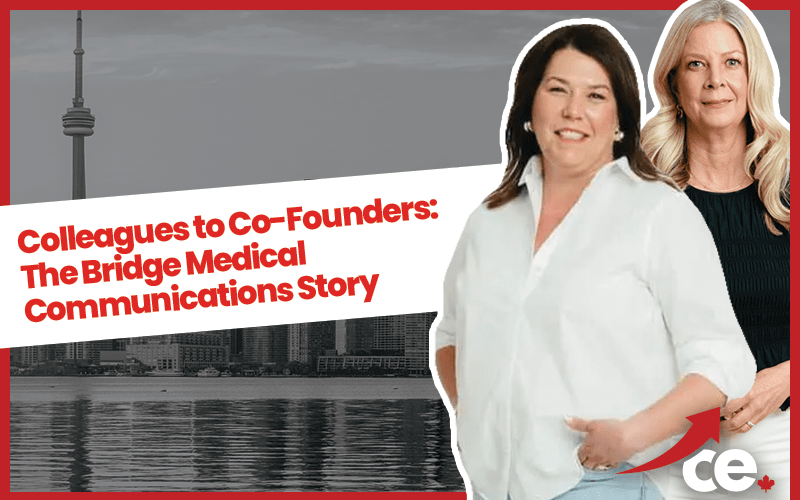
From Colleagues to Co-Founders: The Bridge Medical Communications Story
Watch episode
Episode
Lorie Spence and Carolyn Pritchard founded Bridge Medical Communications, which was built to fill the patient and healthcare provider...
Key takeaways
- Co-founders should establish clear decision-making frameworks early that prioritize what's best for the business rather than personal preferences, removing emotion from strategic choices.
- Building and maintaining a strong professional network is essential for entrepreneurial success, and entrepreneurs should actively encourage their team members to develop their own networks and personal brands.
- Roles and responsibilities between co-founders will naturally evolve as the business grows, and it's important to realign them based on business needs rather than just initial skill sets every few years.
- Having a co-founder provides the critical advantage of being able to take time off while knowing someone equally accountable is managing the business, which solo entrepreneurs rarely experience.
- Aligning on core values at the start of a partnership creates a foundation for navigating conflicts and challenges, ensuring both founders are working toward the same vision even when they disagree on tactics.
Transcript
Full transcript page · Interactive episode
============================================================
TRANSCRIPTION WITH SPEAKERS
============================================================

[00:00] SPEAKER_00: Welcome to Canada's Entrepreneur. Where we talk to the entrepreneurs who are making it happen
[00:05] SPEAKER_00: across Canada and deliver the news, trends, knowledge and opinions from entrepreneurs and business
[00:13] SPEAKER_04: influences across the country. Hi, this is Celine Williams hosting for Ontario for Canada's Entrepreneur.
[00:21] SPEAKER_04: My guests today are the co-founders of Bridge Medical Communications, Laurie Spence, and Carolyn
[00:26] SPEAKER_04: their vision is to empower healthcare professionals to optimize patient outcomes through
[00:30] SPEAKER_04: innovative communication tools, creativity, and strategic collaboration. Welcome, Laurie and Carolyn.
[00:37] SPEAKER_04: Thank you, Celine. We're excited to be here. I'm excited to talk to you, not only because I
[00:42] SPEAKER_04: love when I get to talk to two people and two co-founders at once. It's kind of my favorite,
[00:47] SPEAKER_04: but I'm really curious about how you got to this very specific field niche in communications.
[00:58] SPEAKER_04: So I'd love to hear a little bit about each of your journeys as entrepreneurs and how you came
[01:03] SPEAKER_04: together. Laurie, since you're top left for me if you'd like to start. Thanks, and now starting
[01:09] SPEAKER_02: it as entrepreneurs, I'm ironically Carolyn and I've known each other for a number of years
[01:14] SPEAKER_02: and our journey actually started working together at a global agency and it was during that time
[01:20] SPEAKER_02: that we were really trying to identify our next opportunity and entrepreneurship seemed like
[01:26] SPEAKER_02: the logical choice. However, it was a little bit scary, so I think that's where the co-foundership
[01:31] SPEAKER_02: came in. And as we started to plan and look to what that would be, a co-founder model for moving
[01:37] SPEAKER_02: forward into something that we could offer and medical communications that wasn't existing
[01:43] SPEAKER_02: was where we really wanted to go. And I know Carolyn gets really excited talking about the
[01:48] SPEAKER_02: opportunity and what we provided to that niche, so let Carolyn continue on where that goes.
[01:55] SPEAKER_01: Thanks, Laurie. And thanks, Celine, for having us today. I would say very early in my education,
[02:05] SPEAKER_01: I'd, you know, my mother was someone who really wanted me to be a nurse. Her mother was a nurse.
[02:11] SPEAKER_01: And I felt that there was more opportunity than bedside nursing. And I had joined the Canadian Armed
[02:20] SPEAKER_01: Forces militia as a medic before university to get a sense of that. And from there, I worked in
[02:31] SPEAKER_01: a hospital for about three years, met a surgeon that had his own gate analysis and orthotic company.
[02:37] SPEAKER_01: And it was there that, you know, I decided to depart from traditional nursing and go into more
[02:45] SPEAKER_01: of a business setting. But it wasn't until, as Laurie said, that we met working in healthcare
[02:52] SPEAKER_01: agency that I really thought that there was an opportunity to, you know, go out on our own
[02:59] SPEAKER_01: and form our own business. And I think part of that was Laurie doing her MBA part time while we
[03:05] SPEAKER_01: worked at that agency. She kept bringing ideas forward and, you know, through her learnings through
[03:12] SPEAKER_04: that program. So I'm going to take a step back a little bit and ask a question. The agents, because the,
[03:22] SPEAKER_04: the everyone's journey to what they're doing now, especially as an entrepreneur is really different.
[03:26] SPEAKER_04: Right. And so when you say you came, you met in an agency, was it a tradition like, what kind of agency?
[03:34] SPEAKER_04: Because I do recognize also there are agencies that focus on communication. There's some that focus
[03:40] SPEAKER_04: on healthcare service. Like there's so many different kind of niches. So I know our audience would love
[03:47] SPEAKER_04: to hear a little bit more about where that came from and how that came together and how you connected
[03:58] SPEAKER_04: there. And Laurie, I don't know if your background is also in healthcare in some way, shape, or form or
[04:04] SPEAKER_04: not. So I'd be curious about that as well. Absolutely. So my background actually started in
[04:09] SPEAKER_02: communications and the healthcare setting. So I've always worked on on agency side. And when
[04:14] SPEAKER_02: you're speaking of agency, I've worked in boutique agencies as well as larger global agencies and
[04:21] SPEAKER_02: always in a communications capacity. So when Carolyn, I met and worked together at a global agency,
[04:28] SPEAKER_02: it was an agency that had different some offerings. And we were in the specific niche area of
[04:35] SPEAKER_02: communications for healthcare practitioners. So they did have advertising. They did have PR
[04:41] SPEAKER_02: other channels. We were focused directly on the medical communications piece. So it was within that
[04:49] SPEAKER_02: that we were really focused. And I think that's where we saw the opportunity for a boutique
[04:54] SPEAKER_02: offering in Canada versus the global offering that typically was coming into the marketplace.
[05:01] SPEAKER_03: Well, and I'd be I'm curious. I would imagine that there is a difference in how
[05:16] SPEAKER_04: communicate I'm going to say healthcare communications, but how that works in different in
[05:21] SPEAKER_04: Canada, especially because it is a universal healthcare system and it's not a for-profit model
[05:26] SPEAKER_04: the way it is in some other places. How does that compare or what is the how do you assess maybe
[05:38] SPEAKER_04: as a better how do you assess an opportunity like that where there's people who are going to be like
[05:43] SPEAKER_04: oh it's universal healthcare. This seems like a thing that's not you know, it's not maybe not
[05:48] SPEAKER_04: as big an opportunity as it might be somewhere else. And clearly it is. And there's entrepreneurs who
[05:54] SPEAKER_04: don't know how to assess or where to assess or what to do with that. And I'm curious how
[05:59] SPEAKER_04: you did that and how you saw where you saw the opportunity or what flagged it as an opportunity for you.
[06:06] SPEAKER_02: We saw the opportunity in Canada specifically based on our experience. So as Carolyn alluded to
[06:11] SPEAKER_02: having a nursing background in the Canadian marketplace as well as myself working in agency. We had
[06:18] SPEAKER_02: a number of Canadian clients that we'd already built relationships with. And as an entrepreneur
[06:23] SPEAKER_02: relationship building and networking is really critical to expanding who you work with as well as
[06:30] SPEAKER_02: we were also working with a number of healthcare providers. So our network was not just professionals
[06:35] SPEAKER_02: in the healthcare space but also in the pharmaceutical and biotech space. So that was really what gave
[06:42] SPEAKER_02: us probably a lot of the confidence in moving into our own agency space versus the global that maybe
[06:49] SPEAKER_02: didn't have the I'll call them boots on the ground the network and relationships that we built over
[06:54] SPEAKER_02: are probably first 10 years of our careers through other capacities. And that's what we were really
[06:59] SPEAKER_02: able to leverage in starting the co-founder model that we did with bridge. And I appreciate the
[07:12] SPEAKER_04: see the opportunities. We don't always talk about that. And so Carolyn I'm going to ask this to you
[07:17] SPEAKER_04: because I'm curious having a healthcare background. I also recognize communications but coming from
[07:24] SPEAKER_04: that healthcare more of that healthcare background or interest and Lori coming from the communications
[07:30] SPEAKER_04: kind of education of background. I would imagine there's some wonderful balance that happens
[07:36] SPEAKER_04: because of that and some unique challenges because perspectives are quite different even if you're
[07:41] SPEAKER_04: working the same space. So Carolyn I'm going to start with you this time. What has worked not worked?
[07:47] SPEAKER_04: What have you learned? What would you do differently the same in this co-founder space? And Lori I'm
[07:52] SPEAKER_01: going to ask you the same thing in a second. I think reflecting on that co-founder partnership I would
[08:03] SPEAKER_01: say in the early days you know we did come from different backgrounds as you've mentioned with the
[08:10] SPEAKER_01: communications and more of the business background that Lori had and mine being healthcare and
[08:17] SPEAKER_01: I worked in the pharmaceutical industry. So I think you know our backgrounds complemented one
[08:23] SPEAKER_01: another but I also think that our skills set and we really looked at our values as we became co-founders
[08:34] SPEAKER_01: to determine if we were aligned on you know what that business would look like and our core values
[08:43] SPEAKER_01: within bridge medical aligned to our personal values and I think you know knowledge and excellence
[08:51] SPEAKER_01: are just two of them that keep us and I would say innovation that Lori might speak to more but
[08:59] SPEAKER_01: keeping us ahead of the curve in our business. Yeah thank you. Lori I think one of the things when
[09:07] SPEAKER_02: it comes to assessing challenges and you know a model to work together it became clear and I think
[09:14] SPEAKER_02: this is in any partnership relationship is having clear sets of guidelines to work against and so
[09:22] SPEAKER_02: that's one of the things as co-founders we were probably a little bit more stringent on is
[09:27] SPEAKER_02: what we agreed to do and all decisions we made were for the business nothing was personal.
[09:32] SPEAKER_02: It doesn't mean personal opinions and feelings don't get in the way we are human. However at the end
[09:37] SPEAKER_02: of the day we had to make decisions according to the business and I think having that as our guiding
[09:43] SPEAKER_02: light has been really helpful when we would get into areas of potential you know conflict or
[09:49] SPEAKER_02: disagreement we would have to unpack it and say what's the best decision for the business and that
[09:54] SPEAKER_02: always took the only off of one person being right or wrong but ultimately that we were both
[10:00] SPEAKER_02: aligned and what's the best outcome and I think as a co-founder you're probably putting that in
[10:05] SPEAKER_02: place a little bit more formally than maybe as a sole entrepreneur because you have no one challenging
[10:11] SPEAKER_02: you so your decisions final all the way through but I think that challenging is really helpful to
[10:16] SPEAKER_02: also evaluate if each decision has merit as well and that's been something that we've been able to
[10:23] SPEAKER_02: navigate all the way through and with something we set up very early to be able to manage through
[10:29] SPEAKER_02: that because we knew conflict or tough decisions we're going to be inevitable and as a partnership
[10:35] SPEAKER_02: and we want to deviate and navigate forward and I think it's a great lesson because we
[10:44] SPEAKER_04: oftentimes if co-founders get to the point where they have something like that set up it's
[10:50] SPEAKER_04: out of necessity because they're dealing with ongoing conflict or they're not able to
[10:56] SPEAKER_04: get to decisions where there's alignment right doesn't have to be agreement that's not
[11:02] SPEAKER_04: that's not always the way but alignment around what you're moving towards and so I think it's really
[11:08] SPEAKER_04: inspiring that it sounds like it was less about we have all this conflict and challenge and we're
[11:14] SPEAKER_04: doing this because we have to and it was more future focused right more of a strategic decision
[11:21] SPEAKER_04: this is what we're going to do because we're humans and we know the conflict will come and
[11:26] SPEAKER_02: disagreement will come it's really important that you highlight that too Celine the
[11:32] SPEAKER_02: of that being our guiding post because even now as we move forward you know you grow your expand
[11:37] SPEAKER_02: you scale you have to have that area to make those decisions and you know do we hire not hire is
[11:45] SPEAKER_02: this the person right person to hire not hire do we offer this new offering or not it's tying it
[11:50] SPEAKER_02: back to the business outcome versus it being oh I really like this idea and it's great but is it
[11:56] SPEAKER_01: really the best thing at the time I think Dr. Panour is you know I find those bright shiny areas to go
[12:06] SPEAKER_01: and we definitely have been in that situation and I think to Lori's point you know we come back to
[12:16] SPEAKER_01: okay well let's stay focused on what we're doing now and how it's aligning to our current business
[12:24] SPEAKER_04: so is there a and noting that this I'm not saying there's an easy answer to this so I'm fully
[12:32] SPEAKER_04: acknowledging that what I'm about to ask maybe a bit complex to explain but is there a
[12:38] SPEAKER_04: decision tree model that you use or a way that you even approach the conversation if there is
[12:46] SPEAKER_04: a potential misalignment or if it's a big decision like do we expand this team hire more people
[12:54] SPEAKER_04: whatever the case may be and the context of why I ask that is that I think oftentimes people
[13:00] SPEAKER_04: hear oh they have this guiding light this you know a set of values and I'd be very curious what
[13:07] SPEAKER_04: your values are as well that they kind of make these decisions from but what does really look like
[13:11] SPEAKER_02: in action yes so the framework that we use is probably based on having more of the business
[13:20] SPEAKER_02: background and being able to use that for decision making and taking the emotion out of that piece
[13:26] SPEAKER_02: and so we still have to evaluate you know what's the benefit what's the cost and doing it in a bit
[13:33] SPEAKER_02: more of a pragmatic order to then evaluate it so it doesn't make economical sense does it make
[13:41] SPEAKER_02: sense for where we need to go is it the right investment and so we do go through that process and
[13:47] SPEAKER_02: we have set that up from the beginning as part of our structure of decision making and don't just say
[13:54] SPEAKER_02: well it's your decision we've never really relied to say oh you know in the place to say you're
[14:01] SPEAKER_02: fully accountable or you're fully you know out on a limb because I think it's really important that
[14:08] SPEAKER_02: the reason where co-founders is to take both the risk out but also to be supportive in the decision
[14:13] SPEAKER_02: that you feel like it's a solid decision and I think two guts are probably better than one
[14:19] SPEAKER_02: and also putting the pragmatic rigor behind the decision making is really how we've worked through
[14:26] SPEAKER_02: that and it doesn't mean you don't like maybe the decision because it wasn't yours but at the end
[14:32] SPEAKER_02: of the day if it had that rigor around the process you can't disagree without it was achieved
[14:38] SPEAKER_02: and maybe Carolyn do you want to highlight our values?
[14:41] SPEAKER_01: Yes definitely I think I had mentioned knowledge so constantly learning you know that's something
[14:51] SPEAKER_01: that whether it be lorias in you know in a mastermind group formal taking courses networking
[15:02] SPEAKER_01: attending conferences always you know looking for that opportunity especially when you're an
[15:09] SPEAKER_01: entrepreneur that you need to take an effort towards that knowledge because it's not coming
[15:16] SPEAKER_01: necessarily to you and excellence so everything we do for our clients you know is at the highest level
[15:28] SPEAKER_01: of achievement. Methodical is also in medical communications a really important value that we're
[15:38] SPEAKER_01: doing things within regulations like regulations and guidelines we have accountability to ensure
[15:48] SPEAKER_01: you know for our team everybody's accountable to the company and to the clients and we also have
[15:57] SPEAKER_01: wellness as one of the core values that we added probably five years or more ago that it's really
[16:06] SPEAKER_01: you know an important for our employees working in healthcare to take that as a high value.
[16:16] SPEAKER_04: And thank you for sharing those I think it's always beneficial for people to hear different values
[16:22] SPEAKER_04: and how they're laid out and and you know what they mean so to what you said earlier they're aligned
[16:29] SPEAKER_04: with your own values even if you personally might phrase it differently there's an alignment there
[16:34] SPEAKER_04: and then that helps which is almost always the case with whether it's a founder or co-founders
[16:39] SPEAKER_04: and then that helps it be kind of the living breathing experience of being in your company so I
[16:45] SPEAKER_04: appreciate that and I'm besides an alignment of values between the two of you what are some of
[16:53] SPEAKER_04: the best parts of having a co-founder that you might not experience if you were a solo entrepreneur
[17:04] SPEAKER_02: I can start with that some of the best parts for me are really having somebody to inspire and
[17:12] SPEAKER_02: compliment you so I think one of my areas tends to be as Carolyn said going into the knowledge
[17:17] SPEAKER_02: but sometimes you need that spark and that's you know what's bringing those ideas forward and that's
[17:23] SPEAKER_02: really where Carolyn brings a lot of that in she's always happening into networks ideas you know
[17:29] SPEAKER_02: sometimes they may be outside of what we currently think but she's always trying to push the envelope
[17:34] SPEAKER_02: to see what can invigorate our innovation and so that for me is really something I'm grateful for
[17:40] SPEAKER_02: because as you know you only have so much capacity within your realm and so you cannot do all of
[17:47] SPEAKER_02: those things at all the time and I think that's the piece of being a little bit humble of I wish I
[17:53] SPEAKER_02: could do all of our values every day at you know x percent but the reality is you can only perform
[17:59] SPEAKER_02: so much and having somebody be able to bring that other piece to the partnership is really great
[18:07] SPEAKER_01: I appreciate that Carolyn well a very simple benefit of having a co-founder is taking time off
[18:17] SPEAKER_01: and knowing somebody else is there and can respond to anything that's happening and you know in
[18:25] SPEAKER_01: agency life and in I suppose healthcare communication things are it's very dynamic and so
[18:37] SPEAKER_01: adaptability also one of our core values that you know to be able to take a week off and know
[18:43] SPEAKER_01: that Lori's there that's an amazing feeling I think also the collaboration with somebody and not
[18:53] SPEAKER_01: having to make every decision on your own and and I know that maybe as a sole entrepreneur you might
[19:01] SPEAKER_01: have a board but as a smaller business as you're growing and expanding into your business having
[19:07] SPEAKER_01: the co-founder I couldn't imagine doing it in totally independent and maybe that's from my background
[19:14] SPEAKER_01: not having a business degree more of a a healthcare degree but I really appreciate that
[19:21] SPEAKER_04: and I love that you mentioned that having a co-founder allows you to take time off because I don't
[19:27] SPEAKER_04: think anyone becomes an entrepreneur in whatever capacity thinking I'm doing this so I have no freedom
[19:35] SPEAKER_04: so that I have no ability to take time off and yet that happens so often yes and and I think that's
[19:43] SPEAKER_01: something that if you know if we were going to communicate to a broader audience like that is
[19:50] SPEAKER_01: something that to think about right that the value there's a huge advantage of having a co-founder
[19:57] SPEAKER_01: in planning and it's not just the immediate maybe first couple of years that you're starting
[20:02] SPEAKER_01: the business but it's you know we're 14 years and I see you know greater opportunity now
[20:11] SPEAKER_01: because we have our more defined roles and responsibilities
[20:18] SPEAKER_01: and there's nobody else in in an organization that's going to be as accountable as as the founders
[20:24] SPEAKER_04: that's true that is very true yeah so I I love that you mentioned roles and responsibilities and
[20:30] SPEAKER_04: I'm going to ask a question around that is so was that something that you set up
[20:37] SPEAKER_04: clearly at the beginning which I no record so I'm asking that I was going to say I recognize
[20:44] SPEAKER_04: it's often not the case and since the answer is no how how did that come about and what was the
[20:51] SPEAKER_04: impetus behind it because I'm going to acknowledge based on the work that I do I am like clarity to
[20:58] SPEAKER_04: me is so so so important and I talk about and encourage it all the time even on these podcasts
[21:02] SPEAKER_04: interviews I'm like clarity clarity and roles and responsibilities is often a place especially in
[21:07] SPEAKER_04: smaller companies as they're growing where it's like I just could a guy to do everything it will
[21:12] SPEAKER_04: sort it out until something happens so I'm not saying something happened but I'm curious how that
[21:17] SPEAKER_04: came to be because I know it can be complex yeah our defining our roles and responsibilities has
[21:24] SPEAKER_02: definitely been an ebb and flow as the business has evolved yeah I think in the beginning we tried
[21:30] SPEAKER_02: to set up our roles and responsibilities based on skill set which seemed very logical however
[21:36] SPEAKER_02: there's also things around capacity and you know just because that's your skill is that 80% of the
[21:42] SPEAKER_02: business or is that 10% of the business so I think we had to do some re-evaluation and I think
[21:48] SPEAKER_02: that's normal when you know co-founders come together and I think in partnership a lot of times
[21:53] SPEAKER_02: it's complimentary skill setting that people start to define their roles and responsibilities
[21:59] SPEAKER_02: but it probably took us about the first five years to evolve that to roles and responsibilities
[22:05] SPEAKER_02: aligned to the business delivery and operations versus our skill set and that also required us to
[22:13] SPEAKER_02: grow and stretch in some of our skills to be able to take those roles on and I think that's really
[22:19] SPEAKER_02: an important thing that we've evolved at every season of our business as we've gone through as you
[22:26] SPEAKER_02: know you scale you plateau you scale again you plateau each time we change roles and responsibilities
[22:32] SPEAKER_02: and what we had five years ago is not what we have today and I'm anticipating what we have in the
[22:44] SPEAKER_01: yeah I would say you know as the roles responsibilities get to find more clearly it's very helpful
[22:53] SPEAKER_01: for the team that you're working with because prior to that you know as co-founders the decision-making
[23:03] SPEAKER_01: was we both were involved in the decision-making but maybe the team didn't know where to go
[23:09] SPEAKER_01: for the answer and it just stream lines it now so I think depending on the type of business for
[23:19] SPEAKER_01: for entrepreneurs if it's if they're able to define at least a portion of their responsibility
[23:27] SPEAKER_04: early on that's probably a benefit yeah I think that's I think that's great advice and not
[23:32] SPEAKER_04: extremely true um so you mentioned the importance of net having having a network building not
[23:43] SPEAKER_04: building out the network but the network the importance of your network and getting the start
[23:48] SPEAKER_04: of let's put it away um I imagine that especially at 14 years congratulations by the way that
[23:56] SPEAKER_04: the landscape around you has changed like it has for pretty much every industry that exists right
[24:03] SPEAKER_04: now and so I'm curious how you continue to um focus build use your network what has been valuable to
[24:17] SPEAKER_04: you or not valuable to you in that way and I'm you know I will acknowledge that one of the things
[24:24] SPEAKER_04: that I hear a lot even in these interviews is that post-COVID there's just not as much happening
[24:30] SPEAKER_04: and people feel weird reaching out to their network and they don't know what to you know there's
[24:34] SPEAKER_04: there's kind there's a lot of talk around that um in person is coming back in person isn't coming
[24:41] SPEAKER_04: back there you know it's all over the place and I think uh be you know it's very clear that
[24:49] SPEAKER_04: what you have done and are continuing to do is serving you and so I'd be curious if you have
[24:55] SPEAKER_04: advice around growing building maintaining a network if there's things that you highly recommend
[25:00] SPEAKER_04: or do not recommend to people uh what any of that might be I can start with that Celine. Yeah
[25:07] SPEAKER_02: as Carolyn mentioned one of our values is collaboration and so I think that's why we really
[25:14] SPEAKER_02: much value our network and building it out and when we started obviously it was a much smaller
[25:20] SPEAKER_02: network with the two of us and we continue to uh delve in that and probably where we're connected
[25:26] SPEAKER_02: now is more senior leaders in the industry which we really strive to keep those relationships
[25:31] SPEAKER_02: fostered however as we continue to grow and bring our team in and grow our team that's one of the
[25:38] SPEAKER_02: things that we really encourage our team members to do is build their own network and collaboration
[25:45] SPEAKER_02: so that they can have that same value and I think it's important as people grow um and evolve in
[25:52] SPEAKER_02: their industry that they have their own brand they have their own network and that's something that
[25:56] SPEAKER_02: they can leverage you know whether that's with bridge or you know somewhere else but I think it's
[26:01] SPEAKER_02: really important that that usually comes back full circle and so it's something we really encourage
[26:07] SPEAKER_02: for a team and not to work in isolation and take those opportunities to foster those
[26:13] SPEAKER_02: relationships whether they be with providers or clients. Thank you, Carolyn. I love networking. I think
[26:21] SPEAKER_01: this is um something that um is can also be fun and enjoyable and um I find now around the city
[26:32] SPEAKER_01: in Toronto um there are a lot of female women focused business activities um so we've been
[26:41] SPEAKER_01: attending a few of those more recently post-COVID as you mentioned um be it or uninterrupted is one
[26:49] SPEAKER_01: of them where you can join as a member as well last week, Larry and I attended uh it's called work
[26:55] SPEAKER_01: the room um so there's a lot of corporations that are supporting women in business to be at these
[27:01] SPEAKER_01: events but I think there's high value in entrepreneurs also you know investing in themselves and
[27:08] SPEAKER_01: attending and networking or or at least seeing what the trends are. I think networking in your
[27:16] SPEAKER_01: industry is really important through LinkedIn um and I would say um you know a couple things that
[27:26] SPEAKER_01: initiated ourselves one of them most recently was called her seat at the table so as two female founders
[27:35] SPEAKER_01: we invited industry partners um of senior executives to come and and share their experience with
[27:42] SPEAKER_01: other um professionals so I think you know now having more experience and um and I guess uh with our
[27:53] SPEAKER_04: business just giving back in that way. I love that um and I think that's great advice and it's
[28:00] SPEAKER_04: you know it's I think it's wonderful that you also acknowledge Carolyn that you love networking
[28:07] SPEAKER_04: because so many people are like oh networking and so it's nice when someone is like no I love it
[28:12] SPEAKER_04: and here's some of the things I do so I think I think that is really important for people to hear
[28:17] SPEAKER_04: and I also and I would note that you mentioned earlier that Lori you're in like a mastermind
[28:23] SPEAKER_04: fruit for example that's another way of networking if going to an event and meeting a bunch of
[28:28] SPEAKER_04: strangers isn't your thing right and Lori I'm not saying it isn't your thing but if for someone
[28:35] SPEAKER_04: it's like oh god I can't imagine going into a room of strangers something like a mastermind that
[28:40] SPEAKER_04: you're a part of would be another opportunity. Absolutely I think it's finding those networking
[28:47] SPEAKER_02: opportunities with fit with both your schedule and probably with what brings you you know like
[28:54] SPEAKER_04: to up as well. Yeah yeah absolutely um so I want to before we wrap this up I want to give you the
[29:03] SPEAKER_04: opportunity each of you if there's something that um that we didn't get to that you want to say
[29:08] SPEAKER_04: especially around partnership because we spend a lot of time talking about being co-founders which
[29:12] SPEAKER_04: I very much appreciate and I know people always love to hear that if there's something that we
[29:16] SPEAKER_04: didn't get to that you want to say or perhaps something that you just want to emphasize and kind
[29:20] SPEAKER_04: of leave as like a here's a pin in this for anyone listening or watching I want to give you the
[29:25] SPEAKER_04: opportunity to do each of you the opportunity to do that Lori if again top left if you would like
[29:31] SPEAKER_02: to to start you're more than welcome certainly I think you know after 14 years of a co-founder model
[29:38] SPEAKER_02: and and having an entrepreneurial business I think one of the things that's really um important
[29:44] SPEAKER_02: for me to put forward is how excited I still am about the business and the opportunity and
[29:52] SPEAKER_02: keeping it evolving and so where we started 14 years ago is not where we are today which allowed
[29:58] SPEAKER_02: us to navigate and I think if you're motivated and excited around being able to be in charge of
[30:05] SPEAKER_02: your destiny and response is something that you can put a value proposition out there for is really
[30:09] SPEAKER_02: incredible I think one of the things that we're probably really proud of is as we continue to
[30:15] SPEAKER_02: evolve as co-founders is giving more and more back notches to you as Carolyn mentioned her seat at
[30:20] SPEAKER_02: the table but we recently launched a women's health symposium called empower her and you know we
[30:29] SPEAKER_02: really want to lift and people up especially female you know practitioners leaders all of that
[30:38] SPEAKER_02: and this was an opportunity for us to do that so that's what excites us is continuing to be able to
[30:43] SPEAKER_02: build on what we've done in the past but be able to you know make strides forward in things that
[30:49] SPEAKER_02: are a lot more exciting and I think a lot of times when you start an entrepreneurial business that
[30:55] SPEAKER_02: first you know start at phases so exciting because it's so there and I think that first plateau people
[31:01] SPEAKER_02: can start sometimes say oh what are we in this for but I think having that constant idea to innovate
[31:07] SPEAKER_02: and you know go forward it's definitely something that lights me up and you know keeps me excited
[31:12] SPEAKER_02: about where we're going at least for the next five to ten years I love that Carolyn I would say that
[31:20] SPEAKER_01: you know often you hear mentorship and I think as an entrepreneur it's also really I think
[31:33] SPEAKER_01: an opportunity to share your experience with younger people and we've more recently been having
[31:39] SPEAKER_01: more students come and work at our agency from the life sciences industry and I think just
[31:49] SPEAKER_01: being able to share and help them build confidence in what they're doing because I do believe
[31:56] SPEAKER_01: with the FEMTEC boom there are so many opportunities and we need people to take that initiative
[32:03] SPEAKER_01: and become an entrepreneur and take the you know take the lead to bring innovation to the marketplace
[32:09] SPEAKER_01: so definitely you know I would say informal mentorship as well as formalized.
[32:17] SPEAKER_04: Yeah great distinction and I think it's we focus on one not the other quite often so thank you
[32:24] SPEAKER_04: for for mentioning both and thank you both for being a guest on the podcast today it was lovely
[32:30] SPEAKER_04: talking with you and for anyone who is listening or watching you can find Laurie and Carolyn
[32:36] SPEAKER_04: on LinkedIn with their names Laurie's fans in Carolyn Pritchard and you can also check out
[32:42] SPEAKER_04: ridgemedcoms.com and there will be links to everything in the show notes and thank you for listening
[32:49] SPEAKER_04: to Canada's entrepreneur like comment and subscribe to all our channels to get the latest podcasts
[32:54] SPEAKER_04: from entrepreneurs across Canada.