
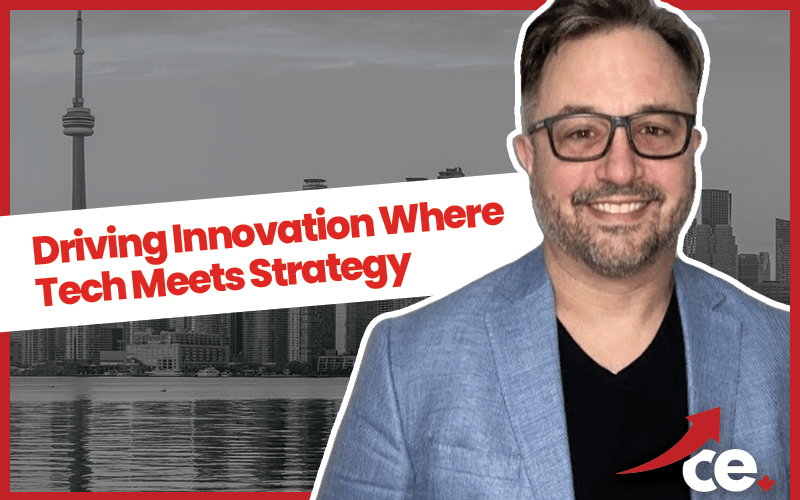
Driving Innovation Where Tech Meets Strategy
Watch episode
Episode
Dan Swayze is a seasoned executive leader with over 20 years of experience driving growth, innovation, and transformation in...
Key takeaways
- Start with market research and validate your unique value proposition before investing heavily in product development to ensure there's actual demand and willingness to pay.
- Hire strategists before individual contributor CTOs in early-stage companies, as strategy and hands-on building are mutually exclusive skill sets that require different approaches.
- Don't chase AI trends just to have AI in your product—focus on solving real problems for specific customers and choose technologies that genuinely serve your business strategy.
- Define your true MVP through market validation rather than building everything in your head, as this significantly reduces seed funding burn and increases success probability.
- Cultivate tenacity as an entrepreneur because the journey involves both feast and famine periods, and the ability to roll with punches is essential for long-term success.
Transcript
Full transcript page · Interactive episode
============================================================
TRANSCRIPTION WITH SPEAKERS
============================================================

[00:00] SPEAKER_00: Welcome to Canada's Entrepreneur, where we talk to the entrepreneurs who are making it happen
[00:05] SPEAKER_00: across Canada and deliver the news, trends, knowledge and opinions from entrepreneurs and business
[00:13] SPEAKER_00: influences across the country. Hi everyone, I'm Phil Bliss, founder and CEO of Canada's Entrepreneur,
[00:22] SPEAKER_00: coming to you from Toronto today. Today we're going to be dance waysy, who's a seasoned executive leader
[00:29] SPEAKER_00: with over 20 years of experience driving growth innovation and transformation in high tech companies.
[00:36] SPEAKER_00: He's renowned for executing technical strategies that enable cloud migration automation
[00:43] SPEAKER_00: and data-driven decision making. He's a very adept at declining business and technology goals
[00:50] SPEAKER_00: to deliver scalable, secure and high-performing solutions. As a strategic thinker,
[00:57] SPEAKER_00: with a collaborative approach, he has led award-winning engineering teams. He's very
[01:03] SPEAKER_00: passionate about mentoring talent and fostering the culture of innovation. He thrives at the
[01:10] SPEAKER_00: intersection of technology and strategy and drives measurable results and sustained business
[01:15] SPEAKER_00: success. Welcome to Canada's Entrepreneur, Dan. Dan, great to see you. Why don't we start by
[01:30] SPEAKER_00: you telling us a little bit more about your entrepreneurial experiences? Let's say over the last decade
[01:41] SPEAKER_00: anyway. Why you became an entrepreneur? That's always an important first thing anyway.
[01:56] SPEAKER_02: That's a great question. Phil, thanks for asking. I guess to understand that I personally was born
[02:04] SPEAKER_02: with the entrepreneurial spirit. I had an early age. I actually as a teenager, I started my first
[02:12] SPEAKER_02: company. From that, I learned a lot of pitfalls. I learned about how to do some business,
[02:21] SPEAKER_02: how to go to market and things like contracting, but really didn't understand the corporate side
[02:30] SPEAKER_02: I think. It was just an early education. The sense was I want to work and do something I love.
[02:35] SPEAKER_02: That was what drove me. Moving forward, I was seeing to adult life, I ended up working in
[02:43] SPEAKER_02: corporations to see how that went because I was able to sell the business that I had made a
[02:49] SPEAKER_02: little bit of money and then I knew that I didn't have the education. I had to figure out what
[02:54] SPEAKER_02: was next. I got involved with another entrepreneur who was older than me. They were more established
[03:01] SPEAKER_02: in the business world to learn about what it took to be able to do that side of things. That was my
[03:07] SPEAKER_02: first experience in the corporate world. He taught me a lot. It was actually a wonderful mentor.
[03:15] SPEAKER_02: From there, he gave me some guidance into where to go with my journey. When we four day in
[03:21] SPEAKER_02: that's when I started to get my education, I got a little bit more formal and then I had another
[03:27] SPEAKER_02: role in corporate to get a little bit more experience and then I had another great mentor.
[03:33] SPEAKER_02: I had these ideas. How do I take these ideas and run with them and do something with them?
[03:40] SPEAKER_02: As a technical person, because my journey, my skillset was highly technical at the time.
[03:48] SPEAKER_02: I was like, how do I leverage this into something? Which is a story that I hear a lot these days
[03:53] SPEAKER_02: from entrepreneurs. There's technical people who really say, I've got this great idea. I want to build
[03:58] SPEAKER_02: this product and I just want to take to market. I made all the mistakes that they made. Which was
[04:05] SPEAKER_02: don't even understand this sense of what does a go-to-market strategy look like? How do I figure out
[04:12] SPEAKER_02: what I need to bring to the market to align what I'm doing with market to know that there's actually a
[04:16] SPEAKER_02: need, things like that. Also, is this patentable? Because I had some interesting patentable ideas.
[04:25] SPEAKER_02: In the early 2000s, I actually had launched a company right around the time of
[04:33] SPEAKER_02: not COVID-19, 9-11. Back to 9-11?
[04:37] SPEAKER_02: I had been working with a company who had lost funding because of that strategy. There were some folks
[04:46] SPEAKER_02: who were really good at that. I remember that very well.
[04:50] SPEAKER_02: For me, it was kind of an opportunity to say, what am I doing now? I had been working on some
[04:55] SPEAKER_02: side things and was in creation of a CMS content management system. That was not all of the time,
[05:01] SPEAKER_02: because I had this idea that people were needed to edit their websites. Then I got in touch with
[05:09] SPEAKER_02: another entrepreneur who had another vision related to email marketing. How the future was going
[05:16] SPEAKER_02: to be on marketing. We were put together by a person who was president of the local ISP.
[05:21] SPEAKER_02: And so, they was all right, like, letting technologies at the time. Everything was super
[05:25] SPEAKER_02: exciting back things. We know about the dot-on boom and everything, right? And so, that was my first
[05:31] SPEAKER_02: experience from it. To actually have a corporation that was actually bringing real product
[05:37] SPEAKER_02: solution to the world. Business part was handling more of the business end of things, and I handled
[05:43] SPEAKER_02: the rest of the operations. We actually grew that successfully. I had my exit later on.
[05:53] SPEAKER_02: So, I did, I wanted to do consulting. That would have been around about 2011-2012.
[06:01] SPEAKER_02: And that's when I decided to do some consulting. At that point, I was still along the lines of,
[06:06] SPEAKER_02: okay, I started to understand business a little bit better, pitfalls, technology, and that
[06:10] SPEAKER_02: that kind of thing. So, that consultancy was related to delivery of technical solutions.
[06:17] SPEAKER_02: But I still hadn't really gotten my legs on strategy and understanding the go-to-market aspects.
[06:22] SPEAKER_02: And so, that's where I had to develop my business sense during that engagement. To grow that,
[06:32] SPEAKER_02: to a point where I was able to sell that business as well, to another MSP that was acquiring
[06:39] SPEAKER_02: companies and books for that type of space. Moving forward, I said, what do I do next?
[06:46] SPEAKER_02: So, at that point, I was like, do I start another company? I didn't have any ideas in the hopper.
[06:51] SPEAKER_02: And then, I actually got involved with another corporation. I've had a really interesting
[06:56] SPEAKER_02: proposition. They wanted to bring, they had an amazing engineering team. And they were struggling
[07:02] SPEAKER_02: with how to productize their product, which I'm finding actually in my consultancy. Now,
[07:08] SPEAKER_02: that's one, that's another key issue is product alignment with the market to figure out how to
[07:17] SPEAKER_02: position it and get the monetization assigned, right? So, and that was in the media broadcast
[07:23] SPEAKER_02: technology industry. So, that went extremely well. We were able to scale that to some of the
[07:30] SPEAKER_02: largest media broadcast companies in the world. And that was an award-winning team, like
[07:35] SPEAKER_02: technical award-winning team. I'll move from there, finish that engagement, and then move
[07:43] SPEAKER_02: on to another organization that was related to technical delivery for ed tech. So, in the education
[07:50] SPEAKER_02: space, and they had similar problems, and they needed further work related to their portfolio.
[07:57] SPEAKER_02: So, understanding a lot of things. Like, they had to do it audit with regards to the
[08:04] SPEAKER_02: team and the delivery and the processes and the technology stacks for revenue generating product.
[08:11] SPEAKER_02: So, there's a lot of love that kind of work. So, realignment. And then, I decided that
[08:20] SPEAKER_02: with all of these types of skills, the, it would make a lot more sense if I would be able to
[08:27] SPEAKER_02: bring this to the world, like to help other entrepreneurs in their journeys, to be able to
[08:33] SPEAKER_02: avoid these pitfalls that I've had over my 30 year career. And with that, I partnered with
[08:39] SPEAKER_02: the mother consultants that have worked in, like for some of the majors, the three big ones.
[08:47] SPEAKER_02: And now, we're going to gather that practice that we can come in and to an organization
[08:54] SPEAKER_02: that is struggling with that go-to-market, struggling with making sure that their
[08:59] SPEAKER_02: product is being launched in a way that's ROI positive and structured from a strategy perspective.
[09:06] SPEAKER_02: And then, with that, we often uncover through discovery that, oh, we don't have a product
[09:12] SPEAKER_02: process in place. The technical stack and understanding of how the delivery happens,
[09:19] SPEAKER_02: what's the support structure look like? What is the, how does all of this tie back to the monetization
[09:25] SPEAKER_02: of your strategy so that you're able to be profitable, align with your stakeholder interest,
[09:35] SPEAKER_02: as well as, like, perhaps prepare for different rounds of funding. So, creating that story is
[09:40] SPEAKER_02: an important element of what we do now. Okay. So, so really as an entrepreneur,
[09:49] SPEAKER_00: you really built your entrepreneurship on two layers. One is actually, you know,
[10:00] SPEAKER_00: innovating and building and delivering the product. And the other way is, you know, being
[10:09] SPEAKER_00: what I would call the outside guy and doing the same thing, but advising other building.
[10:21] SPEAKER_00: You know, how to make some of the steps as successful as possible. Except that.
[10:29] SPEAKER_02: It is one of the key areas that I find company struggle with, especially early stage post.
[10:38] SPEAKER_02: Post bootstrap, perhaps at seed or just post seed funding at those stages. Oftentimes,
[10:43] SPEAKER_02: they're the founders are like, I've got an idea. I've got to something ready for market. I really
[10:50] SPEAKER_02: need to get to growth. And now I've all of a sudden got money. I need to hire some people.
[10:56] SPEAKER_02: But this is where I would caution. Instead of going directly and hiring, for example,
[11:00] SPEAKER_02: what is called the individual contributor CTO to say, I need to have someone who's going to
[11:07] SPEAKER_02: give me strategy and build my product completely from the ground up. Those are mutually exclusive
[11:12] SPEAKER_02: skill sets. And so I would caution those folks to consider bring in a specialist from a strategy
[11:20] SPEAKER_02: perspective first, align what your best practices would be, how you would be able to
[11:27] SPEAKER_02: pair scale and everything by starting with strategy first. And then making sure you have a good
[11:32] SPEAKER_02: product process in place, then it makes really great sense to have the individual contributors come
[11:38] SPEAKER_02: in to deliver those things. So you're getting ROI immediately and not having to dilute, for example,
[11:44] SPEAKER_02: through bringing in a new partner or a technical partner and things like that. So it gives you
[11:52] SPEAKER_02: that opportunity to really spend more on moving your business forward, rather than trying to
[11:57] SPEAKER_00: fill a role that you think you need filled. So it's kind of interesting. But from what I'm listening
[12:06] SPEAKER_00: to here, you've sort of been both on the inside and in the outside building predominantly technology
[12:23] SPEAKER_00: businesses over the last 20 or 20 years. Not very enough to say.
[12:30] SPEAKER_01: It is. So what's the best? Building the businesses in an owner or helping as an advisor?
[12:47] SPEAKER_02: Personally, one of the things that great business coaches will tell you is a great business owner
[12:55] SPEAKER_02: identifies what it is they're good at and then they hire for the roles that they're not good at.
[13:01] SPEAKER_02: And when it comes to saying, I have a passion for a thing and I really want to move this forward,
[13:10] SPEAKER_01: that is the, that is like your CEO type role. I've done that multiple times. And at this point,
[13:21] SPEAKER_02: instead of just focusing on that, my interest is I'm really good at a particular thing. And that's
[13:30] SPEAKER_02: that strategy and bringing that forward and bringing people together so that we can achieve amazing
[13:35] SPEAKER_02: results in short periods of time. And I really want to, at this point in my career and my life,
[13:42] SPEAKER_02: I want to be able to pay that forward and help these other folks to bring the fruition
[13:47] SPEAKER_02: their vision. And so I was able to make my own business out of that that's a scalable business.
[13:54] SPEAKER_02: So at the end of the day, I'm still the entrepreneur, but I'm also able to help other entrepreneurs,
[13:59] SPEAKER_01: which is pretty fulfilling personally. Okay. So on that front, and you have a technical background,
[14:08] SPEAKER_01: anyway, you know, in that role, there's, you know, I'm not that far away from you in terms of
[14:18] SPEAKER_01: skills, I do it's a, but what have you seen the technology has changed
[14:29] SPEAKER_00: in that sort of growth phase companies, we know from, from not, you know, from a marketing,
[14:39] SPEAKER_00: from a manager, from, from a tech side of it, all of those things. What, what is, you know,
[14:47] SPEAKER_00: AI, how's it, how's it changed the game or the startup, early stage, whatever, the companies?
[15:04] SPEAKER_02: Great question. Aside from internal facing tools, which AI can help businesses with streamlining
[15:13] SPEAKER_02: certain aspects of their day to day, as we've all seen, you know, chat, CBT and things like that,
[15:18] SPEAKER_02: when we're considering it from a product, like side or revenue generating side of things,
[15:25] SPEAKER_02: I think it's very important to not say, oh, my app needs to have AI and look at it from that
[15:30] SPEAKER_02: perspective, it's more of understanding, it's back to the fundamental of the business,
[15:36] SPEAKER_02: regardless of the technology you use, all about what problem am I solving, who am I solving it for?
[15:43] SPEAKER_02: And how do I get there? Right? Then you determine what technologies would be best to fit that,
[15:50] SPEAKER_02: that space. Oftentimes, keeping up with trends such as using cloud computing to reduce overhead
[15:58] SPEAKER_02: and cost and doing that in a cloud-native way is an important consideration because that
[16:03] SPEAKER_02: structures and determines the skill sets you need within your organization, as well as what
[16:10] SPEAKER_02: you're responsible for and cost, especially in an early business.
[16:14] SPEAKER_02: Second part of that, when it comes to AI, it's what value will the AI bring specifically,
[16:21] SPEAKER_02: or is my idea completely based on AI and how would I leverage that? So this is the
[16:29] SPEAKER_02: point of consideration of where that fits in the puzzle. It does definitely be who've accompanied
[16:36] SPEAKER_02: you to consider that because VCs are looking for not specifically an AI product or digital
[16:43] SPEAKER_02: product or things like that, they look specifically for, are you leveraging the appropriate
[16:48] SPEAKER_02: modern technologies in your solution that makes sense moving forward? Or is it roadmap as part
[16:56] SPEAKER_02: of your solution if it's not an inherent AI type-tax solution? But it is by even as part of your
[17:02] SPEAKER_01: solution, is a consultant advisor. Isn't AI working out of a job on that?
[17:16] SPEAKER_02: I would definitely say it's not working out of a job. I actually saw a presentation recently
[17:24] SPEAKER_02: from the Noble Loret who is a grandfather of AI. It's interesting. I had a chat time.
[17:30] SPEAKER_02: At UFT that recently. But at the end of the day, the discussion that followed
[17:38] SPEAKER_02: the understanding is, as definitely not there to the point where it can completely replace us,
[17:44] SPEAKER_02: what I can definitely tell you that AI is good for is making a seat of common. So basically,
[17:52] SPEAKER_02: they're a seat of same as they call it now. So by creating or using AI to figure out things
[17:57] SPEAKER_02: like your strategies, will you get marketing strategy, for example, that will work? Sure, but it's
[18:04] SPEAKER_02: going to be, it works and it delivers at a baseline. For anything that's going to be exceptional,
[18:12] SPEAKER_02: that still requires people like you and me who have these years of experience who understand
[18:17] SPEAKER_02: spaces, who can actually apply that creativity, because if you've ever used AI to really try and
[18:23] SPEAKER_02: create something creative, that's where it falls flat. It's really great with processing
[18:28] SPEAKER_00: information, but terrible at novel creativity. Yep, I think so. Being there, done that. Yes.
[18:37] SPEAKER_01: Okay. So, but, you know, what's the greatest challenge you've faced in the business so far?
[18:51] SPEAKER_02: The challenges that I run into, it relates to stakeholder buy-in in the cases of really,
[19:00] SPEAKER_02: brilliant technical people who don't necessarily have a real big background in business.
[19:07] SPEAKER_02: So I find that founders that are a little bit more mature, who've been through the ropes for
[19:18] SPEAKER_02: and done things before, but still need some help to maybe scale or do something different
[19:23] SPEAKER_02: that's outside of their wheelhouse. They're a fantastic group of people to work with. The younger
[19:29] SPEAKER_02: founders who are business-minded, who are willing to take that information and say, yes, okay,
[19:36] SPEAKER_02: I can see the value in this and how you're helping guide me away from the way I'm thinking
[19:41] SPEAKER_02: to build something, also a great group. The ones that are difficult, the ones that are challenging
[19:46] SPEAKER_02: are people who really know their technology, but then when you tell them the definition of an MVP
[19:52] SPEAKER_02: versus what they're actually delivering, and how did they come to that versus just what was in
[19:57] SPEAKER_02: their head, because they predominantly all wanted to build. I know, I understand, I did it, so I'm
[20:02] SPEAKER_02: not faulting anyone. It's just I've learned through my journey that that's not the best approach,
[20:08] SPEAKER_02: and if you do it from a really structured approach, and validate each build as you go
[20:16] SPEAKER_02: through the market, it actually makes a big impact on how much you actually have to outlay
[20:24] SPEAKER_02: from your seed funding, for example, to be able to produce something. So that's one of the key
[20:29] SPEAKER_00: challenges that I run it to. In terms of challenges, is there any kind of
[20:37] SPEAKER_01: process that you've developed that have allowed you to overcome the challenge to get around the wall
[20:49] SPEAKER_02: kind of thing? Yes, the human and their humans, so sometimes they will have to figure it out for
[21:02] SPEAKER_02: themselves, but by being benevolent and being kind and then saying, this is what we suggest to do,
[21:10] SPEAKER_02: this is give them that guidance early on. So part of our playbook is to say we have
[21:15] SPEAKER_02: multi-tiered engagement, so I call it an engagement pathway, and because that word is a road that we
[21:20] SPEAKER_02: walk together, and it starts off with, we'll talk, give you some advice, and go from there. If it's
[21:26] SPEAKER_02: something you want to feed, wonderful, if not, I understand. But if you do heat it, and you're saying,
[21:31] SPEAKER_02: yeah, I understand what you're saying, how do I get there? That's when we get to the next level
[21:35] SPEAKER_02: of we'll give you the strategy. Then after that, if you say, this amazing strategy, I need some
[21:41] SPEAKER_02: help with execution, then that's the next stage of engagement walking down the path. However,
[21:47] SPEAKER_02: that looks for a founder is fine for me, and the way that this overcomes the problem is if a founder
[21:55] SPEAKER_02: decides after the initial conversation that, oh, I'm just going to do it my way, even though you've
[22:02] SPEAKER_02: suggested some things that make sense, they will run into the problems that I had outlined for
[22:09] SPEAKER_02: them, because it's inevitable. Running is on the wall when you know, when you know, you know,
[22:13] SPEAKER_02: and so they'll run into those problems, and then there's always a callback from that perspective.
[22:20] SPEAKER_02: Some will call back some will run out of runway. It all depends on how they've
[22:24] SPEAKER_02: hit it, but the idea is putting more, I've heard this term from one of the VCs that speaking was
[22:29] SPEAKER_02: it's putting the jelly beans in the truss jar. Once they understand, okay, that person does
[22:36] SPEAKER_02: make some sense, and they did try and warn me, maybe I should listen, then we're happy to help.
[22:45] SPEAKER_01: What advice would you give an entrepreneur thinking about, you know, stepping into the entrepreneurial
[22:57] SPEAKER_00: risk environment from where they are in corporate world today?
[23:07] SPEAKER_02: Most important advice relates to the first steps you need to do, and that is your market research,
[23:15] SPEAKER_02: understand your unique value proposition for your product. Then check to make sure that someone
[23:21] SPEAKER_02: is willing to pay X dollars and figure out how much it's going to cost you to deliver. If it's still
[23:27] SPEAKER_02: makes sense, and you're able to raise interest to be able to fund that to get to a proof of concept,
[23:34] SPEAKER_02: but that is a great pathway. But only figure out what your minimum is before really investing heavily
[23:42] SPEAKER_01: into something, and if you need help, don't be afraid to ask, there's no shame in asking for help.
[23:50] SPEAKER_00: On a, staying with the kind of mentoring thing, you know, what's the best piece of advice
[23:57] SPEAKER_00: that you receive, that you keep there in the back pocket that that literally made a difference.
[24:04] SPEAKER_00: In your, in the way you walk right.
[24:10] SPEAKER_01: I've received a lot of good advice, so I have to think about that for a minute.
[24:15] SPEAKER_00: I give the one that keeps coming in, you keep going back to.
[24:20] SPEAKER_02: I think one that actually comes up for me relates to sales, and it was early in my career,
[24:26] SPEAKER_02: as I was talking about that founder that was one of my first mentors.
[24:32] SPEAKER_02: He had me, he was really supportive in training, making sure that all his employees and all his
[24:39] SPEAKER_02: management staff were on boarded to good information. And so even in sales, for example, everybody had
[24:47] SPEAKER_02: to understand sales, so you made this learn zig-zagler. I listened to so much zig-zagler tapes,
[24:52] SPEAKER_02: it's crazy back then, because it were tapes back then.
[24:54] SPEAKER_02: Yeah, yeah. And what came from that, and this is one of his key things was,
[25:01] SPEAKER_01: if you're doing a great sales process, then you have to trust in that, and sometimes
[25:09] SPEAKER_02: a cigar is a cigar. And so that, that always stood with me to say, not everybody is going to be
[25:17] SPEAKER_02: ready for your information, for the thing that you're, want to provide, even if they clearly
[25:23] SPEAKER_02: need it, they may not be ready, so always have be okay with that. Let that sit well with you,
[25:29] SPEAKER_02: move on, and then just keep calm and move on as it's there, right?
[25:35] SPEAKER_00: Okay, that's, that's the, that's the, I'm deep stuff, that's a little bit of fun before we,
[25:40] SPEAKER_00: before we call it, call it an interview. You know, if you want to do what you're doing now,
[25:49] SPEAKER_01: what do you think you would do instead?
[26:00] SPEAKER_01: I'm probably endeavoring to do what I do now, it's just just what I love to do.
[26:06] SPEAKER_00: I know that feeling too. Well, what book are you reading, podcast, listen to,
[26:11] SPEAKER_00: that you would recommend to the audience, that you really feel is of great value?
[26:17] SPEAKER_02: Oh, that's a great question. There's a number of great books that are, if I've prepared for that,
[26:22] SPEAKER_02: I'd have a whole library list for you with things. The things that I'm actually personally reading right now,
[26:28] SPEAKER_02: all that sounds boring is a lot of Harvard Business Review articles from there. Yeah, from that
[26:36] SPEAKER_00: publication. You got to go wrong with HVR. Yeah, that's always a good place. The economist is
[26:44] SPEAKER_02: pretty good too. Even more than a night person. I would say definitely, I'm more an afternoon person.
[26:54] SPEAKER_02: So I do my best work. Yeah, I do my best work in the afternoon, but I mean, I will, it ranges,
[27:04] SPEAKER_02: like I can either work from early morning until the later evening or I'll start, you know,
[27:09] SPEAKER_02: regular time in the morning until like very late in the evening, but generally, I guess we all have,
[27:15] SPEAKER_02: as we get older, we kind of start to be a little bit more aware of those things. And I think my absolute
[27:21] SPEAKER_02: best time is afternoon. But if I had to classify morning or evening, I'd say definitely I'd lean towards
[27:27] SPEAKER_00: an evening person. Okay. If you had to make one word to describe yourself, what would it be? And why would
[27:37] SPEAKER_01: you choose it? I would choose tenacious. And reason being is because I can tell you definitely
[27:49] SPEAKER_02: in this journey, as an entrepreneur, it's not light for the lighthearted, for those who want to
[27:57] SPEAKER_02: give out quickly. You need to be able to get through the times of feast or show times of famine to
[28:03] SPEAKER_02: get through the times of feast. And that tenacity and the ability to adjust so that you can go
[28:12] SPEAKER_02: roll with the punches, as you'd say. I think that's one of the key driving factors of why I've been
[28:19] SPEAKER_02: able to feed in my life. And that's how I describe it. And I would recommend that that being an
[28:26] SPEAKER_01: important principle for folks who want to get into business. Last question. What's keeping
[28:33] SPEAKER_01: up at night these days? Right now, the main thing that keeps me up is actually excitement.
[28:47] SPEAKER_02: I am super excited on some of the projects that I'm working on to be able to make a difference
[28:52] SPEAKER_02: in their lives and their journeys and their businesses. Because when I meet these founders,
[28:59] SPEAKER_02: it's not just a business transaction. There's that personal relationship that comes there. And as
[29:05] SPEAKER_02: I mentioned, the jelly beans and the trust jar, it's all about that. And you start to form these
[29:11] SPEAKER_02: strong bonds and really want to see them succeed. So I don't work with huge companies like
[29:21] SPEAKER_02: a McKinsey or Deloitte Wood or Boston Consulting Group, that kind of thing. I work more with the
[29:29] SPEAKER_02: small to medium enterprise. And so that gives me that blessing and that opportunity to really
[29:34] SPEAKER_02: forge those relationships. And so when working towards a goal to help somebody succeed,
[29:41] SPEAKER_02: that really excites me. So I don't have any major worries that keep me up at night, but it's
[29:49] SPEAKER_02: definitely, I'm just so excited for the next data come that I can't get to sleep.
[29:57] SPEAKER_00: Nice, that's great, Dan. It's been really good meeting you. And I love
[30:02] SPEAKER_00: someone things you said and thinking about entrepreneurs listening to this, I think there's some real
[30:08] SPEAKER_00: real good insights there. So thank you very much for coming on to Canada's entrepreneur.
[30:14] SPEAKER_00: We're welcome and happy to be a source. Wow, now that's what I call some deep insights from Dan.
[30:23] SPEAKER_00: I hope you all enjoyed listening and got some advice that can be very useful as you're building
[30:30] SPEAKER_00: your businesses out there. I'm Phil Bliss. Don't forget to subscribe to our newsletter on our website
[30:37] SPEAKER_00: and subscribe on our YouTube channel as well or on any of the major podcast channels.
[30:43] SPEAKER_00: Thanks for listening to Canada's entrepreneur where you meet the entrepreneurs
[30:47] SPEAKER_00: the drive Canada's economy.