
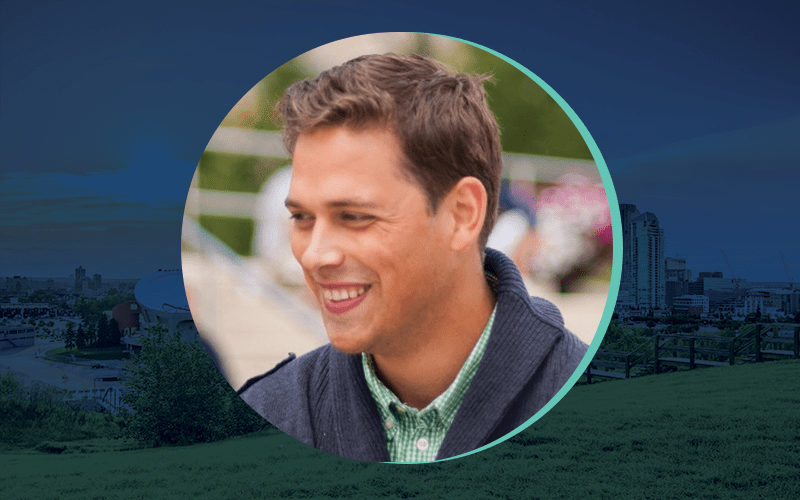
Doug Van Spronsen
Episode
Doug Van Spronsen is a Partner at Versett a product design and technology company.
Key takeaways
- The riskiest thing you can do in business is nothing, because the pace of change is exponential rather than linear.
- Instead of optimizing for the best possible outcome, invert the problem by focusing on avoiding worst-case scenarios and the rest will flow naturally.
- Finding the courage to stick with your core vision and point of view is one of the biggest challenges, even when it means being wrong for long periods of time.
- Invest your time and energy in things that aren't going to change, and always try to have the longest view in the room when making decisions.
- Work-life balance is about getting into a state of flow where you're working on what you want to be working on, not about achieving a perfect 50-50 split.
Transcript
Full transcript page · Interactive episode
============================================================
TRANSCRIPTION WITH SPEAKERS
============================================================

[00:00] SPEAKER_00: It's Calgary's podcast on the Canada's podcast network.
[00:08] SPEAKER_01: Hello, this is Mario Toneguzi coming to you today with Calgary's podcast, a member of Canada's podcast network,
[00:16] SPEAKER_01: where we talk to the entrepreneurs who are making it happen in Calgary, Alberta,
[00:21] SPEAKER_01: so you can listen, discover, and engage.
[00:24] SPEAKER_01: Today's guest is Doug Bands-Franzen, partner at Versette in Calgary.
[00:29] SPEAKER_01: Thanks for joining us today, Doug.
[00:31] SPEAKER_01: Glad to be here.
[00:32] SPEAKER_01: Okay, let's start, just tell me what Versette is and what do you guys do?
[00:36] SPEAKER_00: Sure, so Versette started around seven years ago, and it was really built around a central mission,
[00:44] SPEAKER_00: where we wanted to help accelerate the growth of our clients.
[00:47] SPEAKER_00: And when we thought about growth, especially in sort of the modern economy and where the world was going,
[00:53] SPEAKER_00: we thought, okay, well, how would you design the perfect business to help other businesses grow better?
[00:59] SPEAKER_00: And there were sort of three elements to that that we knew we'd need to excel at.
[01:03] SPEAKER_00: So one was engineering or technology, so much of the modern economy is being shaped by software.
[01:11] SPEAKER_00: And so being able to build and advise and really create performance software was going to be super important.
[01:18] SPEAKER_00: The other one was design, so really knowing how to create services that people want to use,
[01:24] SPEAKER_00: that people want to engage with, that are delightful.
[01:27] SPEAKER_00: That was an important aspect.
[01:29] SPEAKER_00: And then the third one was the strategic output.
[01:32] SPEAKER_00: So how do we decide what to build, when to build it, what to say no to, and those types of questions.
[01:36] SPEAKER_00: And so my partners and I kind of looked at that and said, okay, let's try to build the most performant team
[01:43] SPEAKER_00: that can address all of those different cross functional areas.
[01:47] SPEAKER_00: And then, you know, if we can find clients that are sort of looking for those things together, we can do that.
[01:54] SPEAKER_00: So that was sort of the idea and we've been sort of executing against that over the last seven years.
[01:59] SPEAKER_00: So how did you get involved, like yourself personally in this area?
[02:03] SPEAKER_00: Yeah, so my background was in business.
[02:07] SPEAKER_00: I had the great experience right at a university of starting a company with my professors in the tech space.
[02:15] SPEAKER_00: And just through that, at a university, I think I learned a lot about where the world was sort of going in terms of technology and I got the bug.
[02:22] SPEAKER_00: And so, yeah, from that side, I think we just saw a big opportunity large and small companies were really just kind of struggling, especially around that time to understand, you know,
[02:31] SPEAKER_00: how technology played a role in their company's trajectory.
[02:35] SPEAKER_00: And so it made a lot of sense.
[02:37] SPEAKER_00: And I think personally, I kind of operate off with a few sort of core philosophies.
[02:42] SPEAKER_00: And one of them is that the pace of change is not linear.
[02:48] SPEAKER_00: It's exponential.
[02:50] SPEAKER_00: And so the riskiest thing you can kind of do is nothing.
[02:54] SPEAKER_00: And I think that applies to people and I think it applies to business as well.
[02:57] SPEAKER_00: So we kind of wanted to help companies adjust to that.
[03:00] SPEAKER_00: And there was an opportunity there.
[03:01] SPEAKER_00: And I think the other kind of broader piece was just this understanding of asymmetric risk.
[03:08] SPEAKER_00: So, you know, something can have a three to four X upside and a downside is a one X.
[03:14] SPEAKER_00: And finding opportunities to sort of, you know, do that.
[03:17] SPEAKER_00: I think is always a good idea.
[03:19] SPEAKER_00: So all those things kind of came together and it made a lot of sense.
[03:22] SPEAKER_00: And that's why we took the lead.
[03:23] SPEAKER_01: When you're starting a business and having a business in Calgary these days,
[03:29] SPEAKER_01: what's your overall thoughts of being an entrepreneur in this city?
[03:34] SPEAKER_01: Like what are the benefits, I guess, of having a business here?
[03:39] SPEAKER_00: I feel like I should ask you that question because I think you reported on this for about 10 years.
[03:45] SPEAKER_00: I'll try to give it my thoughts.
[03:49] SPEAKER_00: No, I think we actually get asked that question a lot because we work globally.
[03:53] SPEAKER_00: So people always, you know, if they know about Calgary,
[03:55] SPEAKER_00: it's usually, you know, only a few things to the ask the same question.
[03:59] SPEAKER_00: I think one of the things that we've noticed as a really great benefit is being a smaller market,
[04:05] SPEAKER_00: we are typically, you know, drawing from a smaller talent pool.
[04:11] SPEAKER_00: But the folks that are here are here for a reason and they want to live here.
[04:15] SPEAKER_00: And so because we're such a people-oriented company and we're really a function of the folks that are in our office,
[04:22] SPEAKER_00: being able to attract the top talent and retain them is really, I think, a great part of being a Calgary.
[04:29] SPEAKER_00: Because, of course, it's competitive in a technology space and design fields.
[04:34] SPEAKER_00: These are very competitive places.
[04:35] SPEAKER_00: But I think if you're able to sort of be the employer of choice in a market,
[04:40] SPEAKER_00: which, you know, there's definitely advantage there.
[04:42] SPEAKER_00: And we've seen great, great things about being in a small market.
[04:46] SPEAKER_00: And it's a global world and you can kind of go wherever you need to go.
[04:49] SPEAKER_00: But we've seen a big benefit.
[04:51] SPEAKER_00: And I think if we hadn't started in Calgary, I think it may have limited some of our potential.
[04:57] SPEAKER_00: I think a lot of the character of the city isn't better than our company in many ways.
[05:01] SPEAKER_01: Yeah. So we've had some tough times here in the last five years in the city, right?
[05:06] SPEAKER_01: Since, you know, global oil prices started collapsing in 2014.
[05:10] SPEAKER_01: The last five years have been kind of a pretty down in the city.
[05:15] SPEAKER_01: How was that impacted your business?
[05:17] SPEAKER_00: Really, by no brilliant strategy of our own.
[05:20] SPEAKER_00: We haven't had a lot of exposure to our local economy.
[05:24] SPEAKER_00: A majority of our clients are not here.
[05:27] SPEAKER_00: So we work globally.
[05:28] SPEAKER_00: So we have active projects right now in Dubai and Paris and Dublin all over the place.
[05:35] SPEAKER_00: So that has kind of insulated us a little bit from it.
[05:38] SPEAKER_00: But that being said, I think, you know, there's a sort of.
[05:42] SPEAKER_00: There's these negative narratives that play out in the community.
[05:47] SPEAKER_00: And I think we've definitely experienced that.
[05:49] SPEAKER_00: And I think a big part of our kind of future ambition is to help change those narratives.
[05:55] SPEAKER_00: Because there's a lot of good things happening in the city.
[05:58] SPEAKER_00: We get exposed to a lot of that with some of our early venture or new venture companies that we work with.
[06:03] SPEAKER_00: So I think a big part of the role is sort of acknowledging that yes, things have changed.
[06:08] SPEAKER_00: But also trying to be and participate in the future that we want to create.
[06:13] SPEAKER_00: And I'm very bullish on the future of Calgary.
[06:16] SPEAKER_01: What about your company itself?
[06:18] SPEAKER_01: What's your vision for the company into the future?
[06:22] SPEAKER_00: Yeah, so we're really excited.
[06:25] SPEAKER_00: I think we've seen a lot of expansionary growth over the last couple of years.
[06:30] SPEAKER_00: And we look to continue that.
[06:31] SPEAKER_00: I think one thing that gets us really excited is that.
[06:34] SPEAKER_00: We don't see the world changing materially from the places that we're investing a lot of time in.
[06:40] SPEAKER_00: So we have kind of an internal mantra of why.
[06:45] SPEAKER_00: It's investing things that aren't going to change.
[06:48] SPEAKER_00: And kind of the corollary to that is always having the longest view in the room.
[06:53] SPEAKER_00: So when we're talking to our clients or we're talking internally.
[06:56] SPEAKER_00: We're trying to look at that 10 year scale and say what are the things and our activities we can do now.
[07:01] SPEAKER_00: That will really help propel us to where we want to go.
[07:03] SPEAKER_00: So excited about that.
[07:05] SPEAKER_00: And I think that's really, you know, missionally where we're kind of oriented.
[07:09] SPEAKER_01: Okay, what do you think is the is the biggest challenge you guys have faced in your business over the years?
[07:16] SPEAKER_00: Yeah, I think.
[07:18] SPEAKER_00: Probably the biggest challenge is finding the courage to stick with a point of view.
[07:24] SPEAKER_00: You know, I think it's really easy to be void by trends or different.
[07:30] SPEAKER_00: And you know, philosophies or ideas or concepts.
[07:34] SPEAKER_00: But to stick with a with a core vision is it's hard.
[07:38] SPEAKER_00: And we haven't always done it perfectly.
[07:41] SPEAKER_00: But I think that's been the biggest challenge because if you really think.
[07:46] SPEAKER_00: What you're doing is is directionally right.
[07:49] SPEAKER_00: Then you have to have the courage to stick with that and be to be wrong for long periods of time.
[07:56] Speaker UNKNOWN:
[07:56] SPEAKER_00: Which is not always the easy path.
[08:00] SPEAKER_00: So I think we've experienced that.
[08:03] SPEAKER_00: And I'm very thankful for the folks around our team to kind of help.
[08:09] SPEAKER_00: You'll keep us accountable to to accomplishing that versus, you know, kind of swaying with the different waves in the ocean.
[08:17] SPEAKER_00: Yeah, exactly.
[08:18] SPEAKER_01: So over the years, you've obviously talked to a lot of different people probably.
[08:22] SPEAKER_01: A lot of people give you advice, et cetera, anything stick in your mind as the best sort of piece of advice that you've ever received for being an entrepreneur.
[08:31] SPEAKER_00: Yeah, so I, you know, I'm going to give you two.
[08:35] SPEAKER_00: So I really do believe that you can learn so much through the experiences of other people.
[08:40] SPEAKER_00: One of my favorite sort of role models is Charlie Munger, who is the longtime partner of one profit.
[08:48] SPEAKER_00: And he gave a commencement address years ago.
[08:52] SPEAKER_00: And in it, he gave kind of this kernel of wisdom, which really stuck with me at the time.
[08:56] SPEAKER_00: And his kind of theory was that if you look at your life and you look ahead, you can typically do what most people do, which is sort of say, you know, how do I optimize for the best outcome?
[09:07] SPEAKER_00: So you look into the future and you say, I want, you know, a successful life, I want a successful job, et cetera.
[09:13] SPEAKER_00: But he said the problem with that is that you could often optimize for the wrong things or at the sort of detriment of the parts of it of other parts of your life.
[09:23] SPEAKER_00: And so he said, what you can do is you can invert that.
[09:26] SPEAKER_00: So instead of optimizing for the best possible outcome, you instead try to mitigate the worst case scenarios.
[09:33] SPEAKER_00: So things like, if you want to have a successful business career and you want to work with trustworthy people, then you should probably be trustworthy.
[09:39] SPEAKER_00: Yeah, if you want to have a good life, you should probably have a good partner.
[09:44] SPEAKER_00: So if you're going to be a good partner, then you should probably be a good partner yourself.
[09:49] SPEAKER_00: You know, if you want to avoid ruin, you shouldn't engage in, you know, immoral acts.
[09:54] SPEAKER_00: So I really like that mindset because it makes it a lot more easy.
[09:57] SPEAKER_00: Like if you're just trying to avoid the worst case downstate scenario, then the rest of it sort of flows.
[10:02] SPEAKER_00: So I think that was kind of one and sort of a corollary to that would be my dad growing up.
[10:10] SPEAKER_00: So I don't, some of your listeners might be familiar with David Foster waltz had this really famous speech called This Is Water.
[10:15] SPEAKER_00: And it's worth checking out if you want to Google it.
[10:20] SPEAKER_00: But in it, he kind of talks about how, you know, life is the little mundane moments around you can make a big difference if you acknowledge them and notice them.
[10:29] SPEAKER_00: And I think my dad had almost a clear articulation of this.
[10:34] SPEAKER_00: Any kind of beat it into bay into my head as a kid.
[10:38] SPEAKER_00: And it was, you know, everyone has a story.
[10:40] SPEAKER_00: So this idea that, you know, you don't know where people are coming from until you ask.
[10:47] SPEAKER_00: And I think really engaging with people on a human level.
[10:51] SPEAKER_00: And it's the same with companies.
[10:52] SPEAKER_00: And I think we try to do this at first set as well.
[10:54] Speaker UNKNOWN: So I think that this is a very important thing.
[10:55] Speaker UNKNOWN: And so what I think is really important is, you know,
[10:56] Speaker UNKNOWN: the world's not only in a person's life,
[10:57] Speaker UNKNOWN: but in a person's life.
[10:59] SPEAKER_00: Because I think that can really unlock some powerful insights and empathy,
[11:04] SPEAKER_00: and just make for a better connection.
[11:07] SPEAKER_00: Okay, let's, let's unlock the narrative of your life now.
[11:11] SPEAKER_01: Sure.
[11:12] SPEAKER_01: Okay, so everybody's got a bucket list these days.
[11:16] SPEAKER_01: Personal bucket list.
[11:17] SPEAKER_01: Do you have one and what's sort of on top of that list?
[11:22] SPEAKER_00: Yeah, so I think I'm kind of an anti bucket list guy.
[11:28] SPEAKER_00: And, and it's not to say that there's obviously not things that you want to do.
[11:32] SPEAKER_00: But I kind of in keeping with spirit of, of, of enjoying what's around you.
[11:37] SPEAKER_00: I think, you know, really trying to, to feel comfortable in the situation that you're in.
[11:45] SPEAKER_00: It's something that I, I kind of constantly working on.
[11:48] SPEAKER_00: So I almost think that it sort of, if there's a list of things you have to get to,
[11:52] SPEAKER_00: then there's sort of this anxiety that comes with that to always be working or marching towards it.
[11:57] SPEAKER_00: Versus a mindset of saying, you know, I know directly this is kind of where I want to go in my life and my relationships with my family.
[12:04] SPEAKER_00: So what am I doing today to kind of help enable that or one intention I'm going to do,
[12:08] SPEAKER_00: you know, putting into the world to go there.
[12:10] SPEAKER_00: I think that, that to me is a lot more easy to apply versus climbing in Kilimanjaro or something like that.
[12:17] SPEAKER_00: Although that would be fun.
[12:19] SPEAKER_01: So if you weren't doing what you're doing now, what kind of career profession do you think you'd be in?
[12:26] SPEAKER_00: So I have a, a fascination with architecture.
[12:31] SPEAKER_00: And I know I don't have the skill or talent or drive or any of the natural necessary attributes to be successful in that area.
[12:38] SPEAKER_00: But I'm a casual enthusiast.
[12:41] SPEAKER_00: So I think if I had to restart everything and follow something and probably an architecture,
[12:49] SPEAKER_00: it's just, it's such an interesting field because it marries, you know, human behavior.
[12:53] SPEAKER_00: There's this technical aspect to it.
[12:56] SPEAKER_00: And then probably the most interesting thing about it is just that understanding the valueability of constraints.
[13:02] SPEAKER_00: So if you're an architect, you can have a great vision, but unless it fits within the constraints of the city, how people move within it, building codes,
[13:11] SPEAKER_00: funding models, all these different things.
[13:12] SPEAKER_00: It's, it's really in pursuit of constraints, technology.
[13:17] SPEAKER_00: So, yeah, I think it's a fascinating field.
[13:19] SPEAKER_00: It's one that I'd love to get into, but I think all satisfied from being armchair.
[13:25] SPEAKER_00: I was worried.
[13:26] SPEAKER_01: So everybody talks these days about work life balance.
[13:30] SPEAKER_01: What's yours like these days?
[13:32] SPEAKER_00: Well, I think that's always a journey.
[13:34] SPEAKER_00: I think I have two year olds, so to an hack real, so the work life balance is mandated by, by her schedule, which I, which I quite enjoy.
[13:45] SPEAKER_00: I'm a big believer in sort of routines.
[13:47] SPEAKER_00: So I'm trying to find sort of a consistent flow within your week so that you can be effective and all the different parts.
[13:55] SPEAKER_00: So of your life.
[13:57] SPEAKER_00: But yeah, I do think that there is possible to work too much.
[14:02] SPEAKER_00: And it's possible to not work enough.
[14:04] SPEAKER_00: And so, um, balance is sort of a function, I think of, you know, getting into a state of flow where what you're working on is something you want to be working on.
[14:15] SPEAKER_00: And then even if you're working on it a lot, you feel like you're driving towards the right thing and it feels good.
[14:19] SPEAKER_00: And if your relationships are in sync and you're kind of on the right frequency there, then the actual balance part, you know, the equation doesn't need to act be 50, 50.
[14:29] SPEAKER_00: I think it could be a little different as long as you're kind of going in the right direction.
[14:33] SPEAKER_01: Okay, what besides obviously your child and spending time there and your family, what kind of things do you do?
[14:42] SPEAKER_01: Interest that you have outside of work.
[14:46] SPEAKER_00: So yeah, so for my wife and I, we've always been huge mountain people.
[14:52] SPEAKER_00: One of the great things of being a Calgary is of course being a close, John, to weigh.
[14:57] SPEAKER_00: So yeah, skiing, hiking.
[15:00] SPEAKER_00: It's interesting, like I think like a hike, for example, you know, if you go on a day hike a six hour hike with somebody else, I can't think of a better, fully human experience than doing that.
[15:14] SPEAKER_00: You've got like really every part of humanity. You've got human connection because you're spending a lot of time talking with somebody 101.
[15:22] SPEAKER_00: I'm you're kind of away from technology.
[15:24] SPEAKER_00: There is this sort of nature connection you're observing the world around you.
[15:28] SPEAKER_00: You're physically exerting yourself.
[15:31] SPEAKER_00: You're tired. There's kind of the whole eventually you're like, why am I doing this?
[15:36] SPEAKER_00: All this different emotions. So yeah, I feel like I really like getting out there and experiencing that and just kind of.
[15:46] SPEAKER_00: I think it's a part of living in Calgary that would be really difficult. It's a big reason why we're here.
[15:51] SPEAKER_01: Okay, what would you use for one word to describe yourself? What would it be and why?
[16:00] SPEAKER_00: I'm sure there's a bunch of words that other people would use that I wouldn't want to hear.
[16:05] SPEAKER_00: But no, I think aspirationally, I'd like it to be consistent.
[16:11] SPEAKER_00: So if somebody was to describe me aspirationally, I think I'd love to hear the word consistent.
[16:17] SPEAKER_00: I think there's sort of this concept of, which is Peter Coffin's idea, but he's talked about dog and incremental progress over a long period of time.
[16:28] SPEAKER_00: It's sort of like a singular thing you can focus on.
[16:34] SPEAKER_00: And I think that's sort of how I view how I want to live and act around our team and our interpersonal relationship.
[16:43] SPEAKER_00: So yeah, I think consistent would be the word I'd like to get there. I don't think I'm there yet.
[16:47] SPEAKER_00: I'm sort of inconsistencies all over the place, but as I look across the life and people I admire, it's usually they have that attribute in space.
[16:55] SPEAKER_00: Okay, do you travel a lot?
[16:57] SPEAKER_00: Yeah, I do. So the nature of our work, we have, like I mentioned, we have clients kind of all over the place and that changes over time.
[17:04] SPEAKER_00: So yeah, it means a fair bit of time on airplanes, although I try to manage that as much as possible.
[17:11] SPEAKER_00: But yeah, it does mean that that I'm all over the place.
[17:14] SPEAKER_00: Do you have a favorite place that you'd like to go?
[17:18] SPEAKER_00: Yeah, you know, I think one of the interesting places, I'm kind of attracted to cities or places that have a certain identity around them.
[17:27] SPEAKER_00: So New York is one of those places that you can't help but go there and experience a whole different mindset and shift.
[17:35] SPEAKER_00: San Francisco is the same way.
[17:38] SPEAKER_00: But then on the other end of the spectrum is like small towns in Italy or, you know, rural France.
[17:44] SPEAKER_00: I think all those different places just have these kind of methodologies or ways of being love tapping into that and exploring it and sort of just feeding off those different energies.
[17:55] SPEAKER_00: So yeah, I'm kind of location agnostic, but I like seeing the world and exploring.
[18:02] SPEAKER_01: Okay, super. Speaking of which, I'm going to present a scenario to you.
[18:06] SPEAKER_01: Okay, so imagine a small tropical island, the middle of the ocean, just a beautiful spot.
[18:13] SPEAKER_01: We're going to take you there by yourself. We're going to drop you off.
[18:17] SPEAKER_01: The island has got only a one phone booth, but nothing else in terms of technology.
[18:23] SPEAKER_01: You could make one phone call and that will be to call us and tell, you know, tell us to come pick you up and take you home.
[18:31] SPEAKER_01: Couple things. First off, how long do you think it would take you to make that phone call to us?
[18:37] SPEAKER_01: And what do you think you'd be doing while you were there?
[18:41] SPEAKER_00: Oh, man. Okay. So I think I would like to say I'd last a while, but I'm pretty, I get anxious being kind of stuck in one place too long.
[18:54] SPEAKER_00: But if it was, if I was just myself, I would probably just fill the time with reading.
[19:00] SPEAKER_00: I really do like space and time to read and reflect. I'm an avid reader.
[19:06] SPEAKER_00: I think there's just so much interesting wisdom that can be unlocked, you know, by reading.
[19:11] SPEAKER_00: So I could see myself really enjoying that, but to answer your question, I mean, we're talking hours, probably not days.
[19:18] SPEAKER_01: Okay. Consider it a height then, right?
[19:23] SPEAKER_01: Yeah, that's right. Yeah.
[19:25] SPEAKER_01: Yeah. That's our height. Yeah, exactly.
[19:28] SPEAKER_01: Okay. Well, great. Thanks a Doug for joining us today on Calgary's podcast.
[19:32] SPEAKER_01: No, I'm really glad to be here.
[19:34] SPEAKER_01: Thanks for taking the time today to listen to Calgary's podcast on Canada's podcast network.
[19:41] SPEAKER_01: We hope you enjoyed the show today. Make sure you sign up for our newsletters and write a review for us on iTunes and then connect with us on Twitter, Facebook, Instagram, LinkedIn at Canada's podcast.
[19:54] SPEAKER_01: You can also check out what other onto panoras are doing across the country. See you next time.