
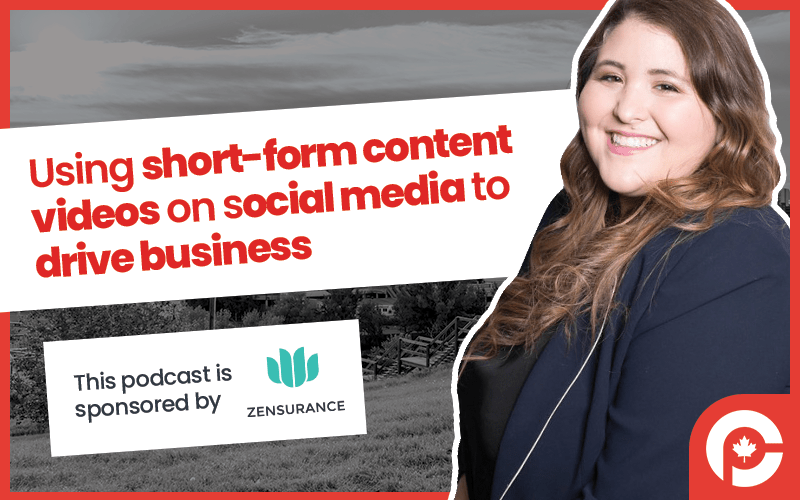
Using short-form content videos on social media to drive business
Episode
Diana Saunders is the accomplished owner of Aerora Transcription, a distinguished business that specializes in providing exceptional legal transcription...
Key takeaways
- Short-form video content is the most consumable form of marketing today, with people spending 10 to 15 hours per week watching it, making it essential for entrepreneurs to leverage platforms like TikTok and Instagram Reels.
- Your first videos will likely fail, but consistency and willingness to adapt based on analytics are crucial—spend time studying content that catches your attention and replicate successful styles in your own way.
- Building a successful business requires finding something you're genuinely passionate about because you need authentic enthusiasm to sustain the work and effectively communicate your value to others.
- Create habits that work with your schedule rather than forcing unrealistic routines—integrate marketing and content creation into existing daily habits to make them sustainable long-term.
- Avoid passion fatigue by prioritizing time outside your business with family and personal interests, because if you don't maintain balance, you'll have no one to share your success with when you achieve it.
Transcript
Full transcript page · Interactive episode
============================================================
TRANSCRIPTION WITH SPEAKERS
============================================================

[00:00] SPEAKER_00: Starting a new business is an exciting journey, but it also comes with its fair share of risks.
[00:05] SPEAKER_00: Business insurance safeguards your hard work by protecting your assets.
[00:09] SPEAKER_00: Without it, a substantial liability claim could put your personal finances at risk.
[00:15] SPEAKER_00: Lability insurance also gives you a competitive edge in the market.
[00:19] SPEAKER_00: Visit Zensurance Forward Slash, save 35, to get a free quote for the low-cost insurance
[00:25] SPEAKER_00: protection you need so you can focus on your growing business.
[00:31] SPEAKER_00: Welcome to Canada's podcast.
[00:36] SPEAKER_02: Hello, I'm Mario Toniguzy, Managing Editor of Canada's podcast. Joining me today is Dianna
[00:42] SPEAKER_02: Saunders, who is the owner of Aurora Transcription. Thanks very much for joining us today.
[00:51] SPEAKER_01: Dianna. Hi, thanks so much for having me. I'm a big fan of the podcast. I really appreciate it.
[00:55] SPEAKER_02: Well, thank you. Let's start first of all about the company Aurora and just tell me a little bit
[01:01] SPEAKER_01: about what you do. Absolutely. So I'm Dianna. Like you said, I am the founder and CEO of Aurora Transcription.
[01:09] SPEAKER_01: We are based out of Calgary, Alberta, but we provide transcript services to core reporters and
[01:14] SPEAKER_02: reporting agencies across all North America. Okay, now can you describe a little bit of what
[01:19] SPEAKER_02: that means, the transcription services and what kind of, I guess, clients or businesses you
[01:25] SPEAKER_01: they have a need of what you do? Absolutely. Whenever I say what I do, people get a good
[01:31] SPEAKER_01: big question mark over their head. So I'm happy to answer those questions. So we work for the people
[01:37] SPEAKER_01: that are in testimony in courtrooms or lawyers offices across the nation giving testimony and
[01:43] SPEAKER_01: they're the ones that report it. They're often known as court reporters. So I'm on the back office
[01:48] SPEAKER_01: staff of that and I help specifically just with the legal transcript side. So typically me and my
[01:53] SPEAKER_01: team will receive audio from courtrooms or lawyers offices across the nation. We take that down into
[01:59] SPEAKER_01: a certain format and make sure it gets to the client accurately and on time. And give me a little
[02:06] SPEAKER_02: history of how this all began when it started. Why? For sure. So I actually started in this career
[02:14] SPEAKER_01: in late 2017. I had an administrative job that I didn't really like a lot. I have very entrepreneurial
[02:20] SPEAKER_01: spirit, both my parents are first generation immigrants from Italy. They're both entrepreneurs.
[02:25] SPEAKER_01: So I always knew that's something I wanted to do, but I'm not much of a salesman, I guess you can say.
[02:31] SPEAKER_01: So I started looking into just some stuff being I could do on the side and I found some legal
[02:36] SPEAKER_01: transcription work. I immediately realized there is a huge demand for this and the reason they're
[02:41] SPEAKER_01: such a demand is because it's a very skilled task that not a lot of people can master. And also there
[02:47] SPEAKER_01: is a great divide in the amount of people that can perform this service versus the people that need it
[02:52] SPEAKER_01: based on the amount of litigation that happens in North America. So I started my company in late 2018
[02:58] SPEAKER_01: and I've been doing it ever since and I just started posting last year on social media and
[03:03] SPEAKER_01: I've gotten a lot of attention from that. So I'm well on my way to you know being rounded about
[03:07] SPEAKER_01: on producing the transcript side and then also have a branding side as well.
[03:11] SPEAKER_02: All right. I want to talk a little bit about that, the use of videos, but before we get into
[03:17] SPEAKER_02: that, Deanna, I wanted to ask. So you know, when you're when you or your people are transcribing
[03:25] SPEAKER_02: things, I'm just wondering if it's all kind of like a all a blur or do you get caught up in some of
[03:31] SPEAKER_02: obviously some of these courtroom testimonies can be fascinating and exciting stories, right? So
[03:39] SPEAKER_02: so do you kind of try to blur it out I guess? Well, a large aspect of it is you can blur out
[03:48] SPEAKER_01: details but the experiences and the emotions that you feel while listening to people on the
[03:52] SPEAKER_01: stand very they stay with you a lot. And that's one reason that I love my job is because you take
[03:58] SPEAKER_01: something like a courtroom that's very animated and exciting and dramatic and you put it on a
[04:03] SPEAKER_01: piece of paper and black and white following very calculated rules. So that's the part that I love
[04:07] SPEAKER_01: about is it takes the kind of like beauty of the courtroom and makes it in a really readable
[04:11] SPEAKER_01: simple format that a lot of people can do. I worked on everything from business to feuds to insurance
[04:17] SPEAKER_01: claims to medical malpractice to death penalty cases, whether or not you can think of. So there's
[04:23] SPEAKER_01: definitely some that stick out in my mind where I kind of you know, favored one side of the other
[04:28] SPEAKER_01: in my mind. So out of the transcript of course and constantly even the trial I'm working on now
[04:32] SPEAKER_01: and closely bouncy between the defendant and plaintiff. I'm sure of who I believe, right? So I
[04:37] SPEAKER_01: kind of feel like a jur in some senses of the word because I hear all the evidence and I make my own
[04:42] SPEAKER_01: conclusions whether anybody hears or cares about those at all. That's good. That's cool. So tell
[04:49] SPEAKER_02: me a little bit about the branding part of what you do and I understand you've started
[04:57] SPEAKER_02: using short, short length videos. Maybe we'll talk a little bit about that and what do you do in
[05:06] SPEAKER_01: that regard? For sure. So I never really found much of a branding aspect to my company because
[05:11] SPEAKER_01: this is a very inundated career. You don't have to do a lot of market acquisition to get very busy.
[05:17] SPEAKER_01: So I had my website and all of that because I wanted my clients to be able to go there and see that
[05:22] SPEAKER_01: was a reputable company and all that. And then about a year ago, any time I mentioned what I do to
[05:27] SPEAKER_01: somebody, either I get two responses. One is I don't care. That sounds super boring. And the other
[05:32] SPEAKER_01: one is wow, that's super interesting. I can do that or I have somebody that I know that could do
[05:36] SPEAKER_01: that. So very quickly I realized there's a huge demand for doing this kind of work that's very
[05:41] SPEAKER_01: remote. It's very flexible. But also it's a very highly paid skill once you get good at it and
[05:46] SPEAKER_01: pass through the learning curve. So I partnered with somebody that touchedly taught me and really
[05:51] SPEAKER_01: took me under her wing. She has a great course. I don't think I should be teaching legal transcription.
[05:56] SPEAKER_01: I've only been at this six years. I really think it's important to learn from very skilled individuals
[06:00] SPEAKER_01: such as a court reporter like she is. So I realized, you know, I should start talking about this and
[06:05] SPEAKER_01: necessarily people don't come my way. At least they know about this industry. And very quickly I just
[06:11] SPEAKER_01: had a lot of following and a lot of attention because I'm kind of one of the only people on
[06:15] SPEAKER_01: TikTok or Instagram Reels talking about this. And I can talk forever about how valuable short form
[06:21] SPEAKER_01: content is, video content is. But it's been really amazing in eye opening to see how much
[06:27] SPEAKER_01: demand there is for people who kind of want to take control of their own futures and learn a new
[06:31] SPEAKER_02: skill and provide for their families in that way. So tell me a little bit about the kind of topics
[06:39] SPEAKER_02: what would you do in these in these videos? I talked about funny things, the legal transcription
[06:47] SPEAKER_01: is going through, like for example, if we have attorneys that are arguing and talking over each other.
[06:53] SPEAKER_01: Or I sometimes talk about challenges or pitfalls of the industries, things that I experienced when I
[06:58] SPEAKER_01: started. I also like to provide kind of over the mountain view of what it can be like after you've
[07:04] SPEAKER_01: been at this for a couple of years. Because when you start, this is something you have to be very
[07:09] SPEAKER_01: dedicated towards. It's a very simple thing to do, but it takes a lot of practice to get very good
[07:14] SPEAKER_01: at it. I compare it a lot to learning a new instrument or learning a new language. When you start
[07:20] SPEAKER_01: off, it's very labor intensive. You have to think a lot, make a lot of decisions. And once you get
[07:25] SPEAKER_01: going at it, I can play anything that comes my way now. So I like to show people what it can be like
[07:30] SPEAKER_01: once you get situated in this field. And what it can turn into based on the work that you want to put
[07:35] SPEAKER_02: into it. So what is roughly, how many people are followers on your platforms? So I have videos that
[07:45] SPEAKER_01: have been masked over a million views, but the amount of people that would be interested in pursuing
[07:51] SPEAKER_01: this career, it's very niche is what they call it. Not a lot of people are searching legal transcription.
[07:56] SPEAKER_01: People don't even know they're looking for me when they find me. Right? So right now I have about
[08:01] SPEAKER_01: 40,000 followers on TikTok. It's a little bit less on Instagram, but it's such a great group of
[08:08] SPEAKER_01: people and I go live every day and I have thousands to an end and it's been a lot of fun.
[08:13] SPEAKER_02: Every day. Yeah, it's not amazing. Wow. Obviously you don't have a shortage of topics to talk about.
[08:23] SPEAKER_01: No, seriously, I feel like I can talk about it forever and ever and I do. I have a whole TikTok page
[08:28] SPEAKER_02: for it. Let me just ask you like, you know, obviously, like diving into this area of video and social
[08:37] SPEAKER_02: media. What's your advice to other entrepreneurs about this and the why more importantly, the why
[08:45] SPEAKER_01: they should be doing something like this? Number one, why short form video content is the most
[08:52] SPEAKER_01: consumable form of marketing. We have people that are spending 10 to 15 hours a week
[08:59] SPEAKER_01: watching short form video content and it's also no surprise to anybody that our attention span
[09:04] SPEAKER_01: is getting very short. So I don't think a lot of people even have the attention span to sit there
[09:09] SPEAKER_01: and watch a whole 30-second commercial. So that means that more companies, really big companies that
[09:14] SPEAKER_01: have these huge budgets for marketing are going to short form content. So there's these whole
[09:18] SPEAKER_01: industries that are opening up in there. So I really think that if you are new to something or you
[09:25] SPEAKER_01: want to make a big impact, short form is where you need to go because there's not a lot of people
[09:29] SPEAKER_01: doing it yet. We see a lot of it but there's still not a lot of people that are doing it and I think
[09:34] SPEAKER_01: that's what made me really different is there's lots of legal transcription companies out there but
[09:38] SPEAKER_01: I am the only one doing short form content and I can go into why I think that is, you know what I mean,
[09:43] SPEAKER_01: but that kind of set me apart. There's nothing special about me or different about me but because
[09:49] SPEAKER_01: I'm the only one, it gives me a like a, right? Yeah, yeah. So why did you choose those two platforms
[09:57] SPEAKER_01: by not Facebook or not Twitter or not LinkedIn? For sure, I post on all of them so I make content
[10:07] SPEAKER_01: in TikTok and then I post in other ones and the biggest reason for this is the algorithm.
[10:12] SPEAKER_01: And I'm not an expert on this by any means but I've seen the power of TikTok. I woke up one day,
[10:19] SPEAKER_01: I had 1700 followers the day before, I woke up on a Monday, I had a master of 30,000 followers and
[10:24] SPEAKER_01: like four million views on one of my videos. That cascaded down to the rest of my videos because
[10:29] SPEAKER_01: in the way that TikTok is created and somebody likes my video, it'll show them another one of my videos.
[10:35] SPEAKER_01: If somebody visits my page, it's going to ask them to follow me, it's going to invite them to,
[10:40] SPEAKER_01: visit the links in my bio and learn more about what I do. So it's more about on the,
[10:46] SPEAKER_01: when you're viewing experience that I think makes it a lot of different in TikTok and that's why
[10:52] SPEAKER_01: like millions of people are flooding over to that app and leaving other apps like Facebook and
[10:56] SPEAKER_01: Instagram. We still use them and I'm still on there for sure. I really think there's big potential
[11:01] SPEAKER_01: in YouTube shorts as well but obviously the business owner, I wear many hats, I also have a
[11:07] SPEAKER_01: company to run. So I have to choose what I'm doing, stick to that and be consistent.
[11:12] SPEAKER_02: So let's talk a little bit about how to get started. Like obviously, you know,
[11:18] SPEAKER_02: when you started doing this, it must have been a little overwhelming to look at all this and
[11:23] SPEAKER_02: oh wow, you know, what do I do, right? You know, how would you guide or tell, what would you tell
[11:30] SPEAKER_02: people who are saying, yeah, you know what, she's right, I got to get on to TikTok and Instagram
[11:35] SPEAKER_02: and do videos like, you know, what would you tell them how to get started?
[11:40] SPEAKER_01: For sure. Well, number one, be prepared that your first videos are going to suck. Probably your
[11:45] SPEAKER_01: first 10 videos, 30 videos are going to suck. And that's because like anything, we have to learn
[11:50] SPEAKER_01: how it works. You have to learn, you know, the kind of film style you like, what works, you have
[11:55] SPEAKER_01: to look at analytics, you might like a video but then nobody else does, right? So you have to
[12:00] SPEAKER_01: really follow that stuff and be constantly, be willing to adapt. But if you're just starting,
[12:06] SPEAKER_01: if you've never been on TikTok, spend some time, you know, scrolling through. What
[12:10] SPEAKER_01: catches your attention? What are you scrolling past? What kind of style do you like? For the first
[12:15] SPEAKER_01: little bit, I just watched people that I liked their content and then tried to replicate it in my
[12:19] SPEAKER_01: own way based on my own niche. And then once you start getting more advanced, you realize that it
[12:24] SPEAKER_01: doesn't matter what everybody's doing, I've kind of found my own path, but that doesn't happen
[12:27] SPEAKER_01: overnight, like anything, it takes a little work. So if you're scared or unfamiliar, just log
[12:32] SPEAKER_01: into the apps, try creating some stuff, you know, if it fails, you can all stick it down. It's not a big deal.
[12:38] SPEAKER_00: Running a new business can be stressful. The last thing you need is to worry about unexpected
[12:43] SPEAKER_00: accidents or lawsuits. Don't overlook the importance of liability insurance. It's a critical
[12:49] SPEAKER_00: investment in the success of your business. Protect yourself, your assets, and your reputation
[12:55] SPEAKER_00: by securing the liability coverage you need. Take the first step and safeguarding your business.
[13:02] SPEAKER_00: Today, go to zenturance.com forward slash save 35 for a free business insurance quote.
[13:10] SPEAKER_00: Get the low cost insurance protection you need from Canada's small business insurance experts.
[13:16] SPEAKER_02: I was going to say like if you got a boring personality or whatever, it's not going to work.
[13:22] SPEAKER_02: Obviously you, Deanna, you're very outgoing and very positive about things. So it probably
[13:27] SPEAKER_01: shows through in the videos, right? Does that help? I think that does help. We can also utilize,
[13:33] SPEAKER_01: I believe that if you don't know how to do something higher, somebody that does it, that does
[13:37] SPEAKER_01: have to do it, right? So there's lots of people really talented people usually called user generated
[13:43] SPEAKER_01: content specialists, and they'll film videos for you. If you tell them what to talk about,
[13:48] SPEAKER_01: you can give them a script. It's not usually that expensive, and those videos can create huge profit
[13:53] SPEAKER_02: for your business. Excellent. Let's talk a little bit about your background. I curious you said
[13:59] SPEAKER_01: your parents were entrepreneurs. What did they do? So my dad is mechanic. He's on a shop locally in
[14:05] SPEAKER_01: Calgary for well over 40 years. It was his father's company before that. And then my mother has been
[14:11] SPEAKER_01: entrepreneur in so many ways throughout my life. Number one, she started a jewelry company. That was
[14:16] SPEAKER_01: my first experience in entrepreneurship. I helped her with invoicing, I did the credit card
[14:21] SPEAKER_01: statements, I packaged and merchandise, everything. And then my family did go on into financial services.
[14:27] SPEAKER_01: It's a very prosperous industry that you don't need a lot of experience to get into it if you're
[14:32] SPEAKER_01: willing to learn and kind of be underneath somebody. So I always thought that was going to be my
[14:38] SPEAKER_01: like Christian entrepreneurship was through financial services. And then I found this and it spoke
[14:43] SPEAKER_01: to my heart and so much so many ways I can't explain. So I take a lot of the elements that I've
[14:48] SPEAKER_01: learned from my parents' business and applied into this. But there's a lot of aspects with this being
[14:53] SPEAKER_01: additional business that my family and my parents can't help me with. That I have to kind of
[14:58] SPEAKER_01: forage on my own and figure out my own way. So what did you learn from your parents that
[15:04] SPEAKER_02: help you in building your business and doing what you do today? I think I learned from my parents
[15:10] SPEAKER_01: that the typical nine to five or working from somebody else is not going to get you anywhere.
[15:16] SPEAKER_01: Where it's not going to get you to the places you want to be. I've always been a very big dreamer.
[15:21] SPEAKER_01: And so I knew that you know, clocking in the somewhere wasn't what I wanted to do. But I also
[15:26] SPEAKER_01: am the kind of person that I need to be very passionate about what I'm doing. I can't just talk about
[15:30] SPEAKER_01: anything. It needs to be something that I'm really interested in. So I learned from my parents that
[15:34] SPEAKER_01: you need to find something you're passionate about. And then you need to do as much as you can to
[15:39] SPEAKER_01: help other people in that as well. Because when you help others, then you help yourself.
[15:45] SPEAKER_02: And you know, when you look at your journey as an entrepreneur, like what were some of the toughest
[15:52] SPEAKER_01: challenges you've faced? For sure. Of course, I was a 24 year old when I started my business.
[15:58] SPEAKER_01: Cash flow was not something that I had. So starting a business with absolutely no upfront money,
[16:04] SPEAKER_01: that was hard. And I wouldn't trade it for anything. I know I had a balance of budget like nobody
[16:09] SPEAKER_01: else. But it definitely is something that I think would cause a lot of businesses to fail and
[16:13] SPEAKER_01: does cause a lot of businesses to fail in the first five years. Another thing is I, in this industry,
[16:20] SPEAKER_01: accuracy is king. You can be the nicest, most most marketable person. But if black and white,
[16:28] SPEAKER_01: you cannot do this skill well. You won't come to fruition for you. So every day I have to
[16:34] SPEAKER_01: get up and really put my best foot forward, even if I didn't feel confident in it. And so learning
[16:38] SPEAKER_01: to just push through that, what I call imposter syndrome, that little chip on your shoulder,
[16:44] SPEAKER_01: that's telling you that, oh, you're not the one for this. This is meant for somebody else. No,
[16:47] SPEAKER_01: it is meant for you. Right? It's just you have to get through those buildings and fell down.
[16:51] SPEAKER_01: So those were kind of the toughest things I had to push through. And most of those are mostly
[16:56] SPEAKER_01: mostly due to myself, right? Like my own shirt, coming. Yeah. You obviously enjoy being an entrepreneur.
[17:03] SPEAKER_02: Absolutely. I wouldn't trade it for anything. Yeah. What are the things you don't enjoy about being
[17:11] SPEAKER_01: I would have to say I don't enjoy sometimes. You know, I'm laying in bed, not Friday night hanging
[17:16] SPEAKER_01: out and my phone's going off because something's going wrong. That's not always fun. Especially when
[17:22] SPEAKER_01: you're responsible for other people, you know, people can drop the ball. Things don't go the way
[17:27] SPEAKER_01: they're supposed to. This is very deadline-driven work. I have lawyers and core quarters that are
[17:32] SPEAKER_01: waiting for my work. When I say I've never missed a deadline. I've never missed a deadline.
[17:36] SPEAKER_01: So I mean, you know, I need to stay up till three in the morning and work. That's what I have to do
[17:40] SPEAKER_01: because it's my business. So of course, like we have flexibility for this. I mean, I'm talking to you
[17:45] SPEAKER_01: now. I'm not working. But there's some things that, you know, you have to put other life events aside
[17:51] SPEAKER_01: that I know a lot of people my age, you know, wouldn't do. And I'm willing to do. You know, one of the
[17:56] SPEAKER_02: things I learned over the years is I remember a conversation I had with a friend of mine who's
[18:02] SPEAKER_02: an artist as a, you know, he paints and he was always telling me how there's two sides of what
[18:11] SPEAKER_02: he does. Number one is his job. Like he's an artist. So that's the one side. But the other side
[18:19] SPEAKER_02: is running the business. The actual business side of it, the marketing, it's et cetera. So
[18:26] SPEAKER_02: how do you, you know, and obviously you do both? How do you balance that?
[18:32] SPEAKER_01: For sure. It's all about creating habits and habits that work with you. A lot of times when
[18:38] SPEAKER_01: people start on TikTok, they'll hear, oh, you need to post three to five videos a day. If that
[18:43] SPEAKER_01: doesn't work with you, if you can't stick that into your schedule, it's not going to be habitual,
[18:47] SPEAKER_01: right? So I found, you know, during the times of eight to nine in the morning, I had some free time.
[18:51] SPEAKER_01: And it's kind of fun to create TikToks. So I would just, you know, do that or work on marketing
[18:56] SPEAKER_01: material or sometimes I'm sitting waiting for, you know, a jury verdict to come in. I've been waiting
[19:00] SPEAKER_01: for one for the last two days. So then I'll pull up, you know, Canva and just create something
[19:05] SPEAKER_01: an infographic about what I do. So it's all about, you know, finding time in your day where you can
[19:11] SPEAKER_01: add these things or joining them to another habit you already have. If you get up and answer
[19:15] SPEAKER_01: emails for thing in the morning, get up and, you know, write some content that you want to do for
[19:20] SPEAKER_01: the day, like add it to something else. But yeah, especially the, this owner, like you never
[19:25] SPEAKER_01: have time for anything. There's always a million to do lists. So I find it really helps to just
[19:29] SPEAKER_01: compartmentalize it. Like, okay, this is the time I'm dedicating to this. This is the time I'm
[19:33] SPEAKER_01: dedicating to my work and stick within those parameters. Okay, you hit on an important topic there,
[19:39] SPEAKER_02: you know, about there's never time to do everything. Do you find you have time to do other stuff
[19:46] SPEAKER_02: beyond work? And if you do, what do you spend time at besides work?
[19:53] SPEAKER_01: For sure. Well, I'm in my sixth year of business on our shift now. So if you would ask me,
[19:58] SPEAKER_01: you know, maybe two or three, I would have said no, this is all I do.
[20:02] SPEAKER_01: But I've really, especially since 2020, just the pandemic in the world stopping. I think it
[20:07] SPEAKER_01: caused a lot of people to kind of zoom out on their lives. And so I really end up working for too,
[20:11] SPEAKER_01: far too much. And I learned about something called passion fatigue, which is when you are
[20:16] SPEAKER_01: burning yourself out with something you love. So I love this, but I was still doing it too much.
[20:20] SPEAKER_01: So I really started to prioritize time with my family. I got a German shepherd. He keeps me
[20:25] SPEAKER_01: out in nature. It's really important to knock it sucked into your business world because once you
[20:32] SPEAKER_01: get to the point where you're celebrating it or benefiting from it, who are you going to share it with?
[20:37] SPEAKER_01: Right? So I really try to spend time with my family and I'm newly wed. My husband, we have a trailer,
[20:43] SPEAKER_01: we camp and that kind of stuff and just enjoy Calgary and be present in my business, but also
[20:49] SPEAKER_02: find time to shut it off. Yeah, you bet. One last thing just came into my mind. Where's the name of
[20:57] SPEAKER_01: the company come from? Aurora. I love when people ask me that question because I always want to have
[21:03] SPEAKER_01: some, you know, definitive answer, but it's literally my two cat's names placed together.
[21:08] SPEAKER_01: That's all it is. The cat's names. One cat is arrow like the chocolate bar and then my
[21:13] SPEAKER_01: cat is Aurora like the Royalist. We're in Alberta, so everybody talks about the mountains and
[21:19] SPEAKER_01: Aurora, so I kept that theme and I never thought it would turn into what it turned into now, but
[21:24] SPEAKER_01: it's the name I have and I'll stick with it. All right, super. Well, thanks, Deanna, for joining us
[21:29] SPEAKER_01: today. Thank you. It's been such a pleasure. I really appreciate it. All right, that was Deanna
[21:33] SPEAKER_02: Saunders who is owner of Aurora Tenskipsian. I'm Mario Toneguzi, managing editor of Canada's podcast.
[21:41] SPEAKER_02: Thanks for joining us today.