
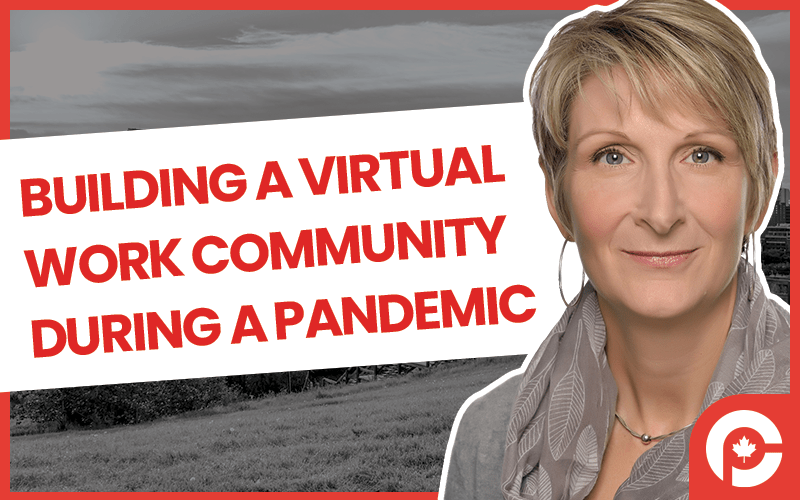
How Dawn O’Connor built a virtual work community during a pandemic
Episode
Driven by a need to connect people in the throes of pandemic-life, Dawn O’Connor built a virtual community for...
Key takeaways
- Seek out help and join peer groups because learning from people smarter than you and sharing experiences with other entrepreneurs is life-changing and helps you realize you're not alone.
- Virtual co-working spaces like Focus Bubbles provide structure and accountability by having people declare what they'll work on, work together separately, and share results at the end of sessions.
- Working exclusively inside focused time containers with clear start and end times can help you define your workday, estimate tasks accurately, and maintain work-life balance.
- Hybrid work environments where employees split time between office and home are the future, with over half of workers saying they would quit if they didn't have that flexibility.
- The pandemic forced businesses to adapt and innovate in creative ways, proving that resilience comes from being pushed out of comfort zones rather than having resources to throw at problems.
Transcript
Full transcript page · Interactive episode
============================================================
TRANSCRIPTION WITH SPEAKERS
============================================================

[00:00] SPEAKER_02: Welcome to Canada's podcast.
[00:05] SPEAKER_02: Hello and welcome to Calgary's podcast with Mario Toneguzi on Canada's podcast network.
[00:13] SPEAKER_02: Joining me today is Don O'Connor, who is the founder and creator of Focus Bubbles in Calgary.
[00:19] SPEAKER_02: Thanks for joining us today, Don.
[00:21] SPEAKER_02: Thanks for having me.
[00:22] SPEAKER_02: Tell me what Focus Bubbles is.
[00:25] SPEAKER_00: It is, I like to think it's fairly self-explanatory, but it's a kind of a new concept.
[00:30] SPEAKER_00: It's virtual co-working space.
[00:32] SPEAKER_00: So if we think of physical space where you go and show up with a bunch of people and do your work,
[00:38] SPEAKER_00: virtual co-working is similar.
[00:40] SPEAKER_00: Just like you and I on this call right now, people will come to a scheduled Focus Bubble and declare what it is that they're going to work on.
[00:48] SPEAKER_00: So there's that, you know, this is what I'm going to work on, declaration and accountability starts kicking in.
[00:53] SPEAKER_00: They do their work, so there's five minutes up front.
[00:56] SPEAKER_00: Everyone lets us know what they're working on, rename yourself.
[00:59] SPEAKER_00: You do your work, you can keep your camera on.
[01:02] SPEAKER_00: I keep mine on and I work over here on a second screen.
[01:06] SPEAKER_00: And everyone's there.
[01:07] SPEAKER_00: And then at the end we come back and we say, hey, this is what we got done.
[01:11] SPEAKER_00: This is how it was, so a five minute close as well.
[01:13] SPEAKER_00: The emphasis is on working together separately.
[01:19] SPEAKER_02: So tell me a little bit about how this started and how the idea came about for you.
[01:25] SPEAKER_02: And when you actually started this?
[01:27] SPEAKER_00: I started it by accident in June of last year.
[01:32] SPEAKER_00: I'd like to say there was some intention and purpose, but it was, I'm a productivity coach and trainer,
[01:37] SPEAKER_00: so I work with individuals and teams and personal productivity, how they use technology, that sort of thing.
[01:43] SPEAKER_00: So I have a client base. I've been doing that for almost 20 years.
[01:46] SPEAKER_00: And my clients were coming to me and saying, you know, we've just shifted everybody home.
[01:51] SPEAKER_00: They are working long hours. They don't know how to stop working.
[01:54] SPEAKER_00: They're stressed over all those things. We've heard it all.
[01:58] SPEAKER_00: And they were asking for workshops and the little one-to-one coaching.
[02:01] SPEAKER_00: But I don't know. My gut was like, I don't think that's what they need.
[02:03] SPEAKER_00: They don't need to have more information thrown at them right now.
[02:06] SPEAKER_00: Because do you remember at that initial time there were webinars and free offerings and all kinds of things available?
[02:12] SPEAKER_00: And I think people were just overwhelmed by information.
[02:16] SPEAKER_00: And so I said, why don't we just host a study hall?
[02:20] SPEAKER_00: For grown-ups, going to the library, but do it virtually, since we're all at home and feeling lonely.
[02:25] SPEAKER_00: And so I just opened up a fixed schedule and said, I'll open it up.
[02:29] SPEAKER_00: We'll touch base and then people came and continue to come.
[02:34] SPEAKER_00: And then they demanded more time, which we were calling, I think.
[02:38] SPEAKER_00: I've said in another podcast, I think we call them task pods or something super-biting and like, not something you'd want to brand.
[02:49] SPEAKER_00: So then the demand was there and I just decided, hey, I got to give this a go as a potential business model.
[02:56] SPEAKER_00: Not to use the word pivot because I'm bored of that word, but adapt.
[03:00] SPEAKER_00: It was an add-on, I thought, oh, this is a new service I can add to my clients.
[03:04] SPEAKER_00: It has then morphed into a full-fledged, full-time business.
[03:08] SPEAKER_02: So who are the people that are using this?
[03:11] SPEAKER_00: Yeah, it's really interesting. It's predominantly women, 90% women.
[03:18] SPEAKER_00: And they range from grad student who just submitted her PhD inside of bubble.
[03:25] SPEAKER_00: And employees at large organizations, business owners.
[03:31] SPEAKER_00: Solarpreneurs who are doing their gig or creating a side gig as they work in a larger company.
[03:37] SPEAKER_00: So it's all over the map.
[03:38] SPEAKER_00: But it is predominantly women, kind of 30 to 55, age.
[03:42] SPEAKER_02: Oh, interesting. Any thoughts of why?
[03:46] SPEAKER_02: What do you think?
[03:47] SPEAKER_00: Because that's my network.
[03:51] SPEAKER_00: So that was pretty much my client base.
[03:54] SPEAKER_00: And so my clients started coming.
[03:55] SPEAKER_00: And now we've had, you know, have a guy coming from Florida and a guy came from Tahoe.
[03:59] SPEAKER_00: Like we're starting to get these people who are finding it and signing up from all over the place.
[04:04] SPEAKER_02: Yeah.
[04:05] SPEAKER_02: You know, I think, you know, initially for a lot of people right,
[04:09] SPEAKER_02: that working remotely, working from home, it was a great idea.
[04:14] SPEAKER_02: Personally, you know, I've worked from home now for five plus years, right?
[04:18] SPEAKER_02: Exclusively.
[04:19] SPEAKER_02: So I have no issues with it and I enjoy it.
[04:22] SPEAKER_02: But I guess when you look forward and going ahead,
[04:27] SPEAKER_02: where do you think this whole trend is going?
[04:32] SPEAKER_02: And do you think that there is going to be a need for something like focus bubbles even more?
[04:37] SPEAKER_00: Yeah, I sure hope there is.
[04:39] SPEAKER_00: But yeah, I did a fair bit of research.
[04:40] SPEAKER_00: I'm a very data driven person and I wanted to get some sense of the numbers.
[04:44] SPEAKER_00: And last year, as we saw people getting more comfortable working from home and meeting some connection,
[04:50] SPEAKER_00: I could see, you know, it was an immediate fit.
[04:53] SPEAKER_00: But now what I'm reading is that I mean, there was just this stat and I just posted an article,
[04:58] SPEAKER_00: 58% of workers in a particular survey said they would actually quit their job if they didn't have the opportunity to have a hybrid work environment.
[05:06] SPEAKER_00: And so, you know, there's the remote work that's permanently remote.
[05:09] SPEAKER_00: And then there's the middle ground of hybrid where you have a couple days at home, a couple days in the office.
[05:15] SPEAKER_00: So you can do your collaborative work, you know, in a downtown office or whatever.
[05:19] SPEAKER_00: And then you can work deep focus and concentration, hopefully in your home setting or elsewhere.
[05:26] SPEAKER_00: I do absolutely from the stats and the directions and the businesses that I work with see that hybrid is going to be a significant approach in the future.
[05:36] SPEAKER_02: Yeah.
[05:37] SPEAKER_02: Speaking of the future, what do you foresee and what's your vision, sorry, for the focus bubbles?
[05:45] SPEAKER_00: Well, it's interesting. I'm just exploring that right now as the membership grows.
[05:50] SPEAKER_00: I'm just talking to a couple of smart business owners who buy and sell businesses and stuff like way smarter than me.
[05:56] SPEAKER_00: So they're giving me some good input.
[05:58] SPEAKER_00: I think there's a couple of models business models we could take with this approach.
[06:03] SPEAKER_00: One, the one right now is really be to see it's the consumer, the individual who is buying it.
[06:08] SPEAKER_00: Even if they're in a large corporate, they're paying for it themselves on their credit card.
[06:11] SPEAKER_00: Usually they're not even going to their company for support. They're just doing it because they need it.
[06:16] SPEAKER_00: But I think there's a huge opportunity in the B2B space where, you know, we look at a company say with 100 to 500 employees.
[06:26] SPEAKER_00: And the vast majority of those are working remotely.
[06:29] SPEAKER_00: This could be a benefit to them. So the company could have, you know, say a focus bubble platform specifically for teams, different teams in the organization or individuals.
[06:38] SPEAKER_00: So that they can come a couple of times a week or some people come twice a day morning and afternoon.
[06:46] SPEAKER_00: And have that connection like they get the check in point, they get a little bit of laughter they get to see some of their peers.
[06:53] SPEAKER_00: So they still feel that connection, but they get to work deeply and more focused on their own.
[06:58] SPEAKER_02: Okay. Don, what were you doing before this?
[07:01] SPEAKER_00: So for the last, I don't know, 30 years, I've built and sold a couple of little businesses, both in the productivity space, one in home organizing and one in productivity training and coaching.
[07:13] SPEAKER_00: It was a license model across Canada.
[07:16] SPEAKER_00: And I'm a facilitator for women presidents organization.
[07:20] SPEAKER_00: So that is a group. It's a really unknown, but global group of women, business owners in the one to 10 million revenue space.
[07:28] SPEAKER_00: And they get together monthly and help each other solve problems. And I'm their facilitator.
[07:33] SPEAKER_02: Oh, interesting.
[07:34] SPEAKER_00: Yeah.
[07:35] SPEAKER_02: From your perspective, what do you, why do you like being an entrepreneur? I mean, Ben, you want to so long.
[07:43] SPEAKER_00: Yeah, I didn't ever want to be an entrepreneur again. I feel like I fell into it.
[07:47] SPEAKER_00: I worked at CP rail and incorporate setting for 10 more than 10 years.
[07:52] SPEAKER_00: And loved it. But then once I had kids, I just needed flexibility. And so to me, I was driven by flexibility.
[07:59] SPEAKER_00: And it just sort of, it felt like a natural thing to do to have the autonomy and to create something.
[08:06] SPEAKER_00: But I get bored quickly. So I would create it, get it going, and then I'd be like, I'm done with that. So I sold it and then do the next thing.
[08:13] SPEAKER_00: Yeah. So by accident, I'm a serial entrepreneur, I guess.
[08:17] SPEAKER_02: What's up, you know, when you look over the years of being an entrepreneur, what kind of advice do you have for people who are just starting off in this journey?
[08:27] SPEAKER_00: Yeah. That's a good question. That's kind of a tough one.
[08:31] SPEAKER_00: I should have prepared for that one. What comes to mind is seek out help.
[08:36] SPEAKER_00: So a lot, particularly because I work with so many women in the space, women don't always ask for help.
[08:42] SPEAKER_00: And men don't either. Like people just don't ask for help often.
[08:46] Speaker UNKNOWN:
[08:47] SPEAKER_00: Well, you know, hang out with people who are smarter than you ask for help. Join a peer group.
[08:52] SPEAKER_00: So I've joined a peer group. I don't qualify to join the WPO. I facilitate them.
[08:56] SPEAKER_00: But now I've joined my own peer group. It's life changing to hear from other people.
[09:01] SPEAKER_00: Because you know, you're not alone. You're there, pain points. You can relate all those things.
[09:06] SPEAKER_00: I'm sure you've heard that from lots of entrepreneurs.
[09:09] SPEAKER_02: Yeah. No, you know, it's, it's an interesting thing that to follow people's examples, right?
[09:15] SPEAKER_02: And, and that's quite helpful, I think, for anybody, right? And in anything, right?
[09:20] SPEAKER_02: To see who's been successful and maybe see some common threads there and success.
[09:28] SPEAKER_02: But also failure, I guess, too, right?
[09:31] SPEAKER_02: I think that's one thing that people don't understand. I guess being entrepreneurs, you've got a lot of ups and downs, don't you?
[09:38] SPEAKER_00: Yeah, often it seems more downs than ups.
[09:41] SPEAKER_00: And the tenacity of entrepreneurs is incredible.
[09:45] SPEAKER_00: To stick with it. What I've seen in my WPO groups, you know, people have lost a couple of people have lost their businesses during COVID.
[09:52] SPEAKER_00: And some have doubled or tripled. So just depending on the industry that they're in.
[09:55] SPEAKER_00: But yeah, so many ups and downs and learning from failures the best way.
[10:00] SPEAKER_00: Hearing other people's failure, I haven't really learned. I've had to fail myself to learn those hard lessons.
[10:06] SPEAKER_02: Mm-hmm. Anything over the years that you've followed in the sense of, say, books or people, you know, a lot of people talk, you know,
[10:17] SPEAKER_02: there's a lot of coaches, business coaches and famous facilitators, so to speak, out there.
[10:23] SPEAKER_02: Is there any that you kind of follow that helps help you on your entrepreneurial journey?
[10:32] SPEAKER_00: Oh, so many Simon Sinek, James Clear. Do you know James Clear? He wrote the book, Atomic Habits.
[10:40] SPEAKER_01: Okay.
[10:40] SPEAKER_00: And it's pretty much my Bible for coaching clients because it's, I applied in the productivity space, but it's brilliant.
[10:50] SPEAKER_00: Oh, so many, Brunei Brown on vulnerability. I'm lucky enough to go to a lot of big conferences that have some pretty amazing speakers through the WPO.
[11:00] SPEAKER_00: So I've gotten to see those folks speak. One that's not well known, strongly recommend, is Sean Acore.
[11:07] SPEAKER_00: So he's got a great little TED Talk, A-C-H-O-R's, his last name, and a book called The Happiness Event, which I'm just looking for.
[11:14] SPEAKER_00: It's probably somewhere close by. It's back there in the pile.
[11:18] SPEAKER_00: I'm, again, data driven and his studies are fantastic and the things he talk about are implementable immediately, like, you know, practicing gratitude every day and how that can impact your mindset and your positivity and happiness.
[11:32] SPEAKER_02: Yeah. Speaking of which, you know, being an entrepreneur obviously is a, is a job, so to speak, and that consumes you.
[11:42] SPEAKER_02: Can't consume people, right? 24 or 7, and many times. And you mentioned, even like for people who work, you know, remotely, there is that, quote, unquote, danger of, basically working like crazy from, from home, because you're right here.
[12:01] SPEAKER_02: You're computers right there. For yourself, how do you find that work like balance and, and is that important to you?
[12:10] SPEAKER_00: It's very important to me. And before I started Focus Bubbles, I was pretty close to like, I'm really comfortable. I'm just going to semi-retire and enjoy my monthly facilitation and, you know, the odd client that comes my way.
[12:25] SPEAKER_00: I had no website, like, I was just operating under the radar with enough business to keep me full time. And then I then COVID hit, which, that's a phrase you've heard a hundred times, then COVID hit everything changed.
[12:36] SPEAKER_00: And I just felt compelled to do this, to create this business. But what it's done for me actually is define my day so clearly, because I start my day at nine with a Focus Bubble.
[12:47] SPEAKER_00: I end my day from three to four thirty in the last Focus Bubble. And I don't work beyond that. My goal is to only work inside of a Focus Bubble.
[12:57] SPEAKER_00: So once or twice a day, do all of my work inside that container.
[13:03] SPEAKER_02: How do you, how do you find the discipline, I guess, to do that? Because it's, it's, it's top in this day and age where, where we have all the technology in our hands, right?
[13:14] SPEAKER_02: Right here and, you know, it seems like this would be like literally twenty four seven for people.
[13:21] SPEAKER_00: Yeah, and I'm not a disciplined person. And that's probably why, and I said jokingly to the groups in the Focus Bubble this morning, I said, I think I created this not for you guys, but for me, because it's helped me define my day, shortened my day.
[13:35] SPEAKER_00: And when it's over, it's over. I mean, yeah, there's times I work in the evening or the weekend, but those are fun projects researching, writing, you know, that kind of thing.
[13:42] SPEAKER_00: Yeah. But the hardcore work, you know, we have rules in the bubble, you put your phone away, it's on mute.
[13:49] SPEAKER_00: If I were a participant, I'd probably be cheating a bit. But as the host, and I have to role model it.
[13:57] SPEAKER_00: And so I've just started to live it in obviously I've been doing this for these pink dots on the wall on my calendar represent two bubbles each.
[14:06] SPEAKER_00: So the routine of getting into that, I can time estimate anything now. I know exactly how long it's going to take because I practice plugging it into a bubble.
[14:14] SPEAKER_00: I'm accountable to the people there.
[14:17] SPEAKER_00: We start off with laughter, so that puts you in a good mood. Like it's, there's a lot of brain science behind it, but just its common sense as well.
[14:25] SPEAKER_00: So yeah, my goal is to just work inside of focus bubble, but I've recently brought on four, two, three, four, maybe a fifth facilitator to help me because it's a lot to do it all.
[14:36] SPEAKER_00: Oh, interesting. Yeah. Yeah. So I'm going to have them help. And then I can have a break.
[14:40] SPEAKER_02: Okay, super. When you look at the past year in a bit with the pandemic, what do you think you've learned?
[14:48] SPEAKER_02: What are some of the key lessons that you can take from this past year in a bit?
[14:54] SPEAKER_00: I usually ask that question.
[14:59] SPEAKER_00: That I'm a hardcore introvert. I loved being at home. I in the past before COVID, often felt like I was missing out.
[15:08] SPEAKER_00: And because I didn't always have the energy to go and participate and it took a lot to go to show up for networking events and for speaking events and those kinds of things.
[15:18] SPEAKER_00: So I've really enjoyed embracing the introversion and I love being at home. I built a pat, we call the pandemic patio out front.
[15:28] SPEAKER_00: It's like huge, huge patio so that neighbors can drop by and still be distanced.
[15:34] SPEAKER_00: I guess that's my biggest lesson is that I, I, I love the experience. I'm just one of the few I think that maybe just likes to be at home.
[15:43] SPEAKER_02: You used, you used a word just a few minutes ago about the pandemic, that word pivot. Why didn't, why don't you like it?
[15:56] SPEAKER_00: I don't, I don't know, maybe because it's so overused.
[16:00] SPEAKER_01: Yeah.
[16:00] SPEAKER_00: And I don't feel like a lot of the pivots are actually pivots. They're adaptations or enhancements to what businesses were already doing.
[16:08] SPEAKER_00: And then they were just forced to get out of their comfort zone. Just like you said in an interview I heard from you is that in the recession times, we had to think more creatively.
[16:18] SPEAKER_00: We didn't have the money to just throw at it, right? So it forced us into more innovative in a painful way for a lot of people, but ultimately so much good is come out of it.
[16:27] SPEAKER_00: And there's another lesson that, you know, from the year of lockdowns and is nothing as predictable or certain and we are resilient and creative. And if you are forced to do it, you will find most entrepreneurs I know have found amazingly creative ways out of this.
[16:43] SPEAKER_02: Yeah, exactly. All right. Well, thanks Don for joining us today.
[16:47] SPEAKER_02: Thank you for having me. That was fun.
[16:49] SPEAKER_02: All right, super. That was Don or Connor, who is the founder of Focus Bubbles in Calgary.
[16:55] SPEAKER_02: This has been Calgary's podcast with Mario Tanaguzzi on Canada's podcast network. Thanks for joining us today.