
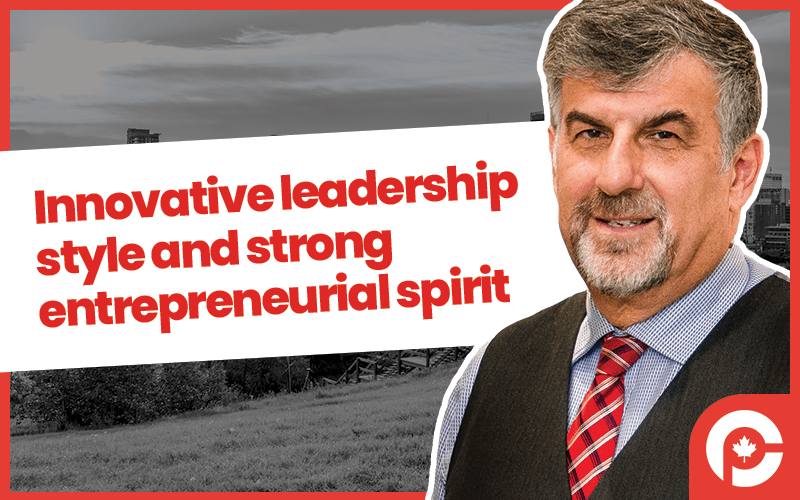
Innovative leadership style and strong entrepreneurial spirit
Episode
With an innovative leadership style and a strong entrepreneurial spirit, David Wallach has expanded Barclay Street Real Estate from...
Key takeaways
- Having the right people in the right positions within your company is essential for surviving economic downturns and maintaining long-term success.
- Leading by example and being willing to do what you ask of others builds trust and creates a culture where people will naturally follow your vision.
- In competitive markets, focusing on delivering results and building genuine partnerships with clients rather than just collecting listings differentiates smaller firms from larger competitors.
- Staying present and accessible during difficult times, such as keeping offices open during COVID when others closed, creates lasting competitive advantages and client loyalty.
- Maintaining physical and mental health through regular exercise and activities outside of work is crucial for sustaining the energy and focus needed for entrepreneurial success.
Transcript
Full transcript page · Interactive episode
============================================================
TRANSCRIPTION WITH SPEAKERS
============================================================

[00:00] SPEAKER_01: Welcome to Canada's Entrepreneur, where we talk to the entrepreneurs who are making it happen
[00:05] SPEAKER_01: across Canada and deliver the news, trends, knowledge and opinions from entrepreneurs and business
[00:13] SPEAKER_02: influences across the country. Hello, I'm Mario Tegh, using the managing editor of Canada's
[00:20] SPEAKER_02: Entrepreneur and joining me today is David Wallach. On Caldrie's podcast, David is president and CEO
[00:27] SPEAKER_02: of Barkley Street Real Estate, also president and founder of Triumph Real Estate in the
[00:33] SPEAKER_00: development fund. Thanks David for joining us today. It's a pleasure and thank you for having me.
[00:39] SPEAKER_02: Okay, let me just first of all talk a little bit about both entities. So let's start with Barkley.
[00:46] SPEAKER_02: Tell me a little bit about Barkley and what you folks do. Barkley Street is a commercial
[00:51] SPEAKER_00: real estate brokerage and property management, third party property management. We deal with all
[00:57] SPEAKER_00: commercial aspects of real estate, industrial retail, office, investment sales and we manage
[01:05] SPEAKER_00: condo boards and commercial properties. That's what Barkley does. And what about Triumph? Triumph
[01:13] SPEAKER_00: was an investment fund that we bought properties both sides of the border, focused on Alberta,
[01:21] SPEAKER_00: Arizona and Colorado and we sold some of the properties and we earned a process of selling a few more.
[01:29] SPEAKER_00: And yeah, so that was just revenue producing properties that we bought and when the market was
[01:35] SPEAKER_02: right, we sold them. Okay, tell me now just David, how did you get involved in the real estate world?
[01:42] SPEAKER_02: I'm sure as a kid you probably didn't have an official real estate person, right?
[01:49] SPEAKER_00: What? No, it wasn't high on the list when I was a teenager or a kid. What brought me to real estate
[01:58] SPEAKER_00: in 1999 when we immigrated to Canada, my wife, my three kids and myself, the government
[02:06] SPEAKER_00: lost my medical exam. So I couldn't work until I had to do the medical exams again, send them to
[02:13] SPEAKER_00: Tel Aviv, then to pair this for their lab to approve the time healthy. So I had a period of about 10
[02:20] SPEAKER_00: months that I was, you know, couldn't work, kids were in school and what I did is, you know, I
[02:27] SPEAKER_00: traveled around the city and I saw the growth in commercial in real estate. So I decided to take
[02:32] SPEAKER_00: the real estate course and I did the real estate course and from the get-go, I kind of decided I'm
[02:38] SPEAKER_00: going commercial. I want to talk with business people and I don't want to do residential, which is
[02:43] SPEAKER_00: more for emotional sale. So that's what brought me into real estate and I never looked back.
[02:51] SPEAKER_00: Wow, what be doing in this room? I had my insurance brokerage for many years and I'm a big sports
[03:01] SPEAKER_00: fan. So the team that I'm a big fan of still today, Makabi Haifa from my hometown in Haifa
[03:08] SPEAKER_00: was in financial, financial, dire straits. So I volunteered to be the chairman of the basketball
[03:16] SPEAKER_00: part of the club for a few years and I did that and but I was volunteer after work.
[03:23] SPEAKER_00: So but mostly it was insurance and I was licensed. I had my insurance brokerage and I was licensed
[03:30] SPEAKER_00: with third party, third liability, fire and life insurance and benefits.
[03:37] SPEAKER_02: Oh wow. So you've been in Calgary here now for some time, it's been down,
[03:44] SPEAKER_02: it's been down, the market. How does someone survive in the real estate world in a city like Calgary?
[03:53] SPEAKER_00: Well, I think that you know you have to stay the course in what you do. That's one but I think
[04:01] SPEAKER_00: the most important is to stay the course with your people. At the end of the day,
[04:09] SPEAKER_00: we're a people company working in real estate and it's all about the people that work with me
[04:13] SPEAKER_00: and work with the industry to real estate and you know we had our financial ups and downs like
[04:19] SPEAKER_00: everybody else in the city and in this country. We survived the financial meltdown of 2008. We
[04:26] SPEAKER_00: survived the oil and gas crash of 2014. We survived COVID but it all ended up with having the right
[04:36] SPEAKER_00: people with you as the phrase says the right people on the bus in the in the perfect seat or in the
[04:41] SPEAKER_00: right seat. So that is the focus. This is my focus is having the right people and making them
[04:50] SPEAKER_00: understand that our culture will keep us strong and will keep us through the ups and downs.
[04:57] SPEAKER_02: Now speaking up of downs and wondering guys, where do you see the real estate market commercial,
[05:05] SPEAKER_02: real estate market in Calgary these days? How is it doing?
[05:09] SPEAKER_00: Well, it was a slow start to the year and I think it was mostly because of you know background
[05:16] SPEAKER_00: noise, meaning the election that we had here in Canada, the terrorists that our neighbor from
[05:22] SPEAKER_00: the south had decided to put on Canada. It was uncertainly uncertainly uncertainty. So people
[05:29] SPEAKER_00: were sitting on their hands for a while. We've seen the last few weeks or months that this is moving
[05:36] SPEAKER_00: forward in a very positive way. So I'm very optimistic that the second part of 2025 is going to be
[05:43] SPEAKER_00: very strong in Calgary. I already see it in the amount of work we do, the amount of listings we have,
[05:50] SPEAKER_00: the amount of deals that we close. So it's a very positive era right now. As I said, it started slow.
[05:59] SPEAKER_00: I think you know when the elections were over, people realized, okay, that's a new government,
[06:06] SPEAKER_00: that's a new reality, let's go on with life. The other thing is in today's world, you want to be in
[06:12] SPEAKER_00: Alberta, you want to be in Calgary. There's no doubt that Alberta and Calgary are leading the country
[06:18] SPEAKER_00: right now in growth. We had over 90,000 people move to Calgary every year in 2023 and 2024 each year.
[06:29] SPEAKER_00: And when I immigrated here 26 years ago, Calgary was 900,000, now it's over 1.7 million. So it's almost
[06:36] SPEAKER_00: double in 26 years, which is a very good, I would say, testament to the strength of the city.
[06:45] SPEAKER_00: Even though oil and gas is still a major player, it's not only oil and gas anymore. So we don't see
[06:54] SPEAKER_00: negative migration when the oil crashed. We didn't see a negative migration. And so I'm very
[07:00] SPEAKER_00: optimistic for the next part of 2025 and for 2026. Let's talk a little bit about some of the
[07:06] SPEAKER_02: different sectors within the virtual real estate industry. I imagine that still the
[07:14] SPEAKER_02: signing stars are multi-family and industrial still, right?
[07:20] SPEAKER_00: Yeah, everybody wants industrial or multi-family. I would say number three is retail.
[07:30] SPEAKER_00: By that creates a lot of pressure in Calgary because if you look at industrial and retail,
[07:35] SPEAKER_00: we're less than 4% vacancy, closer to 3% vacancy, which moves the needle in terms of the rents up.
[07:44] SPEAKER_00: And my fear is that we will be lagging on, especially on the retail construction.
[07:52] SPEAKER_00: When people move here, when you have almost 200,000 people move within two years, they need furniture,
[07:58] SPEAKER_00: they need the house, everything for their house, they need job, they need they need they need they need
[08:04] SPEAKER_00: and they want to spend because they want to have their life come together in the new location,
[08:12] SPEAKER_00: in which they move to Calgary. That happened to us 26 years ago and we were buying every month,
[08:19] SPEAKER_00: we were buying new stuff to our home, making it a cozy home for us after we even read it.
[08:26] SPEAKER_00: The same is happening right now. So I think that we are lagging on the industrial and the
[08:33] SPEAKER_00: arena construction. And I hope that I hear good things about the city red tape is decreasing in terms
[08:42] SPEAKER_00: of the time that it takes to get DP, which is a very positive, I would say, a move. And for years,
[08:51] SPEAKER_00: we're criticizing the city and administration. So I spoke yesterday with one of the developers in
[08:58] SPEAKER_00: town and he told me he got his DP within seven or eight months for a few hundred units, which is
[09:04] SPEAKER_00: if you go back four or three years, it was unheard of. So that's kind of where we see the strength is
[09:14] SPEAKER_00: multifamily industrial retail and then comes office as the bottom of the pile, still.
[09:23] SPEAKER_00: And I think that we'll see, but what the interesting thing we saw and we see is that a lot of
[09:30] SPEAKER_00: private money is coming to Calgary. A lot of private investors are buying in Calgary, including
[09:36] SPEAKER_00: office. They have the pockets that take the opportunity to buy a cheaper than a construction cost
[09:43] SPEAKER_00: and replacement costs. And they have the patience. So we see that as a positive movement for Calgary.
[09:51] SPEAKER_02: Now, the other aspect obviously is the office space, especially downtown.
[09:59] SPEAKER_02: You talk a little bit about the downtown office market and where it's at. And also a little bit,
[10:05] SPEAKER_02: I just noticed that the city has added 10 more conversion projects in the downtown. And how is
[10:14] SPEAKER_00: that program working? Well, I think the city had a target of taking six million feet out of
[10:23] SPEAKER_00: the office into a residential and thought behind it was one is to decrease the vacancy in the office.
[10:33] SPEAKER_00: So to increase the value of those buildings, because the city lives from property tax. And three,
[10:41] SPEAKER_00: bring more people to live downtown and make it a more vibrant downtown after five o'clock or
[10:47] SPEAKER_00: after 6 p.m. Because Calgary was known that at 5 o'clock 6 p.m, downtown was vacating. Everybody
[10:53] SPEAKER_00: was going to Siberia. The question or the one thing I'm missing is some of the conversion. And I
[11:03] SPEAKER_00: can point my finger which building, but some of the conversion I would like to see bigger,
[11:11] SPEAKER_00: condos that people that are empty nesters or people that have the ability to buy a more expensive
[11:18] SPEAKER_00: condo and a high end condo like the guy on the boat that we have will be moving to downtown.
[11:27] SPEAKER_00: And not just the small, you know, small condos that or apartments that students can rent or people
[11:35] SPEAKER_00: can rent. And I think we have to create that mixture of opportunities and mixture of demographics
[11:43] SPEAKER_00: in downtown. Not just, you know, one one size fits all the 500, 600, 700 square feet or a thousand
[11:51] SPEAKER_00: square feet, but to see some of those downtown like other big cities that people that have the
[11:58] SPEAKER_02: means can buy and want to live downtown. Now, you know, David, you as a business, you're
[12:06] SPEAKER_02: new and you know, partly speak compete against some global giants out there in the market, right?
[12:12] SPEAKER_02: I'm not going to mention any names. We all know who they are. Big commercial real estate firms.
[12:18] SPEAKER_02: You're kind of more of a boutique business. Tell me how you're successful in that environment.
[12:27] SPEAKER_00: And what do you expect? Well, I think that, you know, you mentioned all the big whales. And
[12:39] SPEAKER_00: if I look back to COVID and let's start with COVID, we were in the office
[12:48] SPEAKER_00: through the entire time. We never shut our office. Real estate was assigned as an essential
[12:55] SPEAKER_00: services. And for the first two months after the when the lockout happened, we were 50-50. And then
[13:03] SPEAKER_00: after two months, everybody was back in the office. So we were there. We were answering the phone.
[13:08] SPEAKER_00: We were meeting people with all the restrictions where we had at the time, moving forward.
[13:14] SPEAKER_00: I think that, you know, again, it goes, it comes down to people and it comes down to having the right
[13:20] SPEAKER_00: people. And I see from the amount of I don't think we had as much work as we have right now,
[13:29] SPEAKER_00: probably in the last five or six years. And that is only result of the hard work of the people
[13:36] SPEAKER_00: that work at the market street real estate that they put in. I think we have two slogans
[13:44] SPEAKER_00: that we live by. One is local expertise matter. We want to be the experts as a local people.
[13:50] SPEAKER_00: Our bird are proud, Calgary proud, Edmonton proud. That's what we want to be known for. The other one
[13:58] SPEAKER_00: is our slogan is because we care. We are your partner, not just for the deal. We will help you
[14:08] SPEAKER_00: when there's a long way there are some ups and downs as you mentioned, as you asked me at the
[14:13] SPEAKER_00: beginning of the opposite. Everybody has ups and downs. And if they need to sublease, if they have
[14:19] SPEAKER_00: a problem with the landlord, we're always there. We're always there to help, to suggest, to advise,
[14:26] SPEAKER_00: to get the right people. And that's kind of how we compete. We have, of course, we do our PR
[14:34] SPEAKER_00: with Parker PR and we try to build our brand. They have bigger pockets than us, yes. But I think that
[14:42] SPEAKER_00: overall, we also found a very niche that works for us. And as entrepreneurs, we work very well
[14:51] SPEAKER_00: with entrepreneurs. The interesting thing is we started getting work also from institutional
[14:58] SPEAKER_00: landlords just because of the so our success with entrepreneurs in, you know, listening space that
[15:06] SPEAKER_00: was vacant for many months, listening space that other, some of the whales had listed and didn't
[15:12] SPEAKER_00: do anything about it. We want to take a listing just for the sake of listing. We'll take listing
[15:17] SPEAKER_00: to fill it up to sell it to do something. And I think that makes a big difference when you have
[15:25] SPEAKER_00: the results, when you deliver results, that makes the difference. And I think that's what
[15:32] SPEAKER_00: differentiates us from others. From others is being the Mavericks. If you talk about Calgary and
[15:37] SPEAKER_00: going to the Stempeanum soon, we're being the Mavericks of the city in terms of commercial
[15:42] SPEAKER_02: realistic. Let's talk a little bit about you, David. So I know from, I think it's
[15:50] SPEAKER_02: rather than a counter, you have yourself taught your Israeli cowboy, right? Yeah, I'm,
[15:56] SPEAKER_00: you know, I'm very proud Israeli and I'm very proud to be Albertan and leave the, we're getting to
[16:02] SPEAKER_00: Stempean. You'll see me at every event with my cowboy boots, my buckle, my cowboy, my head,
[16:10] SPEAKER_00: a year round. I wear my boots year round to not every day to the office, but at least once a
[16:18] SPEAKER_00: week or twice a week. I wear the boots. I'm, I have a meeting tomorrow with Albertan boot to get
[16:25] SPEAKER_00: you boots. So I like, you know, coming from Israel with such a vast history of 3500 years,
[16:34] SPEAKER_00: I respect the history here and I want to cherish the history here because I think that
[16:40] SPEAKER_00: without history, you can't build the future. Without relating to your history, you can relate.
[16:46] SPEAKER_00: And the history here is the West, is what we are celebrating during Stempean.
[16:51] SPEAKER_02: Now, when you, I'm assuming when you first moved to Calgary, that was your first Stempean.
[17:00] SPEAKER_00: Yeah, it was 1999, 1999 was our first in Pied with our kids and the kids were younger at time.
[17:07] SPEAKER_00: Now they're all grown up and some of them already have kids. So that was our first in Pied and
[17:14] SPEAKER_00: the funny thing about that Stempean, if you have a hotel in Anagdod, we walk through this Stempean
[17:21] SPEAKER_00: ground and all of a sudden I see the Canadian Army display. So coming from Israel, I served in the Army,
[17:29] SPEAKER_00: is a staff sergeant for many years and I show my kids, I use this, I use this and there's a young
[17:35] SPEAKER_00: corporal standing there and I asked him, what are you doing here? And he says, well, recruiting people
[17:41] SPEAKER_00: for reserve, I said, can I apply? And he being a very nice polite Canadian, trying to tell me that
[17:49] SPEAKER_00: I'm too old. And he says, well, we have an age limit. So I asked him, does experience matter?
[17:56] SPEAKER_00: He said, what do you mean? I said, I just immigrated here and I was 22 years of stuff. So he's
[18:01] SPEAKER_00: really Army. He says, just a second, he calls his officer out and I said, I was just kidding, I'm
[18:06] SPEAKER_00: done with this. So that was my first impede. Wow. Just as in the side, you mentioned
[18:13] SPEAKER_02: in the Israeli Army, what did you learn from that experience of? Well, I think that the first
[18:20] SPEAKER_00: thing or the couple of things that I've learned is, you know, you have to lead by example.
[18:26] SPEAKER_00: You cannot ask people to do the things you're not willing to do. And the other thing that I
[18:34] SPEAKER_00: learn is, instead of saying charge, you have to lead by follow me. So you have to set the example,
[18:44] SPEAKER_00: you have to set to be the leader, you have to set kind of, of be the vision and people will
[18:50] SPEAKER_00: follow you. If you go and say charge and you stay behind, that's not a good thing. That cannot hold
[18:58] SPEAKER_02: for a long time. The last thing I wanted to ask you, I know you were on a fitness journey.
[19:08] SPEAKER_00: I'm trying to remember like you cycle a lot, right? Well, I do twice a week. I do boxing at Dynamite
[19:17] SPEAKER_00: boxing club twice. Yeah, twice or three times I go to Abu Valley at Lafaykh Club to do some
[19:24] SPEAKER_00: weights with some days with a trainer, some days by myself. And I cycle a little bit, not a lot.
[19:31] SPEAKER_00: I try to do it once or twice either a spin or on road. And yeah, so you have to keep a little
[19:42] SPEAKER_00: bit of physical health also helps mental health. So I'm trying to get those all together. And of
[19:50] SPEAKER_00: course, I have my radio talk show with Tarmin Cool. So I do a lot of stuff that is not just work.
[19:57] SPEAKER_02: Before we leave here, tell us about that talk show with Tara. And I was a guest once.
[20:06] SPEAKER_00: You're a good guest because you can talk. Some people sit there and they know what they're
[20:10] SPEAKER_00: heading. We tell them it's radio. You have to talk. So when COVID hit,
[20:18] SPEAKER_00: the only hurt every day is how many people passed away, how many people are in hospital, how many
[20:23] SPEAKER_00: people have COVID and it was just bad news one after the other. And we came up with the idea,
[20:28] SPEAKER_00: we have to get some good news into the system. And we came up with the idea to the show is called
[20:36] SPEAKER_00: Calgary next on QR77 and it's promoting Calgary businesses, Calgary businesses, Calgary entrepreneurs,
[20:46] SPEAKER_00: Calgary business coaches, charities. It's all about Calgary and its economy and the good stories
[20:53] SPEAKER_00: and that's so many good stories. It's unbelievable. You'll be shocked when I'm going to tell you right
[20:58] SPEAKER_00: now. We just celebrated four years every week. Four years every weekend we have the show on
[21:05] SPEAKER_00: on QR77. We're moving from Saturday to Sunday. But it's amazing how many people are connecting
[21:14] SPEAKER_00: with us to get to be on the show. And we're having the blast. We're enjoying it. Tara and I
[21:21] SPEAKER_00: to promote Calgary, promote the people, promote the businesses, promote the charities and
[21:26] SPEAKER_00: and it's it's fun. Excellent. Well, thanks so much David for being our guest today.
[21:31] SPEAKER_02: Thank you. It's always a pleasure, Mario. All right. That was David Wall,
[21:36] SPEAKER_02: like President and CEO of Barkley Street Real Estate, as well as President and founder of Triumph
[21:42] SPEAKER_02: Real Estate Investment Fund. I'm Mario Toneguzi, Canada's entrepreneur managing editor.
[21:48] SPEAKER_02: Thanks for joining us today.