
Creating a business to give back
Episode
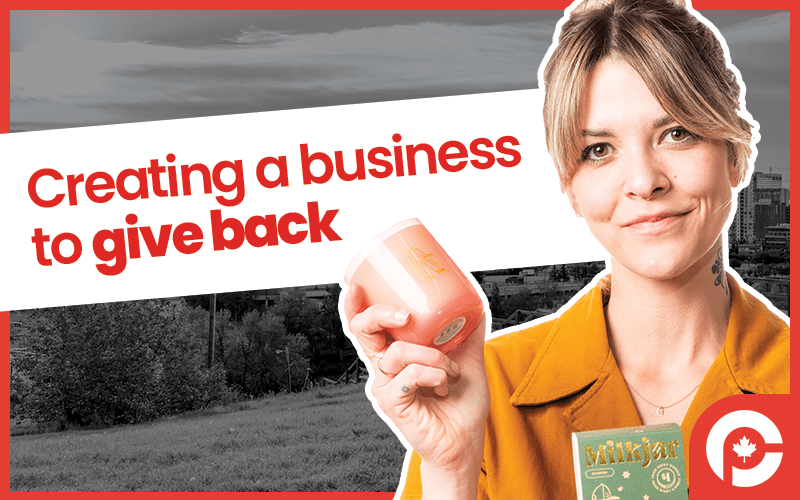
Holly Singer is the founder and CEO of Milk Jar, an inclusive candle company that creates job opportunities for...
Key takeaways
- Starting a business requires trusting yourself and your instincts rather than following what everyone else tells you to do or copying other businesses.
- Inclusive employment practices actually benefit the entire company by improving workplace culture, employee retention, communication, and community support beyond just helping those with disabilities.
- The biggest barrier to hiring people with disabilities is simply fear of the unknown, but service agencies exist in every province to support businesses through the entire process at no cost.
- Progress is more important than perfection when building a business, and mistakes are valuable teachers that help you eventually reach your goals.
- Maintaining work-life balance and continuing to learn new things outside your business keeps you creative, happy, and ultimately makes you a better business owner.
Transcript
Full transcript page · Interactive episode
============================================================
TRANSCRIPTION WITH SPEAKERS
============================================================

[00:00] SPEAKER_00: Welcome to Canada's Podcast.
[00:05] SPEAKER_00: Hello, I'm Mario Toneguzi, Managing Editor of Canada's Podcast.
[00:10] SPEAKER_00: Joining me today on Calgary's Podcast is Holly Singer, who is founder of the Milk Jar
[00:16] SPEAKER_00: Candle Company. Thanks for joining us today, Holly.
[00:20] SPEAKER_02: Thanks so much for having me today. I'm excited to be able to talk to you.
[00:24] SPEAKER_00: All right, Superlix. Talked for a little bit about the company.
[00:28] SPEAKER_00: Tell me what Milk Jar Candle Company is and what you can do.
[00:34] SPEAKER_02: Yeah, so Milk Jar is a candle company that I started in my home kitchen about almost eight years ago now.
[00:42] SPEAKER_02: So we'll be eight actually next week, next week's our birthday.
[00:46] SPEAKER_02: And it really was a company that I really wanted to use as a vehicle for a greater purpose.
[00:54] SPEAKER_02: I do love making candles and I do think we make a pretty darn good candle.
[01:00] SPEAKER_02: But really the whole reason behind why I started it was to use it as a vehicle to give back to a community that I really cared about that I thought I was going to be working in in my career.
[01:12] SPEAKER_02: And that's working with people with disabilities.
[01:14] SPEAKER_02: So in my undergraduate degree at the University of Calgary, I took a kines degree.
[01:20] SPEAKER_02: And I had a class in that program called Adapted Physical Activity.
[01:25] SPEAKER_02: And that really was the first spark of my desiring interest to work with this community and be a support and create these opportunities because not everyone in this world has the same access and opportunities as everyone else does.
[01:41] SPEAKER_02: So I conducted pool therapy and the practicum was only supposed to go four months.
[01:46] SPEAKER_02: I ended up swimming with that boy and his mom for seven years.
[01:51] SPEAKER_02: And it was it was definitely one of those sparks I called them those moments in your life where you're I think the universe or something's trying to tell you like, hey, this is your purpose or this is an interest of yours kind of go down this path.
[02:03] SPEAKER_02: I thought I was going to be an occupational therapist, but I applied for a master's after my undergrad and I say I party too much when I was younger.
[02:13] SPEAKER_02: So I did enough straight A's so I unfortunately didn't get in.
[02:18] SPEAKER_02: But I really didn't let that determine from, you know, seeing what I could do to make a difference.
[02:25] SPEAKER_02: And a number of years after that I was making candles. I thought I could start a business and I would donate a dollar from the sale of each candle to give back to organizations that support children with disabilities and Calgary.
[02:39] SPEAKER_02: And it kind of took off.
[02:42] SPEAKER_02: I was actually in my second degree for nursing at the time and I decided to drop out and pursue entrepreneurship and here we are now, milk jars now eight years old.
[02:53] SPEAKER_02: It's not made in my kitchen anymore. We have a warehouse where we make all the product. We're a team right now of 24 staff members.
[03:01] SPEAKER_02: We candle making classes. We sell internationally left now and we're also an inclusive employer. So a third of our staff up in the milk jar have a disability that help make the products that you get to take home and enjoy.
[03:15] SPEAKER_00: Well, to backtrack for a second, why candles, you know, you could have done a lot of different things, I guess, right? But why did you choose candles to embark on?
[03:28] SPEAKER_02: I made candles for maybe a year before starting the business. And why I really got interested in them was I learned about that burning paraphernal wax candles, which was the most common candle on the market was harmful to your health, breathing it in can cost them respiratory issues and headaches.
[03:46] SPEAKER_02: And that was a cut candle I was more accustomed to. And then so I decided I wanted something cleaner, soy candles. I also learned about wood wicks. They were kind of new at the time and not many candle companies were doing that and it was kind of hard to find soy candles and wood wicks.
[04:02] SPEAKER_02: So I decided to buy the materials and start making them and I have so much fun blending sense together.
[04:09] SPEAKER_02: I think I have a little bit of a knack for it. So and then I would give them to friends and they'd like them. So yeah, I kind of just snowballed from there and I do think it's kind of that it's a really peaceful thing to have candle burning.
[04:23] SPEAKER_02: It's like a little mini campfire in your home, especially when it's a crackling wood wick and it's just it's just that kind of nice ambiance. So that's how I kind of got started with candles.
[04:34] SPEAKER_00: So today, work and people find the candles.
[04:39] SPEAKER_02: So we're if you're in Calgary, we do our own warehouse where you can come and purchase candles. We have a tiny little retail area.
[04:48] SPEAKER_02: But we're also online and we wholesale to actually quite a lot of different stores. So there is a map on our website at milk chart.ca.
[04:56] SPEAKER_02: And you can find all the shops were in locally blusher lane.
[05:01] SPEAKER_02: We're in field study. We're in 27 boutique. A lot of really cool stores that are around and then we also are in a ton of stores across Canada in the States.
[05:11] SPEAKER_02: And even now internationally, we recently just this last year kind of broke into the UK, Belgium, Germany, Switzerland, Australia, even I think has a there's a couple shops with our candles in it now.
[05:25] SPEAKER_00: How many did sorry, how many different candles you may?
[05:29] SPEAKER_02: We I guess I get any given time. We do some seasonals that come in and out like we do some holiday candles right now.
[05:35] SPEAKER_02: I think it's around like 18 we have a line and summer made with fragrance oils. We have which is a synthetic oil.
[05:45] SPEAKER_02: All our fragrances are Thalate free and we do have a line of essential oils, which is completely natural and plant based oils.
[05:53] SPEAKER_02: And then we have another line that's a mix of fragrance and essential oils.
[05:58] SPEAKER_00: You know, I just going back to your purpose here.
[06:03] SPEAKER_00: You know, when you look around at the business world out there, not too many people are doing what you're doing.
[06:12] SPEAKER_00: Right? And why do you think you're first of all, what are the obstacles and why are what's the roadblocks for companies not doing what you're doing?
[06:27] SPEAKER_02: I think probably you're referring to the inclusive employment piece.
[06:33] SPEAKER_02: Yeah, it's quite interesting. It feels like we're kind of breaking a mold a little bit, especially being a small business doing this because we've been an inclusive company now for four years.
[06:44] SPEAKER_02: I would say one of the biggest barriers that I've seen and when I've chatted with other business owners is just this fear of the unknown.
[06:54] SPEAKER_02: And I would probably say I may have had that too if I didn't have that experience in my undergrad degree of spending some good quality time with someone with a different profile than me.
[07:07] SPEAKER_02: I might have thought the same because you know, this world has been quite exclusive.
[07:13] SPEAKER_02: And you know, we've done a lot of this othering even as I've grown up, I never spent a link the amount of time with someone with a disability never in the my classes in school, never sports team or never a job.
[07:25] SPEAKER_02: So this othering that's happened in society, this exclusion creates this unconscious bias that we're not supposed to be together or we can't do the same things.
[07:35] SPEAKER_02: And I really want to show people that that's just not true.
[07:39] SPEAKER_02: We are all people at the end of the day.
[07:41] SPEAKER_02: And I think business owners asking themselves just that question is to why.
[07:46] SPEAKER_02: And then I'm kind of really reflecting on that.
[07:49] SPEAKER_02: You see how kind of how solid it is sometimes.
[07:53] SPEAKER_02: And you know, it's just the biggest barriers of business owners decision to just do it.
[07:58] SPEAKER_02: It's that simple and that easy. And there are a lot of service agencies out there in every province. I know I know of inclusion Alberta gateway association,
[08:10] SPEAKER_02: they cova goodwill all in Alberta, their service agencies that support people with disabilities looking for employment and connecting them to employers looking to hire and they support the interview process, the onboarding the hiring at all.
[08:27] SPEAKER_02: And they're there like any step of the way you have a question of bringing in inclusive practices in your company that they're to support you.
[08:34] SPEAKER_02: And I don't think there's a lot of companies that know that that exists.
[08:38] SPEAKER_00: What would be your sport, unquote, sales pitch, I guess, to companies to do this and to be more inclusive.
[08:49] SPEAKER_02: I would tell them I would tell them you get to do this.
[08:54] SPEAKER_02: This isn't a I have to do this. It's a you get to do this truly because that milk chair what I've seen in four years of how much our company has become better.
[09:05] SPEAKER_02: And I didn't always maybe think this at the beginning to I will be honest that I maybe thought that we were do we were giving more than we were going to receive and I would say we have received 10 times more than what I think I have given to my staff.
[09:22] SPEAKER_02: And that is in like our employee retention has increased substantially not just amongst our employees with disabilities, but amongst all our employees because we we hire people now that know about our company and they want to work for a company that cares also just as much about people as they do about sales and profits.
[09:43] SPEAKER_02: Workplace culture has improved. It's a lot more positive. There's a lot more connection amongst the different teams now to with our marketing and our shipping team or production team or management team.
[09:57] Speaker UNKNOWN: And I think that's a lot more positive.
[09:57] Speaker UNKNOWN:
[09:57] SPEAKER_02: Just because we're connecting a lot more because when you do have these kind of more inclusive practices you communicate more you check in more you make sure everyone has a different way of learning and operating we want to make sure we're supporting each individual with how best they can know what is is being asked of them.
[10:16] SPEAKER_02: And so we're communicating more which is connecting us more. And then I would say even myself as an owner my my communication has improved. I'm a lot more direct but in like still obviously fine, but I think I would pretend or dance around what I wanted my staff to do for the day and I thought people could read my mind.
[10:40] SPEAKER_02: And I learned that through working with service agencies that you know direct requests and communication is the best and it's not unkind and now I can share better what I need from all my staff. They know how to be successful and everyone's happy at the end of the day.
[10:57] SPEAKER_02: And then finally, community support has the communities really really stood behind this company and it's the reason why we've grown so organically to be international and it's like a candle at the end of the day, but it's more than a candle clearly.
[11:12] SPEAKER_02: The people want to spend money at companies and off and purchase services from businesses that care all care about people and where they can see all people represented.
[11:26] SPEAKER_01: Discover the latest trends, strategies and success stories in the ever evolving world of business. Canada's podcast dot com subscribe now.
[11:35] SPEAKER_00: As a company do you do anything special for for in terms of staff training to I guess to be co workers with people with disabilities.
[11:49] SPEAKER_02: We when we first became inclusive I have a friend who's an occupational therapist and she came in and supported myself and our other managers with working alongside and training our supported staff members and also giving a lot of our team information if we had any questions.
[12:12] SPEAKER_02: Just to understand everyone's needs and accommodations a lot better.
[12:17] SPEAKER_02: We also we had about a year for a year and a half we had this one employee who was deaf and we brought an interpreter in for 10 weeks and taught our team sign language once a week so we could better communicate and even if none of us were fluent in sign language because we would we could text or write.
[12:36] SPEAKER_02: We could write things down to communicate it was really meaningful that you know we could even pick up a few words and do our best to communicate and that just showed that we cared a lot.
[12:47] SPEAKER_02: So yeah those have been really really nice and exciting those those little trainings that we've done and you know just reaching out to these agencies to see how we can be more be more supported whenever something comes up.
[12:58] SPEAKER_00: Yeah exactly so you look back at things you must be kind of like shocked that where you've come from from where you've been.
[13:10] SPEAKER_02: Oh yeah it's like sometimes I think I'm like how did this out of this happen like it's like how I said earlier I'm like it's just a candle like I think honestly I don't even know if I believed in it as much as other people did when we started and.
[13:26] SPEAKER_02: I almost feel a little bad about that like I didn't give what we were creating and how important it was enough credit but I am like milk germ made it honestly three four years ago like we when one of my staff members said to me that she wanted to retire at milk jar like that was just one of those moments that I was like oh gosh it's like well milk jar does need to keep going because this employee needs to retire here so we can keep it going but.
[13:54] SPEAKER_02: I was like I this is it's been more than I could have ever imagined and I'm so happy and grateful and we're continuing to grow and I see how every time you know like we are mission at milk jar is to create inviting spaces and we're always trying to think of you know reflect on are we doing that and what can we do more when the time is right.
[14:17] SPEAKER_02: And you know the first it was the donations that we support that we would we would donate to organizations and four years after that it was you know hiring people with disabilities as well in our company and then now it's kind of turning into you know what more can we do and where where can we you know have the most impact and I think it's getting this message out to other businesses that you get to do this and it makes your company so much better it makes your team amazing and you know it was so much better.
[14:46] SPEAKER_02: It really gets you out of bed on those tough days in business like if we didn't have this purpose I'm sure I'm sure I don't know if I could have kept milk jar going if it was just selling a candle it just would seem not as not as impactful or purposeful so yeah yeah it's amazing.
[15:04] SPEAKER_00: Okay I've got to ask your last name you're not are you related to these to the clothing machine.
[15:13] SPEAKER_00: Oh yeah no the sewing machine.
[15:16] SPEAKER_00: The menswear Henry singer.
[15:20] SPEAKER_02: No I mean maybe I don't know I was just curious you never know.
[15:27] SPEAKER_02: Yeah sorry go ahead.
[15:30] SPEAKER_02: No no no you go ahead.
[15:31] SPEAKER_00: I was just going to ask so when you look back at say the beginning stages of setting up a business what was what was I guess your biggest challenge becoming an entrepreneur.
[15:46] SPEAKER_02: Me getting in my own way I would say and I think that's I would say this probably maybe anyone's biggest challenge I mean I can't speak for everyone but it's really when you just don't think you're cut out to do it because like I mean I I don't have any business experience I've never I didn't go to business school I know entrepreneurship but I think really quieting the noise around you of what it takes to start a business and doing what oh it's not.
[16:14] SPEAKER_02: So this is there's like a cookie cutter way of owning business and networking and doing all these things like I remember kind of setting a lot of time like trying to do all those things that didn't feel right I don't know I'd get business cards and thinking out to networking and stuff and I feel like I knew what to do already and if I needed to find a contact I would but you know it's kind of spending all this time doing what other companies were telling me to do and not really what felt.
[16:44] SPEAKER_02: Right in my heart at the beginning and I think it slowed me down but then immediately when I started just kind of you know I'm going to quiet the outside noise and I'm going to trust that I do know and what to do and I do know like what this company stands for and you know how to keep it going.
[17:02] SPEAKER_02: Everything started falling into place a lot more and yeah like it's you got to focus on progress not perfection.
[17:12] SPEAKER_02: Perfection wall is kind of the killer of creativity and you know as long as you're taking those baby steps forward and willing to make a mistake because the mistakes are the greatest teachers and you will you will eventually get to that kind of perfection or that ideal place that you really want to be.
[17:31] SPEAKER_02: But don't anything kind of hinder you from at least taking those baby steps forward and you know seeing those obstacles as opportunities.
[17:37] SPEAKER_00: And as you were moving along on your entrepreneurial journey.
[17:44] SPEAKER_00: Were there any I don't know successful business people out there or books that you kind of looked at to get advice or hints of what to do.
[17:59] SPEAKER_02: No, I don't know if you get if that's like a common answer.
[18:04] SPEAKER_02: I would say like looking at my journey it's a huge what I believe in is trusting yourself.
[18:14] SPEAKER_02: I probably looked up blogs for little things like maybe but it was probably tiny things about how to book keep or something but then I got a bookkeeper.
[18:22] SPEAKER_02: I didn't I didn't I knew I couldn't do that on my own.
[18:26] SPEAKER_02: I'm I I've really kind of shied away from learning too much from other people which I don't know if that's always the best thing maybe it's made me falter a little more but I think I learned best from my own experience.
[18:42] SPEAKER_02: And I think when I'm put your constantly looking about how others do things to copy it or do it that way.
[18:49] SPEAKER_02: It's not really trusting yourself and then there's probably a lot of fear and anxiety around doing something the right way and I don't think there is a really right or wrong way.
[18:58] SPEAKER_02: There's just the way and you know you're going to be able to do it if it feels right in your heart.
[19:03] SPEAKER_02: So yeah, no, it's I've never I got a I even like I said earlier I had a business card for like I think a year and then I I don't have them now and I even go to sometimes some group of events and people asked for a business card and I'm like oh I don't have one.
[19:18] SPEAKER_02: And I say what do I say I say if you need to find me you'll find me.
[19:23] SPEAKER_02: Like I say something kind of a really fairy like that.
[19:26] SPEAKER_02: It's just really trusting and surrendering and knowing like you know I know I know what I want this coming to be I know what the smell is supposed to smell like and you know I know that this employees you know with this accommodation they're needing I can figure it out and it's really exciting and constantly creative.
[19:45] SPEAKER_01: Stay ahead of the game with our expert tips and strategies that will help your business thrive in a digital era.
[19:52] SPEAKER_00: Canada's podcast dot com subscribe now doing a business venture in Calgary. How has that been like a you know do you do you think Calgary is a I know what I'm quote business friendly environment for people who want to start up things.
[20:13] SPEAKER_02: Oh yeah definitely I'm originally from Victoria PC and I moved to Calgary when I was 2021 and I've been here now yeah like 16 15 16 years and yeah I would say it's definitely a great place to start a business.
[20:32] SPEAKER_02: And I from growing up actually in BC I don't know if milk jar would have been taken off or received his while over from my hometown and not that it wouldn't have been you know accepted or anything I just think here there's so many people that move I find to Calgary from other places.
[20:54] SPEAKER_02: Yeah so people there's almost this energy of just you know getting out there and meeting one another and people are super friendly here and you know I mean we've been a bit more of a business oil and gas kind of town back in the back a number of years ago so I think there is that energy of like coming to Calgary and being able to you know set some roots and set some kind of things down whether that is even a home or if it is a business.
[21:24] SPEAKER_02: And there's quite a few people in Calgary and people don't mind driving to a market and I mean we people drive everywhere around here so people get out of the house a lot people go out of the house to go to the Rocky Mountains they get out of the house to go to a market they explore quite a bit here so yeah.
[21:42] SPEAKER_02: Calgary is an excellent excellent place I found the community support and even the small business world the support between other businesses is very supportive it's not a competition here I find at all.
[21:55] SPEAKER_00: Yeah one of that comes obviously being an entrepreneur quite busy all the time do you have an opportunity to nurture that work like balance.
[22:08] SPEAKER_02: Yeah I do I struggle with this quite a bit the last seven and a half years.
[22:16] SPEAKER_02: But I'm actually kind of figuring that out right now I've found some really amazing people at milk sure that I've been you know having taken a few more responsibilities I've learned to delegate which is always been a little challenging I think when you start a company it's your baby and.
[22:36] SPEAKER_02: I always want to help out and I think it's but it's also been kind of my journey of learning to let go and knowing that you know you got to let people spread their wings and that's how they kind of find their purpose in your company and that's kind of what you're looking for.
[22:53] SPEAKER_02: Yeah so work like balance has been very very challenging especially when you're trying to get to a place where almost everything is kind of working smoothly finally like the of the funds coming in to buy the materials and you have the team that knows what what to do to do work in the day to day and.
[23:14] SPEAKER_02: Get all the things done so it takes time but yeah finally in this last little bit I finally found it so I'm working a little bit less in the day to day.
[23:25] SPEAKER_00: So what do you do when you're not in the opposite.
[23:29] SPEAKER_02: I've been walking my dog quite a bit I've been going I've finally been going to yoga again and I'm actually this is pretty cool I bought a saxophone earlier this year.
[23:38] SPEAKER_02: Yeah so I'm making saxophone lessons and I played the piano and when I was younger I didn't really like the piano both so I don't I can't remember anything but I really love music and I really love learning I think you have to keep learning I think when I when I was feeling overwhelmed in a couple of years ago and like I was working almost too much I realized why I didn't have fun.
[24:08] SPEAKER_02: I kind of lost a little bit of a spark for a while and it is because I love getting creative and learning and the last time I learned something was how to make a candle I turned it into a business and then I never learned anything after that because I was like I said I learned this and I learned a lot of other things but I would say personally something just for me creatively.
[24:29] SPEAKER_02: So this year I kind of realized and reflect and as I can you to get back to doing that and I think I've been a lot better of a kind of person at Mulchara when I go in there and just a lot happier and taking care of myself so that's kind of what I'm doing right now just best.
[24:46] SPEAKER_00: All right wonderful well thanks so much Holly for joining us today.
[24:50] SPEAKER_02: Thanks Mario. Yeah it's been wonderful to chat with you it's been a big Christmas season so coming up so yeah we're excited to kind of keep going.
[25:01] SPEAKER_00: All right wonderful okay that was Holly Singer who is founder of Milk Jar candle company in Calgary I'm Mario Toneguzi managing editor of Canada's podcast thanks for joining us today.