
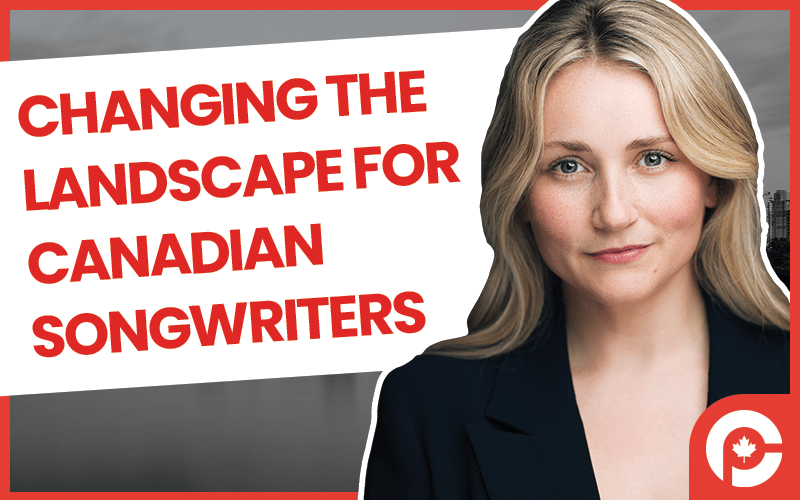
Changing the landscape for Canadian songwriters
Episode
Brittni Noble is a songwriter from Vancouver, Canada who has been performing in front of audiences with her R&B...
Key takeaways
- Songwriters often get overlooked and underpaid compared to performing artists, so it's crucial to advocate for fair compensation and proper credits in the music industry.
- When launching a business, focus not just on your product or service, but on how it makes your customer's life easier and why they should choose you.
- Surround yourself with people who have expertise in areas you lack, especially when venturing into business aspects outside your core creative skill set.
- Stay clear on your why and hold true to your original purpose, especially when the lifestyle and networking aspects of your industry threaten to distract you from your core mission.
- If there's something you want to do, take the leap of faith and do it—the past year has shown that anything is possible and the craziest things can happen in life.
Transcript
Full transcript page · Interactive episode
============================================================
TRANSCRIPTION WITH SPEAKERS
============================================================

[00:00] SPEAKER_01: Welcome to Canada's podcast.
[00:05] SPEAKER_01: Hello, this is Robert Smigel and welcome to the BC edition of Canada's podcast where we talk to the entrepreneurs who are making it happen here in British Columbia.
[00:14] SPEAKER_01: Today's guest is Brittany Noble. She is a songwriter, music publisher and head of creative who is born and raised in beautiful Vancouver, Canada.
[00:24] SPEAKER_01: After attending Berkeley College of Music and living in L.A. for two years, Brittany used her ambition and entrepreneurial drive to launch her dream company,
[00:36] SPEAKER_01: be Noble Music Publishing in January 2021 to advocate for a and be a champion to Canadian songwriters.
[00:46] SPEAKER_01: Well, Brittany, welcome to Canada's podcast. Thanks for taking the time today to be here for all our listeners.
[00:52] SPEAKER_00: Yes, thank you so much for having me on Robert. It's a pleasure to be here.
[00:56] SPEAKER_01: It's a pleasure to have a songwriter. We don't get a lot of these. This is great. I think it's you know, being on the creative side, I'm really happy to have you here today and supporting Canadian songwriters.
[01:07] SPEAKER_01: So tell us a little bit more about yourself. You know, you're from Vancouver, done some traveling, but give us a little bit more of the details on your current business and how you make money at it and some of the things that kind of comprise the company and what you're doing.
[01:21] SPEAKER_01: What it stands for and some of the clients you have maybe.
[01:25] SPEAKER_00: Definitely. Yeah, so being Noble Publishing has really been a long time coming. So I officially launched it in January 2021.
[01:34] SPEAKER_00: But really the idea for the company came while I was still living in L.A. I was finishing up a second degree in songwriting and music business down there.
[01:43] SPEAKER_00: So that was really where I found out about not found out but really go into music publishing and you know, really learned about how a songwriter can monetize their art.
[01:56] SPEAKER_00: You know, growing up as a songwriter started writing songs when I was like 13, 14 years old.
[02:02] SPEAKER_00: You know, I would write songs and I might, you know, perform at a cafe or you know, a local nightclub or whatever that was and that was kind of it.
[02:12] SPEAKER_00: I didn't really know the world of songwriting beyond that.
[02:16] SPEAKER_00: So it really wasn't until I moved to Los Angeles. I interned at a music publishing company in St. House and really found out about the world of publishing and about St. Kfermedia and Selman TV.
[02:29] SPEAKER_00: And it really got me thinking about Vancouver and how much incredible talent is in Vancouver.
[02:38] SPEAKER_00: But there just doesn't seem to be, you know, a lot of people in Vancouver either move away or they move to Nashville or Toronto or, you know, L.A.
[02:50] SPEAKER_00: And some of these bigger music cities and I really wanted to bring back to Vancouver the knowledge and experience that I had learned and, you know, experienced while I was in L.A.
[03:03] SPEAKER_00: So that really was kind of my motivation.
[03:07] SPEAKER_00: I really fell in love with music publishing met some incredible people while I was in L.A.
[03:12] SPEAKER_00: And I just, I wanted to, you know, bring that back to Vancouver and help as many songwriters as I could and, you know, not only create a music publishing company, but also just have that open door policy for songwriters, you know, even if they're not at a stage in their career where they're wanting to be published, but that they could have someone in the industry that, you know, has knowledge and experience in the world of publishing and, you know, as a songwriter.
[03:40] SPEAKER_00: And I really wanted to bring back to Vancouver to ask these questions to reach out to, to figure out how to make the living doing what they love.
[03:49] SPEAKER_01: Speaking of how, how, sorry, speaking of how to make a living, how do you make a living? Maybe you can elaborate a bit on that. I think it's how do you monetize? How do you bring dollars in the door?
[03:59] SPEAKER_00: Yeah, so it really sort of depends on your goals as a songwriter. You know, there are a few different ways. So, sink for film in TV is really huge. So that sink for film in TV is really, you know, working with music supervisors and, you know, showcasing either if you're, you know, if you're signed with the publisher, then that would be the publisher's role would be to showcase your catalog to showcase your songs, you know, to look up the music supervisor and what they're working on.
[04:28] SPEAKER_00: And, you know, and showcasing that talent and those songs to be basically of use to them in their media, whatever they're working on. Another way, you know, is performance performance royalties, you know, performing around town or, you know, tour, you know, that, I mean, obviously, because of COVID tours and performing live hasn't really, you know, been a huge part of the industry as of the last year.
[04:58] SPEAKER_00: But, you know, there's a lot of opportunities, you know, one of the performance rights organization, so can over the pandemic started, you know, pain songwriters, performance royalties for playing, you know, over zoom or Facebook live or, you know, whatever that is because before it, you wouldn't get paid royalties for that.
[05:21] SPEAKER_00: You know, another way is, you know, co writing, writing with other artists, writing with other writers, you know, those are kind of selling merchandise, you know, on that's really the record labels, record label side of things.
[05:37] SPEAKER_00: But really for like songs and compositions, it's really about performance, you know, writing for other writers, writing for other artists and, you know, getting those sinks for film and TV and things like that.
[05:51] SPEAKER_01: Okay, good. I want you to give me a key piece of knowledge or information about your industry that our listeners can learn from that they may not know about. Now, given the fact that not many people may know about music publishing or songwriting.
[06:05] SPEAKER_01: Maybe kind of give us some key general knowledge about your industry that we can learn from.
[06:11] SPEAKER_00: Yeah, I mean, I think sort of the biggest thing is that, you know, songs that you might hear on the radio, sometimes the artist is writing those songs, but a lot of the times those songs that you hear on the radio,
[06:25] SPEAKER_00: they're not written by who's singing them and performing them. So I think songwriters sometimes get forgotten in a lot of things and, you know, they kind of are kind of left behind in a lot of things because the artist is, you know, what people think about and they think of these big pop stars and, you know, those big names, but there's a lot of really talented people behind the scenes that are creating this music and this art that people are consuming that, you know, people don't even think about.
[06:55] SPEAKER_00: And, you know, oftentimes too, they're kind of, you know, they're not being caged fairly or, you know, they might get left out on credits or, you know, the royalty rates will be less than an artist's royalty rate or things like that.
[07:09] SPEAKER_00: So, you know, that's kind of the job of the music publisher is to really champion and, you know, fight for songwriter rights and advocate and, you know, advocate for things like increasing royalty rates and making sure that your writers are being properly compensated for and things like that.
[07:28] SPEAKER_00: So, the songwriter is basically, you know, what makes music happen, you know, without a songwriter, you wouldn't have songs and music. So, you know, songwriters get left behind a lot and so that was really sort of the main focus that I wanted to focus on was really championing and advocating and making sure that songwriters are being paid fairly.
[07:50] SPEAKER_01: Yeah, what's interesting I've learned about the recordings business is that a lot of the times they bring in session musicians. So, just the bad you see may not be actually playing on the album.
[08:00] SPEAKER_01: Exactly.
[08:01] SPEAKER_01: There are musicians that come in play the stuff and they're more, even though it may be their songs, but it's up to the producer at that point that does that, is that who makes that decision?
[08:10] SPEAKER_00: I would say it varies case by case. Sometimes like if it's, you know, if it's a big artist signed to a record label, then usually it's the record label calling the shot.
[08:21] SPEAKER_00: So, it really depends on, you know, the situation is an independent artist or they just hiring someone to, you know, record it in the studio and then they want to play it to themselves, you know, play it by themselves live or there's so many different varying situations that, you know, that could happen.
[08:36] SPEAKER_01: Okay, what's the long term vision and what will your company look like in the future? Do you see the company expanding into other areas and where beyond Vancouver, BC or even Canada?
[08:47] SPEAKER_01: So, this could be like, I guess you could really, you know, you're talking about songs here, but you could technically do movie scores. You could probably do commercials and things like that.
[08:55] SPEAKER_00: Yeah, it's very interesting. You say that actually one of my writers is actually interested in potentially going into film scoring.
[09:04] SPEAKER_00: And that's a little bit different than songwriting where film scoring is you get the media or whatever it is the scene from the TV show or movie and you actually create the music to a lot of the times to write alongside, you know, that media.
[09:20] SPEAKER_00: So, that's a little bit different from songwriting, but so I'm actually helping him create a bit of a demo, you know, to get into scoring for film and TV.
[09:31] SPEAKER_00: But that isn't really the focus. You know, my focus is really just to help as many songwriters as I can. I would love to grow the company.
[09:42] SPEAKER_00: One of my challenges is just being a one-woman show right now. It can be a little challenging, you know, getting back to people as I, you know, in a timely fashion, as I want to maintain that open door policy.
[09:57] SPEAKER_00: And I've got other writers reaching out to me and then I've got PR and people that are helping me write grants and, you know, my current writers that I have signed to my roster, there's a lot of moving parts can be challenging.
[10:10] SPEAKER_00: So definitely want to grow the company in that sense. And then I would also love to open up eventually in, you know, two or three years in LA office.
[10:20] SPEAKER_00: Really helped to bridge the gap between cities like LA and Vancouver. And, you know, there's, there's so many independent music publishing companies and St. houses in LA.
[10:33] SPEAKER_00: And I would love to sort of bring that mindset to Vancouver and help bridge those gaps a little bit too.
[10:39] SPEAKER_01: Okay, great. I love how you segue into Vancouver because that's what we want to talk about now doing this in Vancouver and what that looks like for you.
[10:47] SPEAKER_01: What are the biggest benefits for you and being an entrepreneur here in Vancouver, British Columbia? I want you to give us some of the good points about starting a company here, but I also want you to give us some of the tough things or challenges for listeners so they can keep an eye for them.
[11:01] SPEAKER_00: Yeah, I mean, I would say one of my biggest challenges was probably watching a company in the middle of a pandemic, you know, where the future was kind of uncertain. People weren't really sure what was happening.
[11:14] SPEAKER_00: I mean, you know, and I think at that point, you just have to trust your gut. You just have to trust your intuition. You have to go for it. And sometimes you just have to take that leap of faith and jump off that cliff and see where it lands.
[11:29] SPEAKER_00: And I think one of the most amazing parts is not only the talent that we have here, but there's a lot of government funding and things like that that can help entrepreneurs.
[11:43] SPEAKER_00: And, you know, especially in the entertainment sector, we just got past a bunch of us creatives were lobbying for this fund called Amplified BC.
[11:54] SPEAKER_00: That has just been passed and that's been a multi million dollar fund that will be going into the entertainment industry to help entrepreneurs to help artists.
[12:01] SPEAKER_00: So I would say that government funding and support is really great. And I don't know if you see that in any other, you know, part of the world, the support and the funding that we have from the government is really great.
[12:16] SPEAKER_01: Challenges?
[12:18] SPEAKER_00: Challenges for me, you know, basically what I said launching a company, you know, in the middle of pandemic.
[12:25] SPEAKER_00: And, you know, also navigating being a creative and starting a business. I didn't go to business school.
[12:33] SPEAKER_00: And so I really do have that creative mindset, but I also do have that entrepreneurial mindset. You know, my grandfather was an entrepreneur.
[12:42] SPEAKER_00: I've got a ton of family friends that have been very successful entrepreneurs. So I've had a really great support system to kind of help me and coach me through this process.
[12:52] SPEAKER_00: And it's been really fun. It's been really cool as a creative venturing into launching my own business.
[13:00] SPEAKER_00: And, you know, I learned a lot and I think, you know, one of the challenges, you know, has been that I don't have a ton of business experience.
[13:09] SPEAKER_00: But I think as a creative and as a musician, you have to have that entrepreneurial mindset, whether or not you're an independent artist or not.
[13:18] SPEAKER_00: I think, you know, your art and your is your product. That is what you're selling.
[13:24] SPEAKER_00: So whether creatives like it or not, they are absolutely, you know, business people. And, you know, there's kind of that thing in the creative world, oh, sell out or they're doing this to sell out.
[13:37] SPEAKER_00: But, you know, at the end of the day, we also have bills to pay. And, you know, we have mouths to feed and a roof to put over our heads.
[13:44] SPEAKER_00: So, I think kind of adjusting, you know, a creative mindset to think about numbers has been a bit of a challenge for me as well.
[13:54] SPEAKER_00: And actually, something I've talked a lot about with my lawyer when we were constructing my agreements is initially I came into it wanting to be, you know, this really, really artist friendly thing.
[14:06] SPEAKER_00: But I wasn't thinking about board growth as a company. And so we kind of, you know, skewed my agreements a little bit to definitely still be very artist friendly where the artist is definitely coming first, but it's also taking into account board growth as a company where that wasn't something that I even really thought of first when I, you know, set out to do this.
[14:28] SPEAKER_00: So, I think, you know, sat around surrounding yourself with people who know more than you about certain areas is also really important to do when you're launching a business that you might not have a ton of experience doing.
[14:43] SPEAKER_01: Do you think entrepreneurs are weird or unique in a positive way or are wired differently to go out there start your own business, especially with you on the creative side.
[14:53] SPEAKER_01: It really takes a lot of good spot, you know, a lot of guts to kind of do what you're doing. And like you said, the pandemic and everything going on.
[15:02] SPEAKER_01: But overall, do you think entrepreneurs, big risk takers look at the world differently? You think that's the case.
[15:09] SPEAKER_00: I think, I think you have to be. Honestly, I think, you know, a lot of entrepreneurs are glass half full mentality.
[15:15] SPEAKER_00: You know, you, you have to go into a situation where you're launching or you're putting something out in the world.
[15:23] SPEAKER_00: And, you know, there are a billion reasons why it could fail, right? But if we're constantly thinking about the why it can fail, we're never going to move forward.
[15:33] SPEAKER_00: So, I think we are, you know, wired differently in, you know, in just that sense alone.
[15:39] SPEAKER_00: And, you know, of course, you have to be grounded and level headed. And, you know, we shouldn't be jumping off, you know, the billion class at a time.
[15:49] SPEAKER_00: But, you know, sometimes you do have to take a leap of faith. And, you know, not every person is willing to do that.
[15:56] SPEAKER_00: And, you know, there are a lot of hours and there are a lot of struggles. And there's a lot of learning that goes into running a business and launching a business.
[16:05] SPEAKER_00: And, I don't think everyone is cut out for that. So.
[16:09] SPEAKER_01: Right. So, how do you educate yourself? What books are you reading now and why are even audiobooks or podcasts?
[16:16] SPEAKER_01: And can you recommend any books for our listeners who are also entrepreneurs?
[16:21] SPEAKER_00: So, I've been reading a lot of books sort of geared towards music publishing. So, the plan symbol guide to music publishing.
[16:29] SPEAKER_00: All you need to know about the music business. And then because a lot of my clients and a lot of my writers' goals are to be in film and TV.
[16:40] SPEAKER_00: So, reading books that are, you know, geared towards music supervision. So, a book called Thinking and Sank of Primer on the mind of a music supervisor.
[16:50] SPEAKER_00: Also, just educating myself on the latest, you know, what's happening in the music business, like music business worldwide.
[16:58] SPEAKER_00: You know, I also read a lot of, you know, like self-help books, like the power of now.
[17:05] SPEAKER_00: Listen to a lot of podcasts, you know, and the writer is with Ross Bowlin, Broke and Record with Rick Rubin.
[17:12] SPEAKER_00: A lot of podcasts that are really just centered around the music business. Because I do feel like you do have to be an expert in your field.
[17:20] SPEAKER_00: If you are going to launch something and you are going to do something, you know, you have to be an expert in your field and at least know a lot about, you know, what you're doing.
[17:30] SPEAKER_00: So, I really do try and listen to as many podcasts I can read as many books as I can, read as many music blogs, all of that.
[17:38] SPEAKER_01: So, technology wise, which is really interesting because music has changed over the years. You also hear that, you know, there's the typical band guys that are great musicians, great drummers, great guitar players, great singers, keyboard players.
[17:50] SPEAKER_01: But then you got these guys that are in their bedrooms with a computer and everything synthesized or computer generated and pro tools and all these different things.
[18:00] SPEAKER_01: Has that divided the industry at all? Or do people still want to hear music or are they just interested in the computers, where everything's done on a laptop?
[18:08] SPEAKER_00: I wouldn't say that it's divided the industry. I think the industry is constantly changing.
[18:14] SPEAKER_00: Like something that was the way it was yesterday might be totally different tomorrow. So, I think it's just growing and evolving at the times.
[18:22] SPEAKER_00: I think there was a little bit of like, oh, you know, especially when the rise of EDM electronic dance music came up and, you know, the bedroom producer and there was a bit of like, oh, you know, that's not real music or whatever.
[18:37] SPEAKER_00: But I think that opinion is slowly changing and people are seeing the benefits of, you know, being able to record things, you know, in a bedroom or wherever it, you know, it makes things very efficient.
[18:49] SPEAKER_00: You can, you know, share files back and forth very easily. You can save, you know, cost on, you know, not having to book or recording a studio, things like that.
[19:00] SPEAKER_00: So, I think, you know, the whole mind frame around that is definitely changing. And I think it depends on the type of music that you're into as well.
[19:08] SPEAKER_00: I think there's always going to be space for a live band and live music. And that's not going away.
[19:16] SPEAKER_00: So, I think it's almost just, you know, meshing the new with the old and moving forward.
[19:23] SPEAKER_01: Yeah, last weekend I was in recording studio with a bass player, really good bass player, 18 years old. And he loves the old music.
[19:30] SPEAKER_01: He likes the rush, black Sabbath. I was like, shouldn't you be listening to like, you know, all the latest stuff? He goes, yeah, I do.
[19:37] SPEAKER_01: But, you know, this stuff, I was really stunned. I mean, he was 18. And I was like, wow, you really like to the old stuff, eh?
[19:44] SPEAKER_01: Yeah, he was, he was like, let's up on, oh yeah. And he knew it too. And he knew how to play it.
[19:48] SPEAKER_01: Which is really interesting.
[19:50] SPEAKER_01: Okay. Okay. If you weren't doing what you do now, what would you like to do for a profession?
[19:56] SPEAKER_00: Oh gosh, you know, I have asked myself this before. And honestly, I, I was, I know it's cheesy to say, but I was born to be in the music industry and whatever capacity.
[20:09] SPEAKER_00: So if I wasn't doing music publishing, then I would be writing, well, I still am writing songs, but I would, you know, that would be my main focus.
[20:18] SPEAKER_00: Would be writing songs, performing, you know, just being involved with creatives and, you know, being creative and singing and creating.
[20:29] SPEAKER_00: That's just what I have to do in my life. So if I wasn't doing music publishing, I would definitely, you know, still be doing something on the creative.
[20:37] SPEAKER_01: You could be, you couldn't be an accountant, could you?
[20:41] SPEAKER_00: Could not be an accountant. No, I could not.
[20:45] SPEAKER_01: In business, what is your favorite word quote or sentence that you like to use frequently? Is there anything you like that you use often?
[20:51] SPEAKER_01: People would say she uses that a lot. That sentence that quote.
[20:56] SPEAKER_00: Hmm, I would probably say, especially lately, I've been saying you're very clear on your why.
[21:04] SPEAKER_00: And the reason why I've been saying that is because I think, especially in the entertainment industry, there is, you know, a lifestyle that's associated with it as well.
[21:15] SPEAKER_00: You know, COVID, it's definitely slowed down, but there's the networking aspect of things and, you know, going out and seeing live shows.
[21:23] SPEAKER_00: And sometimes you can kind of get lost in it. And you can forget why you started writing songs in the first place or, you know, why you wanted to work at a label or publishing company or whatever it is.
[21:36] SPEAKER_00: And I think being concrete on your why and holding true to that. And of course there's balance, you know, you need to let loose and have fun and meet people.
[21:46] SPEAKER_00: But staying clear to your why is only going to help keep you focused and motivated and moving forward.
[21:54] SPEAKER_01: Do you have any advice that you may have received from someone else that you can pass on to entrepreneurs or Canada?
[21:59] SPEAKER_00: Yeah. So a close family friend of mine is a very successful entrepreneur in Vancouver. And we were having a chat over the phone right when I launched.
[22:13] SPEAKER_00: And, you know, I was just kind of asking him if you had any to bits of advice. And he was saying that he meets with a lot of entrepreneurs.
[22:20] SPEAKER_00: A lot of people like asking for funding or things like that. And they come with this big, you know, presentation on their brand and their company and what they do.
[22:31] SPEAKER_00: And then they never touch on how their brand or their product is going to make his life easier.
[22:38] SPEAKER_00: So, you know, they do this whole presentation. And then he's sitting there and he's going like that sounds great.
[22:44] SPEAKER_00: It sounds like a great product. Sounds like a great innovation or an idea. But how does that make my life better?
[22:50] SPEAKER_00: Like, why should I invest in your product or why should I, you know, buy your product or whatever it is. And so that really helped shape, you know, the way that I am running my business where I'm not only thinking about my product, which are songs.
[23:05] SPEAKER_00: And, you know, my song writers, but I'm also thinking about the music consumer and the music supervisor and the people that are potentially buying my product and how my business model will make their life better.
[23:20] SPEAKER_00: How how I can make it easier for a music supervisor to clear a song to do their job.
[23:26] SPEAKER_00: So, it's not just about my brand, my company and the product that I am supplying. It's also about who the customer is, how, how what I'm doing is making their life easier and why they should essentially at the end of the day buy my product.
[23:45] SPEAKER_01: Okay, awesome words of advice.
[23:47] SPEAKER_01: Okay, Brittany, we're going to wrap things up. How can our listeners get at all of you and is there anything you'd like to add before you leave us today?
[23:55] SPEAKER_00: Yeah, you can definitely visit my website at www.beenobln music publishing and reach out to me. My email is on the website, but it's Brittany at beenobln music publishing.com.
[24:07] SPEAKER_00: And the last piece of advice is if there is something that you are wanting to do, go and do it.
[24:16] SPEAKER_00: I think the last year and a half has taught us all that anything is possible. The craziest things can happen in life that we will never expect.
[24:25] SPEAKER_00: And I think to flip that on the positive, you know, to watch out for, you know, those, those things that are eating at you and that are just you're wanting to do, but you're scared of or you're thinking of all the ways why it will fail or why it won't work.
[24:41] SPEAKER_00: And sometimes you just have to take that leap of faith and jump off that cliff and see where it lands.
[24:48] SPEAKER_01: Getting your wings on the way down.
[24:50] SPEAKER_00: Exactly.
[24:52] SPEAKER_01: There you go. Well said. Okay. Well, thank you for coming on the show. I've learned a lot about you and I'm sure our listeners have as well.
[24:59] SPEAKER_01: And to all our listeners, thanks for listening today. Our Katas podcast and listening to Brittany's story.
[25:04] SPEAKER_01: Like, comment and to subscribe to all our channels. You get the latest podcasts from entrepreneurs across Canada. And we'll see you next time.
[25:11] SPEAKER_01: Thank you so much.