
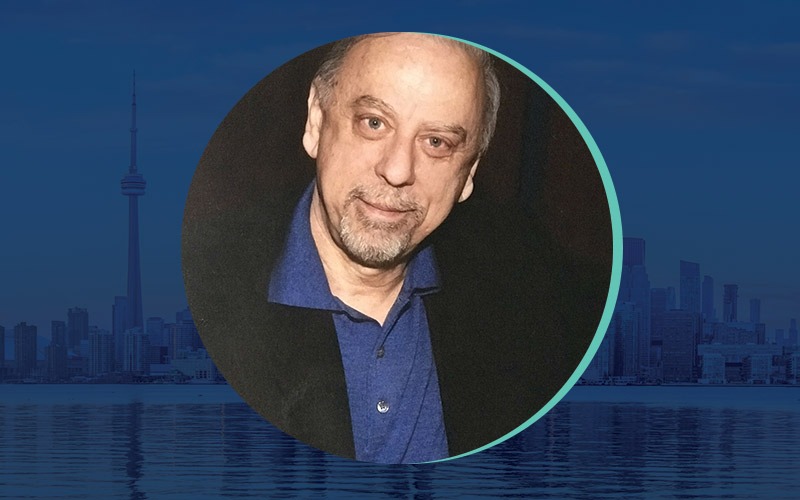
Anthony DeCristofaro
Episode
Anthony DeCristofaro is currently President and CEO of Qnext Corp. and has over 25 years of computer industry experience. In his...
Key takeaways
- Building a strong team of the right people who are synced with your vision and add value is the most critical factor for entrepreneurial success, and it's worth investing properly in talent rather than cutting corners.
- Before fully committing to a product idea, get real feedback from actual potential customers in the marketplace to validate that genuine acceptance exists for what you're building.
- Securing a strategic partner with credibility and influence, especially from Silicon Valley, can elevate a startup's positioning and open doors to larger companies and funding opportunities that would otherwise remain closed.
- Maintaining laser focus on a specific market segment where you can win is essential, as trying to pursue too many directions simultaneously will drain resources and dilute your chances of success.
- Timing is critical in technology markets—entering too early means grinding through cash while waiting for market readiness, so ensure the market exists and is ready for your solution before scaling aggressively.
Transcript
Full transcript page · Interactive episode
============================================================
TRANSCRIPTION WITH SPEAKERS
============================================================

[00:00] SPEAKER_01: It's Toronto's podcast on the Canada's podcast network.
[00:30] SPEAKER_00: Hi everybody, I'm Phil Bliss. I'm a business visionary and also co-founder of Canada's podcast network.
[00:38] SPEAKER_00: And today I'd like to introduce Antideira Christophero.
[00:43] SPEAKER_00: Fortunately for me he's a friend of mine. I'm excited to have a head as a fantastic entrepreneur.
[00:49] SPEAKER_00: Antideira is currently president CEO of QNICS and has over 25 years of computer industry experience.
[00:55] SPEAKER_00: In his career he has done three M&A transactions valued at over 600 million, which is one heck of an achievement.
[01:06] SPEAKER_00: Antideira was also president CEO of IC Media, co-founder and CEO of NGI Software, where he actually brought Intel in as an investor.
[01:15] SPEAKER_00: He co-founder that in 1996 and he sold it to Roxyol in 2002.
[01:21] SPEAKER_00: Prior to MGI, Antideira was a founding board member of Delrina and VPGM of AST Computer and NEC Canada.
[01:31] SPEAKER_00: As I said, I've known Antideira and worked as an advisor to him for many years.
[01:36] SPEAKER_00: But Antideira, let's start off. Tell us a little bit more about you, where you're from.
[01:42] SPEAKER_00: Give us a details of your current business. Just five minute intro and to move the heck. Antideira Christophero is.
[01:51] SPEAKER_01: Yeah, thanks Phil. So a couple things. One is I was born in Toronto. Parents were Italian.
[01:59] SPEAKER_01: So I got to learn a lot of things about good food.
[02:03] SPEAKER_01: And I started my, the beginning of the focus of my career in the engineering side.
[02:11] SPEAKER_01: So I graduated from DeVry Institute. Very focused on engineering. And interestingly enough, I got out of my first job, which was really, I guess, at a desk and analyzing circuits.
[02:32] SPEAKER_01: So that's where the world began for Anthony and the Christophero. And I was enamored and loved the technology sector. And so that's where basically I got my foothold into what I call my first step, my first job.
[02:48] SPEAKER_01: I graduated. I did a little, a little extra where typical.
[02:57] SPEAKER_01: Students wouldn't and that would be that as soon as I graduated, I graduated, you know, a couple of people at the top that were offered a job to go to Texas.
[03:09] SPEAKER_01: And then to do a stint in Saudi Arabia for approximately a year and a half. So I was in the middle of the desert helping.
[03:19] SPEAKER_01: Litton systems record data with with a team. So it was quite a interesting initial exit from engineering school to, to a global global opportunity with learning these cultures around the world.
[03:38] SPEAKER_00: Great. The next thing I ask of everybody, but can you tell us, you know, you started working like we all do.
[03:48] SPEAKER_00: But, you know, what were your stop moment when you decided, you know, you really wanted to become an entrepreneur, which is something different than working to say it, Litton was an employee in the Middle East.
[04:02] SPEAKER_00: What was your, what graduated?
[04:06] SPEAKER_01: Well, I guess before I get, I got to that step, you know, as anybody usually does, and they graduate and they have a certain focus and passion and mine originally was engineering was that, you know, I got back to Canada.
[04:23] SPEAKER_01: Got a little opportunities to be a little more entrepreneurial where I started up micro pro and word star in Canada.
[04:33] SPEAKER_01: But most important of all, I thought I wanted to be in the corporate world to test my skills both, both corporally, both as an individual.
[04:44] SPEAKER_01: And I realized over time from engineering, I wanted to get into product management. And that's what happened with my career.
[04:52] SPEAKER_01: And from product management, I got into marketing and from marketing, I got into sales. And ultimately, with those pieces behind me and confidence, I started a subsidiary called any C corporation.
[05:08] SPEAKER_01: And I got the opportunity to have and be the general manager and setting up any C, which had, of course, the multi sync monitors and the notebooks and all these other world class products to set up their subsidiary, build the team and make it successful.
[05:28] SPEAKER_01: And we were very successful. And, and then after any C, once I had that that kind of bite where all of a sudden I felt like, wow, I can build a team, I can go against the best, you know, in the industry with a great team and, you know, grab our market share grab our revenue.
[05:50] SPEAKER_01: I was given an opportunity to basically set up what's called a st computer. And at the time, they were probably doing about 18 to 20 million dollars.
[06:06] SPEAKER_01: And we quickly within approximately three, three years, three and a half years went from 18 million to close to 400 million. So at that point in time, we were doing the equivalent of 20% of worldwide revenue of a st at a California out of just Canada.
[06:31] SPEAKER_01: Normally, it's, you know, any, any business person or entrepreneur would know that typically Canadian sales are about 10% of us sales. We were 20% of worldwide sales. So we had an amazing team built it, great marketing, great positioning.
[06:48] SPEAKER_01: And we were actually in the beginning, became number two in the Canadian PC market, next to compact. And we were actually ahead of IBM.
[06:59] SPEAKER_01: And so with that tremendous amount of sales, I was offered a position in the United States to run America's, which was about a billion dollars.
[07:10] SPEAKER_01: And I declined and to answer your question, Phil, that was the point where I said, you know, I've worked for companies built some very successful organizations with incredible team players that we had as people.
[07:30] SPEAKER_01: And I said at that point in time, I had an opportunity to either stay in the corporate world or get out in a way on my own. And I was offered through an individual, which became my partner, co founder of a company called MGI software, which was Orr, who had pieces of software, but kind of had to find a place, a market, a strategy.
[08:01] SPEAKER_01: And building a team for execution. So that's when I really said, okay, it's time for me to kind of do it on my own. And that was my first foray into saying, wow, I've got no paycheck immediately.
[08:19] SPEAKER_01: And now I've got to go out and raise money, have a product, get a strategy and figure out how I'm going to conquer this little slice in the world of the same business.
[08:33] SPEAKER_00: So let's take that. So here you are.
[08:36] SPEAKER_00: As I said, unfortunately, I know Anthony and I was kind of around around that during those times, but you and Orr have gotten together, you said, okay, we're going to focus on building a business.
[08:49] SPEAKER_00: You know, you run into that scenario where lots of entrepreneurs do, you had great ideas, you had great concepts, but you needed financing to start your company.
[09:01] SPEAKER_00: And I know that's something you've been involved in, but that was just at the beginning, how did that material is, how did you get it? Maybe you're going to help people understand that a similar position, you know, the kind of surge it takes to get external financing.
[09:17] SPEAKER_01: Yeah, I think, you know, and to answer a little bit of your question, I started in engineering. So for me, it was important to have that fundamental understanding for me to say, from an engineering perspective, I can understand what makes sense, what doesn't make sense, what maybe a possibility.
[09:35] SPEAKER_01: I also knew at that time, which all these entrepreneurs, if they're listening to this podcast is, you've got to do what you love to do.
[09:45] SPEAKER_01: And as much as I know that being an engineer and being on a bench and testing things was really ultimately not what I wanted to do, as I got the bite into marketing and sales said that I can bring these pieces together.
[09:58] SPEAKER_01: And just be more of a force and more of a value add to the, you know, to this marketplace.
[10:08] SPEAKER_01: So to really answer your question, the key is all about passion. So a, you have to have the passion from what you see and what you believe.
[10:19] SPEAKER_01: You have to be strategic one, a lot of the statistics when I was certainly started MGI software was nine out of 10 software companies do not make it and one out of 10 do the statistics may be a little bit better now, but they're probably in and around that that segment.
[10:37] SPEAKER_01: So very important to have a methodical focus is so important. Every company has got to stay focused on their market on their messaging on their segment, and they got to believe in it, and they've got to see the, you know, the progress happening.
[10:58] SPEAKER_01: So I guess to answer your question at the end of the day, you got to have that passion and belief in exactly what you're doing because that is ultimately what helps you raise money and people out there who are waiting for the pitch.
[11:16] SPEAKER_01: They will sense exactly how passionate, how committed and how confident you are in the ideas and the business or the segment you're going after and why you're going to be successful.
[11:31] SPEAKER_00: That's great stuff, but I mean what interested to know, you know, what's a typical day look like for you? How do you maintain the kind of focus that you know it needs to succeed and have fun, you know, every day is a process that you can pass on to people in terms of, you know, how that works for you that you think they may have made learn.
[11:57] SPEAKER_01: Yeah, so I would say to answer your question on a typical day, and whether it's Q next or was MGI in the beginning is again about a laying out some plan in your in your mind to say the focus of what are the key milestones you want to achieve for this company. What are they? I mean, you should be able to put it on one piece of paper.
[12:21] SPEAKER_01: And say in the next, you know, while this is what I want to accomplish and what that does at the end of the day is give you now when you have that goal and that piece of paper and these.
[12:36] SPEAKER_01: You know, key areas and points you want to achieve, then you drive back from that and say, okay, what do I got to do to achieve them for five key points for the company this year.
[12:47] SPEAKER_01: And then you get into the more of the micro detail of, you know, I'm going to need an individual for this. I'm going to have to go out and start talking to these large companies.
[12:56] SPEAKER_01: And here's my positioning and all that relates to trying to accomplish the significant, you know, milestones of a company that will allow you to a build value and be give you the opportunity then to have more access to more cash.
[13:16] SPEAKER_00: So thinking about, I mean, I know that you have tons of experience on the international front that this is, this is sort of Canada's podcast and specifically Toronto's podcasts.
[13:29] SPEAKER_00: So what are the biggest benefits for you about being an entrepreneur in Toronto? You know, why here you could be anywhere to be an Italy for goodness sake, you know.
[13:40] SPEAKER_01: Yeah, well, I think, you know, you know, I'm sure we'd enjoy the lifestyle in Italy. I don't know how much we'd accomplish, but we definitely do.
[13:52] SPEAKER_01: But I think, you know, it's a good question. I mean, listen, the best impact would be being in the valley. But then you say to yourself, okay, you know, you've got to make certain decisions, say about your experience and the talent you have and, you know, where are they.
[14:08] SPEAKER_01: And then you hit say to yourself, okay, if I'm not in the valley, I'd say I'm in Toronto. Let's say I'm in a suburb called Concord. So, and I got the greatest software product in the world in this segment, I believe I have the best.
[14:24] SPEAKER_01: So how do you conquer the world, the entire world? How do you do it? You're sitting in Concord with a little piece of software. You got a great little team.
[14:32] SPEAKER_01: And now somebody's telling you, and you're getting some of these investors who are investing in you, and they are investing money believing you have the opportunity to conquer the world.
[14:46] SPEAKER_01: So now comes the other side, which is all comes down to the entrepreneur and the CEO and the guy in charge is that, you know, how am I going to conquer the world from here?
[15:00] SPEAKER_01: There's a first thing I do is, you know, and I will tell everybody who's listening is that the world is California and Silicon Valley is a big, big, big influence segment that in many ways sometimes has to be conquered to get the real next level of financing and the next level of credibility.
[15:24] SPEAKER_01: And so then you say to yourself, okay, I'm from Concord, I have this great little app, and I'm going to present it, and they're going to go, well, great, you know, you're from Concord, Ontario, in Canada somewhere, and you say you're going to change it.
[15:37] SPEAKER_01: So then comes the strategy, right, which was comes back to my sheet of the five key points or six or three, whatever you feel you, you need to accomplish in the next 12 to 18 months as you start this company.
[15:51] SPEAKER_01: And one of them for me, because as Phil, as you said, we're in Toronto and why Toronto is that luckily in the background, just imminently now in the last couple of years, we're seeing Toronto becoming more and more respectful in the AI community and some of the other key software segments.
[16:12] SPEAKER_01: But at the end of the day, any good startup and technology company needs some kind of strategic partner.
[16:22] SPEAKER_01: So strategic partner could mean many different areas.
[16:28] SPEAKER_01: It could mean an investment from a strategic partner, it could mean an alliance from a strategic partner, it could mean a co marketing from a strategic partner that has large credibility that has a lot of money.
[16:42] SPEAKER_01: And that has influence on the valley, which elevates you now to a point where at least you're going to have an opportunity to call the largest companies in the world and at least they're going to listen to you.
[16:54] SPEAKER_01: And that was one of the things I did at MGI and obviously got Intel to invest. And ever since that happened, we had the greatest product and we still have the greatest companies in the world selling our product.
[17:07] SPEAKER_01: But until that moment, all of a sudden, the world looked at us quite differently in terms of acceptance.
[17:16] SPEAKER_00: Good advice. Good advice. So here's a question I ask a lot of people.
[17:21] SPEAKER_00: This is what we all ask. So imagine there's a small tropical island just off the beach.
[17:28] SPEAKER_00: There's only one phone booth where there's no internet. We drop you off there. You won't have a computer or a smartphone or a tablet.
[17:37] SPEAKER_00: You use the phone with located there anytime to call about and we'll come pick you up. How long would you last before you made that call? And what would you do there while you were there?
[17:49] SPEAKER_01: Good question for survival. So I think I think the first thing it ended up doing is for me is to say, OK, in other words, let me figure out how I can live here without without using the phone at the end of the day.
[18:07] SPEAKER_01: The game here, right? Then comes the fact of analyzing, looking at the market. How do I live here? How do I?
[18:16] SPEAKER_01: How do I do the day to day to begin with? And then how do I get to another level, which means there is opportunity. It's an island. I assume there's people on the island or there's some kind of a way of survival in terms of potential for you.
[18:32] SPEAKER_00: You're building your own island. So that's OK.
[18:35] SPEAKER_01: Yes. Well, exactly. But yeah, so I would say again, it's not about panic. It's about being methodical, analyzing, and then executing. And so I believe anything like that can be done just what's available.
[18:57] SPEAKER_00: So just one more final thing before we call the day here. Can you give us the top three things on your inspired lifeless that you would, you know, think would be useful for other entrepreneurs basically.
[19:15] SPEAKER_01: Well, I think on the top list is number one, the team and the people. It's so important to pick the right people. And not to nickel dime yourself in getting to a point where you have to have the right individuals who are synced with you, who add value with you and are really, really team players.
[19:41] SPEAKER_01: One individual, no matter how entrepreneurial, no matter how visionary you are, no matter how strategic you are, can't be done without a great team. So that would be number one.
[19:54] SPEAKER_01: And number two is no matter how much you vet an idea and how great you think it is and how great you think this product going to be to the world is to get feedback from the marketplace, get real feedback.
[20:10] SPEAKER_01: In other words, real companies, they would normally have sold to understand whether or not the acceptance is there three, you know, when you've got few of these pieces happening is to set up your strategic positioning to go after financing, which at the end at that point is really about saying, hey, I got a great idea.
[20:32] SPEAKER_01: I got a great team. I got the product. I got feedback from from my customers. There's a big potential here and then gather statistics that drive, you know, that segment.
[20:45] SPEAKER_01: And then when there's some bit of financing that happens is to begin looking at how are you going to leverage this technology to the industry.
[20:56] SPEAKER_01: How do you get your name out to the industry, which then comes to strategic partners, investment that helps you leap forward quickly because in this industry, time is of the essence and it's all about not being too early in a segment because you will end up grinding and grinding and spending money and patience runs out very quickly with investors.
[21:23] SPEAKER_01: If they don't see the significant traction, so timing is important to make sure the market is there for you and that the timing is right.
[21:32] SPEAKER_01: And at the end of the day, bringing some of these pieces together and starting it and the other important point, you know, which comes to my fourth point is be very focused.
[21:44] SPEAKER_01: You might look at your software and say, well, I can go over here and I go over here and I go over here and you probably can't. But the reality is pick exactly where you're going to go and make sure you're a winner in that little segment and then start expanding and having your team discipline to focus.
[22:00] SPEAKER_01: Very important focus focus focus.
[22:02] SPEAKER_00: That is fantastic. I think it's very much for joining us. If our listeners want to get a hold of you, is there any way to do that? Or would you like them just to get a hold of you through a camera spot.
[22:16] SPEAKER_01: Sure, they can they can certainly email me anytime. Anthony D as in David at qnext.com.
[22:25] SPEAKER_00: Perfect. Thank you once again and thank you all for joining Canada's podcasts. I think Anthony's life experience is as an entrepreneur certainly been fantastic to listen to.
[22:39] SPEAKER_00: Thank you.
[22:41] SPEAKER_00: Thanks for.
[22:42] SPEAKER_00: Thanks for.