
Alicia Dubois is CEO of the Alberta Indigenous Opportunities Corporation, Which Guarantees Loans for Indigenous Groups in Alberta
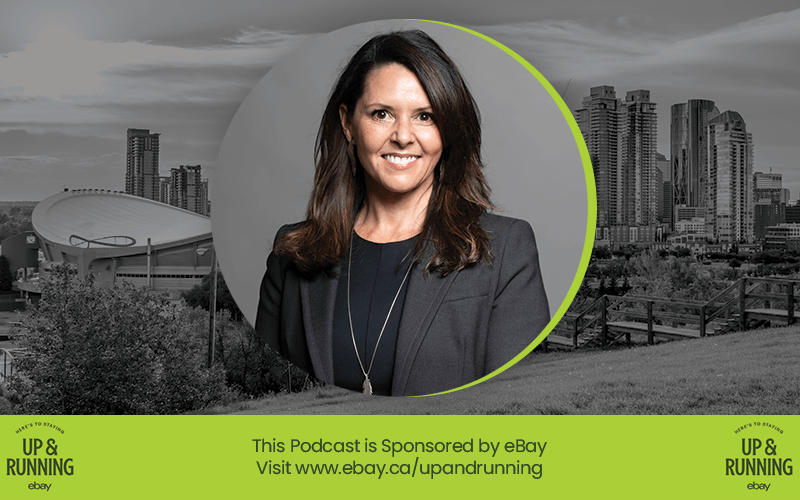
Episode
Alicia Dubois is the first-ever CEO of the Alberta Indigenous Opportunities Corporation, which was created to in November 2019 to guarantee loans...
Key takeaways
- Access to capital has been a long-standing barrier for Indigenous groups in Alberta and across Canada, limiting their ability to participate in significant economic projects.
- The Alberta Indigenous Opportunities Corporation provides loan guarantees ranging from $25 million to $250 million for Indigenous equity ownership in medium to large-scale natural resource projects and infrastructure.
- Indigenous equity ownership in projects creates more meaningful economic impact than traditional impact benefit agreements because it enables active business partnership, stable revenue streams, and greater influence over employment and supply chain decisions.
- The capacity grant program is crucial because it supports Indigenous groups through the due diligence process before they commit to pursuing major project investments.
- Indigenous entrepreneurs bring their values and principles to business ventures, including considerations for environmental remediation and inclusive meeting practices, which serves to create a more holistic approach to regional economic development.
Transcript
Full transcript page · Interactive episode
============================================================
TRANSCRIPTION WITH SPEAKERS
============================================================

[00:00] SPEAKER_02: This podcast is sponsored by eBay Canada.
[00:02] SPEAKER_02: eBay Canada is here to help.
[00:04] SPEAKER_02: They've been supporting Canadian small business retailers for 25 years
[00:08] SPEAKER_02: and have recently launched their up and running program
[00:11] SPEAKER_02: to meet an urgent need to get businesses online today.
[00:16] SPEAKER_02: New business sellers can get a free e-commerce store for 90 days
[00:19] SPEAKER_02: when they visit ebay.ca slash up and running.
[00:23] SPEAKER_02: Offer open until August the 22nd.
[00:27] SPEAKER_02: Welcome to Canada's podcast.
[00:29] SPEAKER_02: The number one podcast for entrepreneurs and by entrepreneurs.
[00:34] SPEAKER_01: Today's guest on Calgary's podcast is Alicia Dubois,
[00:40] SPEAKER_01: who is the first CEO of the Alberta Indigenous Opportunities Corporation.
[00:45] SPEAKER_01: Thanks for joining us today, Alicia.
[00:48] SPEAKER_00: Thanks for having me.
[00:49] SPEAKER_01: Let's start with just a simple question about what is the organization
[00:54] SPEAKER_01: and what's its purpose?
[00:57] SPEAKER_00: Sure. So the Alberta Indigenous Opportunities Corporation
[01:00] SPEAKER_00: is truly a first of its kind and it's innovative.
[01:03] SPEAKER_00: It's a crown corporation in Canada that will provide up to $1 billion
[01:09] SPEAKER_00: in loan guarantees for Indigenous investment opportunities.
[01:13] SPEAKER_00: More specifically, the AIOC's foundational intent is to foster an
[01:17] SPEAKER_00: inclusive economic ecosystem that bolsters Indigenous prosperity
[01:22] SPEAKER_00: and wellness through direct Indigenous involvement and ownership.
[01:25] SPEAKER_00: In medium to large scale natural resource projects and related infrastructure.
[01:30] SPEAKER_00: The beauty of the mandate is that, while of course we're supporting access
[01:35] SPEAKER_00: to capital and to the economy for Indigenous groups,
[01:39] SPEAKER_00: we're also serving regional development growth simultaneously.
[01:44] SPEAKER_01: Okay. And where is your base right now?
[01:48] SPEAKER_00: So my base right now is in Calgary.
[01:51] SPEAKER_00: I live just outside, but the primary office will be Calgary.
[01:56] SPEAKER_01: Do you anticipate moving to Edmonton as well eventually?
[02:00] SPEAKER_00: I think we do anticipate having an Edmonton office in addition to Calgary.
[02:05] SPEAKER_00: These are things that I'm still learning about myself.
[02:08] SPEAKER_00: So forgive me, there's a bit of an evolution both in my knowledge
[02:12] SPEAKER_00: and also in the corporation, of course.
[02:16] SPEAKER_01: Let's talk a little bit about the reasons behind this.
[02:19] SPEAKER_01: I guess how this all came about.
[02:22] SPEAKER_01: Can you maybe talk a little bit about that and how the organization came to be?
[02:29] SPEAKER_00: Well, as I understand it, it was a promise of the current government
[02:35] SPEAKER_00: as a means to support Indigenous prosperity.
[02:40] SPEAKER_00: And the corporation was originated approximately one year ago.
[02:44] SPEAKER_00: So it has had a process of getting the independent board developed, etc.
[02:50] SPEAKER_00: It is a politically agnostic corporation.
[02:53] SPEAKER_00: So the intent here is to really focus on enhancing Indigenous prosperity
[03:00] SPEAKER_00: and making sure that Indigenous groups have access to capital.
[03:04] SPEAKER_01: Why is that important?
[03:06] SPEAKER_00: Well, access to capital has been a long-standing barrier, honestly,
[03:10] SPEAKER_00: for Indigenous groups in Alberta, but all across Canada.
[03:14] SPEAKER_00: At the end of the day, Indigenous peoples have traditionally been marginalized from the economy
[03:21] SPEAKER_00: and financial infrastructure.
[03:23] SPEAKER_00: And so the echo effect of that is that there has not been a real significant ability
[03:30] SPEAKER_00: for Indigenous groups to participate in really smart projects.
[03:35] SPEAKER_00: And we're hoping our mandate is to correct that to a certain degree.
[03:39] SPEAKER_01: Okay, so how maybe we can explain the process?
[03:43] SPEAKER_01: So how will this work?
[03:47] SPEAKER_01: How will you get the funding or money out to groups if I'm an Indigenous person with a business
[03:55] SPEAKER_01: and I need some money?
[03:57] SPEAKER_01: What do I do?
[03:58] SPEAKER_00: Yeah, so there's a specific application process and it's on the website.
[04:03] SPEAKER_00: So the application process is quite transparent.
[04:05] SPEAKER_00: The funding will not actually come from the government.
[04:10] SPEAKER_00: So Indigenous groups who have a potential project that they're interested in pursuing
[04:15] SPEAKER_00: from having an equity stake type standpoint,
[04:18] SPEAKER_00: so actually being part owner of the project,
[04:21] SPEAKER_00: will then have to ensure that they get financing from an independent financial institution
[04:29] SPEAKER_00: and then as part of the security package for that borrowing,
[04:34] SPEAKER_00: the government, are there the Alberta Indigenous Opportunities Corporation,
[04:38] SPEAKER_00: Guarantee, then comes into play.
[04:41] SPEAKER_00: So that's essentially how the mechanics of it work.
[04:44] SPEAKER_00: And of course, getting to the point with a project where you actually are in a position
[04:50] SPEAKER_00: to be able to put forward an application for a Guarantee would require having an agreement
[04:56] SPEAKER_00: with a financial institution that the borrowing would be available in the event that Guarantee
[05:01] SPEAKER_00: is granted.
[05:03] SPEAKER_00: And so doing all of that due diligence is not a simple thing to get to that point.
[05:08] SPEAKER_00: And we want to ensure that Indigenous groups have the ability to engage in an appropriate
[05:14] SPEAKER_00: level of due diligence in the projects that they're considering before they start down the road
[05:20] SPEAKER_00: too far. So in order to support that aspect above and beyond the up to $1 billion in loan guarantees,
[05:27] SPEAKER_00: is a capacity grant program.
[05:31] SPEAKER_00: And that program is really important because essentially it will support Indigenous groups as they
[05:36] SPEAKER_00: go through the due diligence process and figure out whether or not this is an initiative they're
[05:41] SPEAKER_00: interested in.
[05:42] SPEAKER_01: Okay, when you mentioned the $1 billion in loan guarantees, is that on an annual basis or is that
[05:48] SPEAKER_01: the lifetime of the corporation?
[05:50] SPEAKER_00: Right, so as it stands right now, that's what we're working with.
[05:53] SPEAKER_00: I can't speak to the evolution of it.
[05:56] SPEAKER_00: I think that at this point, we're just wanting to make sure that we get those dollars that
[06:02] SPEAKER_00: have been initially established, right? And that we have some success stories coming from there.
[06:07] SPEAKER_00: Because if we don't have that, we'll have a really challenging time with anything going forward.
[06:12] SPEAKER_01: Do you have any idea of how many businesses you might touch initially with this?
[06:19] SPEAKER_00: Well, I do understand that there's a number of applications. So the board has been very highly
[06:24] SPEAKER_00: engaged in the process so far because of course it's taken some time to get to the point where
[06:29] SPEAKER_00: they're able to bring me on. And so the board's been working at the pace of business in assessing
[06:35] SPEAKER_00: applications and looking at things. There's a number for me waiting for me to review once I get
[06:42] SPEAKER_00: there, of course. But ultimately, I don't know if I can necessarily give you a number, but I can tell
[06:48] SPEAKER_00: you that the actual guarantee range is we start with minimum of $25 million. So the
[06:58] SPEAKER_00: indigenous group needs to be requiring at least a minimum of $25 million for the guarantee.
[07:04] SPEAKER_01: And the maximum is $250 million. Oh wow. Okay, then. So this isn't like me setting up my little
[07:13] SPEAKER_00: convenience store down the street type thing. No, exactly. This is really focused on mid to large
[07:19] SPEAKER_00: scale projects. And specifically, the projects that would be eligible include energy projects. So
[07:27] SPEAKER_00: oil and gas, renewable energy, power, etc. But also forestry and infrastructure.
[07:33] SPEAKER_01: Okay. How did you get it? Maybe talk a little bit about your background. First,
[07:39] SPEAKER_00: where did you come from before this position? Yeah. So I'm still in transition. So I still hold the
[07:46] SPEAKER_00: role of Vice President Indigenous Markets at CIBC. So Indigenous Finance is something that I'm
[07:52] SPEAKER_00: very familiar with. And I've been engaged with for some time by training. I'm a lawyer. So I
[07:57] SPEAKER_00: practiced law first for a number of years before going into finance. And at the end of the day,
[08:04] SPEAKER_00: anyone who knows me knows that I have a real sincere passion about supporting Indigenous
[08:10] SPEAKER_00: prosperity and wellness. And that Indigenous peoples have a right to self-determination.
[08:16] SPEAKER_00: And I've found throughout my career, and I've held a number of different positions, is that
[08:20] SPEAKER_00: for me, the best way that I can contribute is by supporting access to capital and access to
[08:28] SPEAKER_00: the economy for Indigenous peoples. Because the echo effect of that type of engagement is really
[08:33] SPEAKER_00: profound. It touches the communities in a very meaningful way. So the beauty of this is that
[08:40] SPEAKER_00: the partnerships that the AIOC will support will mean that the Indigenous groups that are
[08:47] SPEAKER_00: participating will be able to be in a position to be active business partners. And therefore,
[08:52] SPEAKER_00: develop very meaningful business acumen. They'll be able to drive stable, own source revenues.
[08:57] SPEAKER_00: And that will be, you know, that will be present then to be able to support their communities.
[09:01] SPEAKER_00: And of course, there's other echo effects too, because it will encourage entrepreneurialism
[09:06] SPEAKER_00: within the community. And that then drives skills development, employment, entrepreneurial growth,
[09:12] SPEAKER_00: et cetera. So it's, you know, all the while, all the while, they're also supporting the regional
[09:18] SPEAKER_00: economic growth. So it really is a win-win for everybody. So where is this passion on your part
[09:24] SPEAKER_00: for the Indigenous community camp? Yeah. So I have Indigenous roots from my father's side.
[09:32] SPEAKER_00: And so for me, from a professional standpoint, I mean, personally, it's always a pleasure to
[09:39] SPEAKER_00: be able to support and foster success in communities from a personal standpoint. And professionally,
[09:48] SPEAKER_00: it just has maintained, I've maintained a very sincere desire to make sure that I am contributing
[09:55] SPEAKER_02: meaningfully to Indigenous communities. This podcast is sponsored by eBay Canada. eBay Canada
[10:01] SPEAKER_02: is powering Canadian small businesses. Go to eBay.ca slash up and running to open your online shop.
[10:10] SPEAKER_01: I just wanted to go back when you're talking about the capital investment, especially now,
[10:16] SPEAKER_01: you know, with everything we're facing out there, obviously, you know, with the COVID stuff still
[10:21] SPEAKER_01: going on. And then in Alberta, particularly, we have challenges due to the little oil prices,
[10:28] SPEAKER_01: et cetera. How important is it, whether it's the Indigenous community or whether it's any business
[10:35] SPEAKER_01: community, to have that access to capital right now? Yeah, the access to capital is really key.
[10:43] SPEAKER_00: The COVID has presented very unique challenges. I think, you know, really caught us off balance.
[10:49] SPEAKER_00: I think as a society at the beginning, I do, I'm pleased to see that we've now sort of started
[10:56] SPEAKER_00: to build into this new normal. And I'm not sure how things will continue to evolve in that regard.
[11:02] SPEAKER_00: But I know that in my current role at CIBC, and I also know that in the role that is waiting for me
[11:08] SPEAKER_00: as of September 1, there's a lot of activity and engagement and interest in engaging the
[11:15] SPEAKER_00: in the economy in a meaningful way. So I'm hoping that I'm hoping to yet to be part of that
[11:21] SPEAKER_01: solution. Is the corporation just a curse me? Is the corporation unique in Canada? Are there any
[11:28] SPEAKER_00: other entities similar to this? Yeah. So there's only one other similar entity, but there are some
[11:36] SPEAKER_00: very important differences between the two. So in Ontario, the Ontario provincial government has
[11:44] SPEAKER_00: the Ontario Aboriginal Loan Guarantee Program. So it's similar in the sense that it's available
[11:49] SPEAKER_00: for projects that involve Indigenous groups as part equity owners. And they've had some great
[11:58] SPEAKER_00: success out there with a couple of really key projects. The difference I would say is that
[12:05] SPEAKER_00: my understanding from the Ontario program, at least the last time I looked at it, is that
[12:10] SPEAKER_00: its limit generally is capped at 50 million. So the contract like that guarantee support is less
[12:18] SPEAKER_00: significant. And I think their annual sort of allowance is 250 million. So again, another
[12:26] SPEAKER_00: limiter in that regard. And the whole point of what the AIOC is really focusing on is creating
[12:33] SPEAKER_00: that ecosystem. So rather than it being a transaction and just being the one to facilitate the necessary
[12:40] SPEAKER_00: security so that the nation has or the the Indigenous group has access to capital, it's much more
[12:47] SPEAKER_00: about being part of an ecosystem that helps to really prepare the Indigenous group for engagement.
[12:56] SPEAKER_00: And that goes back to the capacity building grants also. Is there any stipulation in terms of the money
[13:03] SPEAKER_01: that there's has to be some job creation in the Indigenous community as well?
[13:12] SPEAKER_00: So there's no specific tie when it comes to the guarantee. But it is I think a natural byproduct
[13:19] SPEAKER_00: of being an equity owner that it's not like a one undone. So in other decades, we got very
[13:31] SPEAKER_00: used to seeing impact benefit agreements. So resource development companies would enter into the space,
[13:38] SPEAKER_00: they would make agreements with the Indigenous groups that were impacted perhaps it was their
[13:44] SPEAKER_00: traditional land that was impacted, etc. And then the partnership really went by way of an
[13:50] SPEAKER_00: impact benefit agreement that included funding. So like revenue sharing, so to speak with the Indigenous
[13:58] SPEAKER_00: group. And potentially some employment opportunities and the like. The the impact benefit agreement
[14:06] SPEAKER_00: limiter really is that there's no joint ownership. So there's no real partnership and engagement
[14:13] SPEAKER_00: from a business perspective. And so like the I think that this idea of Indigenous ownership and
[14:20] SPEAKER_00: joint ventures involving Indigenous groups is one that is really key to Indigenous prosperity
[14:27] SPEAKER_00: and stability because it does mean that as owners, there's going to be a better chance of employment
[14:34] SPEAKER_00: and skills development and there'll be more say as far as you know how diverse even the supply
[14:41] SPEAKER_00: chain is for the project. And you know, I hope to see that this ecosystem really blossoms in a way
[14:47] SPEAKER_00: that the echo effect is far far beyond just the transaction. So it's very exciting to me. I'm
[14:54] SPEAKER_01: I'm super honored to be able to have this role. It may be an odd ball type question, but I'll ask it.
[15:05] SPEAKER_01: As an entrepreneur, an Indigenous entrepreneur, do you think someone that you know has roots in
[15:12] SPEAKER_01: the Indigenous culture and background brings something different to the table in terms of skill sets,
[15:21] SPEAKER_01: personality in terms of you know, being a business owner? Well, I think that naturally people bring
[15:28] SPEAKER_00: their values and their principles to the table in almost anything that they endeavor to do.
[15:35] SPEAKER_00: And that's something that I'm always pleased to see be brought to the table when there's an
[15:42] SPEAKER_00: Indigenous group or person that's engaged. So undoubtedly, I think a part of the consideration
[15:50] SPEAKER_00: for Indigenous groups as they get engaged with AIOC and move forward with projects is that
[15:57] SPEAKER_00: there's going to be a desire and for them to be able to bring those values to the table,
[16:04] SPEAKER_00: whether it be with respect to environmental remediation or or even the way in which meetings are held.
[16:12] SPEAKER_00: I've been to many corporate meetings that involve Indigenous communities where talking sticks are
[16:17] SPEAKER_00: used and that means everybody gets a chance to speak and without interruption. And so, you know,
[16:22] SPEAKER_00: like these concepts are very important. And I think that it will certainly serve everybody well
[16:31] SPEAKER_01: bringing in an inclusive perspective. Would you say Alberta is a leader in this area? Why
[16:38] SPEAKER_00: what it's done when setting up this corporation? Yes, I absolutely do. And really that's why I'm
[16:45] SPEAKER_00: interested in this role. So I've had a fantastic experience at CIBC and I'm so proud of all of the
[16:51] SPEAKER_00: work that we've been able to do together. But this role for me is one that is particularly one
[16:58] SPEAKER_00: of thought leadership and that makes me very excited because I think that if we can put forward a
[17:04] SPEAKER_00: very positive example and we're able to show success even when the economy is challenging,
[17:11] SPEAKER_00: then that will be a very important example for all of Canada and in fact beyond. So earlier,
[17:17] SPEAKER_00: a number of months ago, I was invited to join a group of Indigenous people that went to the OECD,
[17:25] SPEAKER_00: which stands for the organization for economic cooperation and development. And it's essentially
[17:30] SPEAKER_00: a public policy organization that informs the United Nations as they are starting to create their
[17:37] SPEAKER_00: directives. And the beauty of that meeting was that I was there with a number of Indigenous people
[17:44] SPEAKER_00: from around the world and able to have conversations about the Indigenous perspective in regional
[17:49] SPEAKER_00: economic development. And to that time, even though the OECD and the UN have been in place since
[17:57] SPEAKER_00: after World War II, the Indigenous perspective is not one that has been considered. And at that
[18:03] SPEAKER_00: table, we were able to convince the OECD and specifically one of the very key regional economic
[18:09] SPEAKER_00: development subcommittees of the importance of the Indigenous voice being told from the Indigenous
[18:15] SPEAKER_00: person based upon their own lived experiences. Because at the end of the day, there's a huge
[18:22] SPEAKER_00: contribution to the economy that is made by way of Indigenous businesses. And this is just another
[18:27] SPEAKER_00: example of thought leadership in that regard. And I know this is something that I hope will begin to
[18:35] SPEAKER_00: be contemplated even beyond Canada's borders. It truly is thought leadership.
[18:41] SPEAKER_01: Okay. Is there anything you'd like to add, Alicia, before you read the part today?
[18:47] SPEAKER_00: No, I think that I have essentially touched on everything. And I'm really pleased to be able to
[18:53] SPEAKER_01: have a chance to speak. Well, thanks for joining us today. Thanks.
[18:57] SPEAKER_01: That was Alicia Dubois, who was the first ever CEO of the Alberta Indigenous Opportunities
[19:04] SPEAKER_02: Corporation. Thanks for joining us today. This podcast is sponsored by eBay Canada.
[19:11] SPEAKER_02: eBay Canada is here to help. They've been supporting Canadian small business retailers for 25 years
[19:17] SPEAKER_02: and have recently launched their up and running program to meet an urgent need to get business
[19:22] SPEAKER_02: online today. New business sellers can get a free key call in the store for 90 days when they visit
[19:30] SPEAKER_02: eBay.ca slash up and running. Access eBay's 170 plus million buyers around the world. With eBay
[19:39] SPEAKER_02: Canada, you can stay local, sell global and power up. That's eBay.ca slash up and running.
[19:47] SPEAKER_02: Offer is open until August 22nd.