
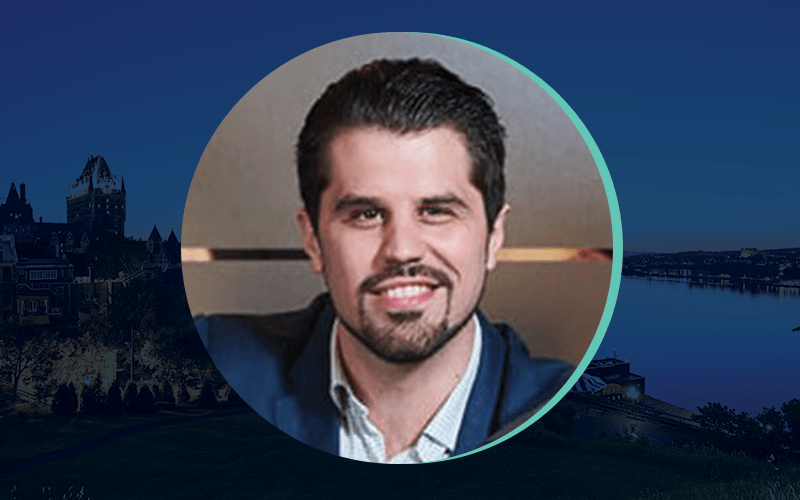
Alexandre Champoux
Episode
Alexandre Champoux is a business entrepreneur who formerly owned and managed Alliance Pavage from 2009 to 2018. This business specialized...
Key takeaways
- La passion et l'initiative sont les deux seuls facteurs essentiels lors du recrutement dans une startup, car on ne peut pas enseigner ces qualités.
- La communication constante avec votre partenaire de vie est cruciale pour réussir en tant qu'entrepreneur, surtout lors des périodes de sacrifice.
- En rendant la construction plus efficiente grâce à la technologie, on peut réduire les coûts opérationnels jusqu'à 40% tout en diminuant l'impact environnemental.
- Écouter est l'une des compétences les plus importantes d'un entrepreneur, même si on pense que notre rôle est principalement de vendre et promouvoir.
- Le succès d'une startup repose sur le travail d'équipe en divisant les responsabilités selon les forces de chacun plutôt que d'essayer de tout faire soi-même.
Transcript
Full transcript page · Interactive episode
============================================================
TRANSCRIPTION WITH SPEAKERS
============================================================

[00:00] SPEAKER_00: It's Qua Backspot Cast, on the Canada's Podcast Network.
[00:30] SPEAKER_01: Aujourd'hui, on a Alexandre Champou,
[00:33] SPEAKER_01: qui est le coût de l'élection de Sevalgo avec nous.
[00:36] SPEAKER_01: Donc Alexandre, merci de nous être avec nous aujourd'hui.
[00:39] SPEAKER_02: Merci beaucoup, Sandra, pour avoir eu un podcast sur vous.
[00:42] SPEAKER_01: Merci.
[00:43] SPEAKER_01: Donc, vous êtes un peu plus d'un peu plus d'entrepreneur et de l'entrepreneur.
[00:47] SPEAKER_01: J'ai une journée où vous avez besoin d'être là.
[00:50] SPEAKER_02: Bien, l'entrepreneur a été un très jeune âge.
[00:54] SPEAKER_02: Je n'ai jamais dit de faire quelque chose.
[00:58] Speaker UNKNOWN: Je suis ent temptée de faire expert comme unmiens.
[01:00] SPEAKER_02: Je ai Startet sur le bours
[01:00] SPEAKER_02: et je suis 17 ans avant qu'on était en Afro 1 et 3kms.
[01:21] SPEAKER_02: Rédius. After that, I turned to landscaping, which was a little bit of an incidence from the second company.
[01:29] SPEAKER_02: And that company grew very fast in the West Island as well. We did jobs all over Montreal.
[01:37] SPEAKER_02: And then in 2009, that became a construction company when I started studying civil engineering.
[01:45] SPEAKER_02: So I basically had a company called Alliance for 10 years. So from 2009 to 2018.
[01:55] SPEAKER_02: So last summer, we closed down and sold the company. We built major projects all over Montreal,
[02:03] SPEAKER_02: like the Bonneventure Park, which is an emblem in the Montreal Corps, a portion of the airport
[02:09] SPEAKER_02: de Montreal, metro stations, like Honoré Bougre, which was the biggest renovation.
[02:17] SPEAKER_02: And we had 50 employees, and at a certain point, we lost control of our operations.
[02:22] SPEAKER_02: So two and a half years ago, me and 14 other engineers got together and we conceived
[02:30] SPEAKER_02: Sevalgo, which was a platform to help entrepreneurs manage their operations.
[02:38] SPEAKER_02: So that's a fun journey. It's every day. It's a lot of work, but we're passionate about that.
[02:43] SPEAKER_01: That's awesome. So you really built on your experience and then your education to build the company
[02:48] SPEAKER_01: that you have now. And what does it do exactly?
[02:52] SPEAKER_02: So Sevalgo is a web platform that basically links scheduling with live performance feedback.
[02:59] SPEAKER_02: Through the same tools, the industry's been using for decades, we are able to collect speed of
[03:05] SPEAKER_02: execution. So with the speed of execution, which is a performance, we're able to predict costs,
[03:13] SPEAKER_02: delays, and resources of ongoing and future projects with artificial intelligence.
[03:19] SPEAKER_01: Well, that's really cool. And so you're located in Montreal and you've been there all your life,
[03:26] SPEAKER_01: and thus the reason why you're bilingual, a lot of Montrealers.
[03:30] SPEAKER_01: So what was your experience of starting a company, especially a tech startup in Montreal?
[03:37] SPEAKER_01: What are the benefits or what are the challenges that you face being in Montreal?
[03:43] SPEAKER_02: First of all, starting a company is never easy. A lot of startups, it's their first companies,
[03:50] SPEAKER_02: so they have to learn to be an entrepreneur. It's a lot of work and a lot of sacrifice.
[03:56] SPEAKER_02: I know everybody says that, but when you live it, you just have to be passionate about it.
[04:02] SPEAKER_02: And you do it every day, and you never look back. And I've been doing sacrifices all my life.
[04:07] SPEAKER_02: I mean, I rarely went out and played with friends. I was always on business.
[04:12] SPEAKER_02: And I mean, Montreal is a great place to start a business. There's a lot of people, but there's
[04:17] SPEAKER_02: a lot of help too. We were with Sevalgo. We did Sentec with ETS. So that's the most important
[04:24] SPEAKER_02: school of engineers. I was saying Quebec. And so they helped us a lot to develop the first
[04:31] SPEAKER_02: stages of our company. And then with further development, we got into Next36 actually through
[04:40] SPEAKER_02: at NextAI, which is part of Next36. So Montreal is a great place. There's a lot of help.
[04:46] SPEAKER_02: A lot of people give back. So I mean, that's, you know, learning from experience is always good.
[04:52] SPEAKER_02: But being an entrepreneur, I guess it's hard to learn. You have to be it.
[04:57] SPEAKER_02: You can learn it, but I mean, you have to be passionate about it.
[05:02] SPEAKER_01: Yeah. So passion. And I think I don't want to drag, but I think that passion is something that we,
[05:08] SPEAKER_01: that a lot of Quebecers have from our personality and maybe our history. So right now,
[05:16] SPEAKER_01: your life is like you live in Montreal, you're bilingual. Does your client or like what does
[05:22] SPEAKER_01: your day to day look like being a bilingual entrepreneur in Montreal? Okay. So that's an interesting
[05:28] SPEAKER_02: story. My day to day, what it looks like. I guess I kept very good habits of construction. I get up
[05:36] SPEAKER_02: at 415 in the morning. And I'm at the office five. And I come back at eight in at the evening.
[05:45] SPEAKER_02: So we said a lot of sacrifices, right? So the story is that we had a six million dollar company,
[05:53] SPEAKER_02: which we sold and closed down to be CEO of a startup with, you know, a lot of potential, a lot of
[06:02] SPEAKER_02: clients, but initially very hard on cash flow while my wife is pregnant. So I mean, those are all
[06:09] SPEAKER_02: situations of sacrifices, but you have to be true to yourself and understand, you know, your
[06:15] SPEAKER_02: game plan to make it happen. That was the day to day. Can you repeat the second question, perhaps?
[06:22] SPEAKER_01: Our audience here are either in Canada and the States, not all of them are in Quebec. So what
[06:29] SPEAKER_01: does that look like for your company to be growing in a bilingual city? Like, does most of your
[06:35] SPEAKER_01: clients are in our, our francophone in the province or anglophone or you're all across Canada?
[06:41] SPEAKER_01: Like, when you interact with people for your businesses and as an entrepreneur, is it mostly in
[06:46] SPEAKER_02: English or in French? I would say that it's mostly in English, even though we started in Quebec,
[06:53] SPEAKER_02: like our first clients were major road companies in Quebec, like Uni Rock construction,
[07:01] SPEAKER_02: Pec 2000. Those are our French companies, but we interact all over Canada and the United States.
[07:10] SPEAKER_02: So no, we have to be bilingual. So the majority of our business is done in English.
[07:15] SPEAKER_01: Great. Okay. Good to hear. And what has been the greatest challenge that you face starting
[07:20] SPEAKER_01: this business or maybe as an entrepreneur because you've been an entrepreneur for more than 10
[07:25] SPEAKER_02: years, as you said. The greatest challenge. So basically, it's a challenge to find the great people,
[07:34] SPEAKER_02: but I guess that there's a very easy way to filter the best talent and the people that you need
[07:41] SPEAKER_02: in the startup. So once again, we're bringing back passion and initiative. You know, people that
[07:47] SPEAKER_02: want to have the greatest conditions in the startup, when you're starting out, I mean, that makes no
[07:53] SPEAKER_02: sense. So obviously, talent is one of the biggest problems in all the industries. But once you've
[08:02] SPEAKER_02: had the core people, like I said, we're 14 and we just onboarded a master's degree in business
[08:09] SPEAKER_02: from ASC. And I mean, we have talented people that are not looking for the day-to-day paycheck.
[08:16] SPEAKER_02: They see the long run. But sometimes it's difficult when you want somebody and they don't have
[08:22] SPEAKER_02: the same vision. It's kind of hard to teach them that because once again, you can't teach that.
[08:27] SPEAKER_02: You have to have passion and initiative because if you're passionate, even if you're not the best,
[08:31] SPEAKER_02: you're going to find the way to be the best and initiative, well, you're going to be able to learn
[08:36] SPEAKER_02: on your own and bring great ideas to the table. So those are really the two only factors we're
[08:42] SPEAKER_02: looking for in Sylvago. I mean, we have, I think it's 11 devs, computer devs, software engineers,
[08:51] SPEAKER_02: and all of them are the same. They're just looking for the goal. I mean, a lot of people are
[08:56] SPEAKER_02: doing sacrifices. And when you do sacrifices, that's where you get a great payoff. That's, you know,
[09:02] SPEAKER_01: that's how I believe it is. Great. Thank you. And talking about sacrifices and earlier you said,
[09:09] SPEAKER_01: you know, like having your wife being pregnant, like for all the partners of entrepreneurs,
[09:16] SPEAKER_01: what advice would you say to your partner or to any partners out there to prepare them for
[09:22] SPEAKER_02: living, being the spouse of an entrepreneur? Well, they have to be patient because entrepreneurs,
[09:28] SPEAKER_02: most of the time, were crazy. So yeah, being patient, but it always goes through communication.
[09:38] SPEAKER_02: And, you know, if there's true love, the partner will understand because in my case, I could not
[09:44] SPEAKER_02: have it any other way. I had to do a transition when I closed my company to have, you know, a job.
[09:52] SPEAKER_02: And I was miserable. So I mean, it goes through communication and support. And, you know,
[09:59] SPEAKER_02: through communication, you can solve anything. So it's always of being fair with your partner. And,
[10:03] SPEAKER_02: you know, I'm talking about what makes you happy and what you need to do to actually live happy life.
[10:10] SPEAKER_01: Yeah, yeah, I think being happy is definitely definitely the core of everyone's life, but also
[10:16] SPEAKER_01: of a successful business. And talking about like, you know, vision or what makes you happy, like,
[10:21] SPEAKER_01: what are what are what are the top three things on your vision board right now?
[10:26] SPEAKER_02: I suffered from construction. I invested 10 years and I gave it everything I've had. And obviously,
[10:33] SPEAKER_02: I made a ton of mistakes like growing too fast, working for the wrong people,
[10:39] SPEAKER_02: through keeping the wrong people at strategic places in the company. So the vision of
[10:45] SPEAKER_02: Civalgo is to make the construction industry better and more profitable. That's one of the first goals.
[10:55] SPEAKER_02: And by using our methodologies, we're able to, you know, reduce the cost of operations up to 40%.
[11:03] SPEAKER_02: Another goal would be that by tracking performances, we're able to make construction way
[11:11] SPEAKER_02: more efficient. So that has an impact on all the society. I mean, in Montreal right now,
[11:16] SPEAKER_02: it's no surprise, everybody hates construction. It's everywhere. It's disturbing every single
[11:22] SPEAKER_02: people that lives on the island of Montreal and around. So by making construction more efficient,
[11:28] SPEAKER_02: not only are the construction companies going to make more money, but, you know, all the residents
[11:33] SPEAKER_02: are going to be, you know, less disturbed and annoyed. And then there's a huge impact on the
[11:39] SPEAKER_02: environment, but because by knowing your resources, you're able to plan better. And by planning better,
[11:45] SPEAKER_02: you're wasting less. So just by going less times on a work site, you know, those big heavy trucks
[11:51] SPEAKER_02: that pollute a lot. So just by being more efficient, we have an immense impact on the environment.
[11:58] SPEAKER_02: Those are the three main goals, but really if we come back to the why is because we want to make
[12:05] SPEAKER_02: the construction industry way more efficient. Through artificial intelligence. Yeah, absolutely.
[12:13] SPEAKER_01: And then the method, the process that you created that has been proven to be more efficient
[12:19] SPEAKER_02: than what's been used out there. Yeah, actually, even in beta testing, one of our clients in 2018,
[12:27] SPEAKER_02: saved $347,000 by using our app. So just by reducing double manipulations through scheduling,
[12:35] SPEAKER_02: work orders, life performance feedback, data analysis, and estimation, that natural cycle,
[12:43] SPEAKER_02: that all the entrepreneurs do, we linked it together. So we're demonstrating tremendous
[12:49] SPEAKER_02: reductions on cost and also risk. The risk reduction is a little bit more like harder to quantify.
[12:57] SPEAKER_02: But let's say you're doing a bid and you're off. How much is that error worth? It's worth the
[13:03] SPEAKER_02: number of the difference, right? So yeah, we're having a huge impact on the environment of construction
[13:11] SPEAKER_02: in Canada. So we have clients all over Canada, actually, right now. That's great. Congratulations.
[13:18] SPEAKER_01: And coming back to you, one thing that our entrepreneurs say and like we love to hear
[13:25] SPEAKER_01: depending of the city that you live in, like, you know, some of our best ideas come from
[13:30] SPEAKER_01: when you're outside of the office or, you know, you have a special routine. Like for you,
[13:36] SPEAKER_01: like, where do you go in Montreal to actually get inspired or rechart or just disconnect?
[13:42] SPEAKER_02: That's a tough one because disconnecting is not something that I do really often. But I guess
[13:48] SPEAKER_02: that when we go into a lot of events, so we're promoted through startup Canada,
[13:54] SPEAKER_02: Fundica, a lot of road shows. So we participate in events and trade shows. So it's always by meeting
[14:01] SPEAKER_02: people, meeting people in exchange. And also listening is one of the most important factors of
[14:08] SPEAKER_02: an entrepreneur. You think you're always selling and you're always promoting. But if you don't know how
[14:13] SPEAKER_02: to listen, you're in trouble. So I would say that, you know, conversating with people of different
[14:21] SPEAKER_02: industries, different knowledgees, different backgrounds, I would say that that would be the number one
[14:28] SPEAKER_01: priority to get inspired. Great. That's awesome. Yeah. And it really depends on the personality
[14:34] SPEAKER_01: of the person, right? Sometimes we have answers that's like, I like to go like hiking or I like to go,
[14:39] SPEAKER_01: you know, like some like a place quiet. But for you, what energizes you, it's actually to get
[14:43] SPEAKER_01: with people and talk with people from different backgrounds so that you get to learn and then get
[14:48] SPEAKER_01: to grow. Absolutely. Great. Well, and are there any books or podcasts? Where do you get some sort of
[14:55] SPEAKER_01: like knowledge right now that you would like to share with our audience? Well, you know, through
[14:59] SPEAKER_02: next AI in Montreal, there is a lot of great people that come to inspire us. I would say that
[15:06] SPEAKER_02: the prediction machines book is an AI book for the general public. It explains all the factors
[15:15] SPEAKER_02: involved and from Jay Agraal in Toronto. And I really appreciated that book. But through next AI,
[15:23] SPEAKER_02: we have a lot of mentorship, a lot of experienced people that come to give us extra knowledge.
[15:30] SPEAKER_02: And I would say that my two other co-founders participate a lot because we're very different,
[15:35] SPEAKER_02: but we all come from a construction background. But Gabrielle Krotot, which is our CPO,
[15:41] SPEAKER_02: he worked with us at Alliance for five years as an estimator and project manager.
[15:46] SPEAKER_02: He has the gift of simplicity and he's in charge of the product. But he's very good in research.
[15:51] SPEAKER_02: He's always finding the newest thing, the newest method. So I would say that we split the
[15:57] SPEAKER_02: responsibilities and Gabrielle's good at that. And Samuel Krotot, his brother, actually, he's the
[16:05] SPEAKER_02: CTO and he's in charge of the dev team. So he's an expert in AI and machine learning,
[16:10] SPEAKER_02: having worked at the Genetek and CIA. So he is very up to the newest technology. So these two
[16:19] SPEAKER_02: guys bring a lot to the table when it's the time to get involved with some new and creative methods.
[16:27] SPEAKER_01: Yeah, that's great. So like, instead of having for you to be up to date with everything that's
[16:32] SPEAKER_01: going on in your sphere, you actually like split the knowledge so that together, you have like
[16:39] SPEAKER_01: common knowledge about everything you need to know to be up on the edge. Absolutely. It's always
[16:44] SPEAKER_02: about the team, right? You can't do everything by yourself and by having the best team. That's how
[16:49] SPEAKER_02: we're going to have, you know, the best way to change the construction industry. Great. Well,
[16:54] SPEAKER_01: then we're already at the last question. So this one is for you personally. So there's a small,
[17:01] SPEAKER_01: beautiful tropical island in the middle of the ocean. And there's only one phone booth and no
[17:07] SPEAKER_01: internet. So you have no access to technology. We take a boat. We drop you there. And the question
[17:13] SPEAKER_01: is, well, two questions. So how long would it take you before you pick up that phone and call
[17:20] SPEAKER_01: the boat so that it comes and pick you up? And the second one is what would you do in between the
[17:25] SPEAKER_01: time that you're dropped there and that you pick up that phone? It depends. Am I going to be with
[17:29] SPEAKER_02: my wife on that island or am I by myself? You're going to be by yourself. Wow. Okay. So I would
[17:36] SPEAKER_02: I would probably call my wife fairly fast. But I mean, after that waiting for the boat, I would
[17:44] SPEAKER_02: probably play around with a lot of things. I would build stuff. I'd break stuff. I'd play around
[17:50] SPEAKER_02: with a lot of things. But this is an interesting question because it's a weird answer. But that's how
[17:55] SPEAKER_02: I would like to end my days on an island with nothing with my family, you know, being involved with
[18:01] SPEAKER_02: all the technology, having the contrast. And that's like one of my dreams actually to be designated
[18:08] SPEAKER_02: to a rest area and having, you know, just the basic needs to fulfill. So yeah, I would love
[18:16] SPEAKER_02: being at Desert Island after having accomplished. That's after having accomplished all my goals.
[18:22] SPEAKER_01: So it would be the reward I would say. Great. That's a great answer. And like, I'm sure your wife
[18:29] SPEAKER_01: will be listening and being like, yes, I like this answer. Great, Alexandra. So how can our listener
[18:38] SPEAKER_01: get a hold of you? And is there anything you would like to add before we end this conversation
[18:45] SPEAKER_02: Yeah. So basically very easy to get in touch. C Valgo C-I-B-A-L-G-O.com is the best way my phone
[18:55] SPEAKER_02: numbers on the site you can call me almost 24 hours a day. And we would be happy to help anybody
[19:02] SPEAKER_02: in the construction industry or if people want to get involved. We're always looking for the best
[19:07] SPEAKER_02: talent. So fairly easy to get in touch with. And I would say maybe something that will be
[19:13] SPEAKER_01: intriguing for our audience is learning how you get a business started with 14 people. To me,
[19:19] SPEAKER_01: that's one of the first questions I would ask if I were to pick up that phone. Yeah, absolutely.
[19:24] SPEAKER_02: We'll be happy to answer that. There's no secrets. It's it's all about leadership. There you go.
[19:28] SPEAKER_01: There's the answer. Awesome. Well, thanks for coming on the show today. I will chat soon.
[19:35] SPEAKER_02: Thank you very much, Sandra. Have a great day.