
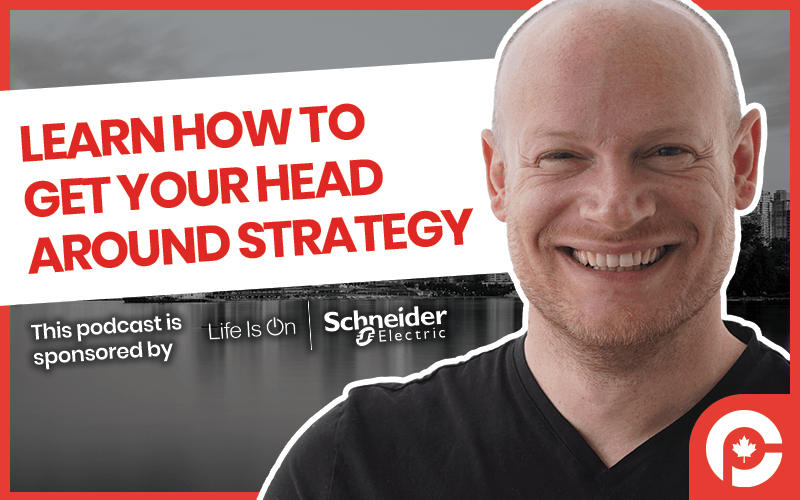
Learn how to get your head around strategy
Episode
A globally active strategist, executive coach, and board advisor, Alex Brueckmann partners with corporate leaders, entrepreneurs, and (small) business...
Key takeaways
- The coaching industry is overcrowded with unqualified practitioners, so if you want to become a coach, invest in proper education and accreditation through recognized organizations like the International Coach Federation.
- When starting a business, focus on being intentional and excellent at one thing rather than spreading yourself thin across multiple ventures, as very few entrepreneurs can successfully manage multiple companies simultaneously.
- Building an online scalable business requires significant upfront investment in areas like course creation, copywriting, and social media expertise, so ensure you have adequate capital before launching.
- Business culture and client engagement differ significantly between regions—in Canada, initial conversations tend to be exploratory rather than commitment-focused, resulting in lower conversion rates compared to European markets.
- Make continuous learning a priority by committing to acquire a new skill, certification, or complete a course every year to stay relevant and grow as an entrepreneur.
Transcript
Full transcript page · Interactive episode
============================================================
TRANSCRIPTION WITH SPEAKERS
============================================================

[00:00] SPEAKER_00: Welcome to Canada's podcast.
[00:05] SPEAKER_00: This podcast is brought to you by Schneider Electric,
[00:09] SPEAKER_00: supporting Canadian businesses with innovative energy management and automation solutions.
[00:15] SPEAKER_00: Schneider Electric, your digital partner for sustainability and efficiency.
[00:20] SPEAKER_01: Hello, this is Robert Spigel and welcome to the BC edition of Canada's podcast
[00:24] SPEAKER_01: where we talk to the entrepreneurs who are making it happen here in British Columbia.
[00:28] SPEAKER_01: Our guest today is Alex Abruckman.
[00:31] SPEAKER_01: Alex is a globally active strategist, executive coach and board advisor.
[00:37] SPEAKER_01: Alex partners with corporate leaders, entrepreneurs and small business owners.
[00:40] SPEAKER_01: He coaches them on designing intentional strategies with measurable impact
[00:44] SPEAKER_01: and on shaping cohesive teams able to implement strategy faster and more successfully.
[00:51] SPEAKER_01: They value Alex's sands on approach of combining the strategic side of business
[00:57] SPEAKER_01: and the human aspect of transformation.
[01:00] SPEAKER_01: Alex, welcome to Canada's podcast.
[01:03] SPEAKER_01: Thanks for taking the time today to be here for all our listeners.
[01:06] SPEAKER_02: Thank you for having me, Robert.
[01:07] SPEAKER_02: We're really excited to be in your great show.
[01:10] SPEAKER_01: Awesome. I can tell by your accent we've talked in the past.
[01:12] SPEAKER_01: You're from Germany, Germany, so that's good.
[01:14] SPEAKER_01: But also tell us what it was like and when you came to Canada and give us the details on your current business.
[01:21] SPEAKER_02: I came to Canada just right when the pandemic hit.
[01:24] SPEAKER_02: So we were actually we were pulling our flights forward because Air Canada or Louft Hanside was state told us that our April flights will be canceled.
[01:35] SPEAKER_02: So we hopped on the last plane from Frankfurt to Vancouver before air Canada actually shut down their service.
[01:43] SPEAKER_02: So arriving here right at the beginning of the pandemic was not easy.
[01:48] SPEAKER_02: So I came here because of love my girlfriend is from Canada.
[01:52] SPEAKER_02: She was born in a Westminster and it was it would have been great to have family around when you come to a new country, but yeah, I mean everyone has experienced how those past months were or year work was so it was very difficult in the beginning, but we worked our way through it and we stuck to our decision, which was great.
[02:14] SPEAKER_02: So we stayed here, we love it here.
[02:16] SPEAKER_02: As I said, my girlfriend's family lives around so it's it's not that we completely started a new and I really enjoyed those first 18 months in the country, even if it was kind of difficult.
[02:30] SPEAKER_02: What I do, the second part of the question, I try to make a living as everyone else.
[02:37] SPEAKER_02: I've been an entrepreneur back in Europe with my partner, we built and scaled the company there.
[02:45] SPEAKER_02: First in Germany, then later in Iceland and also in the UK, the business is running very successfully and when I decided to relocate to Canada, I kind of changed my role within the company and started my new business a bit more than two years ago now.
[03:01] SPEAKER_02: Where I focus less on servicing large corporations as a strategy consultant and more on helping aspiring entrepreneurs, small business owners to get the head around strategy based on my experience of the past 15 years, what strategies, how it works and how it helps small companies become more successful and grow.
[03:27] SPEAKER_01: Okay, good. Now did you need financing to start your company here in Canada and how do you currently make money in the business now?
[03:35] SPEAKER_02: No, I didn't need any financing. Business has been very good over the past year, so I had quite some money in the bank to start my own business, which is really good because starting a business from scratch, the way I do it requires some investments upfront.
[03:53] SPEAKER_02: So if you start building an online business and most of the work that I do here in Canada is offering online courses around the topic of strategy, you just need to invest a lot of money, you need to build these courses, record videos, get your social up and running and you can't do this on your own.
[04:14] SPEAKER_02: You need people that help you. So there are copywriters involved there are social media experts involved. There's all kind of work involved also I just finished writing my book some month ago.
[04:25] SPEAKER_02: There is a literary agent involved helping me a ghost writer involved helping me get some pieces of the book here and there to a higher level. So there's a lot of pre investment that you need.
[04:36] SPEAKER_02: And I'm really happy that over the past years I saved quite some money that I now put into my new business. And at the same time, of course, I need to make money, which works in a way I mentioned my previous company.
[04:50] SPEAKER_02: I'm still associated to that company. I'm running their largest client account for them. It's a relationship with that client that I built from scratch over many years.
[05:00] SPEAKER_02: So this helps me to fund the transition and to build my new dream business while still serving my previous clients.
[05:11] SPEAKER_01: Okay, I want you to give me a key piece of knowledge or information about your industry, particularly coaching that our listeners can learn from that they may not know about.
[05:24] SPEAKER_02: Would it be more valuable if I talked about the industry as such if you want to join this industry.
[05:33] SPEAKER_02: Then I would say this is an industry that is completely overpopulated with people that think they are coaches, but have no coaching education whatsoever.
[05:44] SPEAKER_02: And therefore deliver incredibly poor service. So you need to be there. If you want to become a coach and if you want to be part of this industry, you need to know extremely well why you want to do this.
[06:00] SPEAKER_02: And what the unique value is that you will bring to your clients. And everyone can call themselves a coach. It's not a protected job description or title or anything.
[06:11] SPEAKER_02: So if you consider yourself to be a coach, make sure you know your business and you know how to coach.
[06:19] SPEAKER_02: And my tip would be to take a coaching course with one of the large training organizations renowned training organizations that would then give you also the possibility to be accredited by the international coach federation.
[06:36] SPEAKER_02: An example would be performance consultants international in the UK, for example, or around the world. There is CTI, the coach training institute that can help you with that.
[06:49] SPEAKER_02: I personally learned so much during my education with CTI. I'm benefiting from that every day. And it really helps me not only in my business, not only in my job as an executive coach.
[07:04] SPEAKER_02: But it really helped me to figure out some key things in my own life. It helps me with self leadership a lot.
[07:12] SPEAKER_01: Okay, what is the long term vision and what will your company look like in the future? Do you see your company expanding into areas and where beyond Vancouver, BC or even Canada?
[07:21] SPEAKER_02: This is a funny question to ask to a strategy consultant because of course I do have a longer term vision for my business.
[07:30] SPEAKER_02: As I consult people, I run my business in the same way. So I have a three year rolling strategy in place that helps me focus my priority on those focus areas that count most in order to grow the business.
[07:47] SPEAKER_02: And my business is not limited to BC right now. So I have clients all over the world, especially entrepreneurs all over the world that take my courses that I support in building their businesses and helping them get the head around the topic of strategy overcome some hurdles and barriers that they find on the way.
[08:10] SPEAKER_02: But my business is completely changing because of the pandemic, I realized how wonderful it is to be around my son 24, 7, basically. So and before that, I was traveling a lot.
[08:22] SPEAKER_02: 60, 70% of my time. So that has changed completely. My offering is now more online based and it will stay that way.
[08:31] SPEAKER_02: I will reduce them or I already have reduced the amount of travel for face-to-face consulting services, for example, for larger clients.
[08:39] SPEAKER_02: To a very, very large degree, which meets my personal intention to live a more conscious life in a sense that I don't want to have too big of a carbon footprint anymore through flying, for example.
[08:58] SPEAKER_02: And my business, since it is mainly online, is a business that is for the first time in my life, it's a scalable business.
[09:07] SPEAKER_02: Before that, my business was very much focused on delivering face-to-face leadership trainings, leadership courses and strategy projects, which now is kind of fading out to a certain degree.
[09:22] SPEAKER_02: I believe I will always do parts of that work because I enjoyed so much. But the larger and larger and growing part of my business and revenues will definitely come from offering online courses to help entrepreneurs scale their business.
[09:36] SPEAKER_01: Okay. How do you know if someone's coachable? I mean, if you come across an entrepreneur that kind of is a no-world-all or, you know, been through this head coach's, you know, how do you determine that?
[09:47] SPEAKER_01: Are you coachable? Is that something you consider when you're taking on a new client?
[09:54] SPEAKER_02: I did. I just did so recently, a young aspiring entrepreneur from Montreal, a great guy, by all means, a visionary and someone who has incredible energy, but someone who understood through the first two conversations that we had that he's not in the right state of mind.
[10:16] SPEAKER_02: He was a great client to be coached. He was someone that super positive and very energetic, but that completely lacked prioritizing his own personal development as an entrepreneur.
[10:32] SPEAKER_02: So while he was incredibly great at understanding his industry and a visionary when it comes to shaping this industry, he admitted when I confronted him with it, he basically admitted that he had different priorities.
[10:51] SPEAKER_02: So he reached out to me, actually, and what I wanted to work with me, but in those first two phone calls, we realized that he needs to prioritize his own development in a different way and be more serious about wanting to grow personally than he was.
[11:10] SPEAKER_02: So we call it a day and I'm pretty sure at some point in time, when the time is right for him, he will reach out again. And this is typically when those people, when those entrepreneurs hit a wall for some reason or repeatedly hit a wall for some reason and then be like, hmm, I wonder whether a coach could help me now.
[11:31] SPEAKER_00: At Schneider Electric, we empower Canadian businesses to utilize energy and resources efficiently Schneider Electric, the future of energy.
[11:43] SPEAKER_01: Let's talk a little bit about doing business in British Columbia. What's the biggest bonus for you and being an entrepreneur here in Vancouver, BC? I want you to give some of the good points about starting a company here, but I also want you to give some of the tough things or challenges you've encountered.
[11:57] SPEAKER_02: So our listeners can keep an eye on that. I think the best points about living and working here in BC is BC as such, just the surroundings, the nature.
[12:07] SPEAKER_02: It's very easy for you to get your head off work and cool down and find balance in life, which is I think immediate, incredibly important for entrepreneurs.
[12:17] SPEAKER_02: When it comes more to what does BC offer, what is it that BC offers that makes working here or founding a company easier, I would say it was incredibly easy to actually register a company.
[12:32] SPEAKER_02: There's not a lot of sludge here that you need to go through. It's just very easy to incorporate your company to start working.
[12:43] SPEAKER_02: There are some clear rules and guidelines in place. And if as long as you follow those all works well. Having said that, I'm still struggling with the CRA when it comes to taxing.
[12:57] SPEAKER_02: This is so different than in Germany that I still have to get my head around. But hey, that's me living in a new country. So that's just part of the game.
[13:06] SPEAKER_02: What I think is different and what would make me think a lot is how business is being approached from a mindset perspective.
[13:20] SPEAKER_02: And I give you a very concrete example. When I talk to companies in Europe when they approach me and ask us to pitch for a project, there would be very deep discussions.
[13:31] SPEAKER_02: There would be very concrete ideas already exchanged in that process. And you build a strong relationship with these people already in pitching process.
[13:42] SPEAKER_02: And the moment they actually reach out and want to know about your business, they are already serious about this here in Canada.
[13:51] SPEAKER_02: So they would have done their homework, they would have done their research, they would not approach it. They didn't feel you were the fit.
[13:57] SPEAKER_02: Here in BC, it seems to be slightly different. The relationships or conversations that I had with other business people that approached me or that answered when I approached them are more of more on a basis of curiosity or general feeling of some interesting.
[14:14] SPEAKER_02: Let's explore this. And there's not been too much business coming from from this channel. Then I'm used to or I used to be.
[14:26] SPEAKER_02: Let me give you a concrete number. Back in Europe, I would have a closing rate of 80% of fleets. When when people approach me for business, when we talk about how to further develop their company strategically or how to implement leadership development programs.
[14:42] SPEAKER_02: 80 out of 10 would work with me once they would be on the phone with me to discuss their projects here in Canada, that number dropped below five.
[14:51] SPEAKER_02: It's just a different stage in the process where people approach you. And this is something you have to get used to when when you change countries, continents, it's just a different mindset and a different way of doing business.
[15:07] SPEAKER_01: How do you educate yourself? What books you read now and why are you even audiobooks and podcasts? And can you recommend any books for listeners who are also totally totally.
[15:18] SPEAKER_02: I became a bookworm over the past years. And I think many of us started to read more during the pandemic. So this is a good time to write good books and to read good books.
[15:31] SPEAKER_02: Two of the books that I'm currently reading are the Ministry of Common Sense by Martin Lindstrom. It's a book that deals with red tape in all kinds of aspects in life and in business.
[15:44] SPEAKER_02: It's really interesting to cut through it. And another book that I'm currently reading is Think Again by Adam Grant, a world-renowned expert in his field of organizational psychology.
[15:58] SPEAKER_02: I love how he works. His books are amazing. Not just this book. All books. His podcast is amazing. So I also recommend to listen to his podcast.
[16:11] SPEAKER_01: There was a second part of the question, Robert. What was that? Do you listen to audiobooks, podcasts, any other forms of educating yourself beyond the book?
[16:20] SPEAKER_02: Yeah, educating myself. That was the point. Exactly. So apart from listening to podcasts and reading books, I'm a strong believer in constant education and continuous education.
[16:32] SPEAKER_02: So I made a pledge, I think six or seven years ago, that I would learn a new skill or visit a course or get a certification every year.
[16:47] SPEAKER_02: So this year's education was visiting Harvard Business School and they have a huge amount of online courses, really great online courses that you can just from the comfort of your home take.
[17:04] SPEAKER_02: I took a course called Sustainable Business Strategy, which has a concept at the center that resonates very much with my own purpose, which is doing well while doing good.
[17:20] SPEAKER_02: So how can entrepreneurs build a business that allows them to do well financially while doing good for a concrete purpose out there?
[17:30] SPEAKER_02: So it's basically about becoming very conscious about how you build your business, how your supply chain looks like, what you can do to make the world a better place to either increase or improve the quality of life of the people up and down your supply chain, your own employees, what is your your carbon footprint, anything around environmental and social impact.
[17:55] SPEAKER_02: A course that is tremendously valuable for every entrepreneur.
[18:01] SPEAKER_01: Okay, if you weren't doing what you do now, what would you like to do for a profession?
[18:07] SPEAKER_02: I think I would love to teach history. It was always my dream to become a history professor because I enjoyed history classes so much back in school.
[18:20] SPEAKER_02: But I think I took the easy way out at some point in time. I asked myself, do I want to study something that I'm totally passionate about now?
[18:29] SPEAKER_02: And then probably have a very, very hard life, finding a job and making a living as a university professor for history.
[18:37] SPEAKER_02: I mean, there is only a finite number of jobs out there for this kind of profession.
[18:43] SPEAKER_02: Or do I want to study something that I'm not really passionate about, like business administration, which is kind of, nah, dry, but it opens just an incredible amount of opportunities because it's such a broad field.
[19:00] SPEAKER_02: So in a sense, that took the easy way out, but in the other way, on the other hand, it wasn't easy for me to go through business administration university until I found my true passion, which was the people's side of business rather than the processes or money side of business.
[19:18] SPEAKER_02: And this is where I eventually started building my companies around.
[19:22] SPEAKER_01: In business, what is your favorite word quote or sentence that you like to use?
[19:30] SPEAKER_01: Just something you use frequently when you're talking to your clients.
[19:33] SPEAKER_02: Yeah, totally. There are a few. First of all, I strongly believe in what goes around comes around how you treat people will always get back at you.
[19:42] SPEAKER_02: If you treat them well, they will treat you well and they will elevate you. If you treat them in a bad way, it will fall on your own feet.
[19:53] SPEAKER_02: And one of one of the most favorite sentences that stem from my time as a management consultant when I was still employed as a management consultant was garbage in garbage out.
[20:05] SPEAKER_02: So if you're assumptions suck and you build your business on assumptions that don't make sense or a pipe train, you will definitely not build a successful business.
[20:16] SPEAKER_02: If you if your assumptions assumptions are garbage, your business will not work.
[20:21] SPEAKER_01: Which your least favorite word or sentence you do not like to hear.
[20:26] SPEAKER_02: Anything that is looking down on people, anything that is the regulatory or is, for example, gossip in general.
[20:38] SPEAKER_02: I hate when people gossip about other people. It's kind of a poison that just is no good for any company, any business, because it just poisons the atmosphere.
[20:53] SPEAKER_01: Office politics, I mean.
[20:55] SPEAKER_02: Not so much office politics, really talking about other people in a negative way, like, oh, has he's being colleague a and B.
[21:04] SPEAKER_02: Just driving again, the brand new, I don't know, the latest Tesla model. I wonder how they make all this money. I bet there's something illegal going on.
[21:15] SPEAKER_02: Things like that really, really bad talking bad about people not in an intentionally bad way was just engaging in gossip.
[21:25] SPEAKER_02: So that people that gossip is something that does not talk well about people. There's no positive gossip.
[21:31] SPEAKER_02: There's a negative gossip for me is something negative in general.
[21:36] SPEAKER_02: It's about talking bad about people to elevate yourself.
[21:41] SPEAKER_02: And that's something I really don't like.
[21:44] SPEAKER_01: It kind of just starts and spirals down.
[21:47] SPEAKER_01: It doesn't go away. It doesn't help anyone. If you had to pick one or two words, describe yourself or to be in why.
[21:59] SPEAKER_02: I think I would like to take those terms that are the 34 Clifton Gallup string find a correct or a sticks.
[22:08] SPEAKER_02: I don't know whether you're familiar with those. There is actually it's a pretty cool online test that tell you what your talents are and how to develop those talents into strengths.
[22:19] SPEAKER_02: And some of my top five are apparently strategic, which makes all sense in the world, given my job.
[22:27] SPEAKER_02: But it's also individualization, which stands for the fact that you are able to talk to individuals in a way that they understand you no matter their background, no matter their status, their age.
[22:46] SPEAKER_02: So you can really target your communication in a way that people can relate to what you say.
[22:53] SPEAKER_02: And this is something super important. If you are in a job like mine, talking about strategy can often be very academic and very up in the clouds and ivory tower style.
[23:03] SPEAKER_02: If you're not able to help people understand what strategy is in normal terms.
[23:09] SPEAKER_02: They will just look at you as kind of weirdo that's not adding value to them.
[23:16] SPEAKER_02: So I would say strategic and individualization are the other two words I would use to describe me.
[23:22] SPEAKER_01: Do you have any advice that you may have received in Germany or even in Canada that you can pass on to entrepreneurs throughout Canada?
[23:35] SPEAKER_02: I think the most important advice that I ever got when it comes to entrepreneurship was be intentional about what you do and really give it your all.
[23:48] SPEAKER_02: So, meaning don't do three things at the same time. If you want to be an entrepreneur, be a great entrepreneur in one thing rather than a mediocre or weak one in three things.
[24:02] SPEAKER_02: There are not too many Elon Musk's out there in this world that can build two or three companies of massive size and success at the same time.
[24:10] SPEAKER_02: This is kind of a superpower. It's probably unparalleled. So, if you want to become a successful entrepreneur, be clear on what you want to do, be clear on what the value is that you add to your clients and build the company intentionally around those around this value and around those springs.
[24:29] SPEAKER_01: Okay, good. We're going to wrap things up Alex. How can our listeners get hold of you and is there anything you'd like to add before you leave us today?
[24:38] SPEAKER_02: I think the only thing that I would like to add is there is tons of value and free resources on my website that you can take yourself into articles on my blog, podcasts that you can listen to where we talk about strategy.
[24:56] SPEAKER_02: And there is the intentional strategy toolkit on my website for you as a free download that will help you first of all understand what strategy really is and how it helps you grow your business for more profit for your more personal freedom.
[25:11] SPEAKER_02: And it's even to find all this on my website. I will not pronounce my name. I just purchased another domain name, which makes it so easy to find me, which is Alex the strategist.com, just type it into your browser and you will land on my landing page where the tool kit is just right there. And you can download it for free and start building a profitable business on purpose.
[25:38] SPEAKER_01: Awesome. Okay. Well, Alex, thank you for coming on the show. I've learned a lot about you, your business and I'm sure our listeners have as well. And to all our listeners, thanks for listening to Canada's podcast and listening to Alex's story.
[25:51] SPEAKER_01: Like, comment and subscribe to all our channels to get the latest podcasts from entrepreneurs across Canada and we'll see you next time. Thanks Alex.
[25:59] SPEAKER_01: Thank you, Robert.
[26:01] SPEAKER_00: This podcast is brought to you by Schneider Electric supporting Canadian businesses with innovative energy management and automation solutions.
[26:11] SPEAKER_00: Schneider Electric, your digital partner for sustainability and efficiency.