
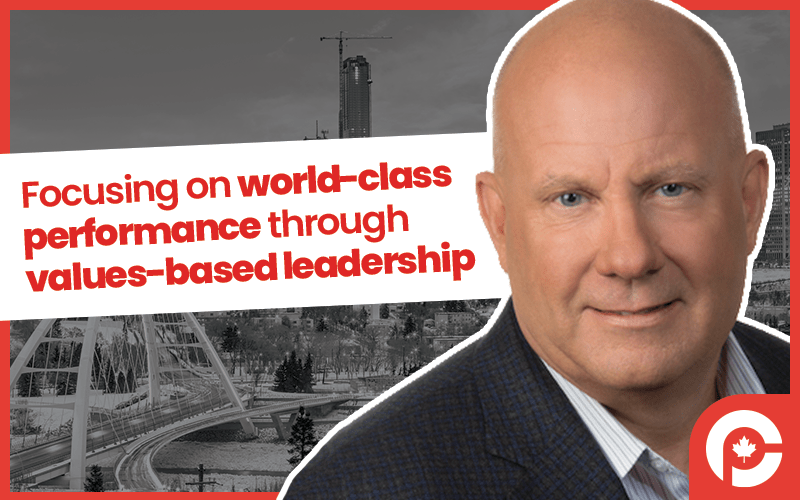
Focusing on world-class performance through values-based leadership
Episode
AJ Slivinski is an accomplished author and award-winning team leader. He wrote “The Leadership Code” which focuses on world-class...
Key takeaways
- Technology and responsive 24/7 communication are essential to modernize property management and meet today's consumer expectations for faster service.
- The hardest competitive advantage to replicate is company culture and values, which requires focusing on people first before processes and technology.
- Being a successful entrepreneur requires being different, stepping outside the box, and having contrarian thinking rather than following the crowd.
- Entrepreneurship is significantly harder than corporate life because you must handle all responsibilities on your shoulders without departmental support systems.
- Financial literacy is foundational for aspiring entrepreneurs, with books like Rich Dad Poor Dad providing essential knowledge not taught in schools.
Transcript
Full transcript page · Interactive episode
============================================================
TRANSCRIPTION WITH SPEAKERS
============================================================

[00:00] SPEAKER_01: Welcome to Countless Podcast.
[00:05] SPEAKER_01: Hello, I'm Mario Toneguzi with Edmonton's podcast on Canada's podcast network.
[00:11] SPEAKER_01: Joining me today is AJ Slavinsky, who is president of Mayfield Management Group in Edmonton.
[00:17] SPEAKER_01: Thanks for joining us today.
[00:20] SPEAKER_01: Thank you very much, Mario.
[00:21] SPEAKER_01: Thank you for having me.
[00:22] SPEAKER_01: Well, let's just start by you telling me what Mayfield Management Group is and what you guys do.
[00:28] SPEAKER_00: Yeah, so Mayfield Property Management Group has been around for 30 years.
[00:33] SPEAKER_00: We are what is called a fee based or third party property management company.
[00:37] SPEAKER_00: That means that we don't own any assets.
[00:39] SPEAKER_00: We just manage properties for owners on apartment buildings and we help and manage condominiums and support condominium boards.
[00:48] SPEAKER_01: So tell me just your presence or where you're at and how many of those properties you manage.
[00:55] SPEAKER_00: Sure. So currently we manage about 7,500 doors.
[01:01] SPEAKER_00: That's broken down to about 4,000 apartment or condo doors and about 3,500 apartment doors.
[01:09] SPEAKER_00: We manage properties both in Edmonton and Calgary.
[01:14] SPEAKER_01: And I know we've talked in the past.
[01:17] SPEAKER_01: Tell me about your plans for growth for the company.
[01:20] SPEAKER_00: Yeah, so not only are we looking to continue our growth in Alberta, the company itself primarily started in Edmonton.
[01:31] SPEAKER_00: We did have some customers down in the Calgary area.
[01:35] SPEAKER_00: But recently we've really started to grow in what we call the purpose built apartment building industry.
[01:42] SPEAKER_00: This is where there are very amenity rich large apartments with a demographic of basically downsizers, boomers who are downsizing empty nesters.
[01:57] SPEAKER_00: And then young millennials who are not really looking to buy home today, but are looking for a permanent place to live.
[02:04] SPEAKER_00: And that really seems to be resonating down in the Calgary market.
[02:08] SPEAKER_00: We were working with developers who are coming from sort of the condo side of the business where I think in the last 10 or 20 years condos were the thing.
[02:19] SPEAKER_00: And developers really focused in that area.
[02:23] SPEAKER_00: But now condos are tough. A lot of people aren't selling buying condos like they once were.
[02:27] SPEAKER_00: So these developers are going into this purpose built apartment market and they need help.
[02:34] SPEAKER_00: They need some knowledge from companies like may feel property management that has industry experience and managing apartment buildings and purpose built.
[02:43] SPEAKER_00: So yeah, so we're growing. I think we're now over 1700 doors down in the Calgary market and growing in that future plans to continue that growth there.
[02:53] SPEAKER_00: We've also opened up a division up in the Ontario marketplace.
[02:59] SPEAKER_00: So we're progressing and building our strategy to move out into that side of the market or geography.
[03:07] SPEAKER_00: And then we do have some plans also to enter into the BC market as well.
[03:12] SPEAKER_00: So we're looking to be a national company at some point.
[03:15] SPEAKER_01: Okay, what does it take in this industry and this field to be successful as a company? What do you need to do?
[03:25] SPEAKER_00: Yeah, I think when we enter into new agreements with new developers, the first thing we do is we sit down and we want to really understand their end goal.
[03:37] SPEAKER_00: You know, what is success to them on a particular new project and we have that talk. We get an understanding.
[03:45] SPEAKER_00: And then once we understand their goals, their metrics that they need to deliver success, we determine where we are today.
[03:53] SPEAKER_00: And then we write that strategy with them to get them to that ultimate success horizon.
[04:00] SPEAKER_00: And I think, you know, it's follow up its communication. I think technology is playing a big, big piece in this in this industry.
[04:10] SPEAKER_00: When I first bought me field property management in 2016, the industry was very lethargic, very complacent.
[04:18] SPEAKER_00: And I don't think they were really leveraging technology like they should.
[04:22] SPEAKER_00: And you know, my goal when buying the company, I wanted to make sure that we introduce the technology into the industry.
[04:32] SPEAKER_00: Consumers, tenants today in all disciplines and all segments of the marketplace, not just the property management, are all adapting to technology.
[04:41] SPEAKER_00: We want answers faster, quicker, sooner.
[04:44] SPEAKER_00: And the property management space is just getting into that realm.
[04:50] SPEAKER_00: And that's what we're bringing. I think we need to be able to resonate and communicate with tenants in a paperless environment 24, 7, and be extremely responsive and quick.
[05:01] SPEAKER_00: And I think that's some of the some of the things that need to be done to be successful in this industry.
[05:06] SPEAKER_01: So you mentioned you bought the company in 2016. Can you talk a little bit about the history of the company? How long has been it had had been around?
[05:16] SPEAKER_01: And just the journey to get you and why you bought this company?
[05:21] SPEAKER_00: Sure. Yeah. So, the mayfield management's been around for 30 years.
[05:26] SPEAKER_00: The original owner named Edith O'Flarity is still our broker. She's still a part of the vision. She really believes in where we want to go with the company and maintain mayfield as a legacy.
[05:42] SPEAKER_00: And I think getting to this stage, I started investing in properties apartment buildings in 2020.
[05:50] SPEAKER_00: So just over 20 years ago started with condos across Canada. And then as you know, the saying in Monopoly for greenhouses equal one red hotel, I wasn't going to be able to retire buying condos and living off of that cashflow.
[06:04] SPEAKER_00: So I started trading those condos into buying apartment buildings focused here primarily in Edmonton because the cap rates were very favorable for landlords.
[06:15] SPEAKER_00: And also Alberta is a great landlord friendly province. There's very little if any rent controls, which makes that a very appealing, you know, appealing investment target.
[06:28] SPEAKER_00: So I started doing that in 2020. My professional journey started with maple leaf foods back in 1987. And I started in Thunder Bay as a sales guy.
[06:43] SPEAKER_00: Carried a bag moved out to Calgary eventually ran Western Canada for maple leaf foods.
[06:49] SPEAKER_00: And that's where I got my sales marketing and operations experience moved to Toronto ended up managing Wal-Martin Costco for North America.
[06:59] SPEAKER_00: And where this journey really really started, I left maple leaf and joined an online gaming company called Cryptologic.
[07:06] SPEAKER_00: And that's where I really got introduced to the technology piece. This was back in 2003 when you know the technology, the internet, Google, all of these things now that we take so much for granted were just really in its infancy.
[07:21] SPEAKER_00: I moved to Cyprus of all places to open up a call center, which really focused on customer service.
[07:28] SPEAKER_00: And that's where I developed really and honed my skills in customer service. And I mentioned to you before that, you know, in our in our fifth year, we became the number one contact center in the world and customer service, being a FedEx and carnival cruise lines.
[07:44] SPEAKER_00: So that's where I really got my my introduction to customer service and technology and how technology and people and processes can deliver with the, you know, the customers need today.
[07:55] SPEAKER_00: So I ended up saying, looking at our industry, I have a passion for investing in real estate and thought, you know, the property management business needed to adapt to today's new type of consumer.
[08:08] SPEAKER_00: And so I bought Mayfield in 2016 with the sole purpose of running a property management company from a from an owner's perspective, but again, you know, delivering through technology.
[08:21] SPEAKER_00: You know, I think the formula that we used, Mario in Cyprus to become number one in such a short period of time, there's three areas people processes and technology.
[08:33] SPEAKER_00: Processes are developed by great people technology is just an accelerator of great processes, but the one competitive advantage that is very hard to replicate for competitors is the people and the culture.
[08:46] SPEAKER_00: When I looked back on my career, I and why we became number one in the world in in five years and customer service, it was the culture and the values that we were able to develop and infuse into the culture in Cyprus and I end up writing a book actually called the leadership code.
[09:07] SPEAKER_00: And the leadership code is talks about how an organization can practically infuse values into their culture and with those values, I think, great things happen and that's really I think what differentiates our companies is the people in the culture.
[09:24] SPEAKER_01: In your journey, AJ, what would have you liked about being an entrepreneur?
[09:32] SPEAKER_00: I liked the freedom. One of the things that when I was in finally I always had thought and had a dream starting out of university that by work card and climb the corporate ladder, that was the true success working for somebody else, making lots of money.
[09:48] SPEAKER_00: But when I finally reached the pinnacle of the corporate ladder, I found out that you're basically doing a deal with the devil because you know you're getting paid very well, but you have no no time.
[10:00] SPEAKER_00: I don't I remember my wife and I traveling and I'd have to jump on phone calls and conference calls all the time, even though I was on holidays and and that's what I thought, you know, I need to be an entrepreneur.
[10:11] SPEAKER_00: I need some sort of passive income and I don't want to report to anybody. I want to be my own boss. And if I get to put that time in effort in is our own benefit.
[10:21] SPEAKER_01: So do you think an entrepreneur is made or born into being an entrepreneur?
[10:28] SPEAKER_00: I think you know to be a successful entrepreneur, I think it takes a unique and unique type of person.
[10:37] SPEAKER_00: You definitely can't be a follower. I think successful entrepreneurs have always been a little different.
[10:45] SPEAKER_00: And we can all define what different might mean, but I think entrepreneurs have always been leaders. Somebody who is not afraid to step outside of the box.
[10:57] SPEAKER_00: Somebody who maybe is even contrary in their thinking. But entrepreneurs have to be somebody that's different.
[11:04] SPEAKER_00: I think I have a man a lot of entrepreneurs that have been successful that are the type of people that are are are introverted and and and followers of the crowd are the norm.
[11:16] SPEAKER_01: Yeah. So in that journey of being an entrepreneur and in the business world, along the way that you had mentors or people that you've looked up to as seeking advice or even even books or examples of entrepreneurs out there.
[11:34] SPEAKER_00: Yeah, you know, I've had many in the book that I wrote the leadership code. I actually talk about the values that I learned and the various mentors in my career that taught me certain different aspects of values and discipline, accountability, you know, innovative thinking.
[11:55] SPEAKER_00: There are many in my career. I'm also very, very voracious in my reading, especially early on that that was another thing I needed to read every book on every subject with a resentrepreneurial strategy marketing HR made many notes over those years that helped me help me write the book.
[12:15] SPEAKER_00: But those are the things that I think are important those mentors and and then reading and just getting more knowledge wrong.
[12:23] SPEAKER_01: That somebody came to you and asked you for advice. What's the best words of wisdom you have for them in becoming an entrepreneur.
[12:34] SPEAKER_00: Yeah, you know, I get a lot of that a lot of people asking me to help them out. The first book I asked them to read is Rich Dad Poor Dad.
[12:44] SPEAKER_00: You know, we're not taught financial literacy in our schools and that was the first real book that I started my journey just reading Rich Dad Poor Dad and then ended up liking it so much red cash for quadrant and the whole series of Kiyosaki books.
[13:00] SPEAKER_00: And then that allowed me to get more and more expansive in my reading. But I think everybody should be understand the basics and understand the you know who's liability is it is yours or the banks and and just understanding the basics and then and then going from there.
[13:16] SPEAKER_00: But yeah, I think reading is an important part and of developing your skills to be an entrepreneur.
[13:22] SPEAKER_01: Let's go back in time.
[13:24] SPEAKER_01: What did you you went to university? Where did you go? What did you take?
[13:30] SPEAKER_00: Yeah, great question. I started off back in 1981. I went to university in Manitoba. Took electrical engineering. I thought and in those days, Mario, you and I can share.
[13:44] SPEAKER_00: But there was only a mainframe on the university campus. We used to punch cards and I would stand in line with my coded cards and run them through the mainframe and then take the printout and look for all of the all of the errors and then reprogram the cards.
[14:02] SPEAKER_00: But in those days, computer engineering was just starting and I wanted to be a computer engineer. But by my third year, I found out that I didn't have the smarts, the smartest kids in the world were all going into computer engineering at that time.
[14:17] SPEAKER_00: So I left computer engineering and ended up getting my commerce degree at Lakehead University in Thunder Bay. And yeah, and then from there got hired by May police.
[14:28] SPEAKER_01: So when you went to Lakehead, what were you thinking of in terms of a career and the career path?
[14:37] SPEAKER_00: After engineering, I knew right away that I wanted to be in business and commerce. My grandfather had a sheet metal shop.
[14:48] SPEAKER_00: And when I was growing up and I always idolized his lifestyle, him and my grandmother, my father, those days, Gigi and Baba, they would be able to fly to Burbedo's or Bahamas and the winter come back.
[15:03] SPEAKER_00: Your skin would be brown and growing up as a kid, I always thought why won't have that life? And I thought that that lifestyle would be achieved through business.
[15:14] SPEAKER_01: But you probably didn't realize that at that time as a kid how much work it would take.
[15:21] SPEAKER_00: No, that's the thing. When I was in corporate life, I was in corporate life for 15 years. And I thought it was easy.
[15:29] SPEAKER_00: You know, I had a lot of support. You have an HR department in Toronto, let's say, and you've got a marketing department, et cetera.
[15:35] SPEAKER_00: And I just had to manage a budget and run a bunch of people and I was very successful at it. But being an entrepreneur and having all that on your shoulders is completely different.
[15:46] SPEAKER_00: Being an entrepreneur is ten times harder. I believe they're working in the corporate life and facilitating or being just a functional department head.
[15:55] SPEAKER_01: No, so you know, you are based in Edmonton, but as you said, you have a lot of work and dealings in Calgary.
[16:03] SPEAKER_01: What are the benefits as a business person for being based in Alberta?
[16:10] SPEAKER_00: Yeah, Alberta is just a great, great place to live.
[16:14] SPEAKER_00: Obviously our tax environment is significantly lower than the rest of the country.
[16:19] SPEAKER_00: I believe, you know, one of the things that I really loved about Alberta when I moved to Calgary in 89.
[16:29] SPEAKER_00: When I was in Ontario, Ontario really didn't talk much about politics or didn't have a strong view in politics.
[16:36] SPEAKER_00: I moved to Calgary and I fell in love with David Rutherford. I don't know if you're hearing David.
[16:42] SPEAKER_00: And David's talk was exactly. And just listening to the debates and the politics and understanding the issues of business and tax and then guys like Ralph Klein and how his success story.
[16:58] SPEAKER_00: I just think Alberta is one of the best provinces to live in.
[17:02] SPEAKER_00: They're very, very much three thinkers, very supportive of entrepreneurs and a business community.
[17:09] SPEAKER_00: And I think, you know, if there's anywhere in Canada and you know, we've lived in Ontario and Alberta, Alberta, and down best province in the world.
[17:20] SPEAKER_01: All right. So this day and age everybody talks about what I'm quote work life balance.
[17:27] SPEAKER_01: Do you think you have it?
[17:29] SPEAKER_00: As an entrepreneur, I'm not sure if you ever have it, Mario.
[17:34] SPEAKER_00: But you know, I do love to golf. That is my hobby now.
[17:40] SPEAKER_00: I have also, I'm a football fan. I played sports. My dad was a high school for his head teacher. So he got us involved in every support.
[17:48] SPEAKER_00: But now I gravitate to football. I love Canadian and American football. I'm a seasoned sticker holder of the Minnesota Vikings.
[17:54] SPEAKER_00: So yeah, so that's how much I love football.
[17:58] SPEAKER_00: I was a group of people leaders back in our time way back when yes.
[18:04] SPEAKER_00: So those are my hobbies and my wife and I love to travel.
[18:08] SPEAKER_00: We never, we never did have kids. Our kids are, we spent that budget on travel.
[18:12] SPEAKER_00: So traveling all over the world is another hobby of ours.
[18:16] SPEAKER_00: Okay. So I got to ask you like, why men is sort of biking?
[18:19] SPEAKER_00: Well, when I grew up in Thunder Bay, that was the team that was on the American channel team.
[18:25] SPEAKER_00: So we just fall in love and it's only seven hours from Thunder Bay South. So that's why.
[18:30] SPEAKER_01: Okay, super then. And any, you know, over the years, any favorite travel spots that you enjoyed?
[18:36] SPEAKER_00: Oh, yeah.
[18:39] SPEAKER_00: When we lived in Cyprus, my wife today, if I said we're packing up and going back to the Middle Eastern culture, she would do it in a flash.
[18:46] SPEAKER_00: When while we were there, we were able to travel to Israel, Jordan, Egypt, all the Mediterranean, Southern Greece and all of Europe.
[18:57] SPEAKER_00: So that part of the life we really love and then we love Europe, you know, Italy, you know, France, Spain, all areas that we love to visit.
[19:10] SPEAKER_00: We've been to China. We love Shanghai, Beijing and the wall, Thailand. So we really, we just love it all.
[19:20] SPEAKER_00: We just love enjoying the culture and just seeing how other people live.
[19:26] SPEAKER_00: Okay, super then. Well, thanks, AJ for joining us today.
[19:30] SPEAKER_01: It was absolutely my pleasure. Thank you very much, Mary.
[19:33] SPEAKER_01: All right, super. That was AJ Silwinski, who was president of Matefield Management Group based in Edmonton.
[19:41] SPEAKER_01: This is Mario Tanaguse with Edmonton's podcast on Canada's podcast network. Thanks for joining us today.